
In-depth Analysis of Glossy Paper Self-adhesive Labels: Materials Science, Printing Technology and Application Innovation
author: Eva
2025-09-22
I. Material Structure and Performance Characteristics
Self-adhesive glossy paper, with its high gloss and excellent printing adaptability, has become one of the core materials in the label field. Its core structure consists of three parts:
1)Base Material (Carrier Material)
The surface of glossy paper undergoes special coating treatment, typically using mirror-coated board paper (surface smoothness ≥ 1000s, gloss at 60° reaches 80%) or PE glossy film (such as RAFLATAC's WHITETC 85, with a temperature resistance of -20°C to 100°C, outstanding water and oil resistance). Such materials are processed through super calendering or coating technology to ensure a surface roughness of ≤ 0.5 μm, ink absorption of ≤ 20%, and a dot reproduction rate of over 98%.
2)Adhesive Layer
The adhesive must balance high-temperature tolerance and peelability. Special laser printing adhesives usually use acrylate-based formulations, capable of withstanding 150-200°C fusing temperatures (such as DELL 11879 series). For inkjet adhesives, nano-level suction channels (diameter 50-200 nm) are added to accelerate ink curing through capillary action. Some eco-friendly adhesives use bio-based polyurethane (such as notFOAM's CP1 glue), with a biodegradation rate exceeding 60%, meeting FDA 175.105 standards.
3)Release Liner
The surface of the release liner is coated with silicone oil to form a low surface energy layer (surface tension < 20 mN/m). Common types include Glassine paper (with high stiffness, suitable for high-speed die-cutting) and PET film (with high temperature resistance, used for electronic labels). Adhesive CCK base paper from Avery Dennison optimizes the silicone oil coating amount (1.2-2.0 g/m²), making the interface energy difference Δγ > 15 mN/m between the adhesive and the release liner, enabling label removal without damage.

II. Printing Technology and Equipment Compatibility
The printing of self-adhesive glossy paper requires precise matching of equipment characteristics:
1)Laser Printing Compatibility
Material Selection: Preferentially use laser-specific matte silver paper (such as Jingchen B18) or PET film (with a temperature resistance of -20°C to 120°C), whose adhesives can withstand high-temperature fusing. Models such as Konica Minolta magicolor 2430DL clearly support laser self-adhesive, reducing the risk of paper jams through manual paper feeding slots.
Parameter Optimization: The fusing temperature needs to be adjusted according to the material. For PET film, it is recommended to increase it to 190°C, while for board paper, it can be reduced to 140°C (such as Ricoh SP C252DN's temperature compensation function). The printing speed should be controlled at ≤ 1 m/s to avoid ink smudging.
2)Inkjet Printing Technology Key Points
Ink Compatibility: Use pigment-based ink (such as Epson DURABrite), avoiding ink diffusion on smooth surfaces. Glossy paper requires a pre-coated nano-level anti-slip coating (such as silica + alcohol), shortening the ink absorption time from 5 seconds to within 1 second.
Surface Treatment: Some inkjet models (such as Canon PIXMA iP8780) need to be combined with corona treatment to increase the surface energy to over 38 mN/m to ensure the adhesion of ink.
3)Flexographic and Digital Printing Comparison
Flexographic Advantages: Use water-based UV ink, suitable for mass production (such as cosmetic labels), with an ink layer thickness of 1.2-1.5 μm and color saturation of 95%.
Digital Printing Trend: HP Indigo 6900 and other devices use electronic ink technology to achieve variable data printing on glossy paper, supporting a resolution of 1200 dpi and color matching (such as Pantone color cards).
III. Application Scenarios and Industry Solutions
1)The field of consumer packaging
Food labels: Use FDA-certified acrylic glue (with monomer residue ≤ 0.1 ppm), combined with glossy coated paper (whiteness ≥ 95%) to enhance the appeal of the product. For example, the PET bottle labels of Coca-Cola achieve visual depth through matte finish + local UV varnish.
Cosmetics labels: PE bright facial mask (such as RAFLATAC WHITETC 85) is resistant to squeezing and chemical corrosion, suitable for lotion bottle labels, with a glossiness of 80% to enhance the high-end feel of the product.
2)Industrial and electronic applications
Electronic component labels: Polyimide substrate + polyetheretherketone (PEEK) glue can withstand 260°C reflow soldering and is used for PCB board identification. Avery Dennison's HF labels integrate RFID chips to achieve real-time inventory tracking.
Equipment nameplates: Aluminum foil material combined with conductive glue (volume resistivity < 10⁻³Ω·cm) is used for electromagnetic shielding labels, meeting the environmental requirements of -40°C to 150°C in automotive engine compartments.
3)Logistics and anti-counterfeiting labels
Delivery labels: A4 full-page glossy paper (such as DeLine 11879) through rounded inner cutting design (such as 12 grids per sheet), suitable for automated sorting equipment. SF Express uses removable glue to avoid label tearing when unpacking the package.
Anti-counterfeiting labels: Combining holographic stamping and temperature-sensitive ink, glossy paper shows hidden information when heated to 40°C, used for luxury goods anti-counterfeiting.

IV. Environmental Practices and Sustainable Development
1)Material upgrade direction
Biobased materials: The biodegradation rate of wood starch grafted acrylic adhesive is > 60%, and the cost is 15% lower than traditional glue. FSC-certified coated paper (such as Tianzhang P3768) enables full-chain traceability from forest to finished product.
No liner technology: Avery Dennison's CCK solution reduces material consumption by 40%, transportation costs by 12%, and passes the EU EN 13432 compostable certification.
2)Process optimization path
VOCs reduction: Use water-based ink instead of solvent-based ink, reducing VOCs emissions by 90% during flexographic printing. Some enterprises introduce activated carbon adsorption systems to achieve standard exhaust emissions.
Energy management: Solar-powered printing plants (such as the UPM factory in Finland) reduce carbon footprint by 35%, and the waste paper recovery rate in the production of glossy paper reaches 95%.
The technological evolution of glossy self-adhesive labels has always been centered around "precise control" and "sustainable development". From nanocoatings at the material level to digital transformation in printing processes, from traditional packaging labels to intelligent responsive labels, its application scenarios have continuously expanded. Enterprises need to achieve the dual goals of performance improvement and environmental compliance through material innovation (such as bio-based adhesives), equipment upgrades (such as cold and warm laser technology), and system design (such as full life cycle carbon footprint management). With the deep integration of the Internet of Things, artificial intelligence, and new materials, glossy self-adhesive labels will continue to create value in emerging fields such as intelligent packaging and wearable devices, becoming the core medium connecting products and consumers.
Thermal paper self adhesive is a common type of label material
The definition of removable adhesive self-adhesive
Related Article

Las etiquetas PET resisten el arrugamiento, la deformación, la pérdida de tinta, el cambio de tamaño y el manchado por tinta durante la producción a alta temperatura y la impresión digital con láser.
Comprehensive Analysis of PET Self-adhesive Labels
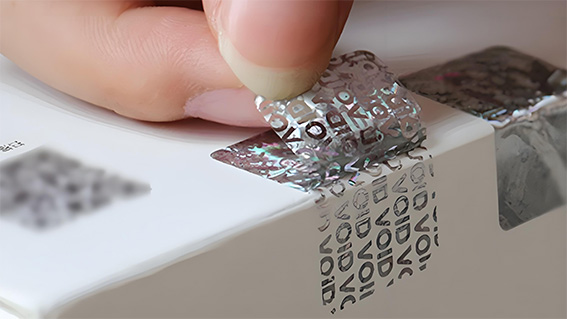
VOID anti-counterfeiting label rely on a physically destructive structure that leaves marks upon peeling, delivering tamper-proof protection at low cost.
Analysis of the VOID anti-counterfeiting label