Guide to Selecting Materials for Daily Personal Care Product Labels
author: Eva
2026-08-27
Instead of fast food fashion concept, vetiver is based on the idea of the wearer, not limited to the scope of age or season. At every time of the day, every region and every place can freely change and connect smoothly. Vetiver skillfully combines leisure style and soft multi-functional materials to create a clothing piece valued by fearless and confident women.
I. Why do ordinary labels fail to last for more than two weeks in the bathroom?
Taking into account factors such as cost, usage environment and label printing quality, the labels for different market positioning levels of personal care products will use different materials. However, they can be roughly divided into two categories: one is paper labels, and the other is film labels.
Before recommending specific materials, we must first understand the four major challenges faced by personal care labels:
1. Humid environment
The penetration of water vapor can cause the paper to expand and the adhesive to lose its effectiveness, especially for non-waterproof paper-based self-adhesive materials.
2. Chemical corrosion
The surfactants, essential oils, and alcohol components in personal care products may dissolve the ink printed on the label or erode the adhesive layer.
3. Physical friction
When using daily personal care products, our regular actions of picking up, squeezing, and rubbing can cause the surface of the product's label to be worn.
4. Brand texture
Consumers usually judge the quality of a product through touch and vision. A low-key and luxurious matte texture or a bright and vivid glossy texture can both become attractive features that draw customers' attention.
II. What are the label materials available for daily hygiene and care products?
|
Material type
|
Advantages
|
Disadvantage
|
Applicable scenarios
|
|
Waterproof, oil-resistant, tear-resistant, with high cost-effectiveness
|
The hardness is slightly lower than that of PET.
|
Shampoo, body wash, laundry detergent
|
|
|
Good flexibility, high fit, and it conforms to the shape of the bottle.
|
Poor rigidity, slightly lower printing accuracy
|
Hand cream tube, squeeze bottle, curved bottle
|
|
|
High strength, high transparency, and good heat resistance
|
High cost, poor flexibility
|
High-end essence water, toner
|
|
|
Highly printed, with excellent color reproduction and low cost.
|
Not waterproof, prone to tearing
|
Soap packaging box, dry area products
|
|
|
Natural and eco-friendly texture, with rich patterns
|
It is necessary to apply a coating to prevent water from penetrating.
|
Handmade soap, organic personal care products, salon-quality items
|
There is no such thing as a completely perfect label material; there are only materials that are the most suitable for your product design and application scenarios.
III. How to Select Tags for Different Application Scenarios
The selection of materials is far more than a simple matching of cold numerical specifications. Whether it is the industrial reliability in extreme environments or the delicate touch in high-end consumer scenarios, the change of materials directly determines how users perceive the value of the brand.
1、Bathroom scene (shampoo, body wash, body lotion)
Recommended solution:
PP or BOPP + strong water-based acrylic adhesive+white glassine
Reason:
In the face of the humid and hot environment in the bathroom, waterproofing will be the top priority. The PP material is inherently waterproof and has a moderate cost.
Notes:
Customers must not only consider cost reduction and use uncoated semi-gloss paper, as it is not waterproof and will mold after two weeks, seriously affecting the brand image.
2、Soft tube packaging (hand cream,toothpaste,facial cleanser)
Recommended solution:
PE label
Reason:
PE material is soft and more suitable for irregularly curved bottle surfaces. For example,the soft tube will be repeatedly squeezed during use,and only a soft PE label can deform along with the bottle without warping or wrinkling.
Notes:
PE labels are prone to overflow when applied. when purchasing materials,carefully confirm to prevent such situations. you can ask the supplier to wrap the outer layer of the non-adhesive label roll with glassine paper to prevent the glue from sticking.
3、High-end facial care (essence,toner,essential oil)
Recommended solution:
PET label
Reason:
The advantage of PET is its resistance to alcohol erosion. The transparent PET has extremely high transparency,combined with the "no label sensation" design,it can make the liquid inside the bottle the visual focus,conveying a pure and high-end brand image.
Notes:
If the bottle body is made of sandblasted,sprayed glass,etc. we will recommend that customers test the viscosity applicability of the adhesive.
In addition, for different care products, such as alcohol-containing perfume products, we will also recommend that customers conduct actual liquid/ethanol wiping tests to avoid alcohol eroding the ink on the label printing surface and damaging the printing effect.
4、Natural organic/handmade soap
Recommended solution:
Kraft paper/peelable tape paper/ special paper
Reason:
Utilize the unique exquisite texture of paper to convey the "natural,handmade,environmentally friendly" tone.
Notes:
Different from ordinary semi-gloss paper,these paper materials have the natural texture sensation that film products do not have,but they are not waterproof and are easily damaged. To extend durability,matte film or light film can prevent the grease and moisture on the surface of handmade soap from damaging the label.
IV. Common Misconceptions and Pitfall Avoidance Guide
❌ Misconception 1: Using ordinary semi-gloss paper to save costs
Consequence: The bathroom environment will suffer from delamination, ink loss, and powdering, resulting in a sharp increase in customer complaints.
Consequence: The bathroom environment will suffer from delamination, ink loss, and powdering, resulting in a sharp increase in customer complaints.
❌ Misconception 2: Using hard PET for curved bottle bodies
Consequence: Due to the hardness of the material, after labeling, the edges will curl up like "small wings" and cannot be smooth.
❌ Misconception 3: Ignoring compatibility testing of contents
Consequence: If the materials do not match the products, various problems will occur, making the final product's presentation effect extremely poor.
Suggestion: Before mass production, make sure to fill the bottles with the contents that have been properly labeled. Place them in a 40°C - 50°C environment for 72 hours and observe for any signs of glue overflow, warping or discoloration.
If any of the above problems occur, please refer to the contents of the following table to take timely measures to remedy the situation.
|
Common Misconceptions
|
Potential consequences
|
Correction plan
|
|
Bathroom products are made with uncoated copperplate paper
|
It will start to mold and lose its ink within 2 to 3 weeks
|
Switch to PP synthetic paper and apply a coating
|
|
The curved bottle body is made of rigid PET
|
The edges of the label are lifting up and not firmly attached
|
Switch to soft PE or highly conformable films
|
|
Products containing essential oils have not undergone compatibility tests
|
The labels have been stained, faded and fallen off
|
Use chemically resistant UV ink and conduct aging tests
|
PS: If you encounter any other special situations that you are unable to handle, please contact us immediately. We will provide you with a personalized and perfect solution.
V. Frequently Asked Questions Answered
Q1: The shampoo and body wash come with semi-gloss paper labels. After being laminated, can they be used in the bathroom for a long time?
A: It is not recommended. The semi-gloss paper substrate itself is paper. Even with coating, water vapor will still seep through the edge of the label and the cut position of the base paper. The paper substrate absorbs water and expands, resulting in bulging, edge lifting.
A: It is not recommended. The semi-gloss paper substrate itself is paper. Even with coating, water vapor will still seep through the edge of the label and the cut position of the base paper. The paper substrate absorbs water and expands, resulting in bulging, edge lifting.
Q2: Why are PE labels prone to glue overflow? What solutions are there?
A: The PE base material is soft. When the roll material is under pressure or the ambient temperature is high, the glue is prone to overflow. During procurement, suppliers can be requested to use Graflex isolation backing paper to control the glue thickness; the storage environment should be kept cool to avoid high-temperature stacking.
A: The PE base material is soft. When the roll material is under pressure or the ambient temperature is high, the glue is prone to overflow. During procurement, suppliers can be requested to use Graflex isolation backing paper to control the glue thickness; the storage environment should be kept cool to avoid high-temperature stacking.
Q3: Why do transparent PET labels on frosted glass bottles always curl at the edges?
A: Firstly, the PET has high rigidity and the bottle's curved surface has a large arc, so the hard film material cannot adapt to the shape change of the bottle; Secondly, the matte surface has large pores, and ordinary glue cannot penetrate adequately. Solution: Change to soft BOPP/PP for the curved surface; If PET is used, then special glue with high penetration needs to be replaced, and actual bottle-lining aging tests must be conducted.
A: Firstly, the PET has high rigidity and the bottle's curved surface has a large arc, so the hard film material cannot adapt to the shape change of the bottle; Secondly, the matte surface has large pores, and ordinary glue cannot penetrate adequately. Solution: Change to soft BOPP/PP for the curved surface; If PET is used, then special glue with high penetration needs to be replaced, and actual bottle-lining aging tests must be conducted.
Q4: The label printing is intact, but after storing the shampoo and conditioner products for some time, the patterns gradually fade and become blurry. What's the problem?
A: Most of it is caused by chemical erosion. The essential oils, alcohol, and surfactants in the cleansing and care products will slowly penetrate, and the ordinary ink will be corroded by the components. It is necessary to replace with chemical-resistant UV ink, and at the same time conduct a high-temperature aging test on the entire contents of the container. One cannot only look at the dry mounting effect at room temperature.
A: Most of it is caused by chemical erosion. The essential oils, alcohol, and surfactants in the cleansing and care products will slowly penetrate, and the ordinary ink will be corroded by the components. It is necessary to replace with chemical-resistant UV ink, and at the same time conduct a high-temperature aging test on the entire contents of the container. One cannot only look at the dry mounting effect at room temperature.
Q5: For the same PP synthetic paper, some labels have good water resistance while others have poor water resistance. What's the difference?
A: The difference lies not in the PP material itself, but in the glue and lamination process. PP is inherently waterproof, but if the glue has poor water resistance or there is no lamination to protect the printed layer, water vapor will attack the adhesive layer and ink from the edge of the label. For bathroom environments, it is necessary to use strong adhesive acrylic water glue, and choose matte film / glossy film for protection as needed.
A: The difference lies not in the PP material itself, but in the glue and lamination process. PP is inherently waterproof, but if the glue has poor water resistance or there is no lamination to protect the printed layer, water vapor will attack the adhesive layer and ink from the edge of the label. For bathroom environments, it is necessary to use strong adhesive acrylic water glue, and choose matte film / glossy film for protection as needed.
Q6: If the soft tube hand cream is repeatedly squeezed, the label wrinkles and lifts up. Is it useful to change to a thicker label material?
A: It doesn't work. The hose needs to follow the compression deformation. The thicker and harder the material is, the more severe the edge warping will be. Soft PE self-adhesive labels should be selected instead of thickened PET or thick PP. The flexibility of the base material should be relied upon to adapt to the deformation of the hose.
A: It doesn't work. The hose needs to follow the compression deformation. The thicker and harder the material is, the more severe the edge warping will be. Soft PE self-adhesive labels should be selected instead of thickened PET or thick PP. The flexibility of the base material should be relied upon to adapt to the deformation of the hose.
Q7: The special paper label made of kraft paper has a film coating, but still has local damages. What's the reason?
A: The coating only protects the printed surface, while the edges of the paper remain exposed. Moisture and soap oil will seep into the paper core through the cut edges. Over time, the edges may turn yellow and the paper may become layered. For handmade soap products, it is best to avoid having the label in direct contact with the soap body. At the same time, leave a reasonable margin for the label size.
A: The coating only protects the printed surface, while the edges of the paper remain exposed. Moisture and soap oil will seep into the paper core through the cut edges. Over time, the edges may turn yellow and the paper may become layered. For handmade soap products, it is best to avoid having the label in direct contact with the soap body. At the same time, leave a reasonable margin for the label size.
VI. Conclusion and Recommendations
For skincare and haircare brands, the labels are the part that consumers come into contact with every day. A label that remains flat, clear and textured even in a humid environment is a direct reflection of the brand's professionalism and quality.
Don't let incorrect label materials ruin your carefully crafted brand image. We recommend that you conduct strict bottle-labeling tests and practical verifications before mass production.
Your next step:
Instiker offer a full range of label material solutions. If you have doubts about the compatibility of a specific bottle type or want to verify the effects of different label structures, please contact our sales representatives immediately.
Instiker offer a full range of label material solutions. If you have doubts about the compatibility of a specific bottle type or want to verify the effects of different label structures, please contact our sales representatives immediately.
?? [Get free samples and quotations immediately]
Analysis of Bright Silver PE Self-Adhesive Material
Gloss White PP Self-Adhesive Labels: Properties, Applications & Printing Guide
Related Article
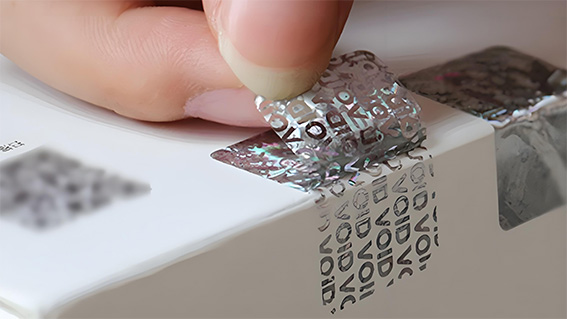
VOID anti-counterfeiting label rely on a physically destructive structure that leaves marks upon peeling, delivering tamper-proof protection at low cost.
Analysis of the VOID anti-counterfeiting label
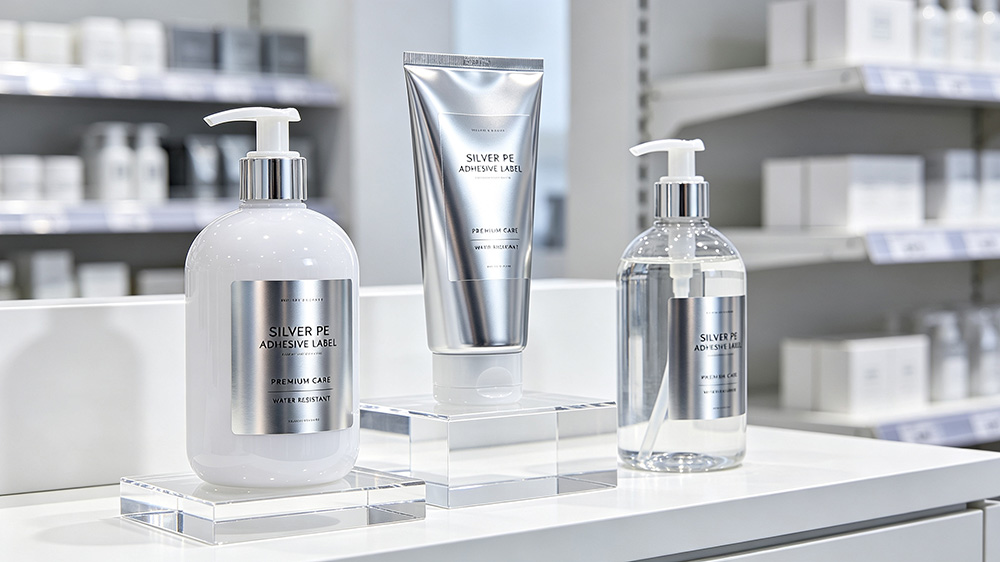
Selecting bright silver PE self-adhesive material depends not only on surface brightness, but also coating process and actual printing verification.
Analysis of Bright Silver PE Self-Adhesive Material