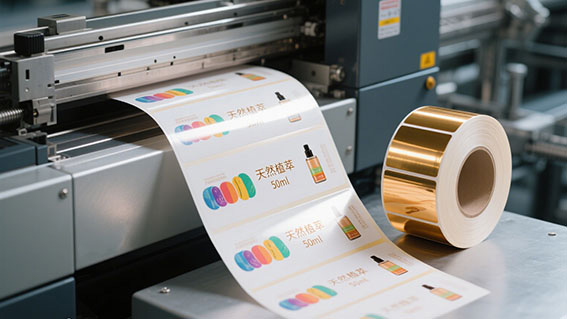
Gloss White PP Self-Adhesive Labels: Properties, Applications & Printing Guide
author: Eva
2026-08-17
Are the labels you are currently using frequently experiencing problems such as insufficient texture, moisture damage, cracking at low temperatures, and cheap appearance?
The gloss white PP self-adhesive labels, with their unique pearl-like soft light effect and comprehensive performance of the film, have become the preferred material for mid-to-high-end packaging labels.
Instiker as a domestic manufacturer of self-adhesive base materials, continuously supplies mature and stable gloss white PP self-adhesive raw materials, helping printing factories and brand owners solve the pain points of labels
I. Definition of Gloss White PP Self-adhesive Labels
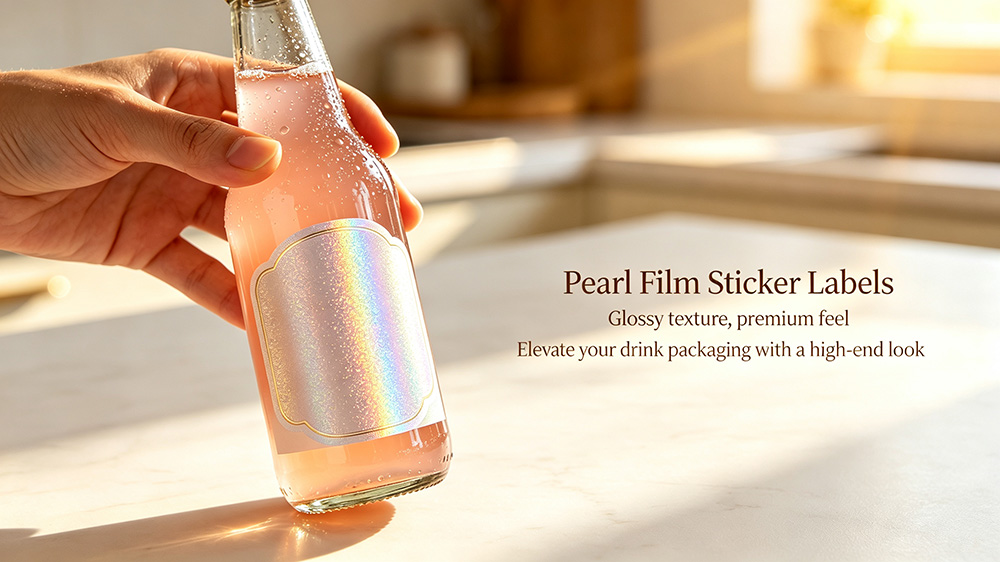
The gloss white PP base material is made by adding pearl filler to the polypropylene raw material and then undergoing biaxial stretching and foaming molding. The internal microstructure of the material can reflect light, presenting a soft and delicate pearl-like luster at different angles.
The gloss white PP self-adhesive labels produced by Instiker additionally feature a special print-receptive top coating, which is also a core differentiating advantage.
The surface coating can increase the improves ink anchorage and printability value of the film surface, enhance the adhesion ability of various printing inks, be compatible with UV flexographic printing, digital printing, and intaglio printing, and avoid ink dropout, scratches, and uneven color problems. The density is lower than that of ordinary BOPP film, and it combines decorative properties with the physical characteristics of waterproof and tear-resistant of the film material.
II. Advantages and Disadvantages of Gloss White PP Self-adhesive Labels
|
Advantages
|
Limitations
|
|
Unique iridescent optical effect
|
Limited high-temperature resistance performance
|
|
Excellent physical properties
|
Not suitable for outdoor scenarios with prolonged exposure to sunlight
|
|
High compatibility of printing technology
|
Higher unit price
|
|
Lightweight base material
|
Surface film material, poor adhesion for normal pen writing
|
III. Who would use the Gloss White PP self-adhesive labels?
1. Food and Beverage Brand: Producing bottled beverages, chilled foods, and honey-based sauces. They aim to enhance the appearance of their packaging and ensure that the labels can withstand condensation water. They do not want to use paper labels as they are prone to moisture damage.
2. Cosmetics and Beauty Companies: Hair care, fragrance, and personal care products. They seek a light and luxurious packaging effect, avoiding harsh reflective surfaces, and require compatible curved label printing for plastic bottles and glass bottles.
3. Label Printing Factory and Packaging Processing Factory: They need a film base material that can accommodate both printing and gold stamping processes, to handle mid-to-high-end label orders, and require stable roll material raw materials.
4. Exporting Manufacturers: Targeting overseas supermarkets, they need differentiated packaging. The materials should provide SGS and other testing reports and comply with food contact regulations.
5. Cultural Creative and Gift Brands: With a mid-to-high-end product positioning, they want a pearl-like soft light visual effect and avoid the overly flashy reflective effect of aluminum film.
IV. Typical Application Scenarios
Case one: A project for labeling of daily care and cleaning hoses of an enterprise
Challenge
In the early stage of the brand's use of ordinary BOPP self-adhesive labels, two major problems emerged: Firstly, the hose has a large deformed curved surface, and after being squeezed, the label is prone to curling and chipping; Secondly, the ordinary bright white film has a harsh reflective effect, making the product lack a sense of sophistication when placed on the supermarket shelves.
Solution
Choose Instiker gloss white PP self-adhesive, combined with flexible acrylic glue and glassine paper.
Choose Instiker gloss white PP self-adhesive, combined with flexible acrylic glue and glassine paper.
Effect
The pearl-like soft light effect has met the brand's expectations. It differs from the packaging of ordinary hair care products on the market, enhancing the shelf recognition. After the soft tube is repeatedly squeezed, the label adheres firmly without any warping or cornering.
The pearl-like soft light effect has met the brand's expectations. It differs from the packaging of ordinary hair care products on the market, enhancing the shelf recognition. After the soft tube is repeatedly squeezed, the label adheres firmly without any warping or cornering.
Case 2: A foreign trade export project for glass bottle labels of a certain enterprise
Challenge
The high humidity environment of sea transportation combined with the condensate water from the cold storage caused the labels to get damp and the edges to wrinkle.
Solution
Using Instiker gloss white PP self-adhesive base material and general moisture-resistant acrylic glue
Using Instiker gloss white PP self-adhesive base material and general moisture-resistant acrylic glue
Effect
High humidity in maritime transportation + condensation water environment in cold storage. The labels do not wrinkle or get wet, remain intact and adhere perfectly to the curved surface of the glass bottles. The offset printing and cold stamping effects are stable, and the ink adhesion meets the standards. The export inspection and verification was successfully passed.
High humidity in maritime transportation + condensation water environment in cold storage. The labels do not wrinkle or get wet, remain intact and adhere perfectly to the curved surface of the glass bottles. The offset printing and cold stamping effects are stable, and the ink adhesion meets the standards. The export inspection and verification was successfully passed.
V. Comparison of Gloss White PP Self-adhesive with Mainstream Materials
|
Materials
|
Standard Gloss White PP self-adhesive
|
PET self-adhesive
|
||
|
Surface effect
|
Soft pearl luster
|
Ordinary paper surface
|
Mirror-like bright white
|
Cool-toned porcelain white
|
|
Waterproof and oil-resistant
|
Excellent
|
Poor
|
Good
|
Excellent
|
|
Surfacing in a smooth and intimate manner
|
Excellent
|
Poor
|
Generally
|
Poor, hard material
|
|
Low-temperature performance
|
Good. Suitable for refrigeration.
|
Poor
|
Low temperature makes it prone to cracking.
|
Excellent
|
|
Cost
|
Medium
|
Low
|
Medium
|
High
|
|
Core weakness
|
Unable to tolerate high temperatures for a long time
|
Afraid of water and moisture, prone to tearing
|
Low temperature makes it brittle.
|
Hard, poor surface labeling, high price
|
VI. Frequently Asked Questions Answered
Q1: Does a thicker film make the pearlescent effect better on self-adhesive labels?
A: No. The pearlescent effect mainly comes from the pearlescent filler formula within the film. Under the same formula, increasing the thickness will make the pearlescent effect stronger, but too thick will increase the stiffness and affect the small curved surface labeling. It is necessary to select the type based on the bottle shape and process.
A: No. The pearlescent effect mainly comes from the pearlescent filler formula within the film. Under the same formula, increasing the thickness will make the pearlescent effect stronger, but too thick will increase the stiffness and affect the small curved surface labeling. It is necessary to select the type based on the bottle shape and process.
Q2: Can Gloss White PP labels be placed in a cold storage environment?
A: Yes, conventional gloss white PP can adapt to the refrigeration 0-5℃ conditions. For the refrigeration scenario, it is necessary to specify the low-temperature-specific glue from the raw material manufacturer.
Q3: Can Gloss White PP be used for thermal transfer printing?
A: Yes, by using the carbon tape that is compatible with the film, ordinary wax-based carbon tape has insufficient adhesion and it is recommended to use resin or mixed base carbon tape to ensure the barcode is resistant to scratching during printing.
Q4: Will the Gloss White PP labels labels fade?
A: Fading mainly comes from the ink. The material itself does not fade; the printing should use the compatible PP film ink, and ensure proper corona treatment on the surface to avoid ink loss.
Q5: Can Gloss White PP be coated with varnish or laminated?
A: Yes, it is supported. It can be coated with water-based varnish or UV varnish, or laminated with matte film or glossy film. Laminating with matte film will weaken the pearlescent effect, while laminating with glossy film will amplify the pearlescent luster. The effect should be confirmed in advance during the design.
Q6: How is the alcohol and wipe resistance of the self-adhesive Gloss White PP labels?
A: The substrate itself is resistant to alcohol and wiping. The wiping resistance depends on the printing ink and varnish. The surface wiping resistance is good, but the printing pattern needs to be matched with alcohol-resistant ink.
Q7: Will there be residual glue when the Gloss White PP labels is torn off?
A: Residual glue depends on the type of glue. General acrylic glue will leave a small amount of residual glue when torn off normally; if a removable effect is needed, a removable glue version of the self-adhesive gloss white PP should be selected.
Q8: Can the Gloss White PP be used for food contact labels?
A: Compliance depends on the complete label construction, intended application, market requirements and whether direct food contact is involved.Instiker can provide available technical or compliance documentation for specific material constructions upon request.
VII. Summary and Recommendations
Gloss white PP self-adhesive labels have addressed the industry pain points of paper labels being prone to water damage and deterioration, ordinary film labels having plain appearance, and aluminum-coated film being flashy and expensive. By integrating appearance level, environmental adaptability, and process compatibility, they are widely used in mid-to-high-end packaging for beverages, cosmetics, and food products.
Gloss white PP self-adhesive labels also have their applicable boundaries. They are not suitable for high-temperature, deep-freeze, and long-term outdoor exposure scenarios.
Downstream printing factories and brand owners prefer to choose stable substrate suppliers, such as Instiker Not only do they obtain roll material raw materials, but they can also receive supporting technical services such as glue selection, process adaptation, and test reports, reducing trial-and-error costs and producing stable-quality and visually outstanding pearl label products.
Guide to Selecting Materials for Daily Personal Care Product Labels
Definition, Categories, and Detailed Printing Guide for Personalized Label
Related Article
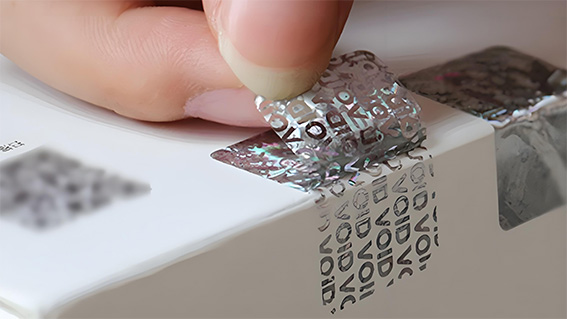
VOID anti-counterfeiting label rely on a physically destructive structure that leaves marks upon peeling, delivering tamper-proof protection at low cost.
Analysis of the VOID anti-counterfeiting label
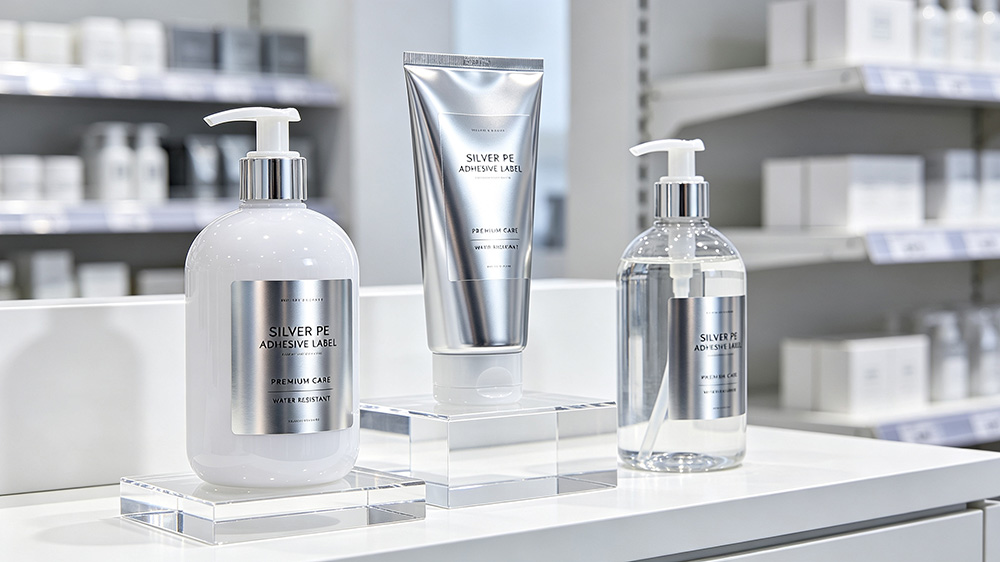
Selecting bright silver PE self-adhesive material depends not only on surface brightness, but also coating process and actual printing verification.
Analysis of Bright Silver PE Self-Adhesive Material