
The definition of removable adhesive self-adhesive
author: Eva
2025-09-22
I. Core Technology Principles and Material System
Removable adhesive non-vinyl adhesives are based on a reversible bonding mechanism, achieving repeatable peeling through dynamic chemical bonds (such as hydrogen bonds, ionic bonds) and physical adsorption (such as van der Waals forces). Their core structure includes:
1)Adhesive layer
Chemical composition: Acrylate-based (such as 3M 467MP) accounts for 70% of the market share, with the crosslinking density (1-5%) adjusted to achieve controllable adhesion. New biobased polyurethane adhesives (such as NatureWorks Ingeo) have a biodegradation rate over 60%, meeting the EU EN 13432 standard.
Microstructure design: Nano-sized pores (diameter 50-200nm) can store air, reducing the interfacial energy during peeling, such as the 0111 vector removable technology that achieves over 100 repetitions through pore rate regulation.
2)Base material and release paper
Base material selection: FSC-certified coated paper (such as Tianzhang P3768) is suitable for printing, and PET film (such as RAFLATAC WHITETC 85) is resistant to -20°C to 120°C temperatures and suitable for electronic labels.
Release paper technology: Grafix paper (surface tension <20mN/m) combined with a silicone oil coating amount (1.2-2.0g/m²) ensures that the interfacial energy difference Δγ between the adhesive and the release paper is >15mN/m, enabling lossless removal.
II. Printing Technology and Equipment Compatibility
The printing of removable adhesive non-vinyl adhesives requires precise matching of equipment characteristics:
1)Laser printing compatibility
Material selection: Preferentially use laser-specific matte silver paper (such as Jingchen B18) or PET film, whose adhesive can withstand 150-200°C high-temperature fixation. Konica Minolta magicolor 2430DL and other models clearly support laser non-vinyl adhesives, reducing the risk of paper jams through manual paper feeding slots.
Parameter optimization: Fixation temperature needs to be adjusted according to the material, PET film is recommended to be raised to 190°C, while coated paper can be reduced to 140°C (such as Ricoh SP C252DN's temperature compensation function).
2)Key points of inkjet printing technology
Ink compatibility: Use pigment-based ink (such as Epson DURABrite), avoiding ink diffusion on smooth surfaces. Glossy paper requires a nano-level anti-slip coating (such as silica + alcohol) to shorten the ink absorption time from 5 seconds to within 1 second.
Surface treatment: Some inkjet models (such as Canon PIXMA iP8780) need to be combined with corona treatment to increase the surface energy to above 38mN/m to ensure ink adhesion.
3)Flexographic and digital printing comparison
Flexographic advantages: Use water-based UV ink, suitable for mass production (such as cosmetic labels), with an ink layer thickness of 1.2-1.5μm and color saturation of 95%.
Digital printing trend: HP Indigo 6900 and other devices use electronic ink technology to achieve variable data printing on removable adhesive labels, supporting a resolution of 1200dpi and color matching (such as Pantone color cards).

III. Future Technology Trends and Innovation
1)Intelligent Response Materials
Thermosensitive Labels: Adhesives containing poly N-isopropylacrylamide (PNIPAM) undergo a phase transition at 32°C, used for monitoring the food cold chain, with color changes indicating abnormal temperatures.
Photo-responsive Coatings: Aminobenzene-modified adhesives can reversibly change color under ultraviolet light, used for intelligent anti-counterfeiting labels, with the adhesive strength adjustable by 3-5 times.
2)Nano-Technology Applications
Graphene Enhancement: Acrylic adhesives with 0.5% graphene added, have a 40% increase in shear strength, and the temperature resistance upper limit is raised to 180°C, used for battery packaging labels.
Nano Microsphere Filling: Hollow microspheres with a diameter of 50-200nm reduce the adhesive density by 30%, while maintaining over 80% adhesion strength, and reducing the packaging weight.
3)Digitalization and Personalization
On-demand Printing: HP SmartStream Mosaic technology supports personalized patterns for removable labels (such as variable barcodes + customized graphics), with a printing speed of up to 120m/min.
AR Labels: Combined with augmented reality technology, consumers can scan removable labels to view 3D product displays or interactive content, such as L'Oréal's "virtual makeup try-on" function.
The technological evolution of removable adhesive non-permanent labels has always been centered around "precise control" and "sustainable development". From nanocoatings at the material level to digital transformation in printing processes, from traditional packaging labels to intelligent responsive labels, its application scenarios have continuously expanded. Enterprises need to achieve the dual goals of performance improvement and environmental compliance through material innovation (such as bio-based adhesives), equipment upgrades (such as cold and warm laser technology), and system design (such as full life cycle carbon footprint management). With the deep integration of the Internet of Things, artificial intelligence, and new materials, removable adhesive non-permanent labels will continue to create value in emerging fields such as intelligent packaging and wearable devices, and become the core medium connecting products and consumers.
In-depth Analysis of Glossy Paper Self-adhesive Labels: Materials Science, Printing Technology and Application Innovation
The diversification of labels
Related Article

Las etiquetas PET resisten el arrugamiento, la deformación, la pérdida de tinta, el cambio de tamaño y el manchado por tinta durante la producción a alta temperatura y la impresión digital con láser.
Comprehensive Analysis of PET Self-adhesive Labels
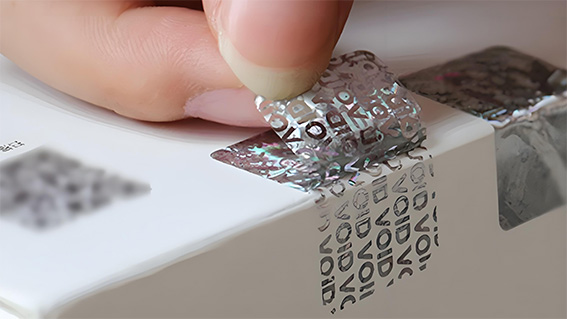
VOID anti-counterfeiting label rely on a physically destructive structure that leaves marks upon peeling, delivering tamper-proof protection at low cost.
Analysis of the VOID anti-counterfeiting label