Analysis From Multiple Perspectives on Removable Self-adhesive Label
author: Eva
2025-09-19
I. Definition
The removable self-adhesive label is made of self-adhesive label material prepared with a special formulation of removable pressure-sensitive glue.
During the specified usage period, after the label is adhered to the substrate surface, it can be completely peeled off without leaving any residue of glue and without damaging the surface of the object being attached.
It is composed of three layers: the base material, the removable adhesive layer, and the release backing paper. Unlike ordinary permanent self-adhesive tapes, this product has a stronger adhesive force.
The adhesive layer adheres preferentially to the surface of the label material rather than the surface of the object being adhered to, thus achieving seamless removal.
II. Advantages and Limitations
(1) Core Advantages
Non-staining removal, protecting product appearance
During the normal validity period, the labels can be easily removed without leaving any residual glue, avoiding permanent glue residue, whitening marks, and glue contamination. Suitable for high-end appearance products such as glass, ceramics, high-gloss plastics, and solid wood.
During the normal validity period, the labels can be easily removed without leaving any residual glue, avoiding permanent glue residue, whitening marks, and glue contamination. Suitable for high-end appearance products such as glass, ceramics, high-gloss plastics, and solid wood.
High tolerance for label application, supporting fine-tuning
After initial application, the label can be lifted and repositioned within a short period, reducing the scrap rate of automated labeling and manual labeling.
Rich material options, compatible with printing
Supports heat transfer printing, digital inkjet printing, flexographic printing, and offset printing, covering both barcode printing and color graphic printing.
Environmentally friendly, strong compliance
Water-based removable glue has low VOC, multiple materials can provide SGS test reports, suitable for food contact areas, cosmetics, and baby products.
Reduces post-sale experience complaints
Consumers do not need to use alcohol or desoldering agents to remove the labels, significantly improving the end-user experience.
(2) Objective Limitations
Less adhesive strength than permanent non-stick labels
Not suitable for long-term outdoor exposure, extreme temperature fluctuations, or severe oil contamination. It is prone to warping and falling off.
Not suitable for long-term outdoor exposure, extreme temperature fluctuations, or severe oil contamination. It is prone to warping and falling off.
Existence of an effective removal window period
When the label is stuck for a long time, the glue undergoes cold flow and penetrates the porous substrate, which may result in residual glue and does not guarantee a "permanent non-staining" label.
Caution with porous substrates
Porous surfaces such as wood, non-woven fabric, and rough cardboard are prone to the glue penetrating the pores, making it difficult to remove cleanly.
Cost higher than ordinary permanent non-stick labels
Special removable glue formula requires higher raw material and coating process requirements, and the material unit price is generally higher than conventional water-based permanent labels.

III. Case Analysis
Case 1: A ceramic bathroom products company
Challenge: For ceramic toilet and washbasin products, the specification labels were pasted using ordinary permanent adhesive tape. After customers removed the labels, large areas of adhesive residue remained, resulting in numerous overseas returns and customer complaints.
Solution: Use Instiker water-based removable copperplate paper self-adhesive material.
Effect: In a normal temperature environment, the adhesive can be removed without any residue within 3 months, and the export inspection meets the standards; customer complaints have decreased by 90%.
Case 2: An electrical appliance manufacturing company
Challenge: Temporary warning labels for stainless steel water jugs and plastic blender casings. Manual labeling is prone to being misaligned, and once incorrect, it cannot be adjusted. The product scrap rate is high.
Solution: Instiker Matte PP Removable Film Adhesive Tape. The initial adhesion is moderate. The label can be repositioned within 15 minutes after application.
Effect: The rate of poor labeling has significantly decreased. The film base material is waterproof and scratch-resistant, and is suitable for high-speed die-cutting and waste removal in automated production lines.
IV. Type of Glue Comparison and Selection Suggestions
|
Comparison dimension
|
Removable self-adhesive labels
|
Permanent self-adhesive label
|
|
Remove the performance
|
No marks or residual glue within the specified period
|
Tearing off leaves a sticky residue and causes the substrate to turn white.
|
|
Bonding strength
|
Moderate, not suitable for extremely harsh environments
|
Strong adhesive force, stable attachment over a long period of time
|
|
Reposting capability
|
Short-term fine-tuning of position
|
After being pasted, it is basically impossible to lift it up again.
|
|
Applicable scenarios
|
Temporary signs, promotional stickers, high-end appearance products
|
Long-term nameplate, outdoor label, sealing mark
|
|
Material cost
|
High blood pressure
|
Lower
|

V. Frequently Asked Questions Answered
Q1: Can the removable labels really achieve complete no-adhesion?
A1: They can be removed without leaving any residue under the recommended period, standard room temperature, and on smooth substrates. However, for long-term adhesion, high temperatures, and porous substrates, there is still a risk of residue. There is no such thing as an absolutely permanent and no-residue label.
A1: They can be removed without leaving any residue under the recommended period, standard room temperature, and on smooth substrates. However, for long-term adhesion, high temperatures, and porous substrates, there is still a risk of residue. There is no such thing as an absolutely permanent and no-residue label.
Q2: Can removable labels be repeatedly pasted and used?
A2: Ordinary removable labels only support short-term fine adjustment.
Q3: Can it be used in outdoor scenarios exposed to long-term sunlight?
A3: Not recommended. Ultraviolet rays will accelerate the aging of the glue, causing edges to lift and leaving residue after removal. For outdoor long-term signs, permanent weather-resistant labels are recommended.
Q4: How to choose between removable paper and removable film?
A4: For ordinary text barcodes and short-term indoor use, choose copperplate removable; for products requiring waterproofing, anti-tearing, color printing, and curved surfaces, select PP/BOPP film removable.
Q5: Why do some customers encounter residual glue when using the same removable material?
A5: Four main causes: exceeding the application time limit, the substrate being porous or having release agents on the surface, continuous high temperature environment, and the glue model not matching the substrate. Before production, it is necessary to conduct sample tests.
VI. Conclusion
As consumer brands place greater emphasis on product appearance and end-user experience, removable self-adhesive label have evolved from optional accessories to essential marking materials in high-end manufacturing and export industries.
Its core value lies not in being more firmly attached, but in being firmly attached when needed and leaving without leaving any trace when removed.
In the procurement process, merely relying on the parameter table is not sufficient. The compatibility of the base material and its environmental tolerance both require actual sample verification.
Instiker specializes in the research and production of self-adhesive film materials. It has multiple sets of removable adhesive systems, and can provide customized removable self-adhesive material solutions for label processing factories and brand manufacturers, addressing common problems such as residual glue, warping edges, and printing compatibility.
Consumer Electronics and Intelligent Interaction: Upgrading the Tag Initiated Experience
Related Article

Las etiquetas PET resisten el arrugamiento, la deformación, la pérdida de tinta, el cambio de tamaño y el manchado por tinta durante la producción a alta temperatura y la impresión digital con láser.
Comprehensive Analysis of PET Self-adhesive Labels
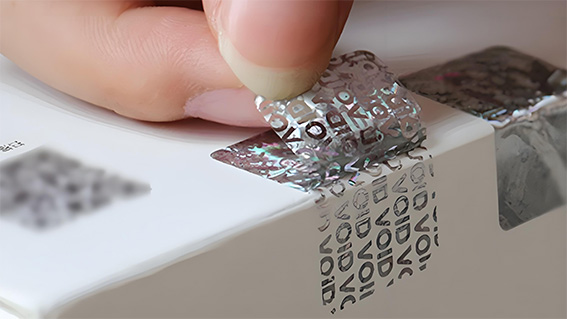
VOID anti-counterfeiting label rely on a physically destructive structure that leaves marks upon peeling, delivering tamper-proof protection at low cost.
Analysis of the VOID anti-counterfeiting label