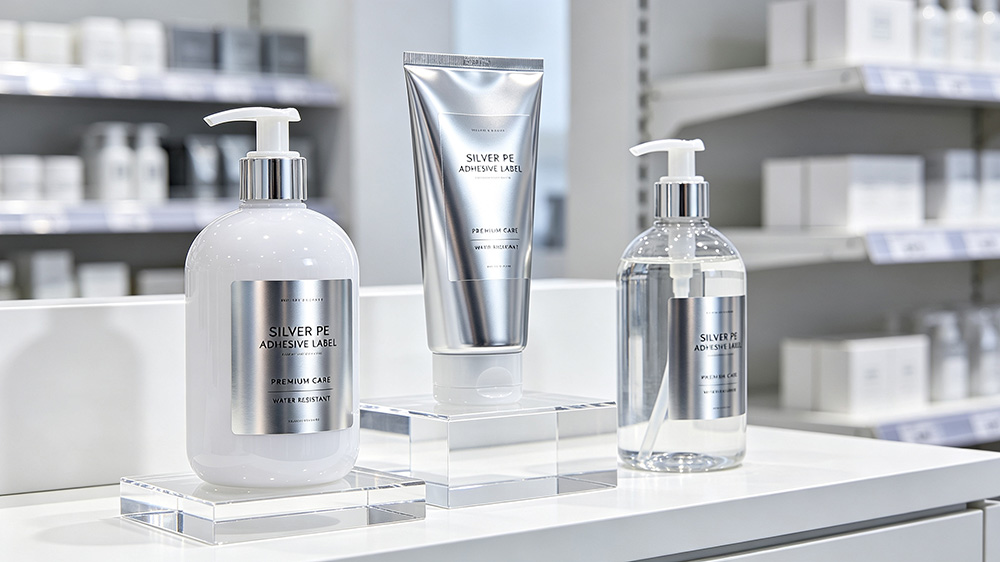
Analysis of Label Materials Performance in Extreme Environments and Selection Scheme
author: Eva
2025-09-19
Standard labels are only suitable for normal indoor conditions at ambient temperature and in dry environments.
When exposed to extreme conditions such as sudden temperature fluctuations, high humidity and condensation, prolonged UV exposure, oil or chemical contamination, seawater salt spray, freezing storage, or long-term outdoor placement, they are highly prone to failures.
Including edge curling and delamination, ink fading, substrate cracking, adhesive residue contamination, and barcode unrecognizability. These issues can lead to product traceability interruption, compliance risks, and increased after-sales losses.
Instiker has been dedicated to the research, development, and production of self-adhesive label materials for nearly two decades.
Leveraging a comprehensive product portfolio including PET, synthetic paper, BOPP, PE, matte silver film, and specialty weather-resistant adhesive systems, the company provides complete label substrate solutions tailored for extreme environments across industries such as industrial manufacturing, new energy, cold chain logistics, outdoor equipment, and electronics production.
I. Advantages and Limitations of Extreme Environment Label Materials
(1) Advantages
Strong environmental tolerance
The low-temperature model supports -40℃ refrigeration environment; the high-temperature PET can withstand 120-150℃ for a long time, and special PI base material can withstand short-term reflow soldering at high temperatures; the base material is not prone to absorbing moisture, and can resist high humidity, condensation water, and rainwater immersion.
Excellent physical stability
The film base material is resistant to tearing, abrasion, and has a low dimensional shrinkage rate. It is not prone to wrinkling or warping under alternating temperature and humidity changes; matte silver PET and other shading materials are not transparent, and barcodes and QR codes remain clear for a long time.
Resistant to medium erosion
When paired with acrylic oil adhesive system, it can resist lubricating oil, weak acids and bases, cleaning agents, and salt fog, and is not prone to being swollen or delaminated by chemicals; suitable for cleaning processes and coastal outdoor scenarios.
Wide printing adaptability
Supports thermal transfer printing, digital inkjet printing, laser printing, flexographic printing, and screen printing; the surface can be treated with top coating to enhance ink adhesion, and the graphics and text are not easily worn off over a long period.
Continuous traceability guarantee
The label information can be read for a long time, meeting the rigid requirements of manufacturing process control, new energy battery identification, special equipment annual inspection, and export product compliance identification.
(2) Limitations
Cost higher than ordinary paper labels
The cost of film base materials and special adhesives is higher. Direct replacement with ordinary labels in large quantities will directly increase the material budget.
Boundary conditions for curved surface attachment
Highly rigid PET materials are not suitable for extremely small radius curved surfaces; soft PE, synthetic paper have better surface adaptation, but the temperature limit is somewhat reduced.
No all-in-one label
There is no material that can simultaneously meet all conditions of ultra-high temperature, strong acid and alkali, long-term outdoor use, and ultra-low temperature refrigeration; in strong corrosive environments, long-term immersion will still gradually age.
Environmental requirements for label application
Direct labeling in low-temperature environments will result in insufficient initial adhesion; if the base material surface is contaminated with oil, dust, etc., even high-end materials will fall off.
Environmental regulations restrict some materials
Ordinary PVC has excellent weather resistance, but export projects in Europe and America are subject to environmental control, and PVC is preferentially prohibited in new energy, medical, and food industries.

II. Comparison and selection suggestions for mainstream extreme environment label materials
|
Material type
|
Core Advantage
|
Disadvantages
|
Recommended application environment
|
|
PET
|
High temperature resistance, stable size, resistant to chemicals, UV protection, and resistant to friction.
|
The material is relatively hard, the small curved surface adhesion is poor, and the price is relatively high.
|
Electronics, new energy, outdoor equipment, high-temperature conditions
|
|
PP synthetic paper
|
Flexible and waterproof, capable of writing, good surface fit, moderate price.
|
Long-term exposure to high temperatures (above 80℃) can cause aging.
|
Cold chain, food packaging, moderately humid environment
|
|
PE
|
Excellent softness, resistant to low temperatures, suitable for irregular curved surfaces
|
High temperature limit is low (≤ 60℃), and it is not resistant to strong solvents.
|
Detergent hoses, frozen soft packaging
|
|
BOPP
|
High transparency, excellent printing quality, moderate cost
|
Long-term exposure to the outdoors leads to aging, and its chemical resistance is average.
|
Short-term outdoor and regular waterproof products
|
|
PVC
|
Soft and weather-resistant, with a reasonable price.
|
Environmental restrictions and high temperatures can easily release harmful substances.
|
Outdoor equipment
|
III. Which enterprises require special label materials for extreme environments?
1. Label printing factory, die-cutting processing factory
They undertake industrial orders, export orders, and new energy electronic orders. Customers have strict requirements for the durability of labels.
2. Manufacturing brand owners
New energy battery enterprises, automotive component manufacturers, electronic appliances, photovoltaic equipment, hardware machinery, medical device manufacturers. After products are manufactured, they need long-term identification and traceability to prevent label failure.
3. Cold chain, food, aquatic product processing enterprises
Cold storage storage, frozen fresh food, ready-to-eat food. Labels are in a high-humidity condensation environment below 0℃ for a long time. Ordinary labels will get damp and fall off.
4. Outdoor equipment, construction machinery, security lighting manufacturers
Products are used outdoors, exposed to long-term sunlight and rain, requiring resistance to ultraviolet aging and day-night temperature differences.
5. Foreign trade export enterprises
Products undergo high-temperature and high-humidity transportation by ocean shipping, as well as temperature variations in multiple countries. Overseas customers have mandatory requirements for label durability and environmental certifications (such as SGS, halogen-free, etc.).
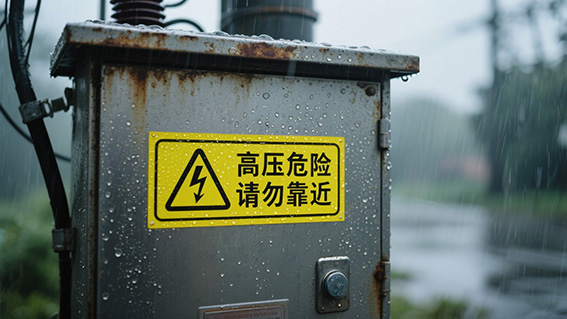
IV. A genuine case study analysis
Case 1: Low-temperature label failure in a cold-chain aquatic product processing plant
Customer situation
Outer packaging label for frozen seafood, stored in a cold storage at -22℃, with continuous condensation on the surface. Ordinary synthetic paper label peeled off after one week of application.
Instiker solution
Cold-resistant modified PP synthetic paper + low-temperature activated acrylic adhesive, with the requirement that the labeling environment be ≥ 10℃.
Improvement result
Maintains stable initial adhesion at low temperatures, resists condensate water penetration, and the label is preserved intact for more than 12 months.
Case 2: Outdoor nameplate of coastal construction machinery fades
Customer situation
Construction machinery manufacturer. The original outdoor label faded after 6 months, and the substrate became powdery. The coastal salt spray environment accelerated aging.
Instiker solution
UV-resistant modified matte silver PET weathering series, combined with weather-resistant ink.
Improvement result
No obvious fading after 500 hours of xenon lamp aging, the salt spray test met the customer's standards, and the outdoor service life was increased to more than 3 years.
V. Common Questions and Answers
Q1: The label states it is resistant to high temperatures. Can it be used continuously at the highest temperature for a long time?
A: No. The material parameters are divided into short-term tolerance temperature and long-term continuous use temperature. The peak temperature for a short period cannot be equated to the long-term working conditions; continuous high temperature will accelerate the aging of the adhesive layer. It is recommended to leave a safety margin of 20℃ or more.
A: No. The material parameters are divided into short-term tolerance temperature and long-term continuous use temperature. The peak temperature for a short period cannot be equated to the long-term working conditions; continuous high temperature will accelerate the aging of the adhesive layer. It is recommended to leave a safety margin of 20℃ or more.
Q2: For the label in a low-temperature cold storage, can it be directly labeled in a sub-zero environment?
A: Not recommended. Most pressure-sensitive adhesives require a temperature of ≥5~10℃ for wetting and adhesion; try to label at room temperature first and then send it to the cold storage; if it must be labeled at a low temperature, choose instiker's low-temperature special adhesive system materials.
Q3: Will extreme environment labels always leave residual adhesive?
A: Permanent adhesive will likely leave residual adhesive after high-temperature aging; if you need to remove less residual adhesive later, inform instiker in advance to use the medium-strength weather-resistant formula; do not use high-strength general adhesive on your own.
Q4: The same PVC label, why does some fade in the outdoors for half a year while others can be used for 3 years?
A: The difference lies in whether the base material is added with UV-resistant additives, whether there is a weather-resistant top coating on the surface, and the type of ink used. Ordinary indoor PVC is not resistant to UV rays; outdoor PVC must use weather-resistant modified PVC materials + weather-resistant ink.
Q5: What detection reports are required for export product labels? Can Instiker provide them?
A: Commonly, SGS, RoHS, halogen-free detection; Instiker can provide corresponding material detection data and support customizing environmentally friendly base materials with different grades.
VI. Summary
In extreme environments, there is no universal material. A proper match is far more important than blindly pursuing the highest parameters.
The resulting traceability failure, customer complaints, and rework costs due to label failure are usually much higher than the material price difference.
Instiker relies on a complete line of adhesive label materials. Based on the customer's usage temperature, humidity, sunlight exposure, chemical contact, substrate attachment, export standards, and printing methods, we can provide a one-stop recommended combination solution of face materials and adhesives.
We also offer sample testing, width cutting, and technical support services to help printing factories and manufacturing enterprises avoid the risk of label failure under extreme conditions.
The dual mission of precise identification and anti-counterfeiting traceability
Consumer Electronics and Intelligent Interaction: Upgrading the Tag Initiated Experience
Related Article

Las etiquetas PET resisten el arrugamiento, la deformación, la pérdida de tinta, el cambio de tamaño y el manchado por tinta durante la producción a alta temperatura y la impresión digital con láser.
Comprehensive Analysis of PET Self-adhesive Labels
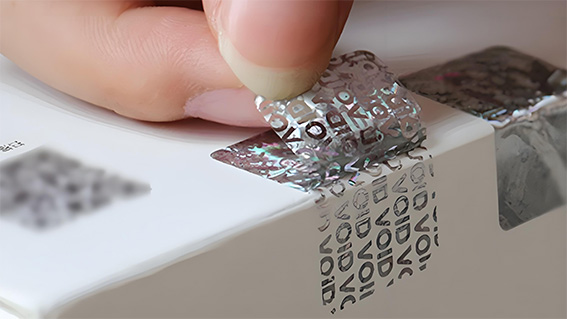
VOID anti-counterfeiting label rely on a physically destructive structure that leaves marks upon peeling, delivering tamper-proof protection at low cost.
Analysis of the VOID anti-counterfeiting label