
The principle and effectiveness of anti-counterfeiting labels
author: Eva
2026-03-23
In a market environment where counterfeit and substandard products persist, anti-counterfeiting label have become an important means for brands to protect their own rights and for consumers to distinguish the authenticity of products. Especially the self-adhesive type anti-counterfeiting label, with their advantages of easy application and wide adaptability, are widely used in various industries such as food, medicine, electronics, and cosmetics. When people come into contact with anti-counterfeiting label, they will have three core questions: What is the principle of anti-counterfeiting label? Can they really achieve anti-counterfeiting effects? What are the main types of anti-counterfeiting label produced by self-adhesive manufacturers? Today, we will dissect these questions one by one and help you fully understand the core knowledge of anti-counterfeiting label.
I. The Core Principle of Anti-counterfeiting Label
The essence of anti-counterfeiting label lies in using special materials, precise manufacturing techniques or digital technologies to create unique, concealed and difficult-to-copy identifiers on the labels. By raising the barrier for counterfeiting, these labels make it difficult for counterfeiters to replicate their core features. At the same time, consumers or brand owners can quickly and accurately identify the authenticity.
From a technical perspective, the principles of anti-counterfeiting label can be classified into three main categories. They are mostly based on a single principle or a combination of multiple principles to enhance the reliability of anti-counterfeiting measures:
The one is the physical anti-counterfeiting principle, which relies on the uniqueness of special materials or physical structures to achieve anti-counterfeiting. The core of such labels is that "the materials or processes are difficult to replicate". For example, the anti-counterfeiting label made of fragile paper have a fabric strength much lower than the adhesive bonding capacity. After being pasted, they cannot be completely removed. Once they are lifted, they will break irregularly and cannot be restored, effectively preventing secondary use at the physical level. Another example is the laser holographic label, which produces a three-dimensional and dynamic visual effect through laser printing technology. Observing from different angles will reveal different images or colors. Its precise optical structure requires professional equipment and techniques to be fabricated, and small workshops are difficult to imitate. In addition, micro-text, physical hollowing-out, and special textures also belong to physical anti-counterfeiting. They can be identified through the naked eye or with simple tools, combining convenience and anti-counterfeiting properties.
The second is the chemical anti-counterfeiting principle, which uses the reaction characteristics of special chemical substances to achieve anti-counterfeiting. These labels are more concealed and require specific conditions to trigger the display of anti-counterfeiting features. For example, temperature-sensitive ink labels will lose or change color when heated, and return to their original state when cooled; water-sensitive color-changing labels will reveal or hide patterns when exposed to water, and return to their original state after drying; fluorescent ink labels will show specific text or patterns under ultraviolet light, and are difficult to be detected under ordinary light. The formulas of these special inks belong to core technologies, and counterfeiters find it difficult to precisely replicate them, thereby achieving the purpose of anti-counterfeiting.
The third is the digital anti-counterfeiting principle. By leveraging the Internet, databases and electronic technology, it achieves precise anti-counterfeiting of "one item with one code". The core of such labels is "information cannot be tampered with and is traceable". The most common ones are QR code anti-counterfeiting label and NFC/RFID anti-counterfeiting label. Among them, QR code anti-counterfeiting assigns each product a unique encrypted QR code. After consumers scan it, they can be redirected to the brand's official verification platform to query information such as the production date, batch number, and origin of the product. Each QR code can only effectively verify once, and if the query is made again, it will trigger an abnormal alert. NFC/RFID anti-counterfeiting label have built-in chips and antennas. The chip contains a globally unique identifier (UID) that cannot be modified or counterfeited. Combined with the cloud database, it can also achieve full-process traceability of product circulation and even support non-contact batch identification.
Nowadays, most anti-counterfeiting label produced by self-adhesive manufacturers adopt a "physical + chemical" or "physical + digital" composite principle. For example, combining laser holographic technology with QR codes, it retains intuitive visual anti-counterfeiting features while also having precise digital verification functions, further increasing the difficulty of counterfeiting.
II. Can the Anti-counterfeiting Label Really Prevent Counterfeiting?
Firstly, the anti-counterfeiting effect of the anti-counterfeiting label depends on the technical threshold. Low-end anti-counterfeiting label have simple technology and low costs, and are indeed easy to be replicated by counterfeiters. Such labels mainly serve as a warning and are difficult to truly prevent counterfeiting; while mid-to-high-end anti-counterfeiting label integrate precise manufacturing, encryption technology and cloud databases. It requires high investment in equipment, technology and capital for counterfeiting, and most counterfeiters cannot afford it, thus achieving an effective anti-counterfeiting effect. For example, the chip manufacturing of RFID labels, encryption algorithms, and the plate-making process of laser holographic labels all require professional technology and equipment. Small workshops simply cannot replicate them, which can effectively intercept the vast majority of counterfeit goods.
Secondly, the effectiveness of the anti-counterfeiting label depends on correct usage. Many brands have affixed high-end anti-counterfeiting label but fail to inform consumers of the verification methods, resulting in consumers not actively verifying them; or the verification platforms are not formal and the query process is cumbersome, which reduces consumers' willingness to verify, indirectly causing the anti-counterfeiting label to lose their effect. Moreover, some brands, in an effort to cut costs, choose non-formal manufacturers to produce anti-counterfeiting label. The labels themselves have quality problems or technical loopholes, which also affect the anti-counterfeiting effect.
Finally, it is necessary to clarify that anti-counterfeiting label are anti-counterfeiting measures, not anti-counterfeiting tools. With the advancement of technology, the imitation capabilities of counterfeiters are also improving. No anti-counterfeiting technology can completely prevent imitation. However, high-quality anti-counterfeiting label can increase the cost of counterfeiting to a level far exceeding the profit from counterfeiting, making counterfeiters hesitate; at the same time, they can provide consumers with a quick and convenient method for identification, reducing the probability of consumers buying fake goods, and also help brands trace the source of counterfeit goods and maintain market order.
In summary, by choosing a reputable manufacturer, using appropriate levels of anti-counterfeiting label, and guiding consumers on how to correctly verify, the anti-counterfeiting label can play a significant role in preventing counterfeiting, and become an important barrier for brand protection and consumer rights protection.

III. Main anti-counterfeiting label produced by self-adhesive manufacturers
(1) Physical anti-counterfeiting self-adhesive labels
1. Fragile paper anti-counterfeiting label
This is one of the most common physical anti-counterfeiting label. It uses fragile paper as the base material. After being adhered, it cannot be completely peeled off. Once it is lifted, it will break and cannot be restored, effectively preventing the label from being transferred to counterfeit products for reuse. Instiker will produce various types of fragile labels according to customer needs, including environmentally friendly, laser, and colored types. They can also be classified into different grades such as medium fragile, fragile, and extremely fragile, suitable for sealing anti-counterfeiting of products such as medicines, electrical appliances, and cosmetics.
2. Imprint Anti-Disturb Labels (VOID Labels)
These are commonly used for product sealing. The key feature is that when the label is removed after being adhered, it will be damaged, and the word "VOID" or a customized message will be left on both the attached object and the label, which cannot be restored. This allows for an intuitive determination of whether the product has been opened or tampered with. These labels come in two transfer effects: the positive version leaves the word "VOID" on the attached object, while the negative version is mostly used for packaging box sealing and can also print the brand logo or other patterns on the surface, providing both anti-counterfeiting and brand display functions.
3. Laser holographic anti-counterfeiting label
Using vacuum aluminum plating and laser processing techniques, a three-dimensional, dynamic holographic pattern is formed on the self-adhesive substrate. When viewed from different angles, different colors and effects will be presented, with strong visual impact and high difficulty to counterfeit. Instiker can customize different holographic patterns, colors and sizes according to customer needs, and widely apply them to electronic, electrical, automotive parts, high-end food and other products. It can not only prevent counterfeiting but also enhance the product grade.
(2) Chemical anti-counterfeiting self-adhesive labels
1. Temperature-variable anti-counterfeiting label
Printed with temperature-variable ink, it is divided into reversible and irreversible types. The reversible temperature-variable label changes color after heating and returns to its original state after cooling; the irreversible temperature-variable label permanently changes color after heating and cannot be restored. This type of label is easy to verify and does not require professional tools, suitable for food, cosmetics and other products. Consumers can identify authenticity simply by rubbing.
2. Water-detecting color-changing anti-counterfeiting label
This label is printed with water-reactive color-changing ink. When a water droplet is added, the patterns or text on the label will appear, disappear, or change color. After drying, it will return to its original state. The operation is simple, the cost is low, and it is difficult to counterfeit. Instiker can customize the color-changing effect and patterns according to customer needs. It is suitable for products related to water such as beverages and health supplements, and can also be used for concealed anti-counterfeiting of ordinary goods.
3. Fluorescent Anti-counterfeiting Label
This label is printed with fluorescent ink. It shows no distinct features under normal light, but will display specific text, patterns or colors when exposed to ultraviolet light. It is highly concealable and can effectively prevent counterfeiters from imitating. Such labels require verification with a dedicated ultraviolet light and are suitable for products with extremely high anti-counterfeiting requirements such as medicines, medical devices, and high-end cosmetics. Instiker can customize the fluorescent color and pattern to further enhance the uniqueness of anti-counterfeiting.
(3) Digital Anti-counterfeiting Self-adhesive Labels
1. QR Code Anti-counterfeiting Label
This is currently the most widely used digital anti-counterfeiting label. Instiker prints a unique encrypted QR code on the label, with each QR code corresponding to a product. Consumers can scan the QR code with their mobile phones to jump to the brand's official verification platform, query product authenticity, production date, batch number, etc., and each QR code can only be effectively verified once. If the same QR code is scanned again, it will prompt "This code has been verified. Be cautious of counterfeiting." This can effectively counteract the counterfeiting method of "copying the genuine code and pasting a fake one". Such labels can also be combined with marketing functions to achieve scanning rewards, point redemption, etc., balancing anti-counterfeiting and brand promotion.
2. NFC/RFID Anti-counterfeiting Labels
These are high-end digital anti-counterfeiting label. The manufacturers of self-adhesive labels embed microchips and antennas into the self-adhesive base material. The chips store unique encrypted information (UID) that cannot be modified or counterfeited. Combined with the cloud database, they can achieve full-process traceability of the products, and also support non-contact reading and batch identification. They are suitable for high-end products such as health supplements, imported foods, and 3C products. Among them, NFC labels can be directly read by smartphones, which is convenient to operate, while RFID labels require a dedicated reader, and are suitable for logistics management and batch verification scenarios.
IV. Conclusion: Select the Right Anti-counterfeiting Label to Build a Robust Brand Protection Line
The core value of anti-counterfeiting label lies in using scientific principles and high-quality craftsmanship to create a difficult-to-replicate and identifiable protective barrier. It is not a universal anti-counterfeiting measure, but it can effectively increase the cost of counterfeiting, safeguard brand reputation, and protect consumers' rights and interests. Various anti-counterfeiting label produced by self-adhesive manufacturers, whether of the physical, chemical, or digital type, all have their unique advantages and applicable scenarios. Brands can choose the appropriate label type based on their product positioning, budget, and anti-counterfeiting requirements.
For consumers, understanding the principles and types of anti-counterfeiting label, and mastering the correct verification methods, enables them to quickly distinguish the authenticity of products when making purchases, thus avoiding buying counterfeit goods. For brands, choosing reputable self-adhesive manufacturers and adopting appropriate anti-counterfeiting technologies can ensure that the anti-counterfeiting label truly function, strengthen the brand protection line, and achieve mutual trust between the brand and consumers.
Analysis of the application of environmentally friendly labels
Analysis of Kraft Paper Label: Food Applicability、Environmental Friendliness and High-Quality Production Pathway
Related Article

Las etiquetas PET resisten el arrugamiento, la deformación, la pérdida de tinta, el cambio de tamaño y el manchado por tinta durante la producción a alta temperatura y la impresión digital con láser.
Comprehensive Analysis of PET Self-adhesive Labels
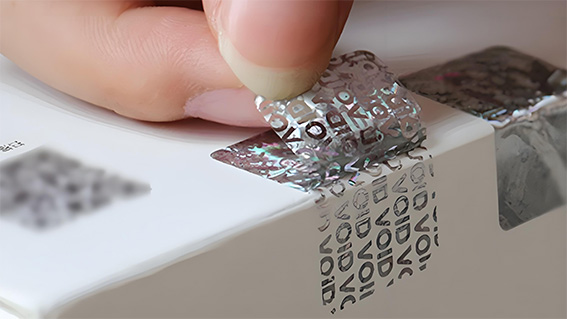
VOID anti-counterfeiting label rely on a physically destructive structure that leaves marks upon peeling, delivering tamper-proof protection at low cost.
Analysis of the VOID anti-counterfeiting label