BOPP Labels Printing Ink Bleeding and Manufacturer's Solutions
author: Eva
2026-04-23
In the field of label printing, BOPP labels have been widely used in multiple industries such as food, beverages, daily chemicals, and electronics due to their advantages of high transparency, strong toughness, moisture resistance, wear resistance, and moderate cost. However, many users often encounter problems such as ink dropping during printing, not knowing how to choose a compatible printer, and being unable to solve the ink dropping issue. How can self-adhesive label manufacturers help users effectively avoid printing risks and achieve high-quality label printing?
I. Will ink drop off when printing BOPP labels?
The common scenarios of ink dropping and the core reasons mainly include the following four points:
1. Incompatibility between ink and BOPP material
This is the most common cause. Ordinary ink cannot form a strong bond with the surface of BOPP film. If incompatible ink is used, even if the printing seems normal at first, the ink will come off when wiped by hand or when a piece of tape is stuck on it later.
2. Unreasonable printing process parameters
Improper control of parameters such as printing pressure, drying conditions, and corona treatment effect can directly cause ink dropping. For instance, if the printing pressure is too low, the ink cannot be fully transferred to the label surface and will not adhere firmly; if the UV ink is not completely dried and has not fully cured, it is prone to ink dropping due to friction; if the corona treatment effect on the BOPP film surface is poor or deteriorates over time, and the surface energy does not meet the printing requirements, the ink cannot adhere effectively. This phenomenon is more common in low-priced BOPP materials.
3. Insufficient cleanliness of the label surface
If the surface of BOPP labels is covered with dust, oil stains or residual additives from the production process, it will hinder the combination of ink and the label surface, resulting in poor ink adhesion and problems such as local ink dropping and showing the base color. This issue is particularly prominent in large-area solid printing.
4. Material quality issues
Poor quality of BOPP film itself, such as poor surface flatness, poor coating, or improper storage environment causing the film to become damp and change its surface properties, will all affect the adhesion of ink, leading to ink dropping. In addition, some manufacturers use inferior films or inks to cut costs, which also leads to frequent ink dropping after printing.
II. Which printers are suitable for BOPP labels?
(1) Industrial-scale batch printing
1. Flexible plate printing machine: This is the mainstream model for industrial-scale production of BOPP labels. It has strong adaptability and can be paired with BOPP-specific inks. It has a fast printing speed and high efficiency, enabling continuous batch printing. It is suitable for food and beverage bottle labeling, as well as labels for daily chemical products, etc., for large-scale orders. This model can solve problems such as uneven ink transfer and ink loss of BOPP labels by optimizing the parameters of the mesh roller and adjusting the printing pressure. The printing quality is stable and can meet the requirements for color reproduction with high standards.
2. Gravure Printing Machine: Suitable for BOPP labels with extremely high requirements for printing precision and color saturation, such as those for high-end cosmetics and personal care products. Gravure printing uses dot transfer ink, which adheres evenly and firmly, is not prone to ink loss, and can achieve delicate gradient effects. However, the equipment investment cost is relatively high. It is suitable for large-scale and high-value label production and can further enhance the ink adhesion by adjusting the ink viscosity and drying temperature.
3. Digital Label Printing Machine: With the development of digital printing technology, industrial-grade digital label printers have become a new choice for batch printing of BOPP labels. This model uses water-based pigment ink and does not require plate making. It can achieve short-run batch and personalized printing. The new generation of ink has excellent adhesion and scratch resistance on BOPP and other plastic substrates. There is no need for pre-coating treatment before printing. The operation is simple, the material loss is low, and it is suitable for the production of BOPP labels with multiple varieties and small batches. It is especially suitable for orders that require quick delivery.
(2) Small-scale On-demand Printing
1. Thermal Transfer Barcode Printer: This is the most commonly used model for small enterprises and stores. It is compatible with BOPP labels. The ink is transferred to the label surface through carbon paper. The ink adheres firmly and does not easily run out. The printing accuracy is high, meeting the printing requirements for barcodes and small text labels. Some high-end models support thermal printing mode, have stronger compatibility, and can flexibly switch printing methods, suitable for small-batch label printing in industries such as logistics, warehousing, and retail.
2. Thermal Label Printer: Suitable for BOPP thermal composite paper labels. No carbon tape is required. It has a fast printing speed and is easy to operate. It can be connected to mobile phones and computers via Bluetooth or Wi-Fi for wireless printing, making it suitable for immediate label printing by individual users and small stores. However, it should be noted that the BOPP labels printed by thermal printing have poor light resistance and may fade under long-term exposure to sunlight. They are suitable for short-term use scenarios.
3. Portable intelligent printer: Compact in size and easy to carry, it supports thermal printing technology and can be compatible with BOPP thermal synthetic paper. It is suitable for small-batch label printing in outdoor and mobile scenarios, such as real-time marking for delivery personnel and warehouse managers. The operation is flexible and it can meet various on-demand printing requirements.

III. Can self-adhesive manufacturers solve the ink bleeding problem of BOPP labels?
(1) Raw material level
1. Select suitable BOPP substrate: Instiker will choose BOPP films with good surface flatness, meeting surface energy standards, and high-quality coatings. Some high-end products will undergo corona treatment or plasma treatment in advance to increase the roughness and polarity of the film surface, enhancing the affinity of the ink, laying a foundation for the adhesion of the ink from the material aspect.
2. Matching Special Inks: Instiker will select and use special inks based on the application scenarios of BOPP labels. Such inks include BOPP-specific UV inks, chlorinated polyolefin inks, water-based pigment inks, etc. These inks can form a strong chemical bond with the BOPP substrate, with strong adhesion and low tendency to smudge or fade.
(2) Production Process Level
1. Optimizing Printing Process Parameters: Instiker will precisely adjust printing pressure, screen roller parameters, drying temperature and speed according to the characteristics of BOPP substrates and ink types to ensure that the ink is fully transferred and completely cured. For example, for UV inks, it will ensure sufficient UV lamp power and no aging of the lamp tubes to avoid incomplete drying; for water-based inks, it will optimize the drying equipment, using methods such as hot air circulation and infrared-assisted drying to accelerate moisture evaporation and ensure complete ink curing; at the same time, it will control the printing pressure within an appropriate range to avoid excessive pressure causing image distortion or ink squeezing off, and insufficient pressure resulting in insufficient ink transfer.
2. Strict control of production environment and testing: The production workshop will maintain suitable temperature and humidity to prevent environmental factors from affecting ink drying and substrate performance. Before printing, the BOPP substrate will undergo dust removal treatment to remove surface dust and oil stains, ensuring that the ink can fully adhere to the substrate. At the same time, a complete testing system will be established, in addition to the regular 3M tape adhesion test, additional abrasion resistance testing will also be conducted to simulate the actual usage scenarios of the labels, ensuring that there is no ink shedding problem before the products are factory shipment.
(3) Customized services
Different users have different printing equipment and usage scenarios,and the specific causes of ink shedding may also vary. Instiker will provide customized services,based on the type of user's printer and usage environment,to customize BOPP labels that are compatible. For example,for outdoor labels,special oil and substrate materials that are resistant to sunlight and friction will be selected;for users using ordinary printers, the labels will be pre-treated in advance to ensure that users do not need to adjust parameters extra when printing, and can achieve a firm adhesion.
IV. Summary: Avoiding BOPP Labels Ink Bleeding: Choosing the Right Manufacturer and Equipment is Key
The ink bleeding of BOPP labels is not inevitable. The core lies in the matching of ink and substrate, the matching of printer and label, and the matching of process and requirements. As the core link in label production, self-adhesive manufacturer can solve the ink bleeding problem from the source by screening raw materials, optimizing processes, and providing customized services, providing users with stable and durable BOPP labels.
For users, there is no need to worry excessively about the ink bleeding issue of BOPP labels. Just pay attention to two points: First, choose a professional self-adhesive manufacturer and clearly inform them of your printing equipment and usage scenarios, so that they can provide customized products; second, select a compatible printer according to your own needs to avoid ink bleeding caused by mismatch between the equipment and the labels.
The 50 transparent BOPP oil-coated paper of our company has excellent quality and clear printing effect. It is the preferred choice for many customers. If you also need it, please feel free to contact me.
The 50 transparent BOPP oil-coated paper of our company has excellent quality and clear printing effect. It is the preferred choice for many customers. If you also need it, please feel free to contact me.
Printing effect of removable labels and manufacturer's optimization plan
Selection of materials for self-adhesive on food packaging labels and reasons for their detachment
Related Article

Las etiquetas PET resisten el arrugamiento, la deformación, la pérdida de tinta, el cambio de tamaño y el manchado por tinta durante la producción a alta temperatura y la impresión digital con láser.
Comprehensive Analysis of PET Self-adhesive Labels
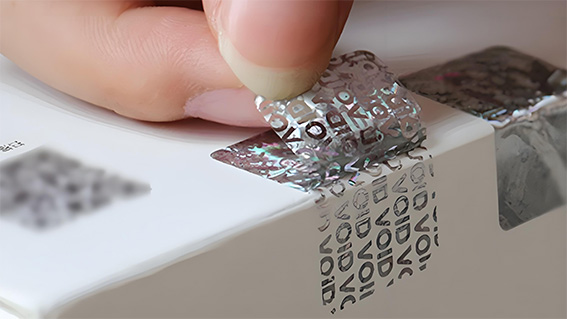
VOID anti-counterfeiting label rely on a physically destructive structure that leaves marks upon peeling, delivering tamper-proof protection at low cost.
Analysis of the VOID anti-counterfeiting label