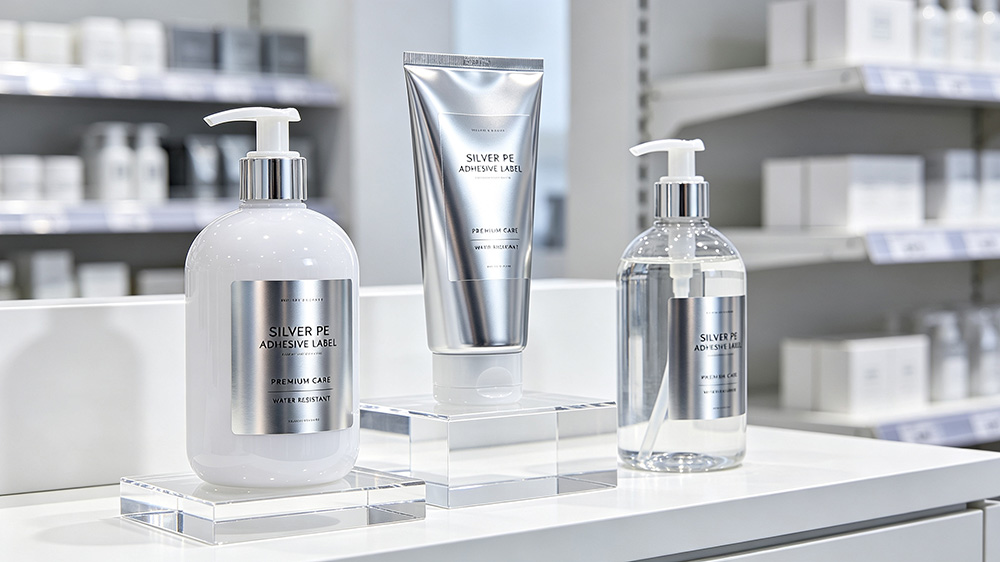
Analysis of the Printing Difficulty, Food Applicability and Price of BOPP Labels
author: Eva
2026-05-08
In the field of label printing and packaging, BOPP labels have become the mainstream choice for industries such as food, daily chemicals, and beverages due to their water-resistant, oil-resistant, and highly transparent properties. However, many customers still have three major questions: Is it difficult to print on BOPP labels? Can they be directly used for food packaging? Are the BOPP labels produced by self-adhesive manufacturers expensive? Let's comprehensively analyze these issues in light of material characteristics, industry standards, and market conditions.
I. Is BOPP Label Difficult to Print?
BOPP labels themselves are not difficult to print, but they require a specific process. Otherwise, problems such as ink dropping and uneven color may occur.
From the perspective of material properties, BOPP film has a smooth surface, is non-polar, and has a high degree of crystallinity. Without treatment, the ink adhesion is weak, which is the core reason why some people think it is difficult to print.
However, the BOPP labels base materials produced by regular manufacturers are all treated with corona or flame before leaving the factory to increase the surface free energy and ensure that the ink can adhere firmly. In terms of printing compatibility, BOPP labels are compatible with many mainstream printing methods:
Flexographic printing:
The most commonly used, suitable for water-based and solvent-based inks, with bright colors, suitable for large-scale roll production;
Offset printing:
Suitable for fine patterns and text printing, with high clarity, suitable for small-batch high-end orders;
Gravure printing:
Thick ink layer, strong three-dimensional effect, suitable for metallic colors and large-area solid printing;
Digital printing:
No need for plates, quickly responds to small-batch and personalized customization needs.
In actual printing, as long as the ink matching and curing control are paid attention to, problems such as ink dropping and scratching can be avoided, and the final product will have rich colors and clear text, even better than ordinary paper labels.
II. Can BOPP labels be directly used for food packaging?
Qualified food-grade BOPP labels can be directly used for food packaging and even come into direct contact with food.
From a safety perspective, the BOPP material itself is non-toxic, odorless, and tasteless, and is a food contact grade material, meeting China's GB 4806.7, the US FDA, the EU EU 10/2011 and other food safety standards. It will not release harmful substances and will not undergo chemical reactions with the oils, acids and alkalis in food.
In practical applications, BOPP labels are widely used in various food packaging scenarios:
Direct contact type:
Bottle labels and sealing labels of cold drinks, ice cream, candies, biscuits and other food products can be directly attached to the surface of the food or the inner packaging.
Non-direct contact type:
Labels for beverage bottles, sauce cans, snack food bags, etc., are moisture-proof and oil-proof, and are suitable for storage in refrigerated or ambient conditions. Special attention is required: Not all BOPP labels can be used for food packaging.
Only products where the base material, glue and ink have all passed food-grade certification (such as SGS, FDA) will meet the requirements. When purchasing, you should request relevant test reports from the manufacturer to avoid using non-food-grade labels by mistake.

III. Are the BOPP labels produced by the self-adhesive label manufacturers expensive?
Overall, the price of BOPP labels is moderate and affordable, with a higher cost-performance ratio than materials such as PET and synthetic paper. The specific price is affected by specifications, processes, and order volume. From the market situation:
Basic model (ordinary white BOPP, transparent BOPP, single-color / double-color printing, without special processing): The wholesale price per square meter is approximately 0.2 - 0.4 yuan;
Mid-range model (glitter BOPP, metallic BOPP, multi-color printing, laminated): The unit price is approximately 0.05 - 0.3 yuan per piece;
High-end model (food grade, resistant to high and low temperatures, gold stamping / UV and other special processing): The unit price is approximately 0.3 - 1 yuan per piece.
Specifically, depending on the complexity of the process. The core factors influencing the price are as follows:
Material grade:
Food-grade BOPP is 10% - 30% more expensive than ordinary industrial-grade;
Order quantity:
The unit price for large orders can be reduced by 30% - 50%;
Process complexity:
Processes such as hot stamping, embossing, and special inks will increase the cost by 10% - 50%. Compared with other materials, the price of BOPP labels is lower than PET labels and synthetic paper labels, and they are more durable, resulting in lower long-term usage costs. It is an extremely cost-effective choice.
IV. Summary
BOPP labels are an excellent label material that is easy to print, safe for food, and affordable: After the process is adapted, the printing effect is excellent. Food-grade products can directly come into contact with food. The price is medium and the cost-performance ratio is outstanding, fully meeting the mainstream needs of the food and daily chemical industries. When purchasing, simply recognize the food-grade certification, the official manufacturer, and the matching process, and you can avoid common problems and obtain a high-cost-performance label solution.
When purchasing and using adhesive labels in practice, it is recommended to clearly define your own requirements in advance - including the usage scenarios, duration, material of the object to be affixed, etc. Communicate thoroughly with the manufacturer to obtain an appropriate solution that is suitable for your needs. This will not only ensure the printing effect but also guarantee that the adhesion meets your expectations, avoiding problems such as label detachment or failure due to improper selection. This way, adhesive labels can truly play their convenient and efficient identification role.
The transparent BOPP produced by Guangdong Yinghui New Materials Technology Co., Ltd. not only has excellent printing quality but also offers high value for money. It is the choice of many customers. If you are also interested, please contact us.
Regarding the issues of difficult to remove packaging labels, remaining adhesive, and environmental protection
The printing difficulty and adhesive duration of sticky labels
Related Article

Las etiquetas PET resisten el arrugamiento, la deformación, la pérdida de tinta, el cambio de tamaño y el manchado por tinta durante la producción a alta temperatura y la impresión digital con láser.
Comprehensive Analysis of PET Self-adhesive Labels
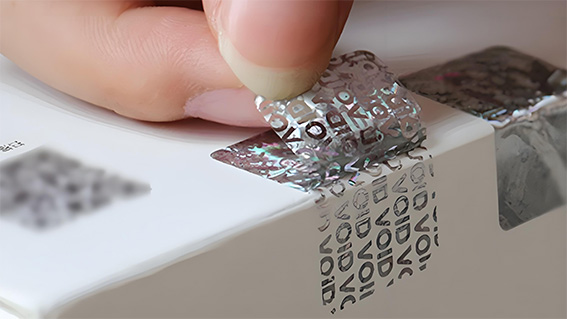
VOID anti-counterfeiting label rely on a physically destructive structure that leaves marks upon peeling, delivering tamper-proof protection at low cost.
Analysis of the VOID anti-counterfeiting label