The waterproof performance、drawbacks and manufacturer's optimization solutions of BOPP sticker paper
author: Eva
2026-03-09
In various industries such as packaging, cosmetics, food, electronics, etc., BOPP sticker paper have become one of the most widely used label materials due to their light weight, transparency, clear printing, and moderate cost. However, in market applications, questions about their waterproof performance and drawbacks in actual use have always been the focus of industry attention. Instiker has proposed targeted solutions to provide references for industry practitioners.
I. Waterproof Performance of BOPP sticker paper
BOPP sticker paper have excellent waterproof properties, which is the key reason why they can be widely used in humid environments such as cosmetics and food industries. BOPP is a type of polypropylene that undergoes a two-way stretching process to make its molecular structure more closely arranged, forming a dense film structure. This inherent property gives it excellent waterproof and oil-resistant capabilities, effectively preventing water from penetrating and avoiding problems such as label deformation, wrinkling, and ink fall off.
The waterproof performance of BOPP base materials mainly lies in two aspects: Firstly, the base material itself does not absorb water or dissolve in water. Even if it is briefly immersed in water or splashed with water, it can maintain its shape stability. Secondly, after processes such as corona treatment and coating, its surface will form a denser protective layer, further enhancing its waterproof and anti-fouling capabilities, making it suitable for humid environments such as kitchens, bathrooms, and cold chain storage. Currently, BOPP sticker paper have covered over 90% of the label demands for daily chemicals and food products, becoming the standard configuration for waterproof labels. Whether it is for mineral water bottles, shampoo labels, or seasoning packaging, they can maintain clear and intact labels due to their waterproof properties.
However, it should be noted that the waterproof performance of BOPP sticker paper is not absolute. The waterproof effect is affected by the process and auxiliary materials: if the adhesive quality is poor and the laminating process is not up to standard, even after long-term immersion or exposure to a strong humid environment, delamination and layering may still occur; at the same time, conventional BOPP materials do not have the property of resisting strong solvents. When in contact with strong solvents such as acetone and butanone, the film may swell and deform, indirectly affecting the waterproof performance.
II. What are the drawbacks of BOPP sticker paper?
Although BOPP sticker paper have significant advantages, due to factors such as material properties and production processes, they still have many drawbacks in practical applications, hindering manufacturers from seizing the high-end market and expanding application scenarios. These drawbacks mainly lie in the following six aspects:
(1) Poor temperature resistance and limited environmental adaptability
This is one of the most prominent drawbacks of BOPP sticker paper. The long-term temperature resistance of conventional BOPP materials is approximately 60℃, and even the high-temperature-resistant models cannot withstand temperatures above 120℃. In high-temperature environments, the film may shrink, deform, and the adhesive layer may melt, making it unable to adapt to high-temperature processing scenarios. Additionally, its glass transition temperature is relatively high. When the environmental temperature is below -10℃ to -20℃, the substrate will lose its toughness and become brittle, prone to cracking during transportation or when removing, and is not suitable for outdoor winter conditions or packaging of frozen foods, etc. Moreover, its weather resistance is limited. If exposed to the outdoors for a long time, it will age and become brittle due to the action of ultraviolet rays and rain, with an outdoor lifespan typically not exceeding 6 months.
(2) Lack of heat sealing performance, restricted independent use
After the BOPP film undergoes biaxial stretching, the molecular orientation arrangement leads to the loss of heat sealing performance, making it impossible to achieve effective sealing when used independently. This limits its application in scenarios requiring heat sealing packaging. Currently, in the industry, it is usually necessary to combine it with PE films and other materials with good heat sealing properties to achieve the desired sealing effect. This not only increases production processes and costs but may also affect the overall aesthetic appearance of the labels.
(3) Poor printing performance and insufficient adhesion of ink
The surface of BOPP film is non-polar, with high crystallinity and low surface free energy, resulting in poor adhesion to ink and adhesive. The printing performance is unstable. If not specially treated, after printing, it is prone to ink peeling, color fading, and blurring, especially for complex patterns and fine lines, making it difficult to ensure clarity and full color; at the same time, its surface is smooth, and some inks are prone to poor leveling and bubble formation, affecting the visual texture of the label.
(4) Prone to static electricity, affecting production and use
On high-speed production lines, BOPP film is prone to generating static electricity due to friction, which not only affects processing efficiency but also may adsorb dust and impurities in the air, causing stains and flaws on the printing surface, affecting the appearance of the product; at the same time, static electricity may cause the labels to stick to each other and adhere, causing inconvenience in the labeling process and increasing production losses.
(5) Poor oxygen barrier performance, not suitable for long-term preservation scenarios
Although BOPP film has good water vapor barrier performance and can meet conventional moisture-proof requirements, its oxygen barrier performance is poor, unable to effectively prevent oxygen penetration. It is not suitable for products that require long-term preservation and have high requirements for oxygen barrier, such as fresh food and high-end health supplements, limiting its application in high-end food packaging.
(6) Leakage and residue problems, affecting the user experience
In hot summer environments or improper production processes, BOPP self-adhesive labels are prone to leakage, manifested as residual glue on the printing rollers and guide rollers, causing surface contamination, blackening of the label edges, and failure to print labels properly. At the same time, some inferior adhesives or when removed after labeling, residual glue may be left on the surface of the object, difficult to clean, affecting the appearance and user experience, especially in fields such as electronics and high-end cosmetics where surface cleanliness is highly required. Moreover, its puncture resistance is weak, the substrate is thin, and it is prone to being punctured by sharp objects, unable to provide effective protection for the protected surface.

III. What are the core countermeasures of the self-adhesive manufacturers to address the drawbacks of BOPP?
In response to these drawbacks, Instiker focusing on core aspects such as material research and development, process optimization, and quality control, combined with application scenario requirements, has formulated targeted solutions. These solutions not only retain the cost-effectiveness advantage of BOPP materials but also make up for their performance shortcomings and enhance product competitiveness.
(1) Optimize the base material formula and process to improve temperature resistance and physical properties
To address issues such as poor temperature resistance, low-temperature brittleness, and weak puncture resistance, Instiker takes two approaches: First, it adjusts the BOPP base material formula by adding UV inhibitors, toughening agents, and high-temperature modification agents, reducing the glass transition temperature of the base material and enhancing its adaptability to both high and low temperatures, expanding the temperature range of conventional products to -20℃ to 80℃, meeting the needs of most scenarios; Second, it optimizes the production process by using co-extrusion compounding, thickening the base material, etc., to increase the thickness and density of the film, enhancing its puncture resistance and tensile strength, avoiding low-temperature brittleness and high-temperature shrinkage problems. At the same time, it can develop special modified BOPP materials, such as high-temperature-resistant BOPP and low-temperature-resistant BOPP, suitable for special scenarios such as high-temperature processing and freezing storage.
(2) Improve surface treatment processes to solve sealing and printing problems
To address the issue of lack of sealing performance, Instiker coats the BOPP film surface with heat-sealable resin gel such as PVDC latex or EVA latex, or uses extrusion coating, co-extrusion compounding, etc., to produce heat-sealable BOPP films, enabling effective sealing without the need to compound other materials, simplifying production processes and reducing costs.
Regarding the poor printing performance issue, Instiker subjected the BOPP film to corona treatment before printing, increasing its surface energy and polarity, and enhancing the adhesion between the ink and the adhesive; at the same time, they used specialized BOPP printing ink, optimized printing parameters, controlled printing temperature, pressure and speed, and avoided problems such as ink shedding and blurring, ensuring clear and vivid printed patterns and rich colors, which are suitable for complex patterns and fine lines printing requirements. Additionally, through overcoating with varnish or laminating, the wear resistance and visual texture of the labels can be further improved, while enhancing waterproof and anti-fouling capabilities.
Regarding the poor printing performance issue, Instiker subjected the BOPP film to corona treatment before printing, increasing its surface energy and polarity, and enhancing the adhesion between the ink and the adhesive; at the same time, they used specialized BOPP printing ink, optimized printing parameters, controlled printing temperature, pressure and speed, and avoided problems such as ink shedding and blurring, ensuring clear and vivid printed patterns and rich colors, which are suitable for complex patterns and fine lines printing requirements. Additionally, through overcoating with varnish or laminating, the wear resistance and visual texture of the labels can be further improved, while enhancing waterproof and anti-fouling capabilities.
(3) Introduce anti-static technology to optimize production environment control
To address the static electricity issue, Instiker installed static eliminators on the production line to promptly eliminate static electricity generated during the production process, preventing dust adsorption and label adhesion; at the same time, they added anti-static agents during the production of BOPP substrates to reduce static electricity generation at the source. Moreover, it is necessary to maintain a clean and stable production environment, controlling the humidity at 40%-60%, further suppressing static electricity generation and enhancing production efficiency and product quality.
(4) Upgrade composite technology to enhance barrier performance
In response to the poor oxygen barrier performance issue, Instiker adopted a composite process, combining BOPP film with materials such as aluminum foil and EVOH that have excellent oxygen barrier properties, forming a multi-layer composite structure, to enhance the oxygen and moisture barrier performance of the labels, suitable for packaging scenarios requiring long-term preservation of fresh food and high-end health products; at the same time, they can add oxygen barrier agents to BOPP film to further strengthen the barrier effect, expanding the application range of products.
(5) Optimize adhesive formula and production control to solve overflow and residual adhesive problems
The core of overflow and residual adhesive problems lies in the quality of the adhesive and improper production processes. Instiker focused on optimizing these two aspects: first, they developed specialized adhesives suitable for BOPP substrates, controlling the viscosity and fluidity of the adhesives, selecting environmentally friendly adhesives that are resistant to high and low temperatures, to avoid overflow at high temperatures and detachment at low temperatures; second, they optimized the die-cutting, winding and other production processes, using a knife with an angle of about 60° , controlling the die-cutting pressure, ensuring only the cutting of the film and glue without damaging the base paper, and adopting short-distance waste removal and reducing winding tension methods to reduce the risk of overflow. In addition, they can use local desoldering technology to remove the adhesive in specific areas of the label, reducing the probability of residual adhesive and achieving flexible labeling and adjustment effects, improving the user experience.
(6) Strengthen quality control and supply chain management to stabilize product quality
On the one hand, a full-process quality control system was established, conducting strict inspections of each process such as substrate procurement, surface treatment, printing, die-cutting, and composite, to prevent unqualified products from leaving the factory; on the other hand, they strengthened cooperation with upstream raw material suppliers, established long-term stable supply relationships, and explored new raw material sources to reduce dependence on crude oil, gas, and coal, responding to cost pressures caused by raw material price fluctuations, while ensuring stable raw material quality, and guaranteeing product quality from the source. In addition, based on the application requirements of different industries, they can provide customized products, such as optimizing waterproof and oil-resistant properties for the cosmetics industry, and optimizing anti-static and no-residue adhesive properties for the electronics industry, to enhance product adaptability.
IV. Conclusion
BOPP sticker paper, as one of the most widely used self-adhesive materials at present, possess excellent waterproof properties and high cost-effectiveness, enabling them to hold an irreplaceable position in various industries. However, their poor heat resistance, poor printing performance, and static electricity problems also restrict their expansion to high-end and diversified scenarios. For self-adhesive label manufacturers, only by basing themselves on market demands, focusing on material research and development, process upgrading, and quality control, and specifically addressing the drawbacks of the products, can they continuously improve the comprehensive performance of BOPP sticker paper and expand their application scenarios, thus gaining an advantage in the fierce market competition.
In the future, as the concept of environmental protection becomes more widespread and technology continues to advance, green, high-performance and customized BOPP sticker paper will become the industry trend. Manufacturers need to continuously innovate and promote product iteration and upgrading to meet the increasingly diversified and high-quality label demands of various industries.
Analyzing the drawbacks of label digital and the solutions provided by the self-adhesive label manufacturers
How do self-adhesive manufacturers address the drawbacks of frozen label?
Related Article

Las etiquetas PET resisten el arrugamiento, la deformación, la pérdida de tinta, el cambio de tamaño y el manchado por tinta durante la producción a alta temperatura y la impresión digital con láser.
Comprehensive Analysis of PET Self-adhesive Labels
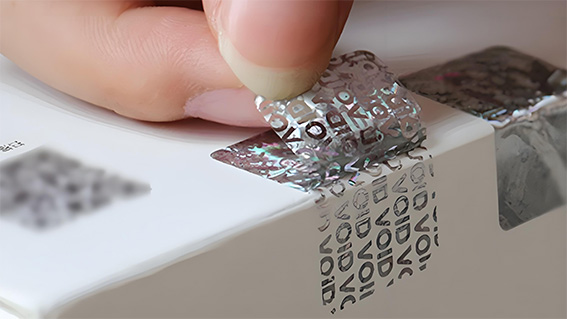
VOID anti-counterfeiting label rely on a physically destructive structure that leaves marks upon peeling, delivering tamper-proof protection at low cost.
Analysis of the VOID anti-counterfeiting label