The pricing of cosmetic labels and the cost control of manufacturers
author: Eva
2026-04-07
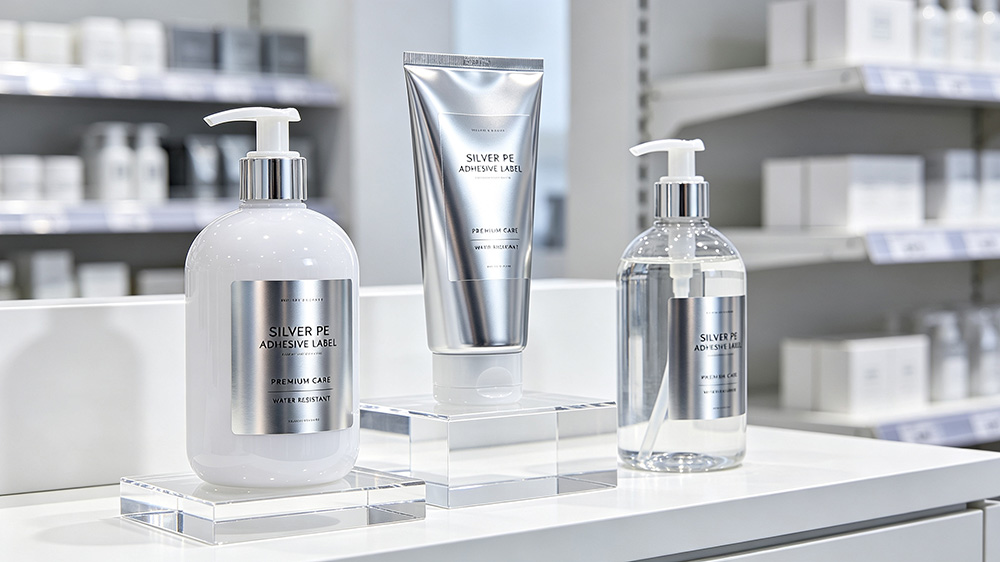
In the cosmetics industry, labels not only serve as carriers of product information but also directly reflect the brand's quality. Self-adhesive labels, with their convenient adhesion and diverse presentation effects, have become the mainstream choice for cosmetics packaging. For cosmetics companies, how to select the right self-adhesive labels, clarify the pricing logic of labels, and how self-adhesive manufacturers can reduce costs while ensuring quality have become the core issues of common concern within the industry.
I. What types of cosmetic labels are there?
(1) Transparent self-adhesive labels
Transparent self-adhesive labels, with their invisible bonding effect, have become the preferred choice for high-end cosmetics and fragrance products. Their core materials include PET, PP, and PVC, and these differ significantly, requiring precise distinction. Transparent PET self-adhesive material has high transparency and excellent texture, featuring high heat resistance, tear resistance, and wear resistance. It is not likely to peel off over a long period of time and is suitable for products such as essential oils, perfumes, and high-end skin care products that require waterproof, oil-resistant, and scratch-resistant properties. However, its cost is higher than that of PP and PVC, and it is not suitable for curved containers with strong bending.
Transparent PP self-adhesive labels are lightweight, highly transparent, and offer good flexibility. They provide a "luxury-like" feel after application and are waterproof, oil-resistant, and resistant to daily friction. Their cost is lower than PET, making them suitable for most mid-to-high-end skincare products and cosmetic bottle labels. The drawback is that they have slightly weaker heat resistance and lower tear strength. Transparent PVC self-adhesive labels are soft and bendable, providing good adhesion when applied to curved containers. They have strong water resistance and low cost, making them suitable for semi-circular and spherical curved bottle bodies. However, their transparency is not as good as PET or PP, and they are prone to stretching and deformation, with usage gradually decreasing due to environmental protection policies.
(2) Synthetic paper self-adhesive labels
Synthetic paper self-adhesive labels do not contain wood pulp, which eliminates the problems of common paper labels that tend to yellow and become damaged. They have outstanding weather resistance, resistance to ultraviolet rays, and acid and alkali resistance. They are less likely to mold in humid environments and have strong toughness and are not prone to tearing. They can be folded and bent, are environmentally friendly, non-toxic, and recyclable, aligning with the green packaging trend in the cosmetics industry. Among them, BOPP material has undergone bidirectional stretching treatment, featuring high transparency, smooth surface, and good glossiness. It is suitable for labels requiring high-definition display of patterns, such as lipsticks and skincare products, with moderate cost and suitable for large-scale use; PP synthetic paper offers higher cost performance and is suitable for neutral and natural-style cosmetics brands. It has good printing adaptability and can be combined with various surface processes to enhance texture.
(3) Special function self-adhesive labels
With the standardization and differentiation demands in the cosmetics industry increasing, the application of special function self-adhesive labels is becoming increasingly widespread. VOID self-adhesive labels will leave the word "VOID" when opened, effectively preventing products from being resold or tampered with, making them suitable for high-end cosmetics and limited edition products; temperature-changing and water-changing anti-counterfeiting self-adhesive labels, combined with anti-counterfeiting technologies such as fluorescence and microtext, can effectively resist counterfeit products and enhance brand trust, but they will increase certain costs. In addition, self-adhesive labels with removable glue on a release paper base can be easily removed without leaving residue, making them suitable for limited edition and trial packaging cosmetics, balancing practicality and aesthetics.

II. Are cosmetic labels expensive?
(1) Four factors determine the price
1. Material cost: This is the core factor determining the price of the labels. The cost varies significantly depending on the material. Ordinary coated paper has the lowest cost, followed by synthetic papers such as PET and BOPP. Special anti-counterfeiting materials have the highest cost, with their unit price being up to 5 times that of ordinary labels. In addition, the quality of the glue and ink also affects the cost. Glue and ink that are resistant to yellowing and environmentally friendly cost more than ordinary glue and ink, and the price of ink is greatly affected by changes in oil prices.
2. The more complex the process is, the higher the price will be. Monochrome printing has the lowest cost. Four-color printing requires precise color management and equipment calibration, and uses more ink, resulting in a higher cost than monochrome printing. Processes such as hot stamping, silver stamping, UV coating, and silk screen thick ink application can enhance the texture and visual impact of the labels, but each of these processes will increase the cost. Each process can increase the unit price by 0.05 to 0.2 yuan. In terms of customization requirements, special-shaped die-cutting requires the production of additional molds, increasing mold costs; variable data printing and special shape customization will also increase the price; the unit price of small-batch customization is much higher than that of large-batch orders because small-batch orders cannot reduce fixed costs such as setup fees and equipment calibration fees.
3. The larger the order quantity, the lower the unit cost. For instance, for a popular cosmetic label on an e-commerce platform, the order price for 100,000 pieces can be as low as 0.08 yuan per piece. However, for small-batch custom-designed products, the unit price may reach as high as 0.5 yuan per piece. Mass production can effectively spread the fixed costs such as equipment wear and tear, labor, and molds. Manufacturers will also offer tiered discounts. The larger the order quantity, the greater the discount.
4. Additional Services and Compliance Costs: Cosmetics labels must comply with relevant compliance standards. The cost of each certification and inspection can reach several thousand yuan. This cost will be indirectly reflected in the label price. In addition, the free design, rush production, logistics delivery and other services provided by the manufacturer will also affect the overall quotation. For example, rush production is more expensive than the regular cycle, and free design can reduce the overall cost for the customer.
(2) Price and Value Are Proportional
For cosmetics enterprises, the price of labels should match the brand value and product positioning. High-end cosmetics choose high-cost self-adhesive labels, essentially to enhance the product's added value through the texture of the label and strengthen consumers' brand recognition; mass-market cosmetics choose cost-effective labels, which can control costs while meeting basic information display and packaging requirements. Therefore, whether a cosmetics self-adhesive label is "expensive or not" cannot be evaluated independently of the product positioning. A label that suits one's own needs and can achieve value matching is a reasonable choice.

III. Cost Control Path for Self-adhesive Label Manufacturers
(1) Optimize raw material procurement and inventory management to reduce costs at the source
The cost of raw materials accounts for 60%-70% of the total cost of self-adhesive labels, making it the core stage of cost control. Instiker reduces raw material prices through centralized procurement,signs long-term cooperation agreements with high-quality base materials,inks,and adhesives suppliers,purchases in bulk to enjoy factory prices, and locks in prices to avoid risks brought by fluctuations in raw material prices. For example,locking in paper suppliers for a year can significantly reduce unit material costs.
In terms of raw material selection, we adhere to the principle of "quality compliance and cost-effectiveness priority". Without affecting the quality of the labels and their usage effect, we replace expensive raw materials with cheaper ones, such as using PP material instead of some PET material, and using environmentally friendly general ink instead of high-end special ink. At the same time, we strictly control the quality of raw materials to avoid increased production losses due to unqualified raw materials. In addition, we reasonably control the inventory level. Through a digital inventory management system, we accurately predict order demands to ensure that raw materials are neither overstocked nor insufficient, thereby improving the utilization rate of raw materials.
(2) Optimizing Production Processes
The losses and efficiency in the production process directly affect the unit cost. On one hand, we control production losses. The industry average loss rate is 8%-15%, and the loss rate for complex patterns even reaches 20%. Instiker introduced automatic inspection machines to monitor the printing and die-cutting processes in real time, promptly eliminating defective products and reducing the scrap rate; we optimize the die-cutting process, precisely adjust the equipment, and reduce the losses caused by die-cutting deviations; during the printing debugging stage, we first use cheaper materials to debug the machine and then replace them with high-quality materials for production, reducing the waste of high-quality materials.
On the other hand, improving production efficiency and equipment utilization rate, introducing automated and intelligent production equipment such as high-speed printing machines, automatic die-cutting machines, and automatic labeling machines, reducing manual intervention, lowering labor costs, and simultaneously increasing production speed. For example, a rotary press costs over 300 yuan per hour, and improving the operational efficiency of the equipment can effectively spread the unit-time cost. Optimizing the production process, adopting lean production mode, reducing unnecessary processes and waiting times, achieving multi-order layout production, improving equipment utilization rate, especially suitable for small batch orders, reducing machine start-up losses. In addition, conducting regular maintenance and upkeep of equipment to reduce downtime caused by equipment failures, improving production stability, and further reducing costs.
(3) Precise Operation Management
Although indirect costs do not account for as high a proportion as raw materials, accumulated over time, they are also an important part of cost control. Instiker reduces operating costs through digital management, introducing the cloud ERP system to achieve digital control of the entire production, inventory, order, and finance processes, reducing manual statistical errors, improving management efficiency, while simplifying personnel allocation and optimizing organizational structure, reducing management expenses.
In terms of compliance costs, familiarize oneself with the compliance standards for cosmetic labels in advance, optimize label design and production processes to avoid rework and increased testing costs due to non-compliance; in terms of warehousing and logistics, establish long-term cooperation with local logistics companies, strive for favorable logistics prices, and optimize warehouse layout to reduce inventory and lower warehousing costs; implement energy-saving and emission-reduction measures, use off-peak electricity and efficient energy-saving equipment to reduce energy consumption costs; recycle and reuse waste materials generated during the production process to reduce resource waste and further compress costs.
(4) Optimize marketing strategies and services
Instiker optimizes its marketing strategies to increase order volume and spread fixed costs. It adopts a stepped pricing scheme, offering significant discounts for large-volume regular orders to attract long-term cooperation from cosmetic enterprises; for start-up cosmetic brands and small-batch order customers, it optimizes the production process to reduce startup losses, introduces friendly policies for small orders, and lowers the unit price for small-order customization, expanding the customer base.
At the same time, we aim to enhance the added value of our services and reduce the overall operating costs. We provide free design consultation and label optimization services to our clients, helping them optimize the size and process of labels, reducing material waste and eliminating the cost of seeking third-party design services for the clients. For urgent orders, we activate the emergency production channel, prioritize production and do not charge an additional rush fee, thereby enhancing customer loyalty. We also establish a comprehensive after-sales service system to promptly address quality issues raised by clients, avoiding increased costs due to rework, returns, and exchanges. At the same time, through high-quality services, we enhance the brand reputation, attract more customers, and achieve cost reduction through scale effect.
IV. Conclusion
With the continuous development of the cosmetics industry, consumers' requirements for the texture, environmental friendliness and anti-counterfeiting properties of labels have been constantly increasing. Adhesive label manufacturers need to continuously optimize product quality and services based on cost control, and launch label products that better meet the needs of the cosmetics industry. Cosmetics enterprises also need to combine their own development and precisely match label selection and pricing to achieve dual improvements of the brand and products, ultimately promoting the high-quality development of the entire cosmetic labels industry.
If you have any needs, you can contact us at Instiker.
If you have any needs, you can contact us at Instiker.
The environmental friendliness and price of heat transfer self-adhesive paper
Upgrading of the self-adhesive label material industry in Guangdong Yinghui
Related Article

Las etiquetas PET resisten el arrugamiento, la deformación, la pérdida de tinta, el cambio de tamaño y el manchado por tinta durante la producción a alta temperatura y la impresión digital con láser.
Comprehensive Analysis of PET Self-adhesive Labels
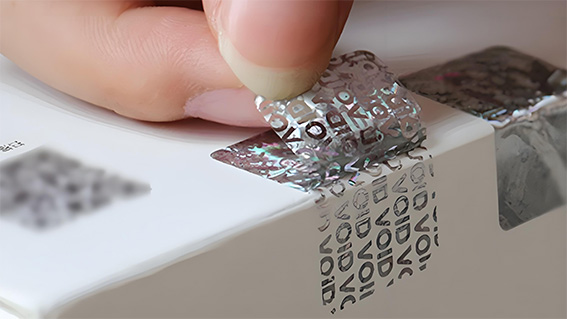
VOID anti-counterfeiting label rely on a physically destructive structure that leaves marks upon peeling, delivering tamper-proof protection at low cost.
Analysis of the VOID anti-counterfeiting label