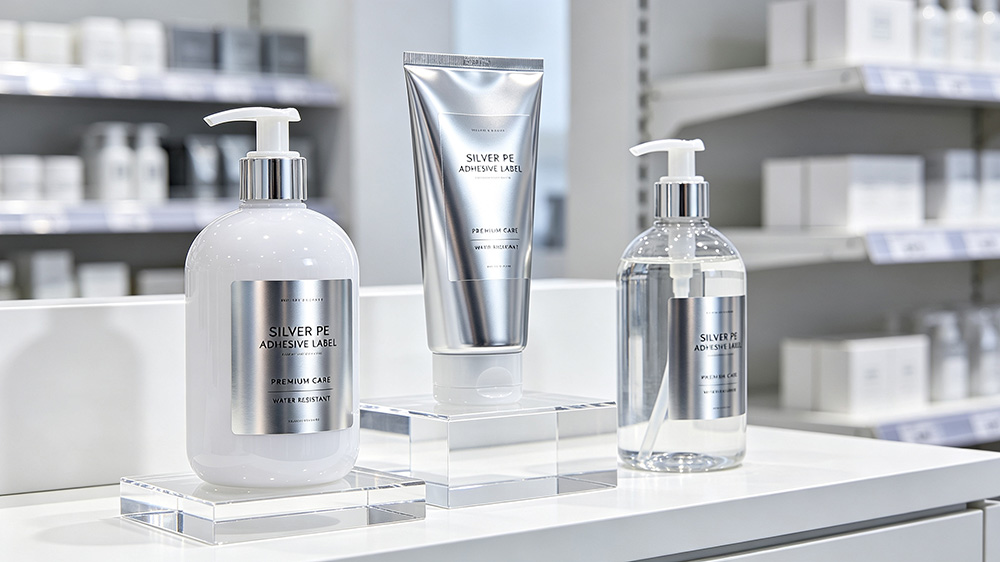
PET self-adhesive is the main high-performance material for long-lasting and durable tracks
author: Eva
2025-10-23
PET self-adhesive is made by using biaxially stretched PET film as the surface substrate, with pressure-sensitive adhesive coating on the back, and combined with a silicon-coated release liner as the base paper to form the raw material for self-adhesive labels.
The mainstream product categories available on the market include: Bright White PET, Matte White PET, Transparent PET, Matte Silver, Matte Silver PET, Colored PET, etc. After undergoing corona coating treatment, they are compatible with heat transfer printing, UV printing, digital printing, screen printing, etc. After die-cutting processing, they are transformed into finished label products.
Unlike coated paper, PE and BOPP materials, PET belongs to high-strength engineering film substrates. It is positioned as an industrial-grade, high-end, long-lasting marking material with durability. It is also one of Instiker' core film self-adhesive product lines.
I. Core Advantages and Limitations of PET Self-Adhesive Labels
(1) Core Advantages
Wide temperature tolerance range
Normal usage temperature is -40℃ to 120℃. Special temperature-resistant PET can withstand short-term temperatures of 150 to 180℃. It does not deform, shrink or curl in alternating cold and hot environments.
Excellent physical strength
High stiffness, anti-tear, resistant to friction and scratching. It is unlikely to be damaged during long-term use, and barcodes and text can be clearly recognized for a long time.
Outstanding resistance to media
Waterproof, oil-resistant, moisture-resistant, resistant to weak acids and weak alkalis, and resistant to various solvents. Suitable for environments with oil stains, humidity, and exposure to chemicals.
Strong dimensional stability
Minimal deformation under temperature and humidity changes. It is unlikely to contract or curl when attached for a long time, making it suitable for high-precision traceability labels and nameplates.
Rich appearance options
Transparent model achieves "label-free visual effect". Matte silver and brushed silver have a metallic texture on their own, and no additional silvering is required, suitable for high-end appearance requirements.
Excellent weather resistance
Resistant to ultraviolet aging. The service life in outdoor and open-air environments is much longer than that of paper and ordinary BOPP labels.
(2) Inherent Limitations
The material is relatively hard and has low ductility, making it unsuitable for large-radius soft surfaces or flexible hoses. Significant bending is prone to rebounding and curling. Flexible surfaces should prefer PE or synthetic paper.
The surface is dense and smooth. Without coating or corona treatment, it is extremely prone to ink loss. Printing must be matched with special inks and resin carbon tapes.
The material costs more than coated board paper and ordinary BOPP self-adhesive labels. It does not have a price advantage in short-term low-cost label scenarios with large quantities.
Strong rigidity. High-speed automatic labeling with small arcs requires adjusting the labeling pressure. Otherwise, bubbles are likely to occur.

II. For whom is the PET self-adhesive designed?
1)Industrial manufacturers
electronics, auto parts, mechanical equipment enterprises, require labels that can withstand high temperatures and oil stains and are not prone to damage for an extended period.
2)Export-oriented factories
products are sold to Europe and the United States. The labels need to meet long-term durability, weather resistance-related compliance requirements.
3)Brand packaging enterprises
high-end cosmetics, wine, and beauty brands, pursuing exquisite appearance, transparent and invisible labels, and metal-silvered visual effects.
4)Printing label processing factories
undertake long-lasting nameplates, outdoor labels, matte silver barcodes, single products. They are looking for stable master roll raw material suppliers (Instiker can provide various PET self-adhesive large master rolls and customized cutting).
5)System integration and asset management companies
fixed asset labels, QR code traceability projects for outdoor equipment, requiring labels to maintain clear information for 3 to 5 years.
6)Laboratories and medical equipment enterprises
labels need to be wiped repeatedly and be resistant to cleaning agents.
III. A genuine case study analysis
Case 1: Upgrade of power adapter label at an electronics factory
Challenge: Ordinary BOPP labels, with the production line being exposed to high-temperature welding, resulted in edge curling and the carbon tape characters disappearing upon wiping. The overseas customers returned a large number of products.
Instiker Solution: 50μm matte silver PET self-adhesive + heat-resistant permanent acrylic glue
Implementation Result: Resistant to short-term high-temperature during the manufacturing process, resistant to hand sweat and solvent wiping, the barcode remains permanently clear, successfully passing the UL label test in North America, and the after-sales defect rate decreased by 95%.
Case 2: Traceability Label for Construction Machinery Components
Challenge: Workshop oil stains, large temperature differences throughout the year, paper labels prone to damage within a short period and scanning fails.
Instiker Solution: White weather-resistant PET self-adhesive label + high-strength, low-temperature-resistant glue.
Implementation Result: The label remained intact for 3 years when stored outdoors, and the QR code remained fully readable, meeting the requirements for full lifecycle traceability of the components.
IV. Comparison of mainstream self-adhesive materials and selection suggestions
|
Material
|
Core features
|
Best scenario
|
Not Recommended Scenario
|
|
PET self-adhesive
|
Resistant to high and low temperatures, resistant to tearing, resistant to chemicals, high in stiffness, long-lasting and durable
|
Industrial nameplates, electronic signs, outdoor signs, high-end transparent packaging
|
Large-radius soft curved surface, ultra-low-cost short-term labels
|
|
PE self-adhesive
|
Soft and stretchable, conforming to curved surfaces, and resistant to low temperatures.
|
Soft bottles, flexible hoses, large-radius plastic containers
|
High-temperature conditions, scenarios requiring hard nameplates
|
|
BOPP self-adhesive
|
Waterproof, lightweight
|
General daily care short-term labels, logistics outer box labels
|
High temperature, long-term outdoor exposure, and severe friction environment
|
|
Copperplate paper self-adhesive
|
High-quality printing with the lowest price
|
Interior short-term price tags, office labels, ordinary packaging
|
Damp, outdoor, oily environment
|
|
PP synthetic paper
|
Cannot be torn apart, maintains paper texture, and has moderate flexibility
|
Frozen food labels, scenarios requiring handwritten markings
|
Continuous high-temperature environment
|
V. PET Self-Adhesive Label FAQ
Q1: Why does the PET label printing tend to smudge the ink?
A: The main reasons are that the surface of PET is not treated with coating or corona treatment, and the ink does not match. The printing must use coated PET of printing grade, and UV / thermal transfer printing should be combined with special ink.
A: The main reasons are that the surface of PET is not treated with coating or corona treatment, and the ink does not match. The printing must use coated PET of printing grade, and UV / thermal transfer printing should be combined with special ink.
Q2: How to deal with the problem that the PET label easily peels off when attached to the curved bottle?
A: PET has poor extensibility and is not suitable for large curved surfaces. If you still insist on using it, you can choose a 25μm thin PET, combine it with high initial adhesion glue, and reduce the size of the label by rounding the corners; for large curved surfaces, it is recommended to replace with PE or synthetic paper.
Q3: What kind of carbon tape should be used for thermal transfer printing of PET?
A: Resin-based carbon tape must be used; mixed-base carbon tape is not durable enough and wax-based carbon tape is prone to peeling off when wiped.
Q4: How to improve the white fog and bubbles on the transparent PET bottle with glass label?
A: Ensure there is no moisture or oil on the label surface; increase the label pressing force; select a low haze and highly wettable glue system. Instiker can customize a special glue type suitable for glass substrates.
Q5: What is the maximum temperature resistance of the PET label?
A: For regular PET, it can operate continuously at temperatures ranging from 40 to 120 degrees Celsius; for special temperature-resistant PET, it can withstand short-term temperatures up to 160 to 180 degrees Celsius. For high-temperature conditions, please inform the salesperson in advance to customize the material.
VI. Conclusion
In the label material system, PET self-adhesive is the main high-performance material for long-lasting and durable tracks.
It cannot replace low-cost paper labels and may not be suitable for all curved packaging, but it has irreplaceable value in industrial traceability, equipment nameplates, high-end brand packaging, and marking in harsh environments.
Instiker has been supplying a full range of PET self-adhesive raw materials for a long time: bright white PET, transparent PET, matte silver PET, brushed silver PET, and colored PET self-adhesive rolls. It supports cutting, customizing adhesive systems, and thickness customization, and provides printing process technology guidance. It offers stable raw materials and one-stop material selection solutions to label printing factories, brand manufacturers, and foreign trade enterprises.
Analysis of weather-resistant PVC self-adhesive label
Self-adhesive labels the core carrier and technological innovation of modern signage
Related Article

Las etiquetas PET resisten el arrugamiento, la deformación, la pérdida de tinta, el cambio de tamaño y el manchado por tinta durante la producción a alta temperatura y la impresión digital con láser.
Comprehensive Analysis of PET Self-adhesive Labels
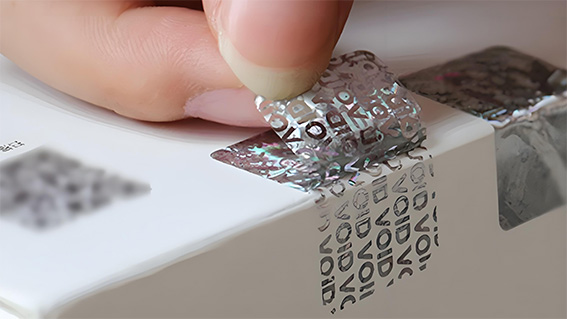
VOID anti-counterfeiting label rely on a physically destructive structure that leaves marks upon peeling, delivering tamper-proof protection at low cost.
Analysis of the VOID anti-counterfeiting label