The uses、advantages and disadvantages of fluorescent paper, and the optimization strategies of manufacturers
author: Eva
2026-03-02
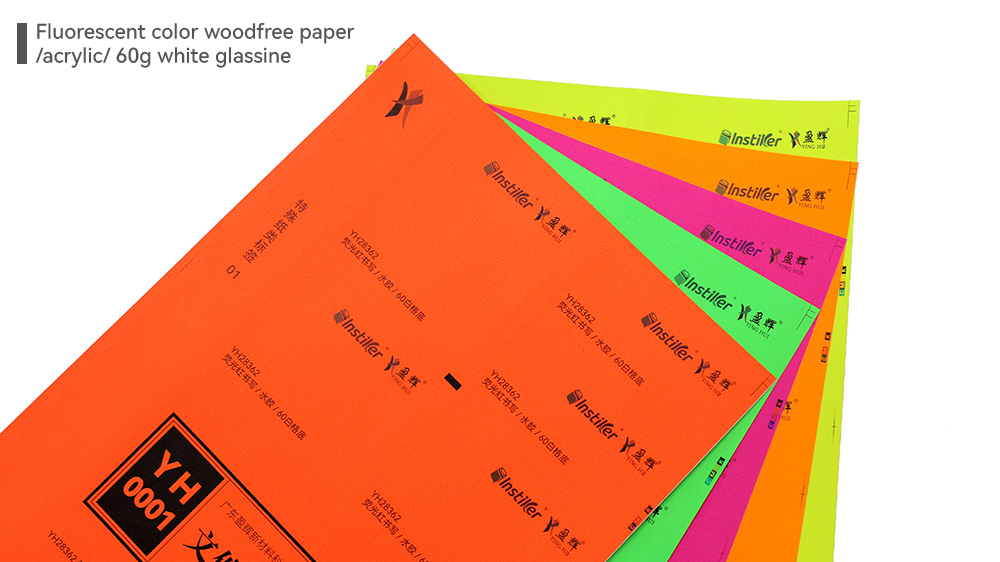
In various fields such as label identification, decorative packaging, and safety warnings, fluorescent paper holds a significant position due to its unique visual characteristics. As a composite material that combines the fluorescence coloring and convenience of self-adhesive paper, it retains the advantages of easy sticking and easy peeling of ordinary self-adhesive paper, while achieving the core value of visual focus through the fluorescence effect. However, its disadvantages are also quite obvious. What targeted solutions will instiker come up with? Let's take a look.
I. The main application of fluorescent paper
The core value of fluorescent self-adhesive paper lies in its dual attributes of fluorescence coloration and self-adhesive convenience. It is used in various industries and can be classified into four categories based on the usage scenarios, precisely matching different demand situations:
In the field of safety warnings, fluorescent self-adhesive paper due to its ability to emit light in the dark and its bright colors, it has become the preferred material for emergency signs. For example, it is used for marking fire-fighting equipment, indicating emergency exits in public places, and warning labels for underground operations. Even in dim or complex environments, it can quickly draw attention and reduce safety hazards. This is also its irreplaceable advantage in the field of safety protection.
In the fields of product packaging and brand promotion, fluorescent paper has become an important means to enhance product recognition due to its bright colors and strong visual impact. This material is widely used in labels for daily necessities, decorative labels for electrical appliances, and surface labels for clothing and textiles, enabling products to stand out quickly on the shelves and attract consumers' attention, thereby helping brands compete differently. At the same time, its good printing adaptability allows it to support laser, inkjet printing, and handwritten marking, meeting the needs of file classification and indexation in office scenarios, and becoming a practical tool for improving office efficiency.
In the field of anti-counterfeiting labels, fluorescent paper can achieve multi-color coloring under ultraviolet light by adding special fluorescent fibers. These fluorescent fibers are embedded in the pulp layer and are not prone to falling off. It is suitable for use as anti-counterfeiting labels for products such as medicines, electronic products, and alcoholic beverages, preventing secondary sales or counterfeiting, and providing a physical guarantee for product anti-counterfeiting.
Furthermore, in scenarios such as toy decoration, gift packaging, and temporary signage, fluorescent self-adhesive paper also meets the personalized and temporary usage requirements with its convenient sticking feature and rich colors. It is suitable for various applications such as handbooks, exhibitions, and temporary signage, and its application scope continues to expand.
II. Advantages and Disadvantages of Fluorescent Paper Self-adhesive Labels
(1) Core Advantages
The advantages of the fluorescent self-adhesive paper are mainly reflected in three aspects: visual effect, ease of use, and cost-effectiveness. These align with the mainstream market demands:
Firstly, it has extremely high visual recognition value. Compared with ordinary self-adhesive labels, fluorescent self-adhesive labels can reflect colored light and convert ultraviolet rays. The colors are more vivid and eye-catching, and they can still be quickly identified even in low-light or complex environments. Whether it is for safety warnings or product promotion, it can achieve the effect of immediate focus. This is its most core competitive advantage.
Secondly, it is convenient and efficient to use. As a self-adhesive material, it does not require additional application of glue. Simply peel off the backing paper and stick it directly onto the surface. It is suitable for various surfaces for sticking, and the operation is simple with a short duration. Moreover, the surface of the backing paper is coated with silicone oil, which can effectively prevent the adhesives from adhering and avoiding contamination. It is suitable for various scenarios such as batch labeling and personal use, significantly improving the usage efficiency.
Thirdly, it has outstanding cost-performance. The fluorescent self-adhesive paper is made from paper as the base material. The raw materials are readily available, and the production cost is lower than that of fluorescent film self-adhesive paper and other similar products. It can be customized for wide widths and specifications according to requirements, and the cost advantage is more obvious during batch production. It is suitable for the needs of small and medium-sized enterprises and scenarios with large-scale usage. At the same time, it also has certain printing adaptability and can meet diverse printing requirements.
Fourth, it has significant anti-counterfeiting potential. By adding fluorescent fibers to the pulp, a unique fluorescent anti-counterfeiting effect can be achieved. Moreover, the embedded design of the fluorescent fibers can prevent them from falling off. Compared to the traditional method of simply scattering fluorescent fibers on the surface, this approach offers greater anti-counterfeiting stability and is suitable for mid-to-low-end anti-counterfeiting scenarios.
(2) Main Disadvantages
Due to the limitations of the substrate properties, production processes, and the nature of the fluorescent materials themselves, the self-adhesive fluorescent paper also has significant disadvantages, which have become the key factors restricting the expansion of its application scenarios:
Firstly, major drawback is its poor weather resistance. The base material of fluorescent paper is sensitive to water, oil, and prone to tearing. Moreover, the fluorescent pigments tend to fade and turn yellow under long-term direct sunlight, high temperature, and high humidity, resulting in significant degradation of the fluorescent effect and making it unsuitable for long-term use in outdoor scenarios. Additionally, in low-temperature environments, the adhesive layer becomes brittle, causing the labels to fall off or curl up, thereby affecting the stability of use. This is its most prominent weakness.
Second, the durability of the fluorescent effect is insufficient. The fluorescent brightness of ordinary self-adhesive fluorescent paper will gradually decrease over time and with changes in environmental light intensity. Some low-priced products may even experience a loss of fluorescence. Moreover, traditional fluorescent fibers are mostly of a single color, which limits their anti-counterfeiting identification capabilities and is unable to meet the requirements of high-end anti-counterfeiting.
Thirdly, the stability of the adhesive application needs to be improved. Some products have issues such as insufficient compatibility between the adhesive and the substrate, and uneven application of the adhesive, which leads to easy detachment and warping after bonding. Especially on materials with low surface tension like PE and PP, the bonding effect is even worse. At the same time, in high-temperature environments, the adhesive layer is prone to softening and oozing, which affects the appearance and user experience of the product.
Fourth, the environmental friendliness and functionality are insufficient. The fluorescent pigments used in traditional self-adhesive fluorescent paper are mostly synthetic materials, and some products contain harmful substances, which do not conform to the trend of environmental protection. Moreover, the base materials are mostly ordinary paper, lacking waterproof, oil-resistant, and wear-resistant functions, and cannot be adapted to high-end scenarios such as food and medical fields. At the same time, some products have the problem of fluorescent fibers falling off, which affects the anti-counterfeiting effect and user experience.
III. The optimization strategies adopted by the manufacturer to overcome the disadvantages of the fluorescent paper self-adhesive labels
In response to the core weakness of fluorescent self-adhesive paper, Instiker focused on three aspects: upgrading raw materials, optimizing production processes, and expanding product functions. By precisely targeting market demands, it transformed the weakness and enhanced product competitiveness, while also considering practicality and environmental friendliness.
(1) Upgrade raw materials to solve the problems of weather resistance and fluorescent persistence
Raw materials are the core factor determining product performance. Instiker has focused on optimizing the selection of fluorescent pigments, substrates, and adhesives, thereby enhancing the quality of the products from the source:
In terms of fluorescent pigments, we have abandoned the traditional low-cost chemical fluorescent pigments and adopted environmentally friendly fluorescent pigments that are resistant to sunlight and temperature changes, such as inorganic fluorescent pigments or high-end organic fluorescent pigments. These pigments can effectively resist direct sunlight and temperature fluctuations, delay the fading of fluorescence, and extend the service life of the products. At the same time, we have optimized the formula of fluorescent fibers, mixing fluorescent fibers with pulp in a reasonable proportion and adopting an embedded design to prevent the detachment of fluorescent fibers. At the same time, it can achieve multi-color display under a single ultraviolet light irradiation, enhancing the anti-counterfeiting identification degree.
In terms of the substrate, the traditional fluorescent paper is modified. Through surface coating or sizing processes, the waterproof, oil-proof and wear-resistant properties of the substrate are enhanced, addressing the issues of being afraid of water and oil and prone to tearing. At the same time, the ratio of the substrate to the base paper is optimized. A thicker base paper is selected to enhance the rigidity of the label, avoiding the warping problem caused by an imbalance in the ratio of the surface material to the base paper, and adapting to more complex usage environments.
In terms of adhesives, customized adhesives are selected based on the usage scenarios. For outdoor scenarios, adhesives with strong weather resistance, such as acrylic adhesives, are chosen. For low-temperature scenarios, low-temperature type adhesives with added cold-resistant plasticizers are selected. When bonding materials with low surface tension, general-purpose adhesives are used. At the same time, the coating amount of the adhesive layer is controlled to ensure uniform coating and improve the stability of the bonding, avoiding problems such as detachment and overflow of adhesive.
(2) Optimize production processes to enhance product stability and consistency
The level of refinement in production processes directly affects product quality. Instiker upgraded its production equipment and standardized the production procedures, resolving issues such as uneven fluorescent effects and uneven coating of the adhesive layer:
Optimize the fluorescent coating process by adopting precise coating technology to ensure that the fluorescent pigments are evenly distributed on the substrate surface, avoiding the situation of insufficient fluorescence brightness in certain areas; at the same time, introduce a positioning distribution fiber pulp mesh cage to precisely control the width and spacing of the fluorescent fiber strips, enhancing the consistency and anti-counterfeiting professionalism of the fluorescence effect, and meeting the anti-counterfeiting requirements of different scenarios.
Standardize the adhesive coating process, regularly maintain the coating equipment to ensure uniform thickness of the adhesive layer, and prevent problems such as poor adhesion and overflow of adhesive due to uneven coating; at the same time, optimize the die-cutting process, adjust the die-cutting knife pressure, ensure that the label edges are smooth without burrs, and avoid edge warping and adhesive layer damage caused by improper die-cutting pressure, thereby improving the product appearance and user experience.
Strengthen the control of the production environment, keeping the temperature and humidity in the printing and coating workshops within the range of 20-25℃ and 50%-60% RH, to reduce the impact of environmental fluctuations on the performance of materials and adhesives; optimize the drying process, using steam drying cylinders for drying, controlling the drying temperature within 65-125℃, ensuring that the adhesive layer is fully dried and avoiding the decrease in stickiness due to incomplete drying. At the same time, through surface coating and calendering processes, improve the surface flatness and wear resistance of the substrate, further optimizing the product performance.
(3) Expand product functions and adapt to diverse scenarios
In response to the individualized needs of different industries, Instiker expanded the product functions, broke through application limitations, and enhanced the product value.
Develop functional series products, such as waterproof and oil-resistant fluorescent self-adhesive paper, suitable for scenarios where food, cosmetics, lubricants, etc. need to come into contact with water and oil; wear-resistant products are suitable for outdoor and industrial equipment with frequent contact scenarios; removable products are suitable for exhibitions, temporary signs, etc. that require repeated pasting, meeting the differentiated needs of different scenarios and expanding the application range.
Strengthen the environmental protection attributes by using degradable raw materials and environmentally friendly fluorescent pigments, adhesives, ensuring that the products comply with national environmental protection standards and can be used in high-end scenarios such as food and medical fields; at the same time, optimize the product structure and develop "physical anti-counterfeiting + electronic traceability" dual anti-counterfeiting products, combined with RFID chips, to enhance the anti-counterfeiting level, meet the anti-counterfeiting requirements of high-end products, and enhance the competitiveness of the products.
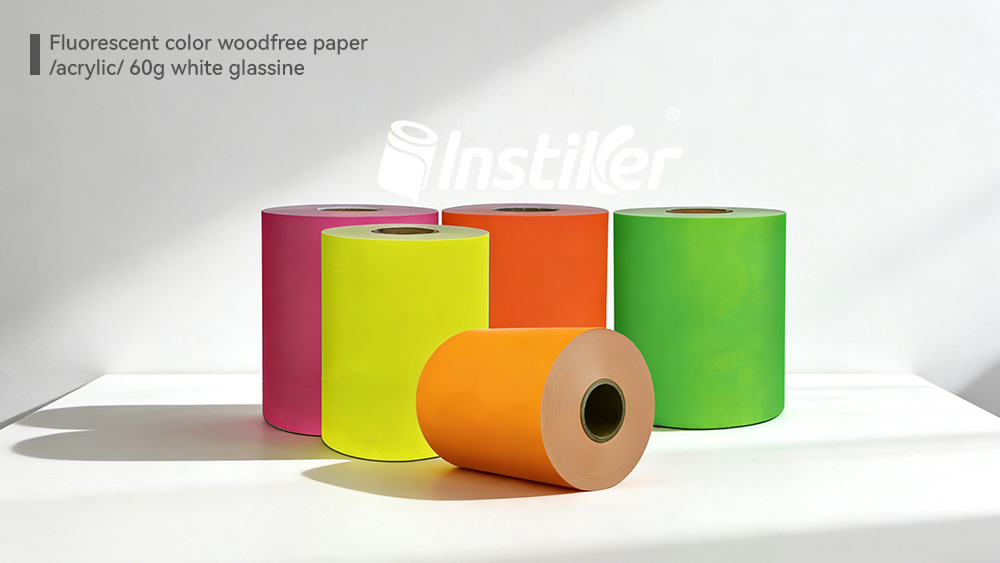
Offer customized services, tailoring the fluorescent color, size, and shape according to customer needs. At the same time, optimize product specifications and provide roll materials of any width and different lengths, suitable for batch labeling and personalized usage requirements. For office scenarios, develop products that are compatible with both laser and inkjet printing, supporting handwritten markings, to enhance product usability and meet the diverse needs of office, journaling, and other scenarios.
(4) Strengthen quality control to ensure product reputation
Instiker has established a complete quality inspection system to conduct full-process inspections on raw material procurement, production process, and finished product delivery: Before raw materials are storage entry,they are inspected for their weather resistance,adhesive properties,and waterproof and oil-resistant performance of the substrate;during the production process,regular inspections are conducted for fluorescence brightness,adhesive layer thickness,and coating uniformity;before the finished products are delivered,their adhesion stability,fluorescence effect,and dimensional accuracy are inspected to prevent substandard products from entering the market,ensuring product reputation and enhancing customer trust. At the same time,based on customer feedback,the product formula and process are continuously optimized,and problems arising during use are promptly resolved to improve product adaptability and user experience.
IV. Conclusion
Fluorescent self-adhesive paper, with its prominent features of being eye-catching, convenient, and having high cost-effectiveness, has broad application prospects in areas such as safety warnings, product promotion, and anti-counterfeiting identification. However, its poor weather resistance, insufficient fluorescence persistence, and poor adhesion stability have restricted its expansion to high-end and outdoor scenarios. For manufacturers, only by basing themselves on market demands, upgrading raw materials, optimizing production processes, expanding product functions, and strengthening quality control, can they effectively overcome these disadvantages and enhance product competitiveness. In the future, with the deepening of environmental protection concepts and the advancement of production technologies, fluorescent self-adhesive paper will develop towards environmental friendliness, functionality, and individualization, further enriching application scenarios and providing higher-quality identification solutions for various industries.
Feasibility、drawbacks and manufacturer's response strategies of vinyl printer self-adhesive printing
The environmental degradability, price and application of woodfree paper self-adhesive labels
Related Article

Las etiquetas PET resisten el arrugamiento, la deformación, la pérdida de tinta, el cambio de tamaño y el manchado por tinta durante la producción a alta temperatura y la impresión digital con láser.
Comprehensive Analysis of PET Self-adhesive Labels
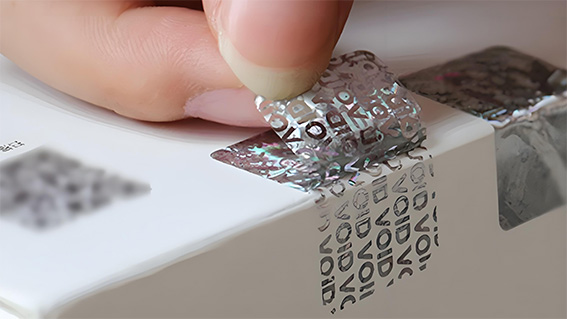
VOID anti-counterfeiting label rely on a physically destructive structure that leaves marks upon peeling, delivering tamper-proof protection at low cost.
Analysis of the VOID anti-counterfeiting label