Selection of materials for self-adhesive on food packaging labels and reasons for their detachment
author: Eva
2026-04-17
Food packaging labels carry legal information such as ingredients, shelf life, traceability barcodes, and production qualifications. They are indispensable identification carriers for food circulation, supermarket sales, and cold chain storage.
There are common problems in the industry such as label peeling, blistering, complete detachment, and blurred barcodes that render the products unusable. These issues not only lead to rework of the packaging and waste of materials, but also violate food safety regulatory requirements due to the absence of labels.
The label detachment is not a single quality issue. Instead, it is caused by a combination of factors such as incorrect substrate selection, mismatched adhesives, environmental conditions, labeling process, and warehouse management.
Instiker specializes in the research and production of food-grade self-adhesive materials. it has launched a complete set of compatible substrates including food-grade PE white film, PP synthetic paper, three-proof heat-sensitive paper, and special low-temperature membrane materials, solving the common problem of label detachment from the source.
This article combines the food full-chain application scenarios, real implementation cases, comparisons of mainstream materials, and systematically analyzes the logic of food label selection and the solutions for label detachment and elimination.
I. Application and Material Selection Suggestions for Food Packaging Labels
1)Frozen food / Seafood and aquatic products
Challenges: Long-term storage at sub-zero temperatures, significant temperature differences during unloading causing a large amount of frost and condensation water, transportation with jolts and friction; ordinary labels with low-temperature adhesives harden and lose adhesion, and the difference in thermal expansion and contraction causes the entire label to fall off.
Suggestions: Modified low-temperature white PE self-adhesive, freeze-resistant PP synthetic paper, combined with food-grade low-temperature water glue, with a temperature range of -25℃ to 60℃, the substrate and food soft packaging have matching shrinkage rates, and cold contraction and warping are completely avoided.
2)Bottled beverages
Challenges: Continuous condensation on the bottle body, smooth and low surface energy curved surfaces of glass/plastic, long-term immersion in ice water; ordinary paper labels absorb water and wrinkle, glue dissolves when exposed to water and detaches.
Suggestions: Transparent PE, metallic PP film self-adhesive, anti-water white eco-friendly water glue, water droplets are not easily penetrating the glue layer, no blistering or warping after refrigeration for 72 hours.
3)Cooked food/fried food
Challenges: Oil seepage from the packaging surface, steam fumigation, high-temperature and humid conditions in the kitchen; paper labels absorb oil and dissolve, the glue layer is isolated by oil and loses adhesion.
Suggestions: Adopting the anti-oil matte PP synthetic paper developed by Instiker first, with a dense membrane layer to block oil penetration, and oil-resistant special pressure-sensitive glue, even with oil stains, the label remains firmly attached.
4)Fresh produce weighing and fruits and vegetables
Challenges: Spray water for preservation, water vapor on the surface of fruits and vegetables, rapid printing and labeling; ordinary thermal paper dissolves when exposed to water, edges fall off.
Suggestions: Instiker's three-proof food thermal paper, waterproof, oil-resistant, and scratch-resistant, the printed barcode remains clear for a long time, and the small-radius fruit and vegetable packaging box adheres without warping.
II. The main causes of label detachment
1)The adhesive does not match the working conditions.
For use in a refrigerated environment, ordinary room-temperature adhesive is used; for high-oil cooked food, water-based ordinary adhesive is used; for smooth PE bottles, low initial adhesion adhesive is used. At low temperatures, the adhesive molecules enter a dormant state, and the oil/water vapor isolation layer is formed. This will cause the edges to lift and fall off after a short period of time.
2)Incorrect substrate selection
For low-temperature cold chain, ordinary copperplate paper is used, which swells when exposed to water; for soft food bags, rigid PET film is used, resulting in inconsistent shrinkage and causing labels to come off during pulling; for curved bottle bodies, thick and hard paper is used, which cannot be perfectly adhered and causes gaps allowing water to enter.
3)The surface of the adhered object was not properly pre-treated.
Residual release agents, oil stains, condensation water, dust, fingerprints and grease remained on the bottle body and packaging bag. The glue could not be firmly combined with the packaging, forming an invisible isolation layer. Even a slight vibration caused it to fall off.
4)Labeling process does not comply with environmental requirements
The workshop temperature is below 10℃. Labels are directly labeled without proper preparation. The tension of the labeling machine is too high, causing the labels to stretch. The pressure for film application is insufficient, resulting in residual bubbles. After labeling, the products are not left to stand for 24 hours before being stored, and the glue has not fully activated, resulting in insufficient adhesion.
5)The destruction of the storage and circulation environment leads to the loss of adhesion.
The finished product label rolls are exposed to high temperatures and direct sunlight, causing the base paper to get damp; during the transportation of food, there are significant temperature differences, and the freezing and thawing processes are repeated, continuously generating internal stress that damages the bonding surface.

III. Analysis of Real Cases
Case 1: Large-scale Replacement of Dislodged Cold Chain Labels in Enterprises
Challenge
A certain enterprise mainly deals in frozen food. It originally used ordinary copperplate paper labels. After being stored in a -18℃ cold storage for 3 to 5 days, the labels would start to peel off in batches and fall off completely. The barcodes became blurry and could not be scanned for unloading.
Solution
Replace the 80μm low-temperature-specific white PE food self-adhesive produced by Instiker with the corresponding freeze-resistant food-grade freezing adhesive, and ensure that the substrate shrinkage rate matches that of food soft packaging.
Result
The labels are stored in the cold storage for 90 days without any detachment or wrinkling. The scanning pass rate of the barcodes is 100%. The label scrap rate has decreased from 26% to 0.5%.
Case 2: Rectification of bubble detachment on the refrigeration gel labels of bottled fruit juice brands
Challenge
A juice beverage company uses 500ml transparent PE bottles for refrigerated display in supermarkets. The ordinary transparent labels deteriorate after 3 days, with bubbles forming at the edges and the glue turning white, seriously affecting the appearance of the product.
Solution
Customized transparent food PE self-adhesive tape. The film material is dense to prevent condensation, and the glue is specially formulated to enhance the initial adhesion force for low surface energy plastics.
Result
Under a continuous humid environment of 7 days in the refrigerator, the labels show no whitening, no blistering, no edge peeling, and the terminal return rate is reset to zero. The quality of the brand packaging has significantly improved.
IV. Comparison Table of Mainstream Food Packaging Labels' Properties
|
Waterproof and oil-resistant property
|
Low-temperature resistance performance
|
Food environmental protection grade
|
Applicable scenarios
|
|
|
Copperplate paper
|
Extremely poor quality, absorbs oil upon contact with water and deteriorates.
|
Poor, low-temperature embrittlement
|
Qualified. Limited to short-term drying.
|
Baking products and dry goods are displayed in a dry and ambient state at room temperature.
|
|
Coated copperplate paper
|
Medium, short-term water and oil resistant
|
Generally, materials below 0℃ are prone to de-gumming.
|
Food-grade compliance
|
Snacks, flat packaging with normal temperature labeling on the surface
|
|
White PE food film
|
Excellent, completely waterproof and oil-resistant
|
Excellent, -25℃ stable
|
High compliance, no harmful substances
|
Frozen pre-prepared dishes, hoses, special-shaped beverage bottles
|
|
Top-grade, dense film layer that repels oil and water
|
Good, -20℃ stable
|
Food-grade environmentally friendly and recyclable
|
Prepared cooked delicacies, fresh produce, chilled beverages
|
|
|
Excellent, water-resistant, oil-resistant, scratch-resistant
|
Generally, it should not be frozen for an extended period of time.
|
Food contact standards
|
Supermarket fruit and vegetable weighing instant labels
|
|
|
PET film
|
Excellent waterproof and temperature-resistant properties
|
Excellent, resistant to high and low temperatures
|
Food-grade compliance
|
Hard glass bottles, flat label application for high-temperature cooked foods
|
V. Frequently Asked Questions Answered
Q: Can food packaging labels be made of PVC material?
A: It is not recommended. Most supermarkets and food safety audits do not approve of this. PVC contains chlorine additives, and there is a risk of leaching when in contact with food. Burning it generates harmful gases.
Q: What kind of labels can be used for soft vacuum food packaging bags without peeling off?
A: The white PE self-adhesive labels produced by Yipin Hui have high flexibility and strong extensibility. They do not peel off even when the packaging bag is squeezed and deformed.
Q: Can regular coated paper be used for packaging frozen food after being laminated?
A: No. The paper substrate itself absorbs water. The coating only provides waterproofing on the surface. When exposed to low temperatures, the paper contracts and cracks, allowing water vapor to seep through the edge of the label. Even after long-term freezing, it will still come off. In freezing scenarios, a membrane-based substrate is necessary.
Q: The packaging of cooked food contains oil and the label often peels off quickly. What material should be chosen?
A: Grease will interfere with the adhesive layer. Therefore, we must use non-sticky PP synthetic paper adhesive. Yinghui synthetic paper comes with a dense anti-grease coating, combined with oil-resistant pressure-sensitive adhesive, to prevent oil stains from penetrating and causing the label to fall off.
Q: The labels on the frozen food come off as soon as they enter the freezer. What's the reason for this?
A: Firstly, the glue is a general-purpose adhesive that loses its stickiness at low temperatures. Secondly, the shrinkage rate of the surface material does not match that of the food packaging bag.
VI. Summary and Recommendations
The detachment of food packaging labels may seem like a minor packaging issue, but in fact, it is related to three core dimensions: production cost, brand reputation, and food safety compliance.
Choosing the right base material and food-specific glue is the most economical and efficient way to solve this problem.
Paper labels are only suitable for dry, normal-temperature, short-term scenarios.
For the cold chain, high oil content, high humidity, and soft packaging curved surfaces, food-grade PE and PP film-based self-adhesive materials must be selected.
Instiker specializes in functional self-adhesive materials for the food industry. Relying on its own film extrusion and environmentally friendly coating production lines, all of its products have passed food contact safety tests.
It provides customers with one-stop services including label application process guidance, sample testing of working conditions, and on-site diagnosis of detachment problems. From the entire chain of base materials, adhesives, processes, and storage, it eliminates the risks of label detachment, helping food enterprises reduce packaging losses, stabilize the appearance of end products, and meet the dual industry requirements of green packaging and food safety supervision.
In the future, as the pre-prepared food and cold-chain food industries continue to expand, the demand for high weather resistance, food-friendly, and recyclable self-adhesive materials will continue to rise.
Instiker will continuously update its low-temperature oil-resistant modified film materials to provide a more stable, cost-effective, green and safe complete set of self-adhesive solutions for food packaging labels.
BOPP Labels Printing Ink Bleeding and Manufacturer's Solutions
Analysis of the types of adhesive film and environmental impact
Related Article

Las etiquetas PET resisten el arrugamiento, la deformación, la pérdida de tinta, el cambio de tamaño y el manchado por tinta durante la producción a alta temperatura y la impresión digital con láser.
Comprehensive Analysis of PET Self-adhesive Labels
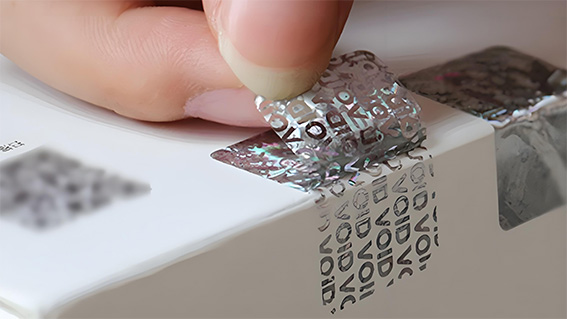
VOID anti-counterfeiting label rely on a physically destructive structure that leaves marks upon peeling, delivering tamper-proof protection at low cost.
Analysis of the VOID anti-counterfeiting label