
Common Questions about Labeling Fruit
author: Eva
2026-01-16
Labeling fruit self-adhesive is an indispensable "identity certificate" in the fruit circulation process. It can not only mark key information such as origin, price, and variety, but also enhance product recognition and facilitate brand promotion. However, many merchants are often troubled by various problems during the selection and use process, among which safety issues are the most common. In response to the concerns of customers, Instiker has made changes to the production technology, allowing customers to use labeling fruit self-adhesive with peace of mind.
I. Which material of labeling fruit self-adhesive is the most suitable?
1. Ordinary coated paper
Suitable for fruits in dry environments with smooth surfaces. It has a high cost-performance ratio and can meet basic labeling requirements. However, it has poor moisture resistance and will soften and make the characters blurry when exposed to water. It is not suitable for tropical fruits or those in refrigerated conditions with moisture.
2. Synthetic paper
Recommended as the first choice! It has the characteristics of being waterproof, oil-resistant, and scratch-resistant. Even when attached to the surface of fruits with moisture or placed in a refrigerator, it can maintain a flat label and clear characters. It is also less likely to leave residue when torn off, and is friendly to the fruit's surface.
3. Thermal paper
Suitable for scenarios where quick printing of prices and production dates is required. Printing does not require carbon paper, and the efficiency is high. However, its light resistance is poor. Long-term exposure to sunlight will cause the characters to fade. It is recommended to use a transparent protective film or for short-term circulation of fruits.

II. How to Choose the Adhesive for labeling fruit?
1. Low viscosity (removable glue)
Suitable for fruits with delicate and thin skins. This type of glue has moderate stickiness. When applied, it can fix the labels, and when removed, it will not damage the skin nor leave any residue, thus avoiding any impact on the appearance of the fruit.
2. Medium viscosity (water glue)
Suitable for fruits with thick and smooth skins. It has stable stickiness and can adapt to various scenarios such as room temperature and refrigeration. It is not likely to fall off, and the impact on the skin when removed is minimal.
3. High viscosity (oil glue)
Not recommended for direct application on the fruit skin. It is more suitable for applying on fruit packaging boxes or bags. For fruits with wax layers, a small amount can be used, but be careful to check if the wax layer will be removed when removing the label.
Tips: Before purchasing, you can ask the manufacturer for samples and apply them on the corresponding fruits for a 24-hour test. Observe whether the labels fall off and whether the skin remains intact after removal.
III. Fruits need to be refrigerated. Will the labels of fruits become invalid due to temperature changes?
Ordinary labels do tend to fail under extreme temperatures, but by choosing "temperature-resistant self-adhesive labels", this problem can be solved.
1. Refrigeration scenario (0℃ - 10℃)
Choose synthetic paper material + low-temperature resistant glue. These labels can withstand moisture in the refrigeration environment. The glue will not lose its stickiness due to low temperature and the labels will not soften or deform.
2. Freezing scenario (-18℃ or below)
Special "low-temperature freezing labels" are required. The material should be PE synthetic paper and the glue should be low-temperature specific glue. It can maintain stable stickiness in the low-temperature environment and will not fall off or seep glue after thawing.
Note: Do not use ordinary copperplate paper labels for refrigeration/freezing scenarios. Otherwise, not only will the labels easily lose effectiveness, but the glue may also deteriorate, affecting the hygiene of the fruits.

IV. Regarding the labels directly attached to the fruits, are the materials themselves safe? Could they release harmful substances?
The safety of the label material is fundamental. One must choose products that comply with relevant food contact standards to prevent harmful substances from migrating and contaminating the fruits. Specific judgment and selection can be made based on these two points:
1. Confirm compliance standards
For labels that come into direct contact with fruits, the base material and printing ink must comply with the "General Safety Requirements for Food Contact Materials and Articles" (GB 4806.1-2016) and related specialized standards. The compliant materials will strictly control the content of harmful substances such as heavy metals, plasticizers, and volatile organic compounds (VOC) during the production process. Under normal use, these substances will not migrate to the fruits.
2. Avoid risky materials
Firmly refrain from using non-food-grade industrial label materials. Such materials may contain excessive heavy metals and harmful solvents. When in prolonged contact with fruits, harmful substances are prone to penetrate and remain. It is recommended to choose food-grade synthetic paper (PP, PE materials) or degradable paper-based materials. These materials are not only safe and non-toxic but also have waterproof and moisture-resistant properties, making them suitable for most fruit scenarios.
V. Will the glue on the labels contaminate the fruits? Can the remaining glue residue after removal be eaten?
Adhesives are a key potential hazard in food safety. High-quality and compliant adhesives will not contaminate fruits, and there is no need to worry excessively about residual glue marks. The key is to choose the right "food-grade adhesives".
1. Prefer food grade pressure sensitive adhesive: The labels that come into direct contact with fruits must be paired with food-grade pressure-sensitive adhesive. This type of adhesive has stable adhesion and is non-toxic. It has passed migration tests, and even if it is stuck on the surface of the fruit for a long time, it will not release harmful components. If there is a slight residue when removing the label, a small amount of adhesive residue entering the human body will not be absorbed and will be excreted through metabolism, so there is no need to worry about health risks.
2. Avoid industrial adhesives: Non-food-grade industrial adhesives contain harmful components such as formaldehyde and benzene. They are very likely to penetrate through the pores or damaged areas of the fruit's surface. Consuming them will be harmful to health. Therefore, they must not be used for fruit labels.
3. Handling of residual adhesive: If there is residual adhesive after removing the label, you can first gently wipe it with a clean damp cloth. For fruits with delicate surfaces, it is recommended to directly remove the part with the residual adhesive to avoid accidentally ingesting too much adhesive residue.
VI. Conclusion
When choosing the adhesive labeling fruits, the key points are "matching the material with the application scenario, the stickiness suitable for the fruits, and the content complying with regulations". If you are unsure about your requirements, you can clearly explain to the manufacturer the types of fruits you operate, the storage methods, whether customization is needed, etc. Instiker will provide targeted recommendation plans to avoid making mistakes. For example, our pearlescent film water-washable adhesive labels and water-soluble paper edible labels are all in line with food safety standards. If you want to know more, you can contact us.
Analysis of the Differences between Solvent-Based Adhesives and Water-Based Adhesives
The safety, environmental protection and food safety issues of synthetic paper labels
Related Article

Las etiquetas PET resisten el arrugamiento, la deformación, la pérdida de tinta, el cambio de tamaño y el manchado por tinta durante la producción a alta temperatura y la impresión digital con láser.
Comprehensive Analysis of PET Self-adhesive Labels
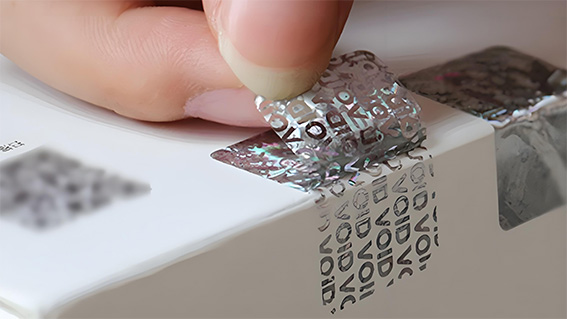
VOID anti-counterfeiting label rely on a physically destructive structure that leaves marks upon peeling, delivering tamper-proof protection at low cost.
Analysis of the VOID anti-counterfeiting label