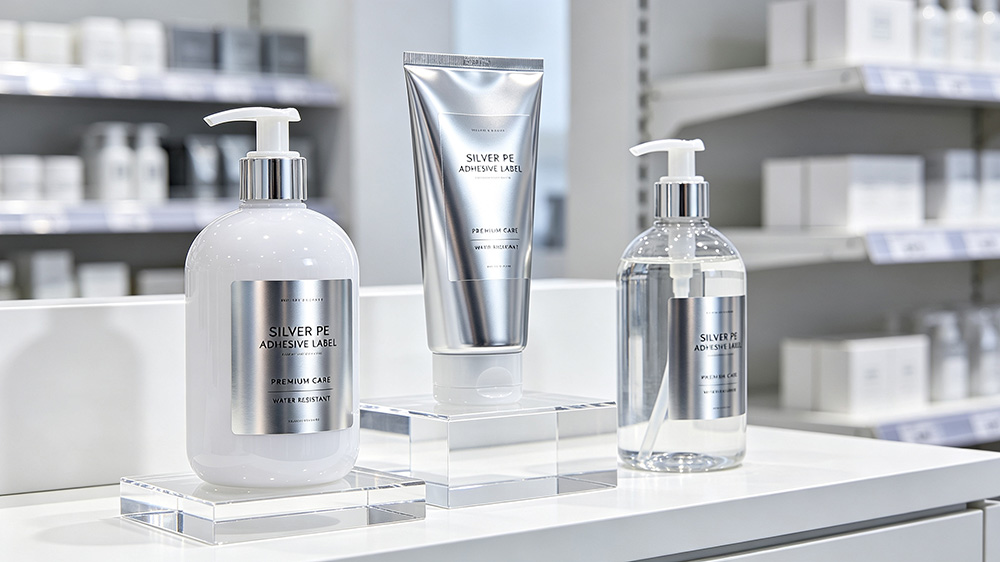
Difficulty in printing glossy labels, ink smudging and solutions
author: Eva
2026-05-22
The glossy labels feature a smooth and shiny texture, as well as waterproof and scratch-resistant properties. They are widely used in high-end packaging fields such as cosmetics, food, daily chemicals, electronics, and beverages. They possess both appearance quality and practicality. However, during actual printing, printing compatibility, weak ink adhesion, and easy ink bleeding and fading are common industry pain points. Many customers have reported that glossy labels are less printable than matte labels. After printing, if wiped, rubbed, or exposed to water, they will experience ink bleeding, ink smudging, and blurred characters. Many self-adhesive manufacturers also often lose their reputation and increase rework costs due to such after-sales issues.
I. Glossy Labels: Why is Printing More Difficult?
Unlike the porous ink-absorbing surface layer of ordinary matte self-adhesive labels, the surface of glossy labels is smooth, dense, without pores, and has extremely high flatness. This is its advantage in appearance and also the core cause of the printing difficulties. The specific difficulties mainly lie in three points:
1. The ink cannot penetrate and dries slowly
Ordinary paper-based matte self-adhesive labels rely on the ink-absorbing pores of the paper fibers to adsorb ink, and the ink can quickly penetrate and solidify. However, the surface layer of glossy self-adhesive labels is a dense coating or film material. The ink can only remain on the surface and cannot penetrate. Whether it is inkjet printing, digital quick printing, or UV printing, there will be problems such as delayed drying, ink layer accumulation, and when printing at high speed, it is very likely to cause ink bleeding, ghosting, and blurred characters, significantly increasing the printing difficulty.
2. Insufficient surface tension, poor printing compatibility
High-quality printing substrates require a surface tension of 42 dynes or above to ensure the uniform adhesion of ink. However, the original surface tension of conventional glossy self-adhesive films is low. If the manufacturer does not strengthen the treatment during production, the surface adhesion of the material is extremely poor. During printing, problems such as uneven ink spreading, local omission printing, color block softening, and large printing color differences will occur. It is necessary to repeatedly adjust the equipment parameters, which requires higher precision of the printing equipment and the technical skills of the operators. The overall printing tolerance rate is extremely low.
3. Static electricity and smoothness causing paper feeding faults
The surface of glossy labels is smooth, with a low friction coefficient, and the film material is prone to generating static electricity. When printing in batches, it is very likely to cause problems such as paper slipping during feeding, multiple sheets getting stuck together, positioning deviation, and paper jamming. Especially for small office printers and commercial barcode printers, the adaptability is even worse, further exacerbating the difficult printing experience.

II. What are the main reasons for the ink loss of glossy labels?
Ink loss is the most frequent quality issue of glossy self-adhesive labels, which can occur in various forms such as slight ink removal by wiping, friction-induced ink loss, water-induced color fading, and long-term delamination. It is not a problem solely with the ink but is caused by multiple flaws in materials, processes, handling, and quality control. The core reasons can be classified into four categories:
1. Defects in the surface coating quality
The coating is the core key for the ink absorption and fixation of glossy self-adhesive labels. Some manufacturers, in an attempt to reduce costs, use inferior coating raw materials or simplify the coating process, resulting in uneven thickness, weak adhesion, and incomplete curing. If the coating of the glossy label with coating is not strong enough, the ink cannot be firmly bonded to the substrate, and even a slight friction during printing will cause the entire label to fall off; without coating, the cheap transparent film material has the ink only physically attached to the surface, with almost no adhesion, and the ink loss problem is even more serious.
2. Failure or substandard surface corona treatment
Corona treatment is the core process to enhance the surface tension of film-type glossy self-adhesive labels. A qualified glossy label must undergo corona treatment to increase the surface tension to above 42 dynes to meet the requirements for ink fixation. However, many manufacturers have problems such as insufficient corona power, too fast processing speed, and single-sided processing, and the corona effect will naturally decline over time. Materials in stock that have accumulated for a long time will have a decrease in surface tension, and the oil ink adhesion will significantly decrease after printing, leading to subsequent mass ink loss.
3. Inappropriate ink matching and printing process
The ink specifically for glossy self-adhesive labels has significant performance differences from ordinary paper-based ink. If using general ordinary ink, expired ink, or incorrect additive ratios, there will be an incompatibility between the ink and the substrate. At the same time, if the ink layer is too thick during printing, the equipment rotates too fast, the UV curing light energy is insufficient, or the curing time is too short, the ink layer will not be fully dried, seemingly printed well, but in fact, it is not fully cured inside, and it is very likely to be wiped off or lose color later.
4. Uncontrolled production and storage environment
The imbalance of temperature and humidity in the production workshop is a hidden cause. When the environmental humidity is too high, trace water vapor will condense on the surface of the material, blocking the combination of the ink and the substrate; when the temperature is too low, the coating activity will decrease, and the ink fixation ability will deteriorate. In addition, the finished labels are exposed to long-term sunlight, high temperatures, and moisture accumulation, which will accelerate ink aging and coating failure, leading to subsequent color fading and ink loss.
III. What are the solutions provided by the self-adhesive label manufacturers?
1. Selecting high-quality raw materials
Abandon low-cost and inferior substrates, and specifically choose high-gloss substrates suitable for printing and printing. Preferentially use light copper paper, high-gloss synthetic films, PET light films, etc. as substrates, and completely avoid directly producing with bare films without coating. At the same time, strictly control the quality of coating materials, select high-end coatings with strong adhesion, fast curing, and suitable for various types of inks, to ensure uniform coating thickness and meet adhesion standards, fundamentally enhancing the ink absorption and curing capacity.
2. Optimizing core processes
Corona discharge treatment is of utmost importance. During production, strictly control the corona discharge parameters to ensure the surface tension of the material reaches above 42 dynes, meeting the requirements for the adhesion of various inks. For high-gloss film materials, adopt the "corona discharge treatment + coating with base oil" dual process, which compensates for the defect of single corona discharge treatment being prone to attenuation, significantly improving the surface adhesion of the substrate. At the same time, strictly control the production speed to avoid insufficient corona discharge treatment and incomplete coating curing caused by high-speed production.
3. Adapting to multiple printing scenarios, standardizing production parameters
According to the requirements of different printing equipment, optimize label production standards. Adapt to printing characteristics of inkjet, laser, barcode, UV printing, etc., adjust the porosity and surface smoothness of the coating, while retaining the high-gloss texture, and improving the ink spreading and curing speed. At the same time, standardize the printing process and implement the "deep ink thin printing" principle to avoid slow drying and ink bleeding caused by overly thick ink layers; match dedicated glossy label inks to avoid mixing with ordinary paper inks or expired inks, ensuring high compatibility between the ink and the substrate.
4. Strengthening curing and protection, enhancing product durability
For UV printing processes, upgrade UV curing equipment, calibrate light energy and curing distance to ensure complete curing of the ink layer, without false drying or semi-drying problems. After printing, an additional transparent gloss varnish layer can be added for protection, preventing the ink layer from being eroded by air, friction, and moisture. This can not only retain the high-gloss brightness of the label but also significantly improve the ink's wear resistance and water resistance, completely solving the problem of ink being wiped off and discoloration when exposed to water.
5. Establishing full-process quality control and storage standards
In the production process, add inspection procedures, test the surface tension of each batch of products with a dynometer, and use tape peeling, dry wiping, and wet wiping methods to test the adhesion of the ink. Unqualified products will be directly reworked to prevent substandard products from entering the market. At the same time, standardize the workshop and storage environment, maintain constant temperature and humidity to avoid high-temperature and high-humidity production; store the finished products in a light-protected and sealed manner, control the inventory cycle, and avoid the attenuation of the corona effect and material aging after moisture absorption, ensuring the long-term stable printing performance and ink curing effect of the labels after leaving the factory.
IV. Superior Luster Labels Depend on the Process
The glossy self-adhesive labels are not inherently difficult to print or prone to ink bleeding. All quality issues are essentially caused by non-standard production processes and inadequate quality control. The smooth and pore-free material characteristics do indeed make their printing more challenging than matte labels. However, as long as the manufacturer masters the five core aspects - selecting the best base material coating, double processing with corona primer and ink, adapting the ink process, upgrading the curing and protection, and strictly controlling the warehouse quality - they can completely overcome the industry pain points such as printing lag, blurred ink, and ink bleeding and fading.
For end customers, high-quality glossy self-adhesive labels should also have a high gloss appearance, smooth printing experience, and extremely strong ink resistance. For self-adhesive manufacturers, standardized production processes not only reduce售后 disputes and lower rework costs, but also enhance market competitiveness and create a differentiation advantage with stable product quality.
The PET and PP films produced by Guangdong Yinghui New Materials Technology Co., Ltd. not only have excellent printing quality but also have strong adhesion. They are the preferred choice for many customers. If you are also interested, please contact us.
The printing performance and environmental impact of durable labels
LOGO labels: Die-cutting difficulty, printing compatibility and common material analysis
Related Article

Las etiquetas PET resisten el arrugamiento, la deformación, la pérdida de tinta, el cambio de tamaño y el manchado por tinta durante la producción a alta temperatura y la impresión digital con láser.
Comprehensive Analysis of PET Self-adhesive Labels
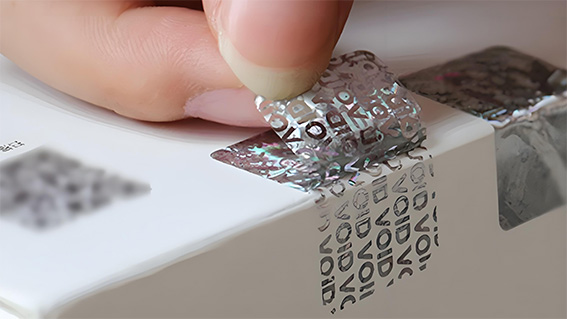
VOID anti-counterfeiting label rely on a physically destructive structure that leaves marks upon peeling, delivering tamper-proof protection at low cost.
Analysis of the VOID anti-counterfeiting label