
The adhesiveness and printability of industrial labels
author: Eva
2026-05-14
In scenarios such as industrial production, logistics warehousing, and equipment operation and maintenance, industrial labels play a crucial role. They not only serve as the carriers for product identification and information traceability, but also are essential for ensuring the standardization of production processes and enhancing management efficiency. However, many enterprises often encounter three major problems when choosing industrial labels: Will the labels easily come off? Is it easy to print industrial labels? What materials do the manufacturers of self-adhesive labels mainly use to produce industrial labels? We will comprehensively and meticulously analyze these three core questions, combined with actual industry applications.
I. Will industrial labels easily come off?
Many people are concerned that industrial labels may lack adhesion and thus fall off soon after being applied. However, this concern should be evaluated based on specific scenarios and label configurations. High-quality industrial labels, when adapted to the appropriate scenarios, can maintain adhesion for several months or even years, fully meeting the long-term usage requirements of industrial environments. The problem of falling off is mostly caused by incorrect material selection, improper application, or environmental factors.
The adhesive core of industrial labels depends on the type and quality of the adhesive. Self-adhesive manufacturers will select different types of adhesives based on the specific requirements of industrial scenarios, which is also a key factor determining the durability of the adhesion.
The commonly used adhesives in the industrial field are mainly divided into three categories:
general strong adhesive type, high-temperature resistant type, and oil-resistant and moisture-resistant type, which are respectively suitable for different environmental requirements. The general strong adhesive type relies on the contact between pressure and the surface of the adherend to achieve initial adhesive force, and is suitable for ordinary workshops, normal temperature storage and other scenarios, and is not likely to fall off after bonding; the high-temperature resistant adhesive can withstand temperatures ranging from -40℃ to 150℃ or even higher, and is suitable for high-temperature production workshops, boiler equipment and other scenarios, avoiding the softening and loss of the adhesive due to high temperature and cracking and detachment due to low temperature; the oil-resistant and moisture-resistant adhesive can resist the erosion of oil and moisture, and is suitable for chemical products, food processing, cold chain transportation and other scenarios, preventing the failure of adhesiveness.
Apart from adhesives, the condition of the surface of the object being adhered and the adhering process itself also affect the durability of the adhesion. If the surface of the object to be adhered is contaminated with oil, dust, moisture or an oxide layer, it will significantly reduce the bonding strength between the adhesive and the substrate, causing the label to fall off. Therefore, before labeling, the surface needs to be cleaned, such as with alcohol wiping or plasma treatment, to increase the surface energy and enhance the adhesive force. Additionally, the shape design of the label also has an impact. Sharp corners are prone to lift and fall off, and using a rounded corner design can reduce mechanical stress concentration and improve the adhesion stability.
It should be noted that the stickiness is not necessarily the stronger the better. The choice depends on the usage requirements: for long-term fixed equipment identification and product nameplates, permanent adhesive agents with strong stickiness should be selected; for temporary markings and labels that need to be frequently replaced, removable adhesive agents can be chosen. This can not only ensure the stickiness during use but also avoid leaving residue of glue when removing, thus avoiding damage to the surface of the object being attached.

II. How is the printing effect of industrial labels?
The ease of printing industrial labels mainly depends on the compatibility between the label material, printing equipment and printing process. Generally speaking, the printing of industrial labels is relatively easy. Whether it is batch printing or temporary supplementary printing, it can achieve efficient operation and fully meets the fast-paced requirements of industrial scenarios.
From the perspective of printing equipment, industrial labels are mainly compatible with two mainstream printing methods:
thermal printing and thermal transfer printing. In some scenarios, laser printing is also used. Each method has its own advantages and is suitable for different needs. The operation difficulty is not high. Thermal printing does not require carbon paper and only requires thermal-type industrial labels. The printing head directly heats the surface coating of the label to make it colorable. The printing speed is extremely fast and the operation is simple. It is suitable for short-term use labels such as temporary logistics labels and workshop turnover labels. However, its disadvantage is poor weather resistance. It is afraid of light and heat and is prone to fading when exposed to the outdoors or in high-temperature environments for a long time.
Thermal transfer printing requires the use of special carbon tapes and labels. The printing head heats the carbon tape and transfers the ink powder onto the surface of the label. It has high printing resolution, supports macro printing, and has a scratch-resistant, waterproof, oil-resistant, and temperature-resistant printing effect that can withstand high and low temperatures. It is suitable for long-term use, such as equipment nameplates, product traceability labels, outdoor signs, etc. Although this printing method requires additional carbon tapes, the operation process is simple, and the batch printing efficiency is high. Currently, it is the most widely used printing method in the industrial field. Most industrial printers support automatic paper feeding, continuous printing, and can be connected to production lines to achieve unmanned printing, significantly improving work efficiency.
From the perspective of the material of the labels, the industrial labels produced by non-drying adhesive manufacturers will have their surface coatings optimized in advance to adapt to different printing methods, avoiding problems such as "blurred printing and ink detachment". For example, paper-based industrial labels have good ink absorption and are suitable for high-speed printing, and are less likely to cause dirtiness; film-based labels (such as PET, PP) will undergo corona treatment or coating treatment on the surface to enhance printing adaptability, avoiding the problem of ink not adhering firmly during printing, even for beginners, they can quickly get started and operate without the need for professional printing technical reserves.
III. What materials are used by self-adhesive manufacturers for industrial labels?
(1) Base Material
The base material is the core part of an industrial labels, responsible for printing information and serving as the carrier of the logo. Its material directly determines the label's resistance to scratching, resistance to high and low temperatures, water resistance, etc. Self-adhesive manufacturers will select different types of base materials based on different industrial scenarios, and they are mainly divided into three categories:
1. Paper-based materials
They offer good cost-effectiveness and are suitable for common temperature scenarios, such as coated paper, kraft paper, thermal paper, etc. Coated paper has a smooth surface, vivid printing colors, good ink absorption, and is suitable for printing basic information such as product names and specifications. It is commonly used for temporary labels in workshops and ordinary product labels. Kraft paper has certain toughness and is tear-resistant, suitable for use in logistics packaging labels and heavy equipment packaging identification. Thermal paper does not require carbon tape and is suitable for quick printing. It is commonly used for short-term turnover labels, but has poor weather resistance and is not suitable for long-term outdoor use or high-temperature environments.
2. Film-based materials
They are highly durable and are the mainstream choice for industrial labels. The main types include PET (polyester), PP (polypropylene), and PVC (polyvinyl chloride). PET is resistant to high and low temperatures, can withstand scratches, is waterproof and oil-resistant, and has high tensile strength, making it suitable for labels in high-temperature workshops, outdoor equipment, electronic components, etc. Its lifespan can reach over 5 years. PP is resistant to chemical corrosion, has good flexibility, and is suitable for curved surface application, often used in chemical products and daily chemical equipment labels. PVC has high flexibility and can be made into transparent or colored labels, has strong weather resistance, but is prone to deformation at high temperatures, and is mostly used for ordinary industrial scene signs. Attention should be paid to environmental issues.
3. Special substrates
Suitable for extreme industrial environments, such as polyimide (PI), fragile paper, metal foil paper, etc. Polyimide can withstand temperatures up to 300℃ and is suitable for high-temperature equipment, electronic components and other extreme scenarios; Fragile paper tears apart immediately upon being torn, has good anti-counterfeiting properties, and is suitable for warranty labels of electronic products and anti-counterfeiting labels for medicines; Metal foil paper has a metallic texture on the surface and is suitable for identification of high-end industrial equipment and industrial products of the gift category.
(2) Adhesives
Adhesives are the key to achieving the sticking function of industrial labels. Non-woven adhesive manufacturers will match corresponding adhesives based on the type of substrate and usage scenarios to ensure that the adhesion is suitable for the requirements. Common adhesives mainly include three types:
1. Acrylic adhesives
The most widely used, with strong weather resistance and excellent anti-aging properties, excellent waterproof, oil-proof, and high-temperature resistance performance. They are suitable for most industrial scenarios. Whether it is paper-based or film-based substrates, they can be well adhered, have long-lasting adhesion, and are not prone to aging and peeling. They are the preferred adhesive for industrial labels.
2. Rubber-based adhesives
Have strong adhesion, with outstanding initial adhesion strength. They are suitable for bonding on rough surfaces such as cement and metal castings. However, they have poor weather resistance. When exposed to the outdoors for a long time or in high-temperature environments, their adhesion will gradually weaken. They are suitable for short-term use or indoor scenarios.
3. Silicone-based adhesives
Excellent in both high and low temperature resistance, capable of withstanding a temperature range of -60°C to 200°C, suitable for extreme high and low temperature scenarios such as boiler equipment and cold chain transportation products, but with relatively weak adhesion, only suitable for specific scenarios and having a higher price.
(3) Base Paper
The main function of the base paper is to protect the adhesive, preventing it from adhering to dust and impurities during storage and transportation, and facilitating the removal and use of the label. When manufacturers of self-adhesive products produce industrial labels, common base paper materials include gelatin paper, kraft paper, and PET base paper. Gelatin paper has a smooth surface and good release properties, and is easy to peel off, suitable for most industrial labels, especially film-type labels; Kraft paper base paper has strong toughness and is tear-resistant, suitable for heavy-duty labels and large-sized industrial labels; PET base paper is resistant to high temperatures and scratches, suitable for labels used in high-temperature scenarios, which can prevent the base paper from deforming or being damaged in high-temperature environments, thus avoiding affecting the peeling and sticking of the label.
IV. Summary: Choosing the Right Industrial Labels: The Key Lies in Compatibility
To sum up, the adhesion of industrial labels is not likely to come off easily. The key lies in the compatibility between the adhesive and the environment, as well as the surface treatment before application; industrial label printing is convenient. Whether it is thermal sensitive or thermal transfer printing methods, they can all meet the efficient requirements of industrial scenarios without the need for professional skills; The manufacturers of self-adhesive labels produce industrial labels using materials that focus on the core of "durability and compatibility", adopting a three-layer composite structure of base paper, adhesive, and backing paper. Different materials are selected according to different scenarios to ensure that the labels can function stably in complex industrial environments.
For enterprises, when choosing industrial labels, there is no need to blindly pursue "high stickiness and high price". Instead, by considering their own usage scenarios - such as whether they are in high-temperature, oil-contaminated, or humid environments, whether the surface of the object being labeled is smooth, whether the labels need to be used for a long time, and whether they need to be printed frequently - they can select the appropriate industrial labels. This not only ensures the usage effect but also controls the cost. In the future, as industrial scenarios continue to upgrade, self-adhesive manufacturers will also continuously optimize materials and processes to launch more adaptable and environmentally friendly industrial labels, helping to improve industrial production efficiency and standardize management.
The lifespan and environmental impact of outdoor labels
Regarding the issues of difficult to remove packaging labels, remaining adhesive, and environmental protection
Related Article

Las etiquetas PET resisten el arrugamiento, la deformación, la pérdida de tinta, el cambio de tamaño y el manchado por tinta durante la producción a alta temperatura y la impresión digital con láser.
Comprehensive Analysis of PET Self-adhesive Labels
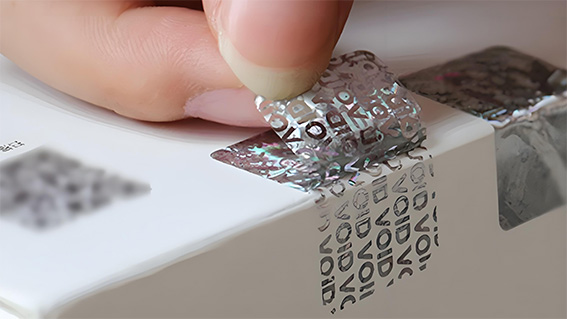
VOID anti-counterfeiting label rely on a physically destructive structure that leaves marks upon peeling, delivering tamper-proof protection at low cost.
Analysis of the VOID anti-counterfeiting label