
Analysis of the impact of low-temperature on self-adhesive labels
author: Eva
2025-11-03
With the continuous development of cold-chain food, biomedicine, northern outdoor industries, and low-temperature storage sectors, the problem of self-adhesive labels failing in low-temperature environments has become increasingly common.
Ordinary self-adhesive labels are prone to problems such as warping, detachment, blurred characters, and printing failures under low-temperature, frost, and repeated freezing and thawing conditions, resulting in interrupted product traceability, packaging rework, customer complaints, and economic losses.
This article systematically analyzes the mechanism of the effect of low-temperature environments on self-adhesive labels, compares the advantages and limitations of low-temperature-resistant non-woven label materials, clarifies applicable scenarios and target customers, and provides selection, storage, and labeling process solutions based on real cases, offering a practical technical reference for printing factories and end-product manufacturing enterprises.
I. How does a low-temperature environment affect self-adhesive labels?
1)Degradation of adhesive layer performance
As temperature drops, the activity of adhesive molecules decreases and their fluidity deteriorates. Ordinary acrylic water-based adhesives and rubber hot melt adhesives harden and lose elasticity at low temperatures, and the initial adhesion force and holding force significantly decline; they cannot fully wet the surface of the object to be attached, and the label will curl and fall off within a short period of time.
2)Physical brittleness and deformation of the substrate
Common coated paper absorbs moisture and shrinks when cooled; PVC and ordinary film substrates become harder and more brittle in extremely cold environments, and curved surface labeling is prone to cracking; alternating temperature differences generate internal stress, which exacerbates label warping.
3)Combination of moisture and condensation destroys adhesion
Low-temperature object surfaces are prone to frost and condensation. Moisture isolates the adhesive from the substrate, forming a "water film", directly causing the label to be poorly adhered; when products are transferred from a cold storage to a normal temperature environment, repeated condensation occurs, continuously eroding the adhesive interface.
4)Processing and printing abnormalities
Production and processing in environments below 10℃, labels are prone to flying off, discarding the waste label tape, and delamination during die-cutting; heat-sensitive labels have unstable color changes at low temperatures, and carbon tape printing is prone to ink interruption and barcode scanning failure.

II. The advantages and limitations of low-temperature resistant self-adhesive materials
1)Core advantages
Modified adhesive layer formula, wider temperature tolerance range
Instiker modified low-temperature acrylic pressure-sensitive adhesive can be directly applied for labeling at -25℃ environment, and can withstand -40℃ low temperature for a long time with stable performance.
Instiker modified low-temperature acrylic pressure-sensitive adhesive can be directly applied for labeling at -25℃ environment, and can withstand -40℃ low temperature for a long time with stable performance.
Adaptability to low-temperature conditions
Combined with PP synthetic paper, PET, and PE film substrates, it does not absorb water, is tear-resistant, and is less likely to break at low temperatures. It is resistant to condensation water erosion and the label information remains clear for a long time.
Combined with PP synthetic paper, PET, and PE film substrates, it does not absorb water, is tear-resistant, and is less likely to break at low temperatures. It is resistant to condensation water erosion and the label information remains clear for a long time.
Suitable for multiple printing methods
Supports thermal sensitive, thermal transfer, UV printing, and flexographic printing, meeting the requirements for QR codes on cold chain traceability and variable barcodes printing.
Supports thermal sensitive, thermal transfer, UV printing, and flexographic printing, meeting the requirements for QR codes on cold chain traceability and variable barcodes printing.
Adaptable to various substrates
Can be stably adhered to common cold chain packaging such as PE/PP plastic packaging bags, metal cans, cardboard boxes, glass, and frozen woven bags.
Can be stably adhered to common cold chain packaging such as PE/PP plastic packaging bags, metal cans, cardboard boxes, glass, and frozen woven bags.
Compliant options available
Food contact grade, low VOC environmentally friendly models are all available, meeting the relevant testing standards for fresh food export and medical cold chain.
Food contact grade, low VOC environmentally friendly models are all available, meeting the relevant testing standards for fresh food export and medical cold chain.
2)Inherent limitations
Cost higher than ordinary normal-temperature non-drying adhesive
Special low-temperature adhesives and film substrate materials have higher costs. Large-scale replacement will slightly increase the packaging material budget.
Special low-temperature adhesives and film substrate materials have higher costs. Large-scale replacement will slightly increase the packaging material budget.
Existence of a lower limit for labeling temperature
Even with high-temperature-resistant materials, it is not recommended to directly label on surfaces with thick frost at temperatures lower than -25℃. Basic surface pre-treatment is still required.
Even with high-temperature-resistant materials, it is not recommended to directly label on surfaces with thick frost at temperatures lower than -25℃. Basic surface pre-treatment is still required.
Cannot completely avoid extreme temperature stress
Under the continuous impact of large temperature differences, large-sized labels and high-stiffness substrates still have a slight warping risk. Optimizing label size and adding rounded corner designs are necessary.
Under the continuous impact of large temperature differences, large-sized labels and high-stiffness substrates still have a slight warping risk. Optimizing label size and adding rounded corner designs are necessary.
Storage conditions require restrictions
Low-temperature label raw materials cannot be stored outdoors in extreme cold for a long time. Long-term storage at -5℃ or below will still slowly affect the performance of the adhesive layer.
Low-temperature label raw materials cannot be stored outdoors in extreme cold for a long time. Long-term storage at -5℃ or below will still slowly affect the performance of the adhesive layer.
III. Case Analysis
Case 1: Label selection for ultra-low temperature sample tags in biotech enterprises
Challenge
The research and development enterprises need to store their samples at -80℃ for a long time. The original ordinary PET labels would warp at the edges after being used for 3 months, posing a risk of sample confusion.
The research and development enterprises need to store their samples at -80℃ for a long time. The original ordinary PET labels would warp at the edges after being used for 3 months, posing a risk of sample confusion.
Instiker Solution
Supply dedicated ultra-low temperature PET self-adhesive materials, along with a low-temperature resistant coating and pressure-sensitive adhesive.
Supply dedicated ultra-low temperature PET self-adhesive materials, along with a low-temperature resistant coating and pressure-sensitive adhesive.
Effect
After a 6-month low-temperature storage test, the labels were firmly attached and the text and barcodes were clear. It successfully passed the internal verification of the enterprise and provided stable batch supply.
After a 6-month low-temperature storage test, the labels were firmly attached and the text and barcodes were clear. It successfully passed the internal verification of the enterprise and provided stable batch supply.
Case 2: Labeling failure on the winter production line of a certain enterprise
Challenge
The winter workshop temperature of a beverage factory was 0-6℃. The surface of the glass bottles was cold. Ordinary hot melt adhesive labels翘led off in large areas after 24 hours of application.
The winter workshop temperature of a beverage factory was 0-6℃. The surface of the glass bottles was cold. Ordinary hot melt adhesive labels翘led off in large areas after 24 hours of application.
Instiker Solution
Switch to low-temperature oil-based acrylic self-adhesive labels. At the same time, it is recommended to appropriately increase the environmental temperature of the labeling area on the production line and increase the pressure of the labeling rollers.
Switch to low-temperature oil-based acrylic self-adhesive labels. At the same time, it is recommended to appropriately increase the environmental temperature of the labeling area on the production line and increase the pressure of the labeling rollers.
Effect
During the winter production period, the defect rate of labels was significantly reduced, meeting the demand for continuous production throughout the year.
During the winter production period, the defect rate of labels was significantly reduced, meeting the demand for continuous production throughout the year.
IV. Material Selection Comparison and Recommendations
|
Material combination
|
Applicable temperature range
|
Advantages
|
Weakness
|
Recommended Scenario
|
|
Copperplate paper + Ordinary water-based glue
|
≥10℃
|
Low price and excellent printing quality
|
Below 10℃, it is highly prone to losing its label and is not resistant to condensation water.
|
Short-term labels for normal temperature rooms. Prohibited for use in cold storage.
|
|
Ordinary synthetic paper + Acrylic glue
|
0~25℃
|
Waterproof and oil-resistant, with high cost-effectiveness.
|
Cannot be stored at a consistently low temperature for an extended period.
|
Refrigerated (0 - 5℃), not suitable for freezer storage
|
|
PP synthetic paper + low-temperature adhesive
|
-25℃~60℃
|
It can be labeled at low temperatures, resistant to freeze-thaw cycles, and has a moderate overall cost.
|
Not applicable - Ultra-low temperature below 60℃
|
-18℃ food cold storage, cold chain logistics
|
|
PET film + low-temperature adhesive
|
-80℃~60℃
|
Resistant to extreme cold, solvent-resistant, high strength
|
The unit price is relatively high.
|
Biological laboratory, ultra-low temperature reagent storage
|
V. Frequently Asked Questions Answered
Q1: Ordinary labels are fine when placed in the cold storage for a short period of time. But after a while, they start to peel off in large areas. What's the reason for this?
A: Ordinary glue loses its elasticity continuously at low temperatures. Additionally, the expansion and contraction of the surface material and packaging materials generate internal stress, causing the bonding interface to gradually deteriorate.
A: Ordinary glue loses its elasticity continuously at low temperatures. Additionally, the expansion and contraction of the surface material and packaging materials generate internal stress, causing the bonding interface to gradually deteriorate.
Q2: The labels have become frozen and hardened. How can their performance be restored?
A: Place the entire roll of material in a sealed environment at a temperature range of 12 to 22 degrees Celsius and let it stand for more than 24 hours. The adhesive layer will gradually regain its fluidity. Do not directly heat it at high temperatures as it may cause the adhesive to overflow and deteriorate.
Q3: Can labels be directly affixed in the -18℃ cold storage?
A: The cold glue can be used for labeling in the -18℃ environment, but it is assumed that the surface of the object to be labeled has no thick frost or ice layer.
Q4: Can the labels be sent to the freezer immediately after being stuck?
A: It is not recommended. Acrylic pressure-sensitive adhesive requires sufficient time to fully penetrate the substrate. It is recommended to let the labels stand in a temperature of ≥10℃ for 12 to 24 hours after sticking to complete the curing process, and then transfer them to the low-temperature warehouse. This can significantly reduce the probability of label warping.
Q5: The barcode on the label often cannot be scanned in low-temperature environments?
A: On the one hand, the low temperature results in insufficient heat-induced color development; on the other hand, the slight warping of the label causes the barcode to deform.
VI. Summary
The failure of self-adhesive labels under low-temperature conditions is the result of the combined effect of multiple factors such as material formulation, storage conditions, labeling process, and the surface condition of the substrate.
Simply changing the label material while neglecting the production operation standards still cannot effectively solve the problems of edge peeling and detachment.
Instiker specializes in the supply of self-adhesive raw materials and has a complete range of low-temperature resistant self-adhesive products, covering multiple gradients such as refrigeration, conventional freezing, and ultra-low temperature laboratories.
We can provide material selection suggestions, free samples, and technical guidance on low-temperature conditions to printing factories and terminal factories. Based on the actual working conditions of customers in cold chain, winter outdoor, and low-temperature storage, we can customize a stable and cost-effective complete set of label solutions to avoid packaging losses and supply chain risks caused by low temperatures.
Comprehensive Analysis of Laser Stickers
The drawbacks of self-adhesive labels
Related Article

Las etiquetas PET resisten el arrugamiento, la deformación, la pérdida de tinta, el cambio de tamaño y el manchado por tinta durante la producción a alta temperatura y la impresión digital con láser.
Comprehensive Analysis of PET Self-adhesive Labels
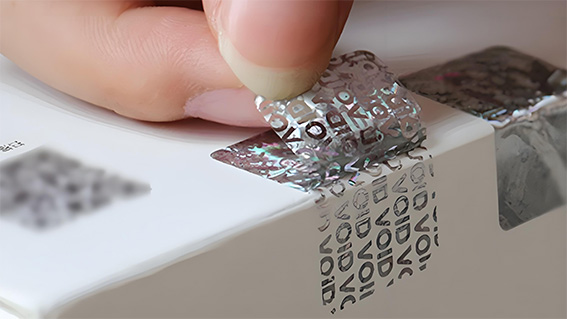
VOID anti-counterfeiting label rely on a physically destructive structure that leaves marks upon peeling, delivering tamper-proof protection at low cost.
Analysis of the VOID anti-counterfeiting label