
The lifespan and environmental impact of outdoor labels
author: Eva
2026-05-15
Identification of outdoor equipment, tracking of logistics goods, explanations of municipal facilities - outdoor labels, with their convenient sticking feature, have become an important carrier for information transmission. However, the accompanying questions are gradually emerging: How long can outdoor labels be used? Will long-term use or disposal cause harm to the environment? As the core force in label production, can self-adhesive manufacturers create outdoor labels that balance durability and environmental friendliness? These questions not only affect the development direction of the label industry, but are also closely related to the overall trend of ecological environmental protection.
I. How long does the outdoor labels last?
Unlike indoor labels, outdoor labels need to endure the harsh conditions of sun exposure, rain, temperature fluctuations, sand and wind erosion for an extended period. Their lifespan is not a fixed value but is influenced by three core factors: material, process, and usage environment.
The lifespan of short-term outdoor labels is usually between 3 and 6 months
These labels are mostly made of ordinary paper substrates combined with basic pressure-sensitive adhesive and have not undergone special weather resistance treatment. They are mainly used in temporary identification scenarios, such as outdoor promotional activities and short-term construction warnings.
Ordinary paper labels are prone to mold and damage in humid environments
lack UV resistance, and will start to fade and become brittle within just 1-2 months after exposure to direct sunlight. They cannot maintain clear information for a long time and are suitable for scenarios where information does not need to be retained for a long period.
The lifespan of the medium-term outdoor labels can last for 1 to 3 years
Making it the most widely used type in current outdoor scenarios. The base material is mostly made of synthetic paper or ordinary PET film, combined with highly weather-resistant pressure-sensitive adhesive. Some products undergo simple coating treatment, which can resist daily exposure to sunlight and rain. These labels are suitable for most common outdoor environments, such as outdoor storage goods identification and ordinary outdoor equipment nameplates. They can not only meet the need for long-term information transmission but also control costs, with outstanding cost-effectiveness.
The lifespan of long-term outdoor labels can reach 3-5 years or even longer
they are mainly used in scenarios where the stability of the identification is extremely demanding, such as photovoltaic modules, outdoor base stations, highway signs, large industrial equipment, etc. These labels use high-end substrates, such as highly weather-resistant polyester film (PET) and polyimide film, combined with special weather-resistant pressure-sensitive adhesive. During printing, UV ink or resin-based carbon tapes are selected, and some may also undergo double laminating or apply varnish treatment. They can withstand extreme temperatures ranging from -40℃ to 180℃, long-term ultraviolet exposure, and chemical corrosion.

II. What are the environmental risks of outdoor labels?
The environmental impacts of outdoor labels mainly occur in three stages: production, use, and disposal. Among them, the risks of traditional self-adhesive outdoor labels are particularly significant. If not handled properly, they will cause continuous harm to the soil, water bodies, and the ecological environment.
From the perspective of materials
The base materials of traditional outdoor labels are mostly non-biodegradable plastics (such as PVC and ordinary PET), and the adhesives are mostly solvent-based pressure-sensitive adhesives, while the printing inks are mostly solvent-based inks. These materials themselves are difficult to degrade naturally. If they are discarded randomly after being used, they will cause pollution. The fragments of outdoor labels scattered outdoors not only affect the beauty of the environment but also may be mistakenly eaten by birds and small animals, posing a threat to their lives. What is even more concerning is that some inferior labels contain harmful substances in their adhesives and inks, such as volatile organic compounds (VOCs), heavy metals, and even perfluoro and polyfluoroalkyl substances (PFAS).
From the perspective of waste disposal
The amount of outdoor labels discarded is huge and their recycling is very difficult. Since the labels are often stuck on different materials, they are difficult to remove, and during the recycling process, a large amount of manpower and resources are required, resulting in most of the discarded outdoor labels being mixed into household garbage and eventually ending up in landfills or being incinerated. During landfilling, the non-biodegradable plastic base materials will occupy land for a long time. The harmful substances in the adhesives and inks may seep into the soil and groundwater, polluting the water resources. During incineration, toxic and harmful gases will be produced, polluting the air and further exacerbating the environmental burden. Moreover, even if the labels are made of biodegradable materials, if they do not decompose under suitable environmental conditions, they may not be completely broken down, forming residual pollution.
III. How do self-adhesive manufacturers produce eco-friendly outdoor labels?
In terms of substrate selection, Instiker has abandoned the traditional non-degradable PVC material and instead adopted degradable or environmentally friendly renewable materials.
The current mainstream environmental-friendly base materials include plant fiber base materials
Degradable synthetic paper, recycled PET films, etc. Among them, plant fiber base materials are made from renewable resources such as straw and bamboo pulp, and can completely degrade in the natural environment within 6 months after use, leaving no environmental residues; degradable synthetic paper is made from degradable plastics and combines the weather resistance of plastics with the printing suitability of paper, which can meet the usage requirements of 1-2 years outdoors and can also gradually degrade after being discarded. These environmental-friendly base materials have been tested and all meet the safety certification standards of EU ROHS, China GB 31701, etc., without harmful substances such as formaldehyde, heavy metals, and fluorescent agents.
In terms of adhesives and inks, the core of environmental upgrading lies in the absence of solvents and low pollution
Traditional solvent-based adhesives and inks release a large amount of VOCs, polluting the environment and harming human health. Nowadays, manufacturers have generally adopted water-based pressure-sensitive adhesives, solvent-free pressure-sensitive adhesives, and water-based UV inks. Water-based pressure-sensitive adhesives use water as the solvent, have no harmful volatile substances, have stable adhesion, and have a weather resistance comparable to traditional solvent-based adhesives, suitable for various outdoor environments; solvent-free pressure-sensitive adhesives are cured through chemical reactions and have no VOC emissions throughout the process, are more environmentally friendly, and also have excellent resistance to high and low temperatures and water, suitable for extreme outdoor scenarios. Water-based UV inks are instantly cured by ultraviolet rays, have a dense ink layer, strong UV resistance, can ensure that outdoor labels do not fade or fall off, and can achieve no VOC emissions, with a green and pollution-free printing process.
In terms of production processes, Instiker has optimized its technology to reduce environmental damage during the production process
On one hand, it has introduced automated production lines and AI layout systems to enhance production efficiency, reduce waste of raw materials, and lower energy consumption. On the other hand, it has improved wastewater and waste gas treatment systems, purifying the wastewater generated during the production process before discharging it, and filtering and adsorbing the waste gas to prevent pollutants from directly entering the environment.
Instiker has launched mature environmentally friendly outdoor labels
These labels have passed quality and environmental certifications such as ISO9001 and SGS, and have achieved a balance between durability and environmental friendliness. Moreover, manufacturers like Shenzhen Juxin Printing and Ningbo Huaguan Labels have introduced degradable outdoor labels. These labels not only have an outdoor service life of over three years but also can naturally decompose after being discarded. The environmentally friendly labels with weather resistance produced by them use water-based ink and solvent-free adhesives, with a temperature range of -40℃ to 180℃, suitable for extreme scenarios such as cold chain and outdoor equipment, and also meet environmental requirements. These environmentally friendly labels have been widely applied in fields such as fresh food, baby products, outdoor equipment, and municipal facilities, meeting the needs of outdoor signage while reducing environmental burdens.
IV. The environmentalization of outdoor labels is both a responsibility and the future of the industry.
The lifespan of outdoor labels varies from a few months to several years, and the core factors depend on the choice of materials, processes, and usage environment; and the impact on the environment is not irreversible - improper materials and handling methods of traditional labels are the main risks, while the technological upgrades of non-woven adhesive manufacturers have made the popularization of environmentally friendly outdoor labels possible.
In the future, as technology continues to advance, self-adhesive manufacturers will continue to explore more efficient and environmentally friendly production technologies, and launch outdoor labels with longer service life, higher degradation efficiency, and more affordable costs. This will enable outdoor labels to not only convey information but also no longer be a burden on the environment, truly achieving "harmonious coexistence between humans and nature".
Analyze the printability of product label printing and the potential risks of ink leakage
The adhesiveness and printability of industrial labels
Related Article

Las etiquetas PET resisten el arrugamiento, la deformación, la pérdida de tinta, el cambio de tamaño y el manchado por tinta durante la producción a alta temperatura y la impresión digital con láser.
Comprehensive Analysis of PET Self-adhesive Labels
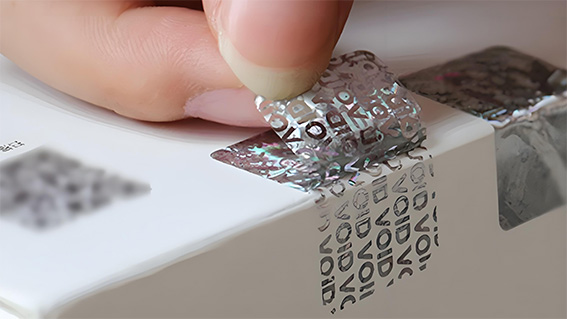
VOID anti-counterfeiting label rely on a physically destructive structure that leaves marks upon peeling, delivering tamper-proof protection at low cost.
Analysis of the VOID anti-counterfeiting label