
Regarding the issues of difficult to remove packaging labels, remaining adhesive, and environmental protection
author: Eva
2026-05-11
On the packaging of the goods we receive every day, there is almost always a sticky label attached - it contains the ingredient list, the production date, and brand information, serving as an indispensable identification for the product. However, this thin sticker often causes us three kinds of troubles: Is it difficult to peel off? Will there be any leftover adhesive after peeling? And will these discarded labels have any impact on the environment? These seemingly trivial questions actually hide the most overlooked details in our daily consumption.
I. Are the self-adhesive labels on the packaging really hard to remove?
In most cases, they are indeed very difficult to remove. Many people have experienced this:
when buying a bottle of honey in a glass jar and wanting to remove the label to reuse the jar, the label seems to be attached to the bottle itself. Pulling it hard only results in a fragmented tear, with the edges stubbornly sticking to the bottle wall. The more you pull, the messier it gets. For online-purchased plastic water bottles and ceramic tableware, the labels are attached to smooth surfaces. Even if you carefully peel them from the edges, they will either damage the label itself or detach along with a small piece of packaging material. Even the self-adhesive labels on paper packaging often leave frayed edges when removed, damaging the integrity of the packaging.
The difficulty in removing labels is not accidental. The main reason lies in the cost choices made by merchants. To reduce packaging costs, most merchants will choose low-cost industrial-grade self-adhesive materials. These materials have strong adhesion and are firmly attached, ensuring that the labels do not fall off during transportation and storage. However, they completely ignore the consumers' subsequent need to remove the labels. Especially on smooth materials such as glass, plastic, and ceramics, these self-adhesive materials have greater adhesion and cause extremely high resistance when removed. Over time, the difficulty in removing labels has become the norm for packaging labels and has also become the first minor annoyance for many consumers after purchase.
There are also a few merchants who choose to use peelable self-adhesive packaging labels. These labels use a special adhesive that can be easily removed completely without any tearing or sticking. However, this type of self-adhesive label is more expensive and is mostly used for packaging high-end products, and has not yet become widespread in daily consumer goods.

II. Will there be leftover adhesive after removing the packaging labels?
Along with the difficulty of removing the label comes the problem of adhesive residue left behind. This is almost a more troublesome issue than the difficulty of removal. Many times, even if we exert great effort to remove the label, the surface of the packaging will still have a circle of sticky adhesive. When touched with your hand, it feels sticky and greasy, and it is prone to picking up dust and fibers, making the originally clean packaging become dirty.
The generation of residual glue is closely related to the stickiness of the self-adhesive material and the packaging material. The stronger the stickiness of the self-adhesive, the more likely there will be glue residue when it is torn off; while smooth and non-absorbent materials such as glass and plastic cannot absorb the glue, the problem of residual glue will be more obvious; in contrast, for paper packaging, some of the glue will be absorbed by the paper, so the problem of residual glue will be slightly less severe, but there will still be traces left.
To remove the remaining glue, many people have tried various methods
boiling with hot water, using a hair dryer, rubbing with alcohol, using an eraser, or even scraping it off with fingernails. These methods are not only time-consuming and labor-intensive but also may damage the packaging material. For instance, rubbing plastic packaging with alcohol may cause it to turn yellow and lose its luster; scraping glass with fingernails may leave scratches. What's more frustrating is that even after repeated cleaning, some remaining glue cannot be completely removed and can only be left on the packaging, affecting its appearance and subsequent use.
III. Will the packaging labels have an impact on the environment?
After many people tear off the labels, they usually throw them into the trash bin without giving it a second thought. Few people realize that this small self-adhesive label is becoming an invisible burden of environmental pollution. Perhaps the impact of a single label is negligible, but when hundreds of billions of labels are discarded, their harm to the environment cannot be underestimated.
Firstly, the materials of self-adhesive labels are difficult to decompose. Most self-adhesive labels consist of base paper + adhesive + printing layer. The base paper is mostly plastic or coated paper, and the adhesive is mostly synthetic chemical materials. These materials are all non-biodegradable substances. When thrown into the trash bin, whether through landfill or incineration, they will have an impact on the environment. Landfilled labels take hundreds of years to decompose and may even contaminate the soil and groundwater; incineration will release harmful gases, polluting the air.
Secondly, labels can affect packaging recycling. The plastic bottles, glass jars, and paper packaging we discard daily are mostly recyclable and reusable. However, the self-adhesive labels on them become a problem for recycling. For example, when recycling plastic bottles, the label and the material of the bottle are different. During sorting, manual separation is required, which not only increases the recycling cost but also may cause incomplete separation, thereby polluting the quality of recycled plastic; for the labels on paper packaging, they will make the waste pulp cloudy, reducing the quality of recycled paper, and even making the entire batch of waste paper unable to be recycled.
What is even more alarming is that some merchants, in an attempt to achieve a better printing effect, use inks containing heavy metals and harmful solvents to print labels. After these labels are discarded, the harmful substances will gradually seep into the environment, further exacerbating pollution. Currently, our country has not established a complete recycling system for self-adhesive labels, and the vast majority of labels are treated together with other garbage, thus accumulating environmental hazards.
IV. Conclusion
The problems of being difficult to tear, having residual glue, and polluting the environment - these seemingly separate issues actually all point to the same core: The design, production, and use of self-adhesive labels always focus on the costs and convenience for the merchants, but neglect the consumer experience and environmental responsibility.
Solving these problems is not difficult: Instiker selects environmentally friendly removable adhesive labels that are easy to tear and have no residual glue. They design tear lines on the labels to balance practicality and user experience. They establish a unified environmental protection standard, regulate the materials and production processes of the adhesive labels, and promote degradable and recyclable labels. As consumers, we can also actively choose products with more reasonable and environmentally friendly label designs, and use our consumption choices to push businesses to improve.
Solving these problems is not difficult: Instiker selects environmentally friendly removable adhesive labels that are easy to tear and have no residual glue. They design tear lines on the labels to balance practicality and user experience. They establish a unified environmental protection standard, regulate the materials and production processes of the adhesive labels, and promote degradable and recyclable labels. As consumers, we can also actively choose products with more reasonable and environmentally friendly label designs, and use our consumption choices to push businesses to improve.
A simple packaging label may seem insignificant, but it connects our daily experiences with the ecological environment of the earth. When we no longer get frustrated by the difficult-to-remove labels, no longer worry about the leftover glue, and when every discarded label can be properly handled, our consumption life can truly become more convenient, more environmentally friendly, and more humane.
The synthetic paper produced by Instiker is highly adhesive-free and has excellent printing quality. It is easy to tear without leaving any residue. It is a preferred choice for many customers. If you are also interested, please contact us.
The adhesiveness and printability of industrial labels
Analysis of the Printing Difficulty, Food Applicability and Price of BOPP Labels
Related Article

Las etiquetas PET resisten el arrugamiento, la deformación, la pérdida de tinta, el cambio de tamaño y el manchado por tinta durante la producción a alta temperatura y la impresión digital con láser.
Comprehensive Analysis of PET Self-adhesive Labels
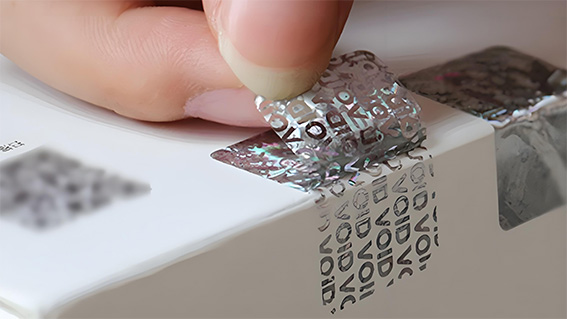
VOID anti-counterfeiting label rely on a physically destructive structure that leaves marks upon peeling, delivering tamper-proof protection at low cost.
Analysis of the VOID anti-counterfeiting label