The lifespan and printability of permanent adhesive labels
author: Eva
2026-04-27
In modern production and life, permanent adhesive labels have become indispensable core consumables for product identification due to their advantages of easy application, firm fixation, and wide adaptability to various scenarios. Many people have many questions during the usage process. How long can permanent adhesive labels actually last? Can they be printed by oneself in daily life? What types of permanent adhesive labels do professional self-adhesive label manufacturers mainly produce? Let's explore together.
I. How long does the actual usage period of permanent adhesive labels last?
Many people have a misunderstanding about the permanence of permanent adhesive labels. They believe that they can remain sticky and intact indefinitely. In fact, the term permanent here refers to the relative nature of removable self-adhesive labels. The labels do not easily fall off or peel off after being attached, and they can maintain clear identification and stable stickiness for a long time under reasonable conditions, rather than truly being indestructible. Their actual service life mainly depends on the base material, the type of adhesive, and the usage environment. The lifespan varies significantly under different conditions.
From the perspective of the base material, different materials have different weather resistance and anti-aging capabilities, which directly determine the service life of the labels. For permanent self-adhesive labels made of paper-based materials, due to the paper's susceptibility to moisture absorption and aging, when paired with permanent adhesive, in an indoor dry and light-protected environment, their service life is approximately 2 years; for permanent self-adhesive labels made of plastic film, they have better waterproof, oil-proof, and wear-resistant properties, and their service life can reach about 10 years; while for permanent self-adhesive labels made of metal film, the material stability is extremely strong, with outstanding resistance to high and low temperatures and UV rays, and their service life can be close to permanent, suitable for long-term archiving or use in extreme outdoor environments.
The quality of adhesives also affects the lifespan. High-quality permanent adhesives have stable molecular structures, are resistant to UV rays, withstand both high and low temperatures, and are not prone to oxidation and aging. They can maintain strong adhesion for a long time. On the other hand, inferior adhesives are prone to problems such as overflow, detachment, and yellowing due to aging, which will significantly shorten the lifespan of the labels. Moreover, the usage environment is a key influencing factor: in an indoor environment that is shielded from light, dry, and at a normal temperature, the lifespan of the labels can reach the above-mentioned maximum standard. If they are exposed to high temperatures, direct sunlight, and humid environments for a long time, or come into contact with acids, alkalis, or organic solvents, it will accelerate the aging of the substrate and the failure of the adhesive, and the lifespan may be shortened by 30% to 50%. In industrial scenarios, such as for cable identification and equipment nameplates, since they need to withstand high and low temperatures and frequent friction, special industrial-grade permanent non-drying labels should be selected. Their lifespan usually meets the requirements of the entire life cycle of the equipment.
II. Can permanent self-adhesive labels be printed?
Permanent adhesive labels can indeed be printed. The printing method is flexible and diverse. Depending on the printing volume, precision requirements, you can choose either home/small office printing or factory professional printing, which can meet different scenarios. Whether for personal use or enterprise batch customization, efficient printing can be achieved.
For individuals, small businesses or small-scale demands, home or small office printers can be used for printing. The operation is simple and the cost is low. When printing, two points need to be noted: First, choose the appropriate permanent adhesive printing paper. Commonly used types include A4 cut self-adhesive paper, which is pre-cut into fixed sizes and does not require manual cutting. It can be used with laser or inkjet printers. Among them, laser printers have clearer and more durable printing effects, while inkjet printers are suitable for printing color patterns. Second, master the correct printing techniques. During design, use software such as Word and Photoshop, set the size consistent with the label paper, with a resolution of no less than 300 DPI, and select the CMYK color mode to ensure the printing effect. Before printing, be sure to print a test page first to avoid wasting the label paper. After printing, you can apply a coating according to your needs to enhance waterproof and wear-resistant properties.
For large-scale and high-quality production requirements of enterprises, it is suitable to have the labels printed by professional self-adhesive label manufacturers. These manufacturers possess professional printing equipment and can complete complex processes such as printing, coating, gold stamping, and die-cutting in one go. Not only do they have high printing accuracy and vivid colors, but they can also combine special techniques to enhance the texture and durability of the labels. During the printing process, the enterprise only needs to provide the design draft, clearly stating the label size, material, adhesive type, and process requirements. The manufacturer can then produce according to the needs, facilitating the efficient delivery of large-scale orders, while ensuring the consistency and professionalism of the labels. For example, labels from brands like 3M support laser, inkjet, or copier printing, and come with dedicated templates, making it convenient for enterprises to quickly customize.
In addition, the commonly used permanent adhesive labels in industrial settings can also be printed using barcode printers, combined with resin carbon tapes, to achieve waterproof, scratch-resistant, and oil-resistant effects. This ensures that the labels remain clear and legible for a long time, meeting the requirements of industrial traceability. It should be noted that when printing permanent adhesive labels, the corresponding ink and printing method need to be selected based on the label substrate. For example, PET material labels are suitable for printing with UV ink to avoid problems such as ink fall off and blurriness.

III. What are the core products of the self-adhesive label manufacturers?
(1) Food and beverage permanent adhesive labels
This type of label is one of the core products of Instiker It is suitable for packaging labels of food, beverages, health supplements, etc. The core requirements are safety, non-toxic, waterproof, and oil-resistant, and it can maintain clear labels for a long time to avoid label detachment or blurring due to food storage environment. Common substrates include copperplate paper, transparent BOPP, pearlescent paper, etc., combined with food-grade permanent adhesive, meeting relevant safety standards, and can be directly adhered to the surface of glass bottles, plastic bottles, packaging boxes, etc. For example, edible oil labels mostly use mirror copperplate paper, combined with permanent glue, through relief printing + lamination process, waterproof and oil-resistant, with a lifespan of 3-5 years; labels for high-end health products such as bird's nest, etc., use special paper or transparent BOPP, combined with offset printing + cold stamping, hot stamping process, ensuring safety while enhancing product quality; juice and beverage labels mostly use transparent PE or PVC materials, suitable for different bottle types, with bright printing colors, not prone to detachment.
(2) Daily care and beauty permanent adhesive labels
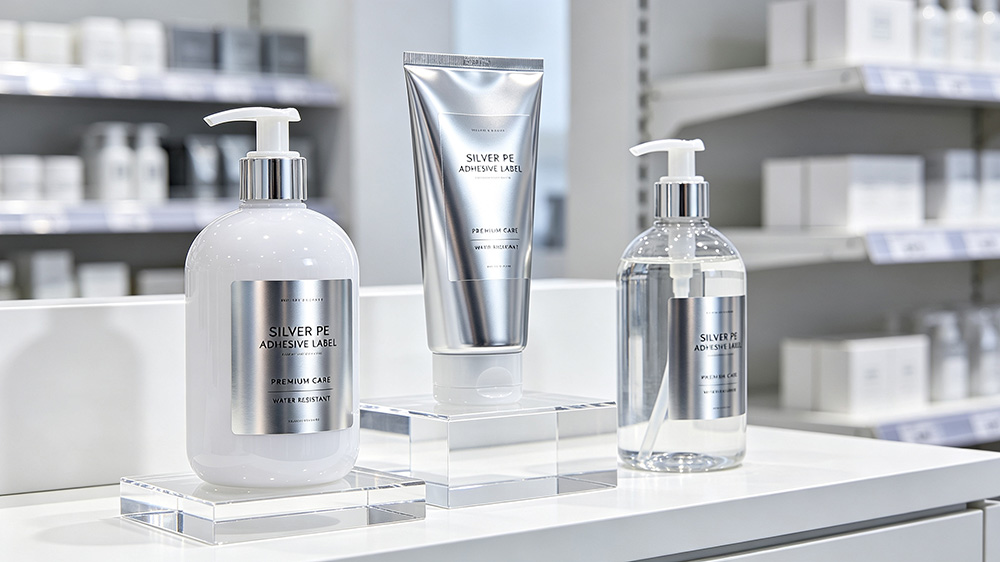
Suitable for daily care and beauty products such as shampoo, body wash, skincare products, perfumes, etc. The requirements are aesthetic, wear-resistant, waterproof, and resistant to corrosion, able to withstand chemical components in daily care products, and remain adhered without peeling or overflow for a long time. Common substrates include transparent PET, matte silver PET, synthetic paper, etc., with good chemical corrosion resistance and anti-yellowing ability. Transparent PET labels can display the color of the product itself, while matte silver PET labels have a metallic texture, enhancing the product's high-end feel; perfume labels mostly use writing paper + matte film, through offset printing + lamination + hot stamping process, combining beauty and durability; labels for hand wash liquid, moisturizing lotion, etc., use transparent BOPP or PE materials, waterproof and oil-resistant, able to be adhered to the surface of plastic bottles, glass bottles for a long time, and not aging or yellowing.
(3) Industrial permanent adhesive labels
These labels are suitable for industrial production, equipment identification, cable traceability, etc. The core requirements are resistance to high and low temperatures, wear resistance, chemical corrosion resistance, strong adhesion, and the ability to maintain clear labels for a long time in extreme environments. Instiker mainly produces cable-specific labels, equipment nameplate labels, asset labels, etc. Common substrates include PET, PI, synthetic paper, etc. Among them, PET material is resistant to high and low temperatures, anti-ultraviolet, tear-resistant, suitable for electronic equipment, automotive parts identification, with a lifespan of 5 years or more; PI material has a wider temperature range and is mainly used in extreme environments such as aerospace, electronic components; cable-specific labels use special pressure-sensitive glue, with strong adhesion to PVC, rubber, etc. outer skins of cables, excellent weather resistance, able to meet the identification needs of the entire life cycle of cables; asset labels mostly use silver PET material, combined with resin carbon tape printing, waterproof and scratch-resistant, suitable for enterprise fixed asset traceability.
(4) Pharmaceutical permanent adhesive labels
Suitable for pharmaceuticals, medical devices, etc. The requirements are safety, non-toxic, tamper-proof, resistant to low temperatures, and able to clearly display key information such as drug name, specification, production date, expiration date, etc., and remain adhered without falling off or blurring. Common substrates are copperplate paper, transparent PET, combined with medical-grade permanent adhesive, meeting pharmaceutical industry standards, able to withstand refrigeration environment, avoiding adhesive failure due to low temperature; Chinese herbal medicine decoction pieces labels mostly use bright silver BOPP material, through offset printing + local reverse gloss process, clear labels, not prone to wear, suitable for long-term archiving.
(5) General and other permanent adhesive labels
In addition to the above industry-specific labels, Instiker also produces various general-purpose permanent adhesive labels, such as office file labels, logistics traceability labels, cartoon stickers, and paper tape stickers. Office file labels are mostly made of coated paper or synthetic paper, with strong adhesion, suitable for file classification and archive management, and can be preserved for a long time without falling off; Logistics labels are made of synthetic paper, waterproof and tear-resistant, combined with permanent adhesive, can be pasted on express packages and logistics packaging boxes, and can withstand friction and moisture during transportation; Cartoon stickers are mostly made of transparent PET or BOPP materials, combined with permanent glue, with bright printed colors, can be used in creative and decorative scenarios, and are not likely to fall off or yellow after being pasted.
IV. Summary
The permanence of permanent adhesive labels refers to the relatively concept of long-lasting adhesion and difficulty in peeling. The actual service life is affected by the substrate, adhesive, and usage environment, ranging from 2 years to several decades. It has extremely strong printability and can be printed either at home or in a factory using professional printing methods, with convenient operation and strong adaptability. Professional self-adhesive manufacturers' products cover multiple industries, ranging from food and cosmetics to industrial medicine, from general identification to specialized traceability, and can customize materials, processes, and specifications according to the needs of the scenarios.
The Use of Tape Stickers and Environmentally Friendly Production
Printing effect of removable labels and manufacturer's optimization plan
Related Article

Las etiquetas PET resisten el arrugamiento, la deformación, la pérdida de tinta, el cambio de tamaño y el manchado por tinta durante la producción a alta temperatura y la impresión digital con láser.
Comprehensive Analysis of PET Self-adhesive Labels
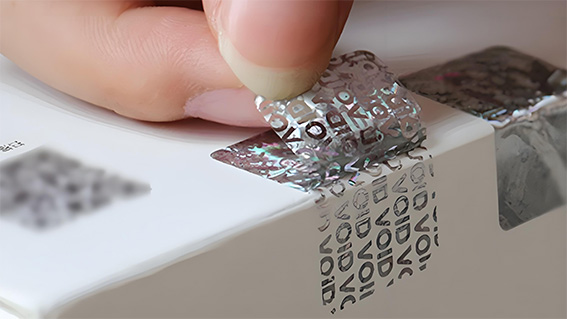
VOID anti-counterfeiting label rely on a physically destructive structure that leaves marks upon peeling, delivering tamper-proof protection at low cost.
Analysis of the VOID anti-counterfeiting label