
The environmental impact of PET sticker、applicability for food packaging and the improvement paths for manufacturers
author: Eva
2026-03-16
In the current era of rapid innovation in the packaging industry, PET sticker, due to their high transparency, durability, and resistance to high and low temperatures, are widely used in various product labeling scenarios. However, with the deepening of environmental awareness and the continuous upgrading of food packaging safety standards, the environmental impact of PET sticker and their suitability for food packaging have become issues that need to be addressed. How can Instiker overcome its inherent drawbacks?
I. What are the environmental impacts of PET sticker?
(1) The environmentally friendly basic characteristics
PET material itself is recyclable. The recycled PET can be processed through a recycling process to become rPET (recycled PET) material, which can be used to produce new packaging, textiles, and other products, achieving resource recycling - companies such as Avery Dennison have launched solutions with 100% rPET as the base material. Their performance is no different from traditional PET, and they have passed the global recycling standard (GRS certification), providing a feasible path for the sustainable development of the industry.
Meanwhile, PET materials themselves are non-toxic and odorless, and do not contain harmful heavy metals. Compared to plastic materials such as PVC, they produce fewer pollutants during production and pose lower direct harm to humans and the environment. This is an important prerequisite for their wide application.
(2) Environmental Hazards That Cannot Be Ignored
1. Difficulties in recycling after disposal, leading to plastic pollution: PET sticker are mostly composite materials. The base material, adhesive, and ink are difficult to completely separate, which poses a great challenge to the recycling process. Especially for PET sticker used for packaging, they are often closely adhered to other materials. If not specially sorted after disposal, the residual adhesives will contaminate other recyclable materials, resulting in most PET sticker being classified as mixed waste and ultimately ending up in landfills or incinerators. During landfilling, PET materials are difficult to degrade and will occupy land resources for a long time; incineration will produce harmful gases, polluting the air environment. In the PET bottle recycling field, labels are difficult to remove and residual glue pollution are the core bottlenecks restricting the "bottle-to-bottle" closed-loop recycling. The residual of traditional PET sticker will cause the PET materials to be used at a lower grade or even become waste.
2. Hidden pollution in the production and usage stages: During the production of PET sticker, the use of adhesives and inks may cause environmental burdens. Some traditional adhesives contain volatile organic compounds (VOCs), which will volatilize into the air during production and usage, causing air pollution; some harmful substances in the ink, if not properly treated, will seep into the soil and water bodies, affecting ecological balance. Moreover, some PET sticker, to enhance the printing effect, do not have an environmental coating treatment on the surface. This not only affects the recycling efficiency but also, if the ink peels off, may cause secondary pollution.
3. Resource Consumption Issue: The production of PET materials relies on non-renewable resources such as petroleum. As petroleum resources become increasingly scarce, large-scale production of PET sticker will further increase the pressure on resource consumption. Additionally, the traditional production process of PET sticker is relatively complex, and some processes consume a lot of energy, which does not meet the green production requirements under the "dual carbon" goals.
II. Can PET sticker be used for food packaging?
(1) Core requirements for food packaging regarding PET sticker
According to GB 4806.7-2023 "National Food Safety Standard - Plastic Materials and Products for Food Contact" (to be implemented on September 6, 2024), food contact PET materials and products must meet strict technical requirements: raw materials must comply with GB 4806.6 and relevant announcements, and additives must comply with GB 9685 and relevant announcements; a requirement that the total migration of aromatic primary amines must not be detected has been added, and at the same time, the technical requirements for food contact plastic materials and products using coatings, inks, and adhesives have been clearly defined. Specifically for PET sticker, the following three core conditions must be met:
1. Material compliance: The PET base material, adhesive, and ink of the stickers must all meet the standards for food-contact materials. Recycled plastics are prohibited. The adhesives and inks must not have any harmful component migration. For example, the Eliadson CleanFlake™ water-washable non-drying label used in the Yuezhuang Yufresh pilot project, its SR3013 water-washable adhesive uses a safe formula and complies with the latest national standard GB 4806.15-2024, even reaching the level suitable for infants.
2. No migration risk: When the stickers come into contact with food, no harmful substances should migrate into the food. Especially for packaging of oily and acidic foods, strict migration tests must be conducted to ensure that the total migration amount and specific migration amounts comply with the limit requirements - for example, for starch-based PET composite materials with a starch content of ≥ 40%, the trichloromethane extract needs to be additionally measured to ensure safety and compliance.
3. Adaptation to food packaging scenarios: Food packaging must have characteristics such as moisture-proofing, anti-fouling, and resistance to high and low temperatures. PET sticker need to be compatible with these requirements. For example, PET sticker for low-temperature refrigerated food packaging must ensure that they do not peel off or crack in low-temperature environments; the stickers for high-temperature sterilization food packaging must withstand high temperatures and not undergo any component changes. At the same time, the stickers must avoid direct contact with food. If contact is necessary, they should be treated with food-grade laminating to prevent the ink and adhesives from coming into contact with the food.
(2) Feasibility and precautions of PET sticker for food packaging
From practical application, PET sticker can be fully used for food packaging, but strict compliance is required to avoid safety hazards:
In terms of feasibility, PET materials are non-toxic, wear-resistant, and have high transparency, making them suitable for food packaging labels, especially for high-end food packaging, which can enhance the product quality - for example, Jinkeliya Yuezhuan Fresh Organic Milk has piloted the use of PET water-washable non-dry adhesive labels, which not only meet the labeling requirements but also comply with environmental protection and safety requirements. At the same time, with the upgrade of environmental protection technology, water-washable and degradable PET sticker have been gradually launched, further expanding their application space in the field of food packaging.
In terms of feasibility, PET materials are non-toxic, wear-resistant, and have high transparency, making them suitable for food packaging labels, especially for high-end food packaging, which can enhance the product quality - for example, Jinkeliya Yuezhuan Fresh Organic Milk has piloted the use of PET water-washable non-dry adhesive labels, which not only meet the labeling requirements but also comply with environmental protection and safety requirements. At the same time, with the upgrade of environmental protection technology, water-washable and degradable PET sticker have been gradually launched, further expanding their application space in the field of food packaging.
In terms of precautions, first, the use scenario of the stickers must be clearly defined to avoid direct contact with food; second, choose PET sticker products that meet food safety standards and check the product test report to confirm that the adhesives and inks do not contain harmful components; finally, use them strictly in accordance with the storage and usage conditions of food packaging to avoid problems such as sticker peeling, ink detachment, etc., caused by environmental factors, which may lead to food contamination. In addition, food packaging PET sticker must comply with label marking requirements, mark "Food Contact Use", clearly indicate the usage temperature range, and avoid false environmental protection statements.

III. Responsibilities of the Self-adhesive Label Manufacturers
(1) Optimization of Material Formulation
1. Instiker develops eco-friendly adhesives and inks: replacing traditional adhesives and inks containing VOCs and harmful components with water-based adhesives, plant-based inks, etc. - Water-based adhesives have no volatile harmful substances and are harmless to the environment and human bodies; plant-based inks are made from natural plant extracts and can be biodegraded and have no pollution. At the same time, they enhance the adhesion between the ink and the PET substrate, reducing ink peeling and pollution. For example, the SR3013 water-wash adhesive used in the Adlens CleanFlake™ technology is not only safe and environmentally friendly, but also can completely detach from the PET bottle body in a 70°C alkaline water-wash environment, solving the problem of residual glue pollution.
2. Promote recycled PET (rPET) substrates: Increase the research and application of rPET materials, utilize recycled PET waste to produce sticker substrates, reduce reliance on petroleum resources, and achieve resource recycling. Manufacturers can collaborate with recycling enterprises to establish a PET sticker recycling system to ensure that discarded stickers can be effectively recycled and reused - Avery Dennison has launched solutions with different rPET content ratios for the facestock and basestock. The 100% rPET facestock has passed GRS certification and has the same performance as traditional PET, helping the industry reduce carbon emissions.
3. Develop biodegradable PET composite materials: Combine biodegradable materials with PET materials to produce biodegradable PET sticker, addressing the challenge of their difficulty in degradation. This composite material retains the advantages of PET while gradually degrading in the natural environment, reducing plastic pollution. Additionally, plant fibers can be incorporated as additives into the PET material, meeting the requirements of GB 4806.7-2023, enhancing the environmental friendliness and safety of the material.
(2) Improve production processes
1. Optimize production processes to reduce energy consumption and pollution: Instiker uses energy-saving production equipment and optimizes production processes to reduce energy consumption and pollutant emissions during the production process. For example, improving the molding process of the PET substrate to reduce the generation of wastewater and waste gas; adopting solvent-free composite technology instead of the traditional solvent-based composite technology to avoid VOC pollution of the air.
2. Improved the recyclability of PET sticker: Optimized the structure design of the stickers, adopted a separable composite structure, making it easy to separate the substrate, adhesive, and ink after disposal, thereby enhancing the recycling efficiency. For example, using peelable PET sticker, the substrate and adhesive can be easily separated after use, allowing for separate recycling processes; for PET bottle packaging labels, developed a water-washable label technology to ensure that the label can quickly detach from the bottle during recycling, without contaminating the PET bottle pieces.
3. Optimized the surface treatment process of PET: To address the issues of smooth PET surface and poor ink adhesion, the TC coating treatment technology was adopted. A modified acrylic or polyurethane coating was added to the PET surface, which not only enhanced the bond between the ink and the substrate, reducing ink shedding, but also did not affect the recyclability of the material. This coating is like a "double-sided adhesive", firmly grasping the PET substrate on one side and providing an interface compatible with UV ink on the other side, solving the industry pain point of ink leakage in PET printing.
(3) Strengthened quality control
1. Instiker established a strict raw material inspection system: Conducted strict inspections on PET substrates, adhesives, inks, etc., to ensure they met the standards for food contact materials and prevented unqualified raw materials from entering the production process. Key inspections included heavy metals, VOCs, aromatic primary amines, etc., to ensure no migration risks and compliance with national standards such as GB 4806.7-2023.
2. Instiker Enhances Quality Control in Production Process: During the production process, strict control is exercised over parameters such as production environment, temperature, and humidity to prevent issues such as glue detachment, ink shedding, and substrate damage in the products. Additionally, samples of the finished products are taken for testing to ensure that the product's adhesion, resistance to high and low temperatures, and no migration properties meet the requirements. Especially for PET sticker used in food packaging, additional migration tests are conducted to ensure safety and compliance.
3. Instiker has improved the product identification and traceability system: Clearly mark product information on PET labels, including raw material components, applicable scenarios, whether it complies with food contact standards, and recycling methods, to facilitate consumers' identification and use. At the same time, establish a product traceability system to ensure product quality traceability and protect consumers' rights and interests.
(4) Strengthen technological research and development and industry cooperation to promote industrial upgrading
1. Instiker has increased research and development investment and broken through core technical bottlenecks: Our factory has invested funds and human resources to focus on researching degradable PET materials, environmentally friendly adhesives, and efficient recycling technologies, breaking through the existing technical shortcomings and improving the environmental protection and safety of PET labels. For example, develop PET labels that are suitable for food packaging, with high-temperature resistance, low-temperature resistance, and no migration, to meet the needs of different food packaging scenarios; optimize the production process of rPET materials to reduce production costs and promote their large-scale application.
2. Strengthen industry cooperation and build a green industrial chain: Establish partnerships with PET raw material manufacturers, recycling enterprises, and food enterprises. For instance, collaborate with food enterprises to customize PET sticker that meet the requirements based on the packaging needs of food products; collaborate with recycling enterprises to establish a PET sticker recycling system, promoting the recycling and reuse of discarded stickers, and achieving resource recycling. The cooperation between Junlebao and Avery Dennison is a typical case where a food enterprise and a self-adhesive manufacturer join forces to promote the upgrade of green packaging, providing replicable practical experience for the industry.
3. Respond to policy directions and fulfill social responsibilities: Actively respond to the national "carbon neutrality" goals and plastic pollution control policies, proactively promote the green upgrade of PET sticker, participate in environmental protection public activities, guide consumers to use and dispose of PET sticker correctly, and enhance the environmental awareness of the industry. At the same time, strictly abide by food safety-related standards, adhere to the bottom line of food packaging safety, and contribute to the high-quality development of the food industry.
IV. Conclusion
PET sticker, as a widely used packaging identification material, their environmental impact and food packaging applicability not only concern the sustainable development of the ecological environment but also the health and safety of consumers. The advantages of PET materials provide the foundation for their application in the field of food packaging, while strict food safety standards set the compliance boundaries for them. As long as the standards are met and the scenarios are adapted, PET sticker can be safely used for food packaging.
For self-adhesive manufacturers, improving the drawbacks of PET sticker is not only an inevitable requirement for responding to policy guidance and fulfilling social responsibilities, but also an important path to enhance the core competitiveness of the enterprise. By optimizing the material formula, improving the production process, strengthening quality control, and enhancing technological research and development and industry cooperation, the environmental hazards and safety risks of PET sticker can be effectively solved, promoting the development of PET sticker towards environmental friendliness, safety, and efficiency.
In the future, with the continuous advancement of environmental protection technologies and the continuous improvement of industry standards, it is believed that PET sticker will achieve wider application while maintaining environmental friendliness and compliance with safety regulations. This will provide strong support for the green and sustainable development of the packaging industry and the safety upgrade of the food industry.
Transparent sticky paper: Application scenarios、environmental friendliness and green production paths
The environmental benefits、drawbacks of heat proof vinyl self-adhesive and the solutions adopted by manufacturers
Related Article

Las etiquetas PET resisten el arrugamiento, la deformación, la pérdida de tinta, el cambio de tamaño y el manchado por tinta durante la producción a alta temperatura y la impresión digital con láser.
Comprehensive Analysis of PET Self-adhesive Labels
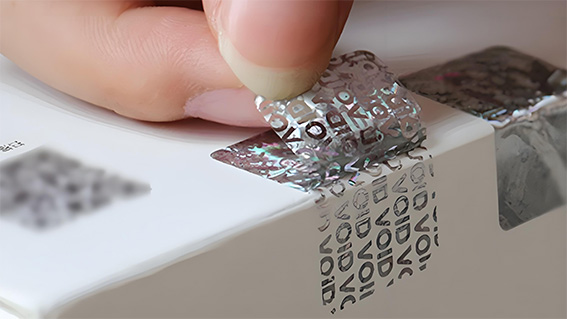
VOID anti-counterfeiting label rely on a physically destructive structure that leaves marks upon peeling, delivering tamper-proof protection at low cost.
Analysis of the VOID anti-counterfeiting label