
A Comprehensive Guide to the Environmental, Cost and Printing Aspects of PET stickers
author: Eva
2026-02-06
In the field of label application, PET stickers, due to their advantages of being wear-resistant, waterproof, oil-resistant and having high transparency, are widely used in various industries such as food, cosmetics, electronics, and logistics. However, at the same time, questions about PET stickers have also frequently arisen. Among them, "whether they are harmful to the environment", "the price level", and "whether they can be printed with ordinary printers" have become the three core issues that are most concerned. How will Instiker improve and innovate PET stickers products?
I. Are PET stickers harmful to the environment?
Many people, upon seeing the PETstickers as being made of plastic, instinctively assume that it is harmful to the environment. However, this perception is not comprehensive. PET stands for polyethylene terephthalate, which is a common type of high-molecular synthetic material. It is actually non-toxic and recyclable, making it an environmentally friendly material. This is why it can be widely used in food packaging.
The environmental friendliness of PET stickers is mainly reflected in two aspects: Firstly, the material itself has no odor and is chemically stable. During the production and usage process, it will not release harmful substances and will not cause direct harm to human health and the surrounding environment. Secondly, PET material is a recyclable resource. After being recycled, the PET stickers are broken, cleaned, and regenerated through various processes, and can be reprocessed into new PET products, achieving resource recycling and reducing plastic waste.
However, PET stickers also present certain environmental protection challenges: On one hand, their recycling process is relatively difficult. During the recycling process, they need to be separated from other types of labels, and the cost of recycling and disposal is higher than that of other plastic labels such as PP and PE. Currently, the professional recycling system for PET stickers in China is not yet fully developed, resulting in some discarded PET stickers not being effectively recycled. After being randomly discarded, they still cause plastic pollution. On the other hand, if improper handling methods are adopted, PET labels will produce a small amount of harmful gases, causing a slight impact on the air environment.
II. Are PET stickers expensive?
The price of PET stickers cannot be simply defined as "expensive" or "cheap". The core feature is that "the initial investment is relatively high, but the overall cost in the long term is relatively low". The specific price is affected by factors such as material specifications, purchase quantity, and processing techniques, and there are significant differences compared to ordinary paper stickers and PVC stickers.
From the perspective of individual cost, the price of PET stickers is indeed higher than that of ordinary stickers: the cost of a single sheet of ordinary coated paper stickers is only 0.05 - 0.1 yuan, while the cost of a PET label is approximately 0.15 - 0.3 yuan, which is 2 - 3 times that of the ordinary paper stickers; if it is a high-performance modified PET stickers, due to more complex raw materials and processing techniques, the price will be higher, and the cost of a single sheet may reach more than 0.3 yuan.
However, from the perspective of long-term usage and overall cost-effectiveness, PET stickers actually have more advantages. Firstly, PET stickers are extremely durable. They are resistant to tearing, oil and water, chemically resistant, have good weather resistance, and their service life is more than three times that of ordinary copperplate paper labels. In harsh environments such as outdoors, warehouses, and chemical industries, they can effectively reduce the costs of repeated printing and replacement due to label damage. In the long run, they actually save more money. Secondly, PET stickers support high-precision printing and can be adapted to processes such as hot stamping and coating, presenting clear barcodes, logos, and text. They are suitable for packaging of high-end products such as cosmetics and electronic products, which can increase product value and indirectly reduce marketing costs. Moreover, the price of PET stickers is significantly influenced by the purchase volume. When purchasing in large quantities , manufacturers will offer certain discounts. The unit price of PET stickers can be as low as 0.05-0.08 yuan, significantly narrowing the gap with ordinary paper labels.
For small businesses or individuals, if the usage is small in quantity and short-term, the cost of PET stickers is indeed higher and its cost-effectiveness is not as good as that of ordinary paper labels. However, if the usage is long-term, large-scale procurement is involved, or if there are higher requirements for the durability and appearance of the labels, the long-term cost-effectiveness of PET stickers is more prominent, and they are a more suitable choice.

III. Can PET stickers be printed using ordinary printers?
The answer is: It can be printed, but there are strict conditions. Ordinary household or office printers cannot achieve the ideal printing effect. They are only suitable for small-scale, low-demand temporary printing. For batch printing or when there are specific requirements for the effect, professional barcode printers with dedicated consumables must be used.
The main limitations of using ordinary printers for printing PET stickers are as follows: Firstly, the material compatibility is poor. Ordinary printers are mainly designed for common paper types (such as A4 paper, coated paper), while PET stickers have a smooth surface and do not absorb water. If an ordinary inkjet printer is used, the ink cannot adhere quickly, resulting in smudging, peeling, and blurred text; if a regular laser printer is used, the high temperature during printing will cause the PET stickers to deform, curl, or even damage the printer components. At the same time, the printed text and patterns have poor scratch resistance and are prone to wear and color fading. Secondly, the printing accuracy is insufficient. PET stickers are often used for printing barcodes, QR codes, etc., which require high-precision presentation. The printing accuracy of ordinary printers cannot meet the requirements, and the printed barcodes may not be scan-able and recognizable, affecting usage. Thirdly, they cannot adapt to special processes. One of the advantages of PET stickers is their wear resistance and water resistance. However, after printing with an ordinary printer, additional coating is required to achieve these effects, which is cumbersome and ineffective, and cannot fully utilize the advantages of PET stickers.
If it is necessary to use a regular printer to temporarily print PET stickers, two conditions must be met: Firstly, choose a special coated PET stickers paper. This type of label paper has a special coating on its surface, which can enhance the adhesion of the ink and prevent smudging and peeling; Secondly, adjust the printer settings. Inkjet printers need to select "thick paper mode" and "high gloss paper mode", while laser printers need to lower the printing temperature to avoid label deformation. However, even with these measures, the printing effect and durability are still far inferior to those of professional equipment.
For scenarios involving batch printing or those with specific printing requirements, it is recommended to use a professional barcode printer in combination with a carbon tape thermal transfer solution. This is the most suitable printing method for PET stickers. Barcode printers are specifically designed for label printing and support various special materials such as PET and synthetic paper. Through the thermal transfer technology, the ink on the carbon tape is transferred to the PET stickers, resulting in clear, durable, waterproof, and scratch-resistant printed text and patterns. It can achieve high-speed, batch, and continuous printing, meeting the needs of large-scale label printing in industries and logistics. Currently, common brands like Borstie that are available on the market can all perfectly adapt to PET stickers printing.
IV: Choose PET stickers rationally, adaptability to scenarios is more important
Overall, PET stickers are non-toxic and recyclable, and proper disposal is environmentally friendly. There is no need to overly worry about their environmental issues; in terms of price, the initial investment is relatively high in the short term, but the long-term cost-effectiveness is outstanding, making them suitable for long-term and large-scale use; for printing, ordinary printers can be used temporarily as an emergency solution, but professional barcode printers can better leverage their advantages.
When choosing PET stickers, there is no need to blindly pursue "environmental friendliness" or "high-end" features. Nor should one reject them due to "high price" or "difficult printing". The key is to consider your specific usage scenario: if it's for short-term, small-scale use with a limited budget, ordinary paper labels are more suitable; if it's for long-term use, with requirements for durability and aesthetics, and with proper recycling measures in place, PET labels are undoubtedly a superior choice. Their advantages can better meet the usage needs of various high-end and complex scenarios.
The environmental degradability, price and application of woodfree paper self-adhesive labels
The heat resistance, adhesiveness and environmental impact of self-adhesive products
Related Article

Las etiquetas PET resisten el arrugamiento, la deformación, la pérdida de tinta, el cambio de tamaño y el manchado por tinta durante la producción a alta temperatura y la impresión digital con láser.
Comprehensive Analysis of PET Self-adhesive Labels
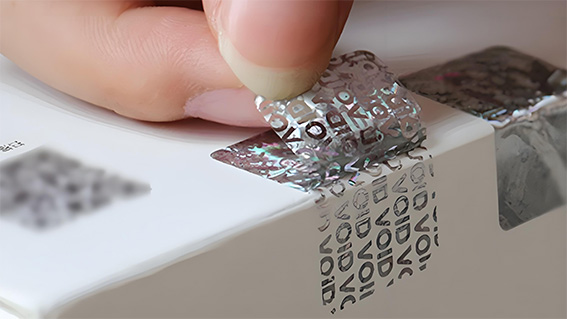
VOID anti-counterfeiting label rely on a physically destructive structure that leaves marks upon peeling, delivering tamper-proof protection at low cost.
Analysis of the VOID anti-counterfeiting label