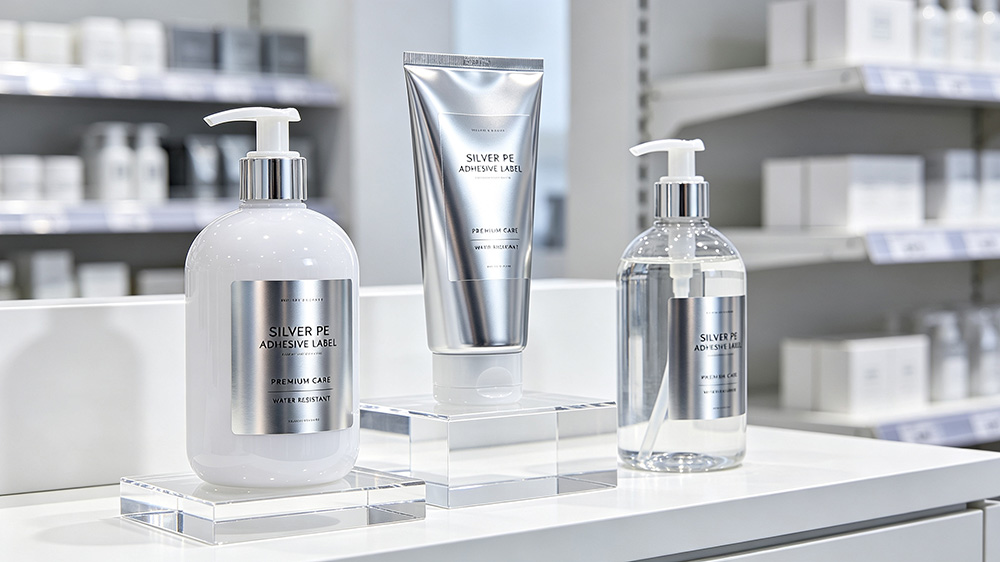
Analyze the printability of product label printing and the potential risks of ink leakage
author: Eva
2026-05-18
Labels serve as the identity cards of products, not only presenting the brand image directly but also serving as the core carrier for information transmission. They are widely used in various industries such as food, cosmetics, electronics, and logistics. For enterprises and manufacturers of self-adhesive labels, the core demands of easy printing and stable ink layer in label printing directly affect production efficiency, product quality, and brand reputation. This article will focus on three core issues - whether product label printing is easy to print, whether ink will smudge after printing, and how self-adhesive label manufacturers can improve printing quality. It will conduct a comprehensive analysis and discussion by combining industry practical experience and technical points.
I. Is product label printing easy to do?
Many enterprises, when purchasing labels or printing them themselves, will have doubts about whether label printing is easy or not. The difficulty of label printing is not absolute. The core factors determining its difficulty lie in material selection, equipment matching, and design specifications. As long as these three factors are compatible, efficient and smooth printing can be achieved; otherwise, problems such as jamming, misalignment during printing, and uneven ink layer may occur.
From the perspective of material compatibility, the printing adaptability varies significantly among different materials, directly determining the ease of printing. For regular indoor short-term use price tags and tags, such as those made of copperplate paper or offset paper, the printing adaptability is excellent. Whether it is digital printing, offset printing or flexographic printing, clear printing can be easily achieved with low cost. However, for outdoor, cold chain or chemical product labels made of PET or PP films, due to their smooth surfaces and low tension, if not pre-treated, direct printing is prone to problems such as weak adhesion of the ink layer and blurred patterns. The printing difficulty is relatively high, and it is necessary to combine with special inks and processing methods to make printing easier.
In addition, the choice of the base paper also affects the smoothness of the printing process. In the automated labeling scenario, a smooth surface Grafix base paper is selected to ensure higher die-cutting accuracy and less likelihood of jamming during printing. For manual labeling, the yellow base paper is chosen, which is more cost-oriented and has relatively lower printing adaptability compared to the ordinary ones.
Equipment matching and operation specifications are equally crucial. For small batches and complex patterns of labels, using digital printing machines eliminates the need for plate making, making the operation convenient and easy to master, enabling quick personalized printing. For large-scale production, it is suitable for offset printing or flexographic printing equipment. Although parameters need to be adjusted in advance, the printing efficiency is high and the stability is strong. As long as the pressure of the ink roller and the tension of the rubber blanket are precisely adjusted, smooth printing can be achieved.
The design specifications can also reduce the difficulty of printing: by using vector formats such as AI and EPS for the files, converting the text into curves, ensuring a resolution of over 300dpi, setting the color mode to CMYK, leaving a 3mm bleed margin, avoiding extremely thin lines and large areas of flat web gradients, it is possible to effectively reduce the rework rate during printing and make the printing process smoother.
Product label printing is not difficult. As long as the right materials are selected based on the usage scenario, the appropriate printing equipment is matched, and the design requirements are followed, efficient and convenient printing can be achieved, meeting the production needs of different enterprises.

II. Will the product labels bleed ink during printing?
After printing, the labels bleeding ink is one of the most troublesome problems for many enterprises and manufacturers. With just a gentle touch, the text and patterns will lose color and fall off. This not only affects the appearance of the product but also may lead to the loss of information, and even cause consumers to question the quality of the product.
Inconsistent material compatibility is the most common cause of ink shedding. In thermal transfer printing, if the carbon tape does not match the surface material of the label properly, for example, using a wax-based carbon tape designed for coated paper to print on PET or PE synthetic paper labels, the ink layer cannot adhere effectively and will naturally shed upon contact; while in traditional ink printing, if the ink does not match the characteristics of the surface material, for instance, using ordinary ink to print on untreated film labels, the ink layer will also peel off. Moreover, inadequate surface treatment of the material can also lead to ink shedding. For example, if the surface tension of the film material is lower than 38 dyn, the ink cannot penetrate and adhere, and even after printing, it is prone to fall off. It is necessary to enhance the surface tension to around 42 dyn through corona treatment to improve the adhesion of the ink layer.
Inappropriate process parameters can also lead to the risk of ink loss. When the ink layer is too thick during printing, it will result in incomplete drying, making the surface appear dry while the interior remains in a softened state, leading to poor wear resistance and easy ink loss. If the printing speed is too fast, the energy of the UV curing device is insufficient, and the UV ink cannot be fully cured, which will also cause the ink layer to become brittle and fall off. In addition, improper adjustment of the printing pressure, with the ink roller and the printing plate being too tightly or too loosely in contact, will cause uneven ink transfer, resulting in some areas of the ink layer being too thin or too thick, and subsequently causing ink loss problems.
The absence or inadequacy of the post-processing stage can also exacerbate the ink bleeding problem. For labels that require wear resistance and moisture protection, if they are not coated or polished, the ink layer will be exposed directly, making it vulnerable to friction and moisture, and prone to peeling off. Moreover, if the coating or polishing process is improper, such as insufficient coating pressure or incompatible coating oil and ink, the ink layer will separate from the coating and polishing layer, resulting in ink bleeding.
The ink dropout problem is not insurmountable: by using copperplate paper with wax-based or mixed-base carbon ribbons, or synthetic paper with resin-based carbon ribbons, the ink layer can be firmly adhered; by adjusting the printing parameters, using thick ink with thin printing to reduce the thickness of the ink layer, ensuring that the UV curing energy meets the standard and prolonging the drying time; after printing, applying lamination, varnishing or UV coating treatment can effectively enhance the wear resistance of the ink layer and prevent ink dropout.
III. How can self-adhesive manufacturers improve the printing quality of product labels?
(1) Strictly control materials to lay a solid foundation for quality
Materials are the source of printing quality. Only by selecting high-quality and compatible materials can we fundamentally reduce printing risks. Instiker has established strict material procurement and inspection standards: the film base, glue, and backing paper all use products from reputable suppliers. Different usage scenarios recommend suitable materials, such as PET and PP for outdoor labels with strong weather resistance, low-temperature glue for cold chain labels, and materials compliant with FDA or GB 4806.1 certification standards for food contact labels. Before materials are stored, the surface tension and thickness uniformity of the film base, the stickiness and temperature resistance of the glue, and the smoothness and release force of the backing paper are tested. Unqualified materials are strictly not stored to avoid printing quality defects due to material issues.
(2) Optimize printing processes to enhance printing accuracy and stability
Process control is the core for improving printing quality. Instiker has carried out refined optimization in design coordination, parameter debugging, and post-processing. In the design coordination stage, it actively guides customers to standardize design documents, clearly defining font size, bleed position, and process reserved quantities, to avoid printing rework due to design issues. Before printing, the equipment parameters are precisely adjusted based on the characteristics of the film base and ink, such as adjusting the pressure of the flexographic printing machine, controlling the tension of the rubber blanket in offset printing, and adjusting the curing energy and speed in UV printing to ensure uniform ink layer, precise registration, and a registration error within 0.1mm, with a color difference ΔE ≤ 2. For film-based labels, pre-electrolytic treatment is carried out to enhance surface tension, or special inks are used for the base layer to enhance the adhesion of the ink layer. During multi-color printing, a closed-loop color management system is adopted to ensure color consistency, avoiding problems such as color differences and registration deviations.
(3) Upgrade production equipment to strengthen technical support
Advanced production equipment is an important guarantee for improving printing quality. Instiker has combined production needs and gradually upgraded equipment and technology. High-precision printing equipment, such as 10-color flexographic printing machines and high-speed digital printing machines, is introduced to improve printing accuracy and efficiency, meeting the needs of small-batch customization and large-scale production. Online surface tension detectors and viscosity automatic adjustment devices are equipped to monitor the pre-processing effect of materials and the viscosity of the ink in real time, ensuring a stable printing process. AI visual inspection systems and CCD visual systems are introduced to automatically capture minor defects such as missed printing, dirt spots, and registration deviations, with an error detection rate of less than 0.1%, improving inspection efficiency and accuracy, and reducing human inspection errors. For UV printing, a dual-curing system is upgraded to enhance the deep curing efficiency of the ink and avoid ink loss problems due to incomplete curing. Electrostatic eliminators and substrate cleaning devices are installed to prevent dust and paper debris from adhering to the film surface, avoiding printing defects such as fish eyes.
(4) Improve the quality control system to achieve full-process management
Quality inspection should run through the entire production process. Instiker has established a complete quality control system to ensure that every batch of labels meets quality standards. The first inspection stage checks the graphic content, process position, color accuracy, and ink layer adhesion, confirming that everything is correct before entering mass production. The process inspection stage checks the registration accuracy, ink color uniformity, and die-cutting completeness, promptly identifying and adjusting problems in the production process. The final inspection stage checks the die-cut quality, waste cleanliness, and barcode readability of the labels, and rejects unqualified products, ensuring they are not released to the market.
The production environment is standardized, maintaining a constant temperature and humidity in the workshop. High-precision printing uses a thousand-grade clean room to avoid the impact of dust and temperature/humidity changes on printing quality. Establish an employee training system and conduct regular training on printing technology, equipment operation, quality control standards, etc., to enhance the professional skills of employees and reduce quality risks caused by human operational errors; establish a quality traceability system, record the production parameters, material information, and test results of each batch of labels, so as to facilitate quick traceability and rectification in case of any problems in the future.
IV. Conclusion
The printability and ink layer stability of product label printing directly affect the production efficiency and brand image of the enterprise. The printing quality of the self-adhesive label manufacturers is even more crucial in determining the quality of the labels. Label printing is not an easy task, but as long as the right materials are selected, the equipment is matched, and the process is standardized, smooth printing can be achieved and ink leakage can be avoided.
For self-adhesive manufacturers, only by adhering to the bottom line of material control, optimizing printing processes, upgrading production equipment, and strengthening full-process quality control can they continuously improve the quality of label printing, address the core pain points of customers, and establish a firm foothold in the fierce market competition.
LOGO labels: Die-cutting difficulty, printing compatibility and common material analysis
The lifespan and environmental impact of outdoor labels
Related Article

Las etiquetas PET resisten el arrugamiento, la deformación, la pérdida de tinta, el cambio de tamaño y el manchado por tinta durante la producción a alta temperatura y la impresión digital con láser.
Comprehensive Analysis of PET Self-adhesive Labels
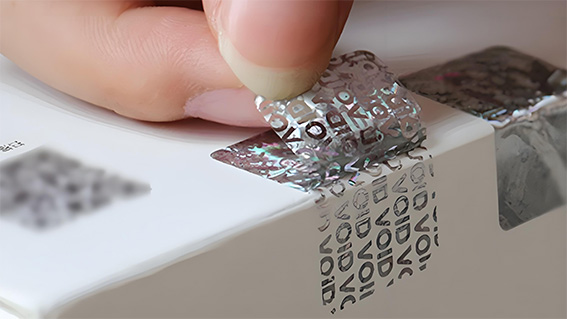
VOID anti-counterfeiting label rely on a physically destructive structure that leaves marks upon peeling, delivering tamper-proof protection at low cost.
Analysis of the VOID anti-counterfeiting label