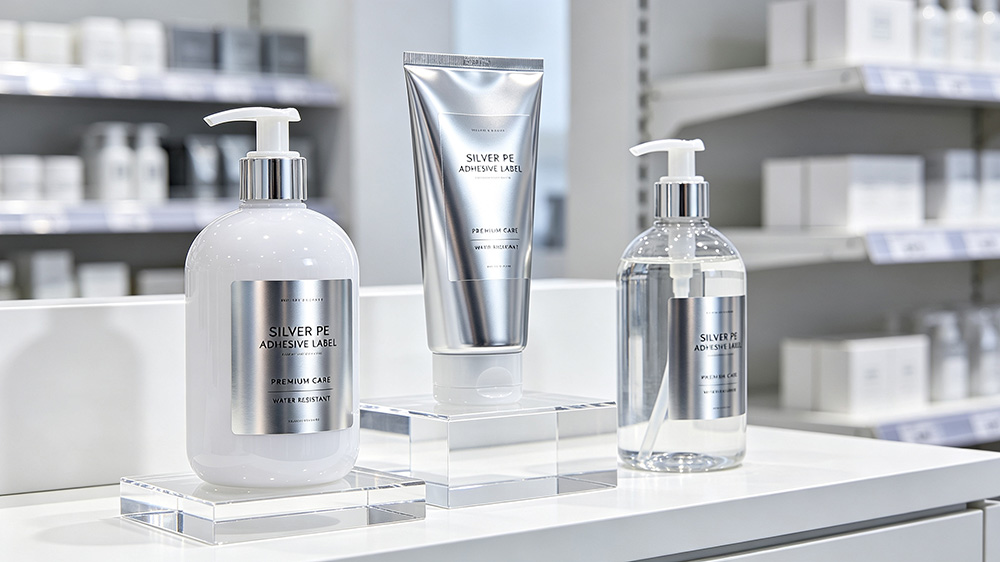
Printing effect of removable labels and manufacturer's optimization plan
author: Eva
2026-04-24
Today, with the increasingly widespread application of labels, removable labels have become the preferred choice in multiple fields such as logistics, food, office, and cultural and creative industries, thanks to their core advantages of adhering firmly and peeling off cleanly. However, along with this, questions have become more prominent: Will removable labels fall off easily? Can their printing effects meet diverse demands? And how should adhesive label manufacturers precisely solve problems that arise during the printing process?
I. Do removable labels fall off easily?
Many people have a misconception about removable labels, thinking that being removable means they are not secure and are prone to problems such as falling off or shifting. This is not the case. The core technical highlight of removable labels is precisely achieving a precise balance between firm adhesion and easy removal. Their adhesive design is fully tailored to the needs of the application scenarios and is not synonymous with being prone to falling off.
The control of the stickiness of removable labels lies in the formulation design of the pressure-sensitive adhesive layer. In the industry, this is known as the balance strategy of low initial adhesion and high peel force. The initial adhesion ensures that the label can quickly adhere to the substrate when pasted, avoiding immediate detachment. The peel force is precisely regulated to ensure that there is no residue or damage to the adhered object when removed, while maintaining stable adhesion throughout the usage period. According to the GB/T4852-2002 standard, the initial adhesion of removable labels is usually controlled at level 3, which can not only cope with vibrations and collisions during transportation and handling but also meet the subsequent requirement of easy removal.
Its adhesive stability is also reflected in its environmental adaptability. High-quality removable labels mostly use composite materials, featuring five protective properties: water resistance, oil resistance, high-temperature resistance, low-temperature resistance, and UV resistance. They can maintain stable adhesion in various scenarios: in a -30℃ freezing environment, the base material will not become brittle or break, and the adhesion remains controllable; in high-temperature workshops or outdoor exposure scenarios, the adhesive layer will not soften or lose, nor will the adhesion suddenly drop or leave residual glue due to aging.
A few removable labels tend to fall off easily, which is mostly related to three factors: First, the adhesive layer formula is unreasonable, failing to achieve a balance between adhesion and cohesion, and the low cohesion strength causes the adhesive layer to fall off easily; second, the compatibility of the base material is poor, for example, on low surface energy plastics such as polyethylene and polypropylene, pressure-sensitive adhesives with dedicated formulas are not used; third, the usage scenario exceeds the design range of the label, such as long-term outdoor exposure and high humidity environments, and products with strong weather resistance are not selected. As long as high-quality products that meet the scene requirements are chosen, the adhesive stability of removable labels can be fully guaranteed, truly achieving a stable application and clean removal.
II. How good is the printing effect of removable labels?
Users' requirements for the printing effect of removable labels are constantly increasing. They not only need clear text and bright patterns, but also need to meet the demands of efficient batch printing, resistance to fading in various environments, and compatibility with multiple printing devices.
From the perspective of advantages, the high-quality removable labels have excellent print compatibility. They support various mainstream printing methods such as thermal printing, laser printing, and inkjet printing, and are compatible with label printers like Jingchen, Yakolei, and Shufang, as well as general office printers. They can not only achieve small-batch personalized printing but also meet large-scale batch printing requirements. The base materials are mostly selected from high-strength synthetic paper, laminated paper, etc. The surface is smooth and flat, with excellent ink absorption and printing performance. After printing, the text edges are clear without burrs, and the color reproduction of patterns is high. Even small logos and QR codes can be clearly presented, meeting core requirements such as brand identification and information annotation.
The printing durability of the high-quality removable labels is outstanding. By adopting UV printing technology, the ink can be instantly cured, which not only improves the printing efficiency but also enhances the wear resistance and chemical resistance of the labels, preventing the blurring of text and the detachment of patterns caused by friction and wiping. Some products are coated with a wear-resistant film, with a pencil hardness of up to 2H. During transportation, they are less likely to develop scratches, further ensuring the durability of the printing effect.
However, there are also some common problems with the printing effect of removable labels, mainly concentrated in four aspects: Firstly, the ink adhesion is poor, and after printing, ink may fall off or smudge, especially more obvious on coated or waterproof substrates; Secondly, there is color deviation, and the colors of different batches of labels printed are inconsistent, affecting brand uniformity; Thirdly, during batch printing, paper jams and paper movement deviation are prone to occur, resulting in printing misalignment and waste; Fourthly, in special environments, the printed content is prone to fade and become blurry, affecting the readability of the information. These problems not only affect the user experience but also become the key factors restricting the expansion of the application of removable labels.

III. How do self-adhesive manufacturers solve printing problems?
(1) Optimize substrate selection
The substrate is the core carrier that affects the printing effect. Instiker selects appropriate substrates based on different printing methods and application scenarios, and performs surface treatment. For laser printing, a synthetic paper substrate with high heat resistance and stiffness is selected to avoid substrate deformation and paper jamming caused by high temperature; for inkjet printing, a coating paper or dedicated inkjet substrate with good ink absorption and smooth surface is selected, and coating treatment is performed on the substrate surface to enhance the ink adhesion and prevent smudging and ink leakage. At the same time, the thickness uniformity and surface smoothness of the substrate are strictly controlled to reduce paper deviation and paper jamming, ensuring the stability of batch printing.
(2) Upgrade adhesive layer formula
The removable adhesive layer not only affects the adhesion but also indirectly affects the printing effect. Some manufacturers have the misconception of excessive adhesion and insufficient printing. The adhesive layer formula is unreasonable, resulting in ink not firmly adhering to the adhesive layer surface, causing ink leakage. To address this issue, Instiker optimized the adhesive layer formula, selecting pressure-sensitive adhesive with strong compatibility with the ink, ensuring the removable property and stable adhesion while improving the ink adhesion on the adhesive layer surface. At the same time, the leak coating process is adopted to reduce the contact between the adhesive layer and the printing equipment rollers and cutters, avoiding ink overflow that causes equipment contamination, thereby reducing printing misalignment and blurring problems. This is particularly suitable for high-frequency printing scenarios, reducing equipment maintenance time by more than 50%.
(3) Standardize printing process
At the printing process level, Instiker introduces advanced printing equipment and technology to improve printing accuracy and stability. For example, digital printing equipment is used to achieve efficient delivery of small-batch and personalized printing, reducing color deviation; UV printing technology is introduced to enhance the adhesion and durability of the ink, avoiding fading and ink leakage, especially suitable for outdoor and high-wear scenarios for label requirements. At the same time, a standardized printing parameter system is established, presetting the optimal printing speed, temperature, pressure, etc. for different substrates and inks to ensure consistent color and uniform precision of labels in different batches and equipment. Additionally, for transparent substrate labels prone to bubbles that affect the printing visual effect, micro exhaust grooves are designed in the adhesive layer to reduce bubble rate and improve label refinement.
(4) Strengthen quality control
Quality control is a key link to ensure the printing effect. Instiker establishes a full-process quality inspection system, conducting strict inspections at every stage from substrate procurement, adhesive layer coating, printing test to finished product delivery. Before the substrate is put into storage, its thickness,smoothness,ink absorption,etc. are inspected; after the adhesive layer coating,the thickness uniformity and adhesion stability of the adhesive layer are inspected;during the printing test,the ink adhesion,color deviation, text clarity,etc. are focused on testing,and parameters are adjusted in time;before the finished product is delivered,sampling inspection is conducted to prevent substandard products from entering the market. At the same time,tracking user feedback,continuously optimizing products and processes to form a "inspection - optimization - improvement" closed loop.
(5) Adapt to scene requirements
Different industries and scenarios have different requirements for the printing effect of removable labels. Instiker bases on the scene and provides customized solutions. For example,for the food industry,environmentally friendly and non-toxic substrates and inks need to be selected,and the printed content needs to comply with "GB 7718-2011 Prepackaged Food Labeling General Rules" to ensure that the text height,information sequence,etc. meet the specifications,while optimizing the low-temperature and moisture resistance to avoid printing information being blurred in refrigerated environments;for the logistics industry,the wear resistance and waterproof performance of the labels need to be improved to ensure efficient batch printing and clear QR codes and barcodes for scanning;For creative and office environments, a variety of material and color options can be provided for customization, enhancing the aesthetic appeal and personalization of the prints while ensuring removable properties and stable adhesion.
IV. Conclusion
The removable property of the removable label is not merely a term indicating something that can easily fall off. Its stickiness has been scientifically controlled, achieving a balance between being firmly attached and easily torn off, and is suitable for various usage scenarios. Although there are some shortcomings in its printing effect, through the optimization of the entire process from the substrate, adhesive layer, process, and quality control by the self-adhesive manufacturer, a clear, uniform, and durable printing effect can be fully achieved.
As the application scenarios of labels continue to expand, users' requirements for the stability of the adhesion and printing effect of removable labels will continue to increase. For manufacturers of self-adhesive labels, they need to base on user needs, deeply engage in technological innovation, optimize product structure, and solve industry pain points. For users, they only need to choose the suitable high-quality products according to their own scenarios, and then they can fully utilize the convenience and practicality of removable labels.
The synthetic paper with removable labels produced by Instiker not only has excellent printing quality but also is cost-effective. It is the choice of many customers. If you are also interested, please contact us.
The synthetic paper with removable labels produced by Instiker not only has excellent printing quality but also is cost-effective. It is the choice of many customers. If you are also interested, please contact us.
The lifespan and printability of permanent adhesive labels
BOPP Labels Printing Ink Bleeding and Manufacturer's Solutions
Related Article

Las etiquetas PET resisten el arrugamiento, la deformación, la pérdida de tinta, el cambio de tamaño y el manchado por tinta durante la producción a alta temperatura y la impresión digital con láser.
Comprehensive Analysis of PET Self-adhesive Labels
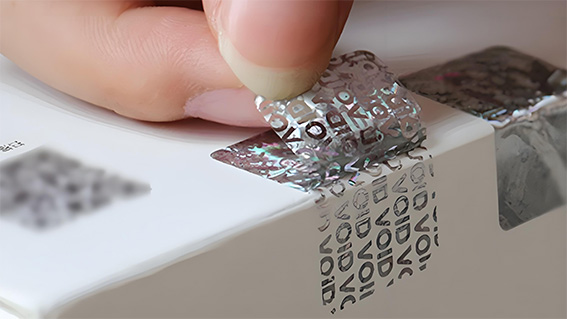
VOID anti-counterfeiting label rely on a physically destructive structure that leaves marks upon peeling, delivering tamper-proof protection at low cost.
Analysis of the VOID anti-counterfeiting label