The price and quality of scratch-resistant labels
author: Eva
2026-03-30
In scenarios such as product packaging, logistics labels, and electronic product nameplates, scratch-resistant labels have become an important choice for ensuring clear product information and enhancing brand quality due to their characteristics of being wear-resistant, scratch-resistant, and not fading easily. However, the prices of scratch-resistant labels in the market vary greatly, and their quality is also inconsistent. Many purchasers and users often have questions: Are scratch-resistant labels expensive? What is their actual quality like? As the core supplier, how can self-adhesive manufacturers specifically improve the quality to meet market demands?
I. Are the prices of scratch-resistant labels high?
The material cost is the core factor influencing the price. The scratch resistance of scratch-resistant labels mainly depends on high-quality base materials and surface treatment materials. Ordinary self-adhesive labels mostly use basic materials such as copperplate paper, while scratch-resistant labels mostly use plastic base materials like PET and PP, or synthetic paper. Among them, PET material has high hardness and strong chemical resistance, and has become the mainstream choice for scratch-resistant labels. Scratch-resistant labels often need to be paired with special inks such as UV ink. These inks have high hardness and strong scratch resistance after curing, and their cost is much higher than that of ordinary water-based inks, further driving up the product pricing.
The complexity of the process directly affects the price. Scratch-resistant labels cannot do without special surface treatment processes such as coating and UV glossing - the coating can form a physical barrier on the label surface, while UV glossing can form a high-hardness resin layer through ultraviolet curing. These processes will increase the production cost, for example, adding coating to each square meter of the label costs about 50-80 yuan. Local UV, hot stamping, etc. processes will increase the cost by another 10%-20%. At the same time, the size of the label and the order quantity also affect the unit price. The larger the size and the lower the minimum order quantity, the higher the unit price; conversely, bulk purchasing can reduce fixed costs such as equipment debugging and plate making, and the unit price can be reduced by 20%-30%.
Overall, the price of scratch-resistant labels is indeed higher than that of ordinary self-adhesive labels. However, the price difference mainly stems from the upgrade in materials and manufacturing processes. For those who require the labels to remain clear for a long time and deal with frequent friction scenarios, scratch-resistant labels actually offer better value for money. They can effectively prevent issues such as blurred information and damaged brand image caused by label wear.
II. Is the scratch-resistant labels of good quality?
The core advantages of high-quality scratch-resistant labels are their strong scratch resistance and stable performance. These labels mostly use high-quality materials such as PET, combined with UV ink and coating/UV gloss treatment. After standardized testing, the pencil hardness can reach above 2H, and the abrasion resistance test can reach more than 500 times without fading. They can effectively resist daily friction and minor scratches, and at the same time have waterproof, oil-resistant, and weather-resistant properties. They can maintain clear information and not fall off even in complex environments such as high and low temperatures and humidity. For example, scratch-resistant labels on electronic products can clearly display product models, parameters, etc., even after long-term use and frequent touching; logistics labels can withstand friction and collision during sorting and transportation, ensuring that barcodes can be scanned and information can be identified.
Low-quality scratch-resistant labels have many problems: Some manufacturers, in an attempt to cut costs, substitute ordinary copperplate paper for PET surface material, or use ordinary water-based ink without applying coating or UV gloss treatment. This results in the labels being prone to scratches, fading, and even ink detachment and label warping. Some manufacturers also fail to strictly control process parameters during production, causing the labels to have blurry printing, uneven margins, and insufficient tear-strength, which cannot meet the actual usage requirements. Moreover, the quality of the labels is also closely related to the application scenarios. If the selection is inappropriate - for example, using labels without UV resistance treatment in outdoor scenarios, or using ordinary glue in low-temperature environments - even if the labels themselves are of good quality, they will still experience fading, warping, and other problems, affecting the user experience.
To evaluate the quality of scratch-resistant labels, simple and intuitive inspections and basic tests can be conducted: Visually, high-quality labels have clear printing, a clean surface, uniform margins, and no dust, stains, or other defects; During the test, gently scrape the label surface with your fingernail or a hard object. If the characters and patterns are not blurry, do not fade, and the label is not damaged, it is considered qualified; For more precise judgment, one can refer to national standards such as pencil hardness tests and abrasion resistance tests to ensure that the product meets the usage requirements.

III. How can the manufacturers of self-adhesive labels improve the quality of scratch-resistant labels?
(1) Strictly control the quality of raw materials from the source to ensure consistency
Instiker has established a strict system for raw material procurement and screening. In terms of material selection, based on product positioning and application scenarios, high-quality plastic materials such as PET and PP or synthetic paper should be preferred. Key parameters such as thickness, density, and tensile strength of the materials should be clearly defined to ensure they meet the scratch-resistant requirements and avoid using inferior and low-priced materials. In terms of ink selection, UV ink and other products with strong scratch resistance and environmental safety should be prioritized to ensure strong adhesion between the ink and the material, avoiding ink loss and color fading issues. At the same time, the environmental protection indicators of the ink should be strictly controlled to comply with industry standards. In terms of glue and base paper selection, appropriate glue should be selected based on the labeling scenario to ensure the label is firmly attached and does not curl, and the base paper should have good support to ensure the stability of the production process.
(2) Optimize production processes to enhance product stability
Instiker continuously optimizes the production process and standardizes operation procedures. On one hand, advanced printing equipment and surface treatment equipment such as digital printing machines, flexographic printing machines, UV curing equipment are introduced to improve printing accuracy and color expression, ensuring clear and uniform label printing, and enhancing the stability of surface treatment, making the coating, UV glossing, and other processes more uniform and firm, and enhancing the anti-scratch performance of the label; on the other hand, standardized production operation procedures are formulated, clearly defining key parameters such as printing pressure, drying temperature, and die-cutting accuracy, such as controlling the printing pressure at 0.15-0.25 MPa, and the printing accuracy within ±0.05 mm, to avoid label defects caused by improper operation. At the same time, process control of the production stage is strengthened,focusing on the bonding degree of coating,the degree of ink curing,and die-cutting accuracy,promptly identifying and resolving problems such as die-cutting edge breakage,continuous cutting,and waste breakage,to improve the product qualification rate.
(3) Improve the quality inspection system and strengthen quality control management
Instiker has established a full-process inspection mechanism from raw material entry,production process to finished product exit,and is equipped with professional inspection equipment and personnel to conduct strict inspections. During raw material entry,the thickness and hardness of the material,the adhesion and scratch resistance of the ink, the stickiness of the glue,etc. are inspected;during the production process,regular sampling inspections of the printing quality, coating effect,die-cutting accuracy,etc. are conducted;before the finished product exits,comprehensive inspections of the anti-scratch,water resistance,and adhesion of the label are carried out,using standardized methods such as pencil hardness testing and abrasion resistance testing to ensure that the products meet quality standards, and non-compliant products are strictly not allowed to be released. In addition,Instiker has actively applied for international authoritative certifications such as ISO9001 and ISO14001 to enhance quality management,establish brand reputation,and establish a quality traceability system. In case of quality issues,the production process can be quickly traced and promptly rectified and optimized.
(4) Focus on scene requirements and achieve differentiated quality improvement
Instiker combines scene requirements to optimize product design and achieve differentiated quality improvement. For example,for electronic product labels,focus on improving scratch resistance and chemical resistance,using PET material + UV screen printing process to ensure that the label can withstand alcohol wiping and daily touch; for logistics labels,focus on improving wear resistance and tear resistance,using thick PET material + solvent-based ink to ensure that the label is not damaged during sorting and transportation;for food and daily chemical labels,balance scratch resistance and environmental friendliness,using degradable materials and environmentally friendly ink, while meeting waterproof and oil-resistant requirements.
(5) Strengthen equipment maintenance and personnel training to lay a solid quality foundation
Instiker has established a complete equipment maintenance system. They regularly clean, calibrate and maintain equipment such as printing machines, laminating machines, and die-cutting machines. They clean the mesh rollers and rubber rollers daily, inspect the lubrication condition of the transmission system weekly, calibrate the pressure control system monthly, to avoid quality problems caused by equipment failures, extend the service life of the equipment, and ensure the stability of the production process. At the same time, they strengthen the professional training of operators to enhance their operational skills and quality awareness, so that they are familiar with the production process, operation standards and detection methods, can operate the equipment in a standardized manner, promptly detect and handle abnormal situations in the production process, reduce quality risks caused by human factors, and ensure the stability and consistency of product quality.
IV. Conclusion
The price of scratch-resistant labels is relatively high, which is an inevitable outcome of the upgrade in materials and craftsmanship. The quality of these labels depends on the strength of the manufacturer and their quality control level - high-quality scratch-resistant labels can effectively ensure clear product information, enhance brand image, and meet the usage requirements in complex scenarios. On the other hand, inferior products will cause many problems for users. For self-adhesive manufacturers, improving the quality of scratch-resistant labels is not a single optimization of a single aspect, but a systematic upgrade in multiple dimensions such as raw materials, craftsmanship, quality control, and services.
Upgrading of the self-adhesive label material industry in Guangdong Yinghui
The anti-counterfeiting principle and price of laser stickers
Related Article

Las etiquetas PET resisten el arrugamiento, la deformación, la pérdida de tinta, el cambio de tamaño y el manchado por tinta durante la producción a alta temperatura y la impresión digital con láser.
Comprehensive Analysis of PET Self-adhesive Labels
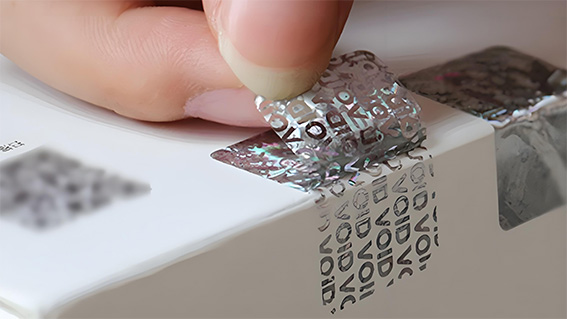
VOID anti-counterfeiting label rely on a physically destructive structure that leaves marks upon peeling, delivering tamper-proof protection at low cost.
Analysis of the VOID anti-counterfeiting label