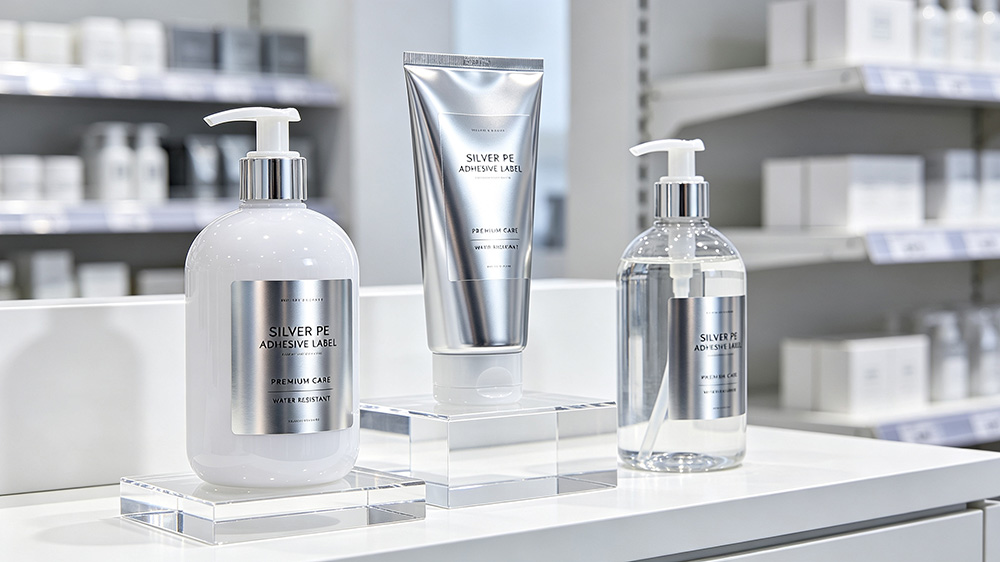
The heat resistance, adhesiveness and environmental impact of self-adhesive products
author: Eva
2026-02-04
Self-adhesive label materials consist of three layers: the surface material, the pressure-sensitive adhesive, and the silicone-coated release liner. They can be easily adhered at room temperature without the need for water, heat, or solvents. They are widely used in consumer packaging, electronic manufacturing, logistics, cosmetics, medical devices, and other fields.
Heat resistance, adhesion and environmental friendliness are the three core indicators for evaluating the quality of self-adhesive materials.
Heat resistance determines whether the label will warp, overflow glue or change color under high and low temperature conditions; adhesion determines the initial adhesion, holding adhesion and peel resistance of the label on different substrate surfaces; environmental impact indicators relate to production VOC emissions, waste recycling, residual glue pollution, and compliance with various environmental protection regulations of different countries.
Nowadays, with the upgrading of the manufacturing industry and the tightening of export regulations, customers no longer merely focus on price, but instead seek customized self-adhesive solutions that strike a balance between performance and environmental protection.
Instiker has been deeply engaged in the production of self-adhesive laminates and cutting for many years. Based on different industrial conditions, they continuously optimize the glue formula and the surface material combination, solving numerous problems for customers such as high-temperature label detachment, residual glue, and environmental certification.
I. Core Performance of Self-adhesive Label: Advantages and Limitations
1) Heat Resistance Performance
Advantages
The material system is rich and enables wide temperature range selection: PET matte silver / PET transparent combined with modified acrylic adhesive can be used for long-term use up to -40℃ to 120℃; special silicone adhesive self-adhesive has a short-term temperature resistance exceeding 180℃, suitable for electronic reflow soldering processes.
The modified water-based acrylic self-adhesive has a stable temperature range and is not prone to rapid adhesion loss under temperature fluctuations.
Film-based self-adhesive (BOPP, PET) deforms less under heat compared to paper-based self-adhesive, and the stability of the automated labeling process is stronger.
Limitations
Common coated paper and thermal sensitive paper self-adhesive has a maximum heat resistance of only 50-60℃. In high-temperature environments, they are prone to yellowing, warping, and ink peeling off.
Common rubber-type hot melt adhesives become soft above 70℃, resulting in overflow and leakage of glue, contaminating the product surface.
General BOPP and PE films will shrink and deform when exposed to temperatures above 85℃ for a long time; PVC materials are prone to releasing plasticizers at high temperatures, increasing environmental risks.
In low-temperature environments, common solvent-based glues harden, and the initial adhesion force drops significantly, making them prone to falling off in cold storage and cold chain environments.
(2) Bonding Performance
Advantages
Flexible selection: A complete range of permanent adhesives, removable adhesives, strong adhesives, and low surface energy adhesives are available. They are suitable for various substrates such as metals, plastics, glass, paper, and curved hoses.
The adhesives can be applied at room temperature and do not require preheating. They are compatible with fully automatic high-speed labeling production lines, resulting in high production efficiency.
High-end modified acrylic adhesives are resistant to oil and moisture. They are unlikely to fall off or detach in humid or outdoor environments for a long time.
Limitations
For low surface energy materials (PP, PE plastics, powder-coated metals), ordinary adhesives have insufficient adhesion and are prone to warping and detachment.
Under the combined effect of high temperature and external force, the holding force decreases, and labels suspended for a long time are prone to slipping.
After removing ordinary permanent adhesives, there are residual adhesives, increasing the cost of packaging material recycling and cleaning; high removable adhesives are difficult to balance long-term adhesion stability.
Adhesives have a migration risk. Long-term contact with ink and plastic substrates may cause glue seepage, corroding printed graphics.
(3) Environmental Impact
Environmental Advantage
The new generation of water-based acrylic adhesives and hot melt solvent-free adhesives significantly reduce VOC emissions in production, replacing traditional solvent-based oil adhesives and conforming to the domestic GB 38507-2024 adhesive emission standards.
Removable self-adhesive labels do not leave residual adhesives, reducing the generation of solid waste during packaging material cleaning; bio-based adhesives are gradually entering commercial use, reducing reliance on petroleum raw materials.
The no-release self-adhesive solution eliminates the need for silicon-coated release paper, significantly reducing industrial waste generation.
Existing Environmental Shortcomings
Traditional graffit silicone base paper has an organic silicone coating and cannot directly enter the ordinary paper recycling system, resulting in a large amount of base paper becoming waste.
The production of solvent-based self-adhesive labels emits VOCs, and inadequate control can cause air pollution.
PVC and ordinary plastic films self-adhesive label are difficult to degrade naturally; residual glue adheres to the surface of plastics and paper, reducing the purity of recycled materials.
Some low-end adhesives contain additives and cannot meet the environmental protection requirements for food contact and export to the EU.

II. Case Analysis
Case 1: Enterprise Cold Chain Fresh Food Labeling Project
Challenge
Frozen food - 18℃ cold storage environment, ordinary water-based adhesive loses adhesion at low temperatures, resulting in a large number of labels falling off during transportation; at the same time, it needs to meet food contact safety standards.
Instiker Solution
PP synthetic paper + low-temperature modified water-based acrylic adhesive, optimized adhesive's low-temperature creep performance, and enhanced low-temperature initial adhesion.
Effect
The product was tested in a simulated cold storage environment at -20℃ and proved to be firmly adhered without any warping. It has the characteristics of waterproofing and preventing condensation water, and has obtained the food contact material testing report. It is suitable for the packaging requirements of fresh food chain brands.
Case 2: Transparent cosmetic bottle labels for a daily chemical printing factory
Challenge
Ordinary oil-based glue for BOPP film, during summer when the warehouse temperature is high, the glue migrates, resulting in a foggy residue of glue on the bottle body; the customer's demands include both aesthetics and environmental protection, as well as reducing the solvent odor.
Instiker Solution
High-transparency BOPP film + low-migration eco-friendly water-based glue, adjusting the coating thickness to control the risk of overflow of glue.
Effect
The label has high transparency and no white fog. It avoids the VOC risks of solvent-based adhesives and is suitable for mid-to-high-end beauty brands. It successfully replaced the original oily non-adhesive.
III. Comparison of Mainstream Self-adhesive Materials' Properties and Selection Suggestions
|
Material combination
|
Long-term temperature resistance range
|
Adhesive characteristics
|
Environmental protection level
|
Applicable scenarios
|
|
Synthetic paper + Water-based acrylic glue
|
-20~80℃
|
Resistant to moisture, with a good surface fit.
|
★★★★☆
|
Cold chain, daily necessities, short-term outdoor signs
|
|
Transparent BOPP + Modified Water Gel
|
-20~85℃
|
High transparency, suitable for smooth surfaces
|
★★★★
|
Cosmetics and beverages transparent bottle labels
|
|
PET matte silver / PET transparent + heat-resistant glue
|
-40~120℃
|
Resistant to high and low temperatures, resistant to oil stains
|
★★★★☆
|
Electronics, household appliances, industrial nameplates
|
|
Copperplate paper + Ordinary water-based glue
|
-10~60℃
|
Medium viscosity, moisture-proof average
|
★★★★
|
Common logistics labels, short-term retail price tags
|
|
Regular PVC + Oil-based adhesive
|
-10~65℃
|
The surface fits well and easily releases at high temperatures.
|
★★☆
|
Low-end hose labels. Not recommended for export to Europe and the United States.
|
IV. Frequently Asked Questions Answered
Q1: Why does the label on the label sheet curl up in a hot environment? Could it be a problem with the glue or the substrate?
A: Both possibilities exist. When the temperature is ≤ 80℃, the curling up of the label sheet is mostly due to the insufficient heat resistance of the glue; when the temperature exceeds 90℃, the shrinkage of the substrate due to heat is the main cause. It is necessary to replace both the high-temperature-resistant substrate and the corresponding glue at the same time.
A: Both possibilities exist. When the temperature is ≤ 80℃, the curling up of the label sheet is mostly due to the insufficient heat resistance of the glue; when the temperature exceeds 90℃, the shrinkage of the substrate due to heat is the main cause. It is necessary to replace both the high-temperature-resistant substrate and the corresponding glue at the same time.
Q2: How to choose between water-based glue and oil-based glue? Are there significant differences in terms of environmental protection?
A: Water-based glue has extremely low VOC levels and is suitable for food and export products; oil-based glue has stronger initial adhesion and better moisture resistance, but there are organic waste emissions during production. The environmental control is strict, and for export projects, water-based glue is preferred.
A: Water-based glue has extremely low VOC levels and is suitable for food and export products; oil-based glue has stronger initial adhesion and better moisture resistance, but there are organic waste emissions during production. The environmental control is strict, and for export projects, water-based glue is preferred.
Q3: How to solve the problem of residual glue when removing self-adhesive labels?
A: There are two solutions: If you need to repeatedly remove the label, choose removable self-adhesive labels; if you need permanent attachment and easy cleaning, choose low-migration modified acrylic glue; avoid using ordinary rubber-based glue.
A: There are two solutions: If you need to repeatedly remove the label, choose removable self-adhesive labels; if you need permanent attachment and easy cleaning, choose low-migration modified acrylic glue; avoid using ordinary rubber-based glue.
Q4: Why do cold storage labels stick firmly at room temperature but fall off when placed in the cold storage?
A: At low temperatures, the molecular chains of ordinary glue become harder, and the initial adhesion force sharply decreases. Specially optimized low-temperature formula glue must be used; ordinary self-adhesive labels cannot be directly used for this purpose.
A: At low temperatures, the molecular chains of ordinary glue become harder, and the initial adhesion force sharply decreases. Specially optimized low-temperature formula glue must be used; ordinary self-adhesive labels cannot be directly used for this purpose.
Q5: Is PET necessarily more resistant to high temperatures than synthetic paper?
A: Yes. The long-term heat resistance of conventional PET can reach 120℃, while the upper limit of ordinary PP synthetic paper is approximately 80℃; however, PET is more rigid, and the surface fitting effect on extremely curved surfaces is not as good as synthetic paper or PE materials.
A: Yes. The long-term heat resistance of conventional PET can reach 120℃, while the upper limit of ordinary PP synthetic paper is approximately 80℃; however, PET is more rigid, and the surface fitting effect on extremely curved surfaces is not as good as synthetic paper or PE materials.
Q6: For products exported to the EU, what tests do self-adhesive label need to undergo?
A: Priority should be given to SGS and REACH high-concern substance testing; in food contact scenarios, additional FDA and national food contact material tests are required; for electronic supporting products, RoHS testing is also necessary.
A: Priority should be given to SGS and REACH high-concern substance testing; in food contact scenarios, additional FDA and national food contact material tests are required; for electronic supporting products, RoHS testing is also necessary.
V.Industry Summary and Development Trends
Under the global trend of packaging green transformation, the development direction of the self-adhesive label industry is clear: low-VOC adhesives replace traditional solvent adhesives, recyclable/low-residue materials are widely adopted, and high and low-temperature special functional materials are continuously updated.
In the past, customers' procurement focused only on unit prices. Nowadays, heat resistance stability, bonding reliability and environmental compliance have become the core thresholds for procurement.
In the actual implementation of the project, there is no universal self-adhesive material. All material selection needs to strike a balance among heat resistance, adhesion, cost and environmental protection.
Manufacturing enterprises and printing factories should make comprehensive selections based on the product storage temperature, transportation environment, substrate to be adhered, and regulations of the target market.
Instiker relies on its continuous research and development of formulas and accumulation of coating processes. It continuously addresses the pain points in the foreign trade and packaging printing markets, optimizing high-temperature resistant self-adhesive labels, low-temperature cold chain self-adhesive labels, and environmentally friendly water-based glue series products.
It assists customers in solving problems such as label detachment, overflow glue, and environmental certification, and provides stable and customizable self-adhesive substrate solutions for the upstream and downstream supply chains.
A Comprehensive Guide to the Environmental, Cost and Printing Aspects of PET stickers
Analyzing the differences between inkjet paper and ordinary paper
Related Article

Las etiquetas PET resisten el arrugamiento, la deformación, la pérdida de tinta, el cambio de tamaño y el manchado por tinta durante la producción a alta temperatura y la impresión digital con láser.
Comprehensive Analysis of PET Self-adhesive Labels
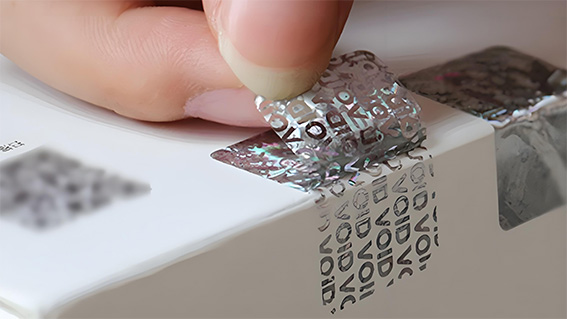
VOID anti-counterfeiting label rely on a physically destructive structure that leaves marks upon peeling, delivering tamper-proof protection at low cost.
Analysis of the VOID anti-counterfeiting label