Analysis of the Differences between Solvent-Based Adhesives and Water-Based Adhesives
author: Eva
2026-01-20
If you want to apply it in high-strength, high-weather resistance, and complex working environment scenarios, solvent-based adhesives are a better choice.
If you focus on public safety, indoor scenarios, and green packaging fields, water-based adhesives are the popular choice.
No adhesive is absolutely better. The correct choice depends on your application scenario, operating environment, expected service life, budget, and sustainability requirements. This guide provides in-depth comparisons to help packaging purchasers, printing professionals, and brand owners confidently choose the most suitable adhesive.
I. Two major mainstream adhesive systems
Instiker has been deeply engaged in the field of self-adhesive adhesive materials since 2008. It has a standardized production area of 16,000 square meters and a product range of hundreds of adhesive products.
The company mainly focuses on high-end solvent-based oil adhesives and environmentally friendly water-based adhesives.
It widely serves industries such as food and beverage, cosmetics and beauty products, electronic and electrical appliances, furniture and home furnishings, and medical packaging.
It can provide customized adhesive solutions for different substrates, working conditions, and environmental protection standards. It is a adhesive material supplier in the industry that combines technical strength and compliance advantages.
II. The principles and application scenarios of the two types of adhesives
From a principle perspective, solvent-based adhesives use organic solvents such as toluene and ethyl acetate as carriers, dissolving high-molecular polymers like acrylic and rubber.
They achieve cross-linking and curing of the adhesive layer through rapid solvent evaporation. After forming, the adhesive layer is dense and has extremely strong adhesion.
Water-based adhesives use pure water as the dilution carrier. Through emulsion polymerization technology, high-molecular colloids are dispersed in water, and water evaporation is the main curing method.
They possess core characteristics such as low VOC, low odor, and safety and environmental friendliness. Due to the differences in performance, the two types form a differentiated application pattern.
| Type | Solvent-based adhesive | Water-based adhesive |
| Characteristics | High initial adhesion strength, stable adhesion retention, resistant to high and low temperatures, resistant to acid and alkali corrosion, suitable for substrates with low surface energy. | No solvent residue, low odor, compliant with environmental protection standards, safe and non-toxic |
| Application | Outdoor sign advertisements, industrial high-end labels, weather-resistant packaging fields, high-toughness composite scenarios | Food and maternal-infant packaging, interior soft decoration and cultural products, lightweight paper packaging, medical and civilian fields |

III. Genuine case study
Case One: Upgrade of Outdoor Industrial Signage
Challenge
The outdoor mechanical equipment identification labels of a large equipment manufacturing enterprise are exposed outdoors for a long time, subject to the erosion of ultraviolet rays, rain, and oil stains. problems such as label warping, detachment, fading, and reduced stickiness occur.
Solution
Instiker has customized a high-performance solvent-based PET adhesive system. have specifically optimized the cross-linking density of the adhesive layer and the weather resistance formula.
Result
The initial adhesion strength of the label has been significantly enhanced. The adhesive layer is dense, waterproof, resistant to oil stains, and UV protection. It can be used outdoors for a long time without warping, peeling, or yellowing or fading.
Case Two: Compliance Upgrade of Food and Cosmetics Packaging
Challenge
A certain daily chemical and food manufacturing enterprise in the South China region has noticed a slight solvent odor on the labels of its finished products.
Solution
Instiker has replaced its food-grade environmentally friendly water-based pressure-sensitive adhesive system, which is suitable for mainstream label substrates such as coated paper and thermal transfer paper.
Result
The labels have absolutely no solvent residues or irritating odors. They have successfully passed the safety tests for food contact materials and comply with the national green packaging standards.
IV. Comparison of solvent-based and water-based adhesives performance
|
Comparison dimension
|
Solvent-based adhesive
|
Water-based adhesive
|
|
Adhesive performance
|
High initial adhesion, stable retention, and excellent compatibility with difficult-to-adhere substrates.
|
The initial adhesion is relatively weak. After curing becomes stable, the adhesion remains good. For substrates with low surface energy, a primer treatment is required.
|
|
Weather-resistant and corrosion-resistant
|
Excellent, resistant to high and low temperatures, UV protection, resistant to oil and stains, resistant to acids and alkalis, and stable in outdoor conditions for a long time.
|
Generally, it has poor water resistance, heat resistance and UV resistance, and is prone to aging and peeling outdoors.
|
|
Construction efficiency
|
The solvent evaporates quickly and the curing process is rapid. It is suitable for high-speed automated production lines.
|
The evaporation of moisture is slow, and it is greatly influenced by temperature and humidity. As a result, the production line speed is relatively limited.
|
|
Environmental protection and safety
|
The VOC content is high, with a slightly irritating odor. There is a risk of being flammable and explosive. Waste gas treatment is required.
|
Using water as the carrier, it has extremely low VOC content, no odor, is non-flammable and non-explosive, and complies with food-grade environmental protection standards.
|
|
Production cost
|
The raw materials and operation and maintenance costs are high. Anti-explosion equipment and waste gas treatment are required, and the overall energy consumption is also high.
|
No need for organic solvents, the equipment operation is simple, and the overall production cost is lower.
|
V. Frequently Asked Questions Answered
Q: The solvent glue has a strong odor. Does this mean it doesn't meet environmental protection standards?
A: That's not the case. The traditional ordinary solvent-based glue has high VOC content and a pungent smell. However, Yinghui New Materials has developed modified low-VOC solvent-based glue. Through the optimization of the formula without benzene or ketone, the VOC content can be reduced to below 50g/L. While maintaining the high-strength bonding performance, it significantly reduces the odor and emissions, achieving a balance between performance and compliance.
A: That's not the case. The traditional ordinary solvent-based glue has high VOC content and a pungent smell. However, Yinghui New Materials has developed modified low-VOC solvent-based glue. Through the optimization of the formula without benzene or ketone, the VOC content can be reduced to below 50g/L. While maintaining the high-strength bonding performance, it significantly reduces the odor and emissions, achieving a balance between performance and compliance.
Q: Why does water-based glue tend to peel off or crack at the edges in low-temperature and high-humidity environments?
A: Water-based glue relies on the evaporation of water to solidify. In low-temperature and high-humidity environments, the rate of water evaporation significantly decreases, resulting in incomplete gelation of the glue layer and insufficient initial adhesion. After application, it is prone to edge warping and overall detachment.
Q: Can PE/PP materials be directly bonded using water-based adhesive?
A: It cannot be directly bonded. The surfaces of PE and PP are highly dense with no pores, and have extremely low surface energy. Water-based adhesives have poor wetting effect and weak adhesion, making them prone to detachment. Therefore, pre-treatment such as corona discharge, sanding, or primer application must be carried out to ensure the stability of the bonding. For these types of substrates, solvent-based adhesives should be preferred.
A: It cannot be directly bonded. The surfaces of PE and PP are highly dense with no pores, and have extremely low surface energy. Water-based adhesives have poor wetting effect and weak adhesion, making them prone to detachment. Therefore, pre-treatment such as corona discharge, sanding, or primer application must be carried out to ensure the stability of the bonding. For these types of substrates, solvent-based adhesives should be preferred.
Q: Can the water-based adhesive products be used for long-term outdoor applications?
A: Ordinary water-based glue is not recommended for long-term outdoor use. It has relatively weak anti-ultraviolet, waterproof and high-temperature resistance properties. If exposed to prolonged sunlight or rain, it is prone to aging, peeling and turning white.
Q: What are the differences in the curing times of the two adhesives?
Under normal room temperature conditions, solvent-based adhesives dry to the touch in 5 to 15 minutes and fully cure within 24 hours; water-based adhesives dry in 10 to 30 minutes and complete curing takes 24 to 48 hours. In poor temperature and humidity conditions, the curing time will be further extended.
Under normal room temperature conditions, solvent-based adhesives dry to the touch in 5 to 15 minutes and fully cure within 24 hours; water-based adhesives dry in 10 to 30 minutes and complete curing takes 24 to 48 hours. In poor temperature and humidity conditions, the curing time will be further extended.
Q: Must the labels on food packaging be made with water-based glue?
A: For labels that come into direct contact with food and baby care products, we recommend using Yinghui food-grade water-based adhesive. It has no solvent residue and complies with the safety standards of GB 4806.10-2016.
VI:Summary and Recommendations
There is no absolute superiority or inferiority between solvent-based adhesives and water-based adhesives; it only depends on the suitability of the application scenarios.
Solvent-based adhesives have firmly occupied the high-end markets of industrial outdoor and complex working conditions due to their superior bonding performance, extreme weather resistance, and wide substrate adaptability;
Water-based adhesives dominate the fields of food and mother and baby products, indoor civilian use, and green packaging with their advantages of safety and environmental friendliness, low odor compliance, and low-cost mass production.
As a new materials company that has been deeply involved in the industry for over a decade, Instiker accurately grasps the technical characteristics and industry demands of both types of adhesives, relying on a standardized production system, mature product portfolio, and customized solutions, to provide precise, compliant, and cost-effective adhesive selection services for different industries, taking into account the three core requirements of product performance, production efficiency, and environmental compliance, and helping various industries' supply chains achieve high-quality and green development.
Introduction to Thermal Transfer Paper
Common Questions about Labeling Fruit
Related Article

Las etiquetas PET resisten el arrugamiento, la deformación, la pérdida de tinta, el cambio de tamaño y el manchado por tinta durante la producción a alta temperatura y la impresión digital con láser.
Comprehensive Analysis of PET Self-adhesive Labels
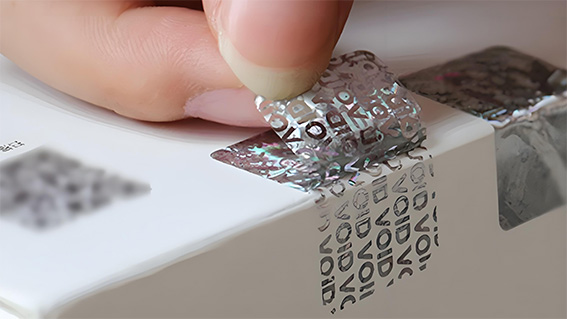
VOID anti-counterfeiting label rely on a physically destructive structure that leaves marks upon peeling, delivering tamper-proof protection at low cost.
Analysis of the VOID anti-counterfeiting label