
The "square inch label" has driven a market worth trillions: The strategic value of self-adhesive labels in fast-moving consumer goods
author: Eva
2025-10-29
I. Compliance Foundation: Labels are the "market entry permits" for fast-moving consumer goods.
1)Precise Information Transmission in Healthy Consumption
With the advancement of the draft of "National Food Safety Standard - General Rules for Labeling of Prepackaged Foods" (GB 7718), the requirements for information disclosure on labels have become increasingly strict: not only must the ingredient list be arranged in descending order by content, but also there are rigid standards for claims such as "no additives" and "zero sugar" - when using the word "no", the component content must be strictly 0, and such claims cannot be made for substances prohibited from being added by regulations. Jiaoyuan Yogurt has successfully established a foothold in the low-temperature yogurt market by adopting a clean label strategy of "raw milk, lactic acid bacteria, nothing else", and its extremely simple ingredient list directly responds to consumers' core demands for health, becoming the key to the brand's differentiated competition.
2)Full-chain traceability guarantee for special categories
For special fast-moving consumer goods such as chilled food and infant formula milk powder, the traceability function of labels has become the safety baseline. The "Application Specification for Intelligent Traceability Labels of Pre-packaged Food" implemented in July 2024 mandates that infant formula milk powder must be 100% equipped with intelligent labels with temperature control functions. A dairy company that adopted temperature-sensitive self-adhesive labels saw these labels automatically change color when the temperature during cold chain transportation exceeded the limit. Combined with QR codes, it enabled full-node data traceability from "production - storage - transportation - terminal", reducing the product recall response time by 60%.
II. Marketing Engine: Tags Are the "Shelf Salespeople" for Fast-Moving Consumer Goods
1)Emotional design activates consumption urges
The "teary stickers" of the FamilyMart convenience store in Japan can be regarded as a classic case of tag marketing. To address the problem of unsold expired food, the brand designed yellow self-adhesive labels featuring a tearful rice ball image and the text "Please save me". By tapping into the empathetic psychology, it downplayed the promotional nature and strengthened the value recognition of "purchasing is environmentally friendly". Test data showed that this label increased the purchase rate of expired food by 5%, and it is estimated that it can reduce 3,000 tons of food waste throughout the year. Similarly, Bo Bao Tan designed the "Take Me Along" tearful character labels for the Aeon shopping mall, combined with a catchy MV for dissemination, making consumers view purchasing expired goods as "a smart and environmentally friendly behavior", effectively reversing the negative perception of discounted products.
2)Value labels shape brand perception
The "label effect" demonstrates great power in fast-moving consumer goods marketing. A beverage brand implanted core labels such as "natural ingredient certification" and "low-carbon production" on its labels, combined with green visual design, enabled consumers to quickly establish a brand perception of "health and environmental protection". Within 3 months of its launch, the sales volume increased by 240% compared to the previous period, and 72% of the buyers stated that they were "impressed by the ideas conveyed by the labels". Jiaoni Yogurt directly reflected the "clean formula" concept on its labels, using the concise expression "Other things are gone" to enhance product differentiation, becoming a brand symbol in the context of the health consumption trend.
3)Interactive gameplay builds consumption stickiness
To break through the limitations of static labels, fast-moving consumer goods brands began to create interactive scenarios through labels. The Sunny Mart supermarket in Kochi Prefecture, Japan, launched the "Chewing Challenge" campaign. They printed cartoon images on the labels of expired products. Consumers could participate in a raffle or donate to charity by collecting 10 stickers. This campaign covered over 300 supermarkets, collected a total of 18 million stickers, reduced food waste by an average of 10%, and also cultivated consumers' repeat purchase habits.

III. Efficiency Core: Labels Serve as the "Supply Chain Lubricant" for Fast-Moving Consumer Goods
1)Flexible production adapted to high-frequency iterations
The application of digital printing technology enables label production to achieve "small batch, fast response", perfectly matching the new product launch rhythm of fast-moving consumer goods. Manz Energy Forest adopts a high-speed inkjet coding system in its sparkling water series, which can complete the personalized date and batch printing of over a thousand bottles per minute; Miniso releases 100 new products every week. Through variable data printing technology, it realizes the rapid customization of labels, combined with RFID labels for inventory tracking, increasing the turnover efficiency by more than 30%.
2)Intelligent Recognition Enhances Efficiency in Circulation
RFID tags are rewriting the efficiency formula in fast-moving consumer goods retail. Uniqlo attaches RFID self-adhesive labels to all categories of products, reducing the manual labor input in automated warehouses by 90% and enabling 24-hour store pickup fulfillment. After adopting this technology, the inventory process in a 4,000-square-meter shopping mall was shortened from several days to 1.5 hours, and the accuracy rate increased from 86%-90% to 99.2%. In the fresh produce sector, PulpaTronics' chipless paper RFID tags have halved the cost and can dynamically record temperature and humidity data in the cold chain, providing the possibility for the full traceability of eggs, dairy products, and fresh produce throughout the process.
IV. Technological Innovation: The "Future Evolution Direction" of Fast-Moving Consumer Goods Labels
1)Green transformation responds to sustainable demands
The advancement of environmental protection policies and consumption concepts has driven the innovation of label materials. In 2024, the proportion of environmentally friendly labels using degradable substrates or water-based inks had reached 39.7%, and it is expected to rise to 43.5% in 2025. Xiamen Changshou has launched fully biobased printable film materials, which, in combination with HP Indigo digital printing equipment, enables low-carbon production. Beer enterprises have adopted washable labels, enabling 100% recycling and reuse of the bottle bodies, becoming a typical practice in the circular economy.
2)Intelligent upgrades expand functional boundaries
The intelligent label market is experiencing explosive growth, with a scale of 13.87 billion yuan in 2024 and projected to increase to 16.12 billion yuan in 2025. RFID labels are widely used in high-end consumer goods. Moutai has deployed NFC labels in liquor to achieve full-process tracking, with the cost of a single bottle label controlled at 1.8-2.5 yuan. Special labels such as temperature-sensitive and humidity-sensitive labels have rapidly penetrated the fresh produce sector, enabling real-time monitoring of product storage conditions and reducing loss rates.
V. Conclusion: Reconstructing Product Labels to Enhance the Value Ecosystem of Fast-Moving Consumer Goods
From the "teary stickers" of the entire family to Jane Eyre's "clean label", from the efficiency revolution of RFID to the green transformation of degradable materials, self-adhesive labels have deeply integrated into the value chain of fast-moving consumer goods. In this small space, compliance standards, brand concepts, technological innovation and consumer demands achieve organic integration, which not only determines whether products can smoothly enter the market, but also affects whether brands can enter consumers' hearts.
With the deepening of 5G, the Internet of Things and the sustainable development concept, the labels of fast-moving consumer goods will undergo more profound changes: perhaps it will be intelligent sensing labels that can monitor freshness, perhaps it will be seed labels that can be planted, or perhaps it will be flexible electronic labels that realize personalized customization. However, no matter how the form evolves, its core value remains unchanged - with the smallest carrier, it carries the greatest commercial possibility. For fast-moving consumer brands, understanding the strategic significance of labels is to understand the competitive logic of the market, and more importantly, it is to grasp the key password to unlock the trillion-dollar market.
With the deepening of 5G, the Internet of Things and the sustainable development concept, the labels of fast-moving consumer goods will undergo more profound changes: perhaps it will be intelligent sensing labels that can monitor freshness, perhaps it will be seed labels that can be planted, or perhaps it will be flexible electronic labels that realize personalized customization. However, no matter how the form evolves, its core value remains unchanged - with the smallest carrier, it carries the greatest commercial possibility. For fast-moving consumer brands, understanding the strategic significance of labels is to understand the competitive logic of the market, and more importantly, it is to grasp the key password to unlock the trillion-dollar market.
The aesthetic of life within the square label: The daily healing power of self-adhesive stickers
Analysis of weather-resistant PVC self-adhesive label
Related Article

Las etiquetas PET resisten el arrugamiento, la deformación, la pérdida de tinta, el cambio de tamaño y el manchado por tinta durante la producción a alta temperatura y la impresión digital con láser.
Comprehensive Analysis of PET Self-adhesive Labels
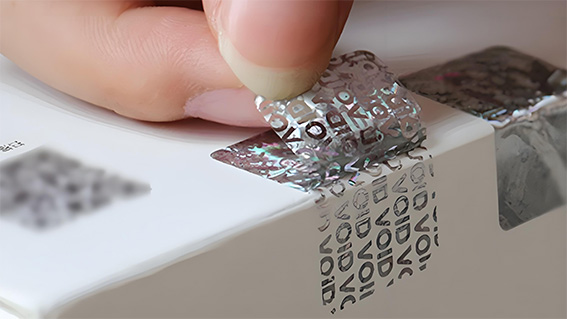
VOID anti-counterfeiting label rely on a physically destructive structure that leaves marks upon peeling, delivering tamper-proof protection at low cost.
Analysis of the VOID anti-counterfeiting label