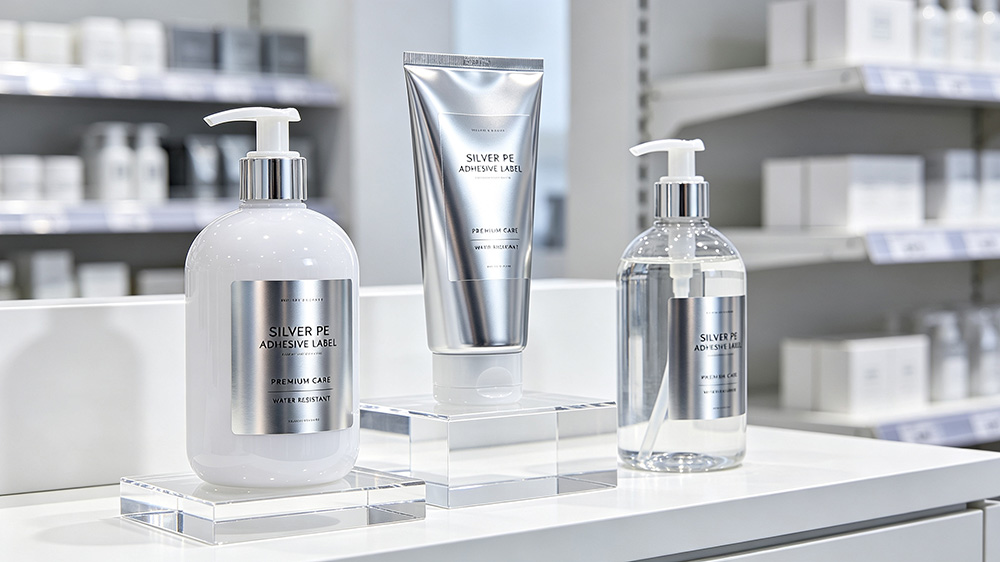
The printing difficulty and adhesive duration of sticky labels
author: Eva
2026-05-06
Sticky labels, due to their convenient application, have been widely used in various fields such as food and beverages, daily chemical products, and logistics barcodes, becoming an indispensable identification medium in modern production and life. In practical use, people often have confusion regarding issues such as the printing difficulty, the duration of adhesive retention, and whether the manufacturer can enhance the adhesiveness. So let's take a look at sticky labels.
I. Are sticky labels easy to print?
Many people mistakenly believe that sticky labels come with a glue layer, and during the printing process, problems such as sticking and glue overflow may occur, making the operation very difficult. However, in fact, with the continuous improvement of printing technology, the printing of sticky labels has formed a standardized process. Whether it is large-scale production or small-batch customization, efficient printing can be achieved. The key lies in the meticulous control of materials and processes.
The reason why the printing of sticky labels is highly feasible lies in its unique three-layer structure - the surface material, the adhesive layer, and the backing paper. The presence of the backing paper effectively isolates the adhesive layer, preventing problems such as the adhesive layer adhering to the equipment or the ink during the printing process.
Various printing methods suitable for sticky labels have been developed in the industry. You can choose the one that best suits your printing volume and effect requirements: Relief printing is suitable for short-run production and offers high color saturation; Flexographic printing is suitable for large-scale, high-speed printing and can achieve integrated operations of printing, die-cutting, and waste removal; Digital printing is suitable for multi-SKU, small-batch, and variable data printing needs, without the need for plate-making, and is flexible and efficient; Screen printing can achieve special effects such as UV, embossing, and metallic luster, enhancing the texture of the labels.
II. How long does the adhesion of sticky labels typically last?
There is no uniform standard for the duration of the adhesion of sticky labels. It can range from several months to several years, and the core factors include the type of adhesive, the usage environment, the material of the object being adhered, and storage conditions. The lifespan of adhesion varies significantly depending on different scenarios.
From the perspective of adhesive types, different formulations of adhesives have vastly different levels of stickiness and durability. Labels made with ordinary pressure-sensitive adhesives typically have a stickiness retention period of 3 to 6 months, suitable for short-term use scenarios such as temporary identification and promotional labels; labels using imported acrylic adhesives have stronger stickiness stability and can maintain stickiness in a normal temperature and dry environment for 1 to 3 years. If combined with UV-resistant coatings and sun-resistant inks, the stickiness attenuation rate during outdoor use is extremely low, and the service life can even reach 5 to 8 years; while special-purpose adhesives for specific scenarios, such as the freezing adhesives used for cold-chain food, can maintain stickiness in low-temperature environments. The duration of stickiness retention mainly depends on the cold-chain storage conditions and usually can meet the requirements of the entire product's shelf life.
The usage environment is a crucial external factor influencing the duration of adhesion. In an ideal environment of normal temperature, dryness, no oil stains, and no direct sunlight exposure, the adhesion of the sticky labels decays the slowest, allowing the maximum utilization of their durability. If they are exposed to high temperature and high humidity for a long time, the adhesive layer will soften and age, and the adhesion will rapidly decline. It may start to peel or curl within 1-2 months. In outdoor scenarios, exposure to sunlight and wind erosion will accelerate the aging of the adhesive layer and the fading of the ink. Ordinary labels may maintain adhesion for 3-6 months, while special weather-resistant labels can last for several years. In environments with a lot of oil stains and dust, the adhesive layer cannot fully adhere to the object being attached, and the duration of adhesion will be significantly shortened. Even after being attached, they may fall off immediately.
In addition, the material and surface condition of the object being adhered also affect the retention effect of the adhesion. Smooth and clean surfaces such as glass and metal allow the adhesive layer to fully penetrate and adhere, resulting in longer retention of the adhesion; while materials with lower surface tension such as PE and PP, if not specially treated, have weaker adhesion of the adhesive layer, and the retention time of the adhesion will be shortened; if the surface of the object being adhered has oil stains, moisture or dust, it will damage the adhesion between the adhesive layer and the object, causing the adhesion to fail rapidly.

III. Can self-adhesive manufacturers enhance the stickiness?
Instiker can definitely meet the customer's requirements by using various methods to increase the stickiness of the labels. The core lies in conducting targeted optimizations from aspects such as materials, processes, and formulas, rather than simply increasing the thickness of the adhesive layer. It should be noted that stickiness is not necessarily the higher the better. Factors such as the usage scenario and the material of the object to be attached need to be considered to balance stickiness and practicality, avoiding situations where residual adhesive remains after removal or damage to the surface of the object being attached.
The core methods for enhancing the adhesion of Instiker mainly include three approaches. The first one is to optimize the adhesive formula, which is the most direct and effective method. The manufacturer can replace the adhesive type with higher adhesion according to customer requirements, such as changing ordinary pressure-sensitive adhesive to imported acrylic adhesive, high cohesion pressure-sensitive adhesive, etc.; or adding special additives to the adhesive, such as cold-resistant plasticizers to enhance adhesion in low-temperature environments, or adding adhesion enhancers to strengthen the adhesion between the adhesive layer and the object being adhered. For example, an oil lubricant label once had a detachment rate of up to 45% due to insufficient adhesion in low-temperature environments. After the manufacturer replaced the low-temperature-resistant acrylic adhesive and added cold-resistant plasticizers, the qualified rate of adhesion increased to 92%, effectively solving the adhesion problem.
The second approach is to adapt the treatment for the adhered object, addressing the drawback of mismatch between the adhesive and the substrate. For materials with low surface tension such as PE and PP, Instiker enhances the surface energy of the material through corona treatment to over 42 dyn, or applies a primer to improve the wetting and adhesion of the adhesive layer; for special materials like PVC bottle bodies, they select special acrylic adhesives to prevent chemical reactions between the adhesive layer and the substrate, which could damage the adhesion; for curved containers, they choose high cohesion adhesives to adapt to the container's deformation and enhance the stability of adhesion.
The third approach is to optimize the production process and reduce the impact of process defects on the stickiness. Instiker precisely controls the thickness of the adhesive layer coating to ensure uniform distribution of the adhesive layer and avoid thinning of the local adhesive layer, which could lead to insufficient stickiness. They also optimize the printing and drying processes, control the thickness of the ink layer, ensure that the ink dries completely, and avoid the mixture of ink and adhesive layer, which could result in a decrease in stickiness. During die-cutting, they precisely control the depth to avoid cutting through the adhesive layer or the base paper, ensuring the integrity of the adhesive layer. At the same time, Instiker also conducts strict quality inspections to test the initial stickiness, holding stickiness, and peel strength of the labels, ensuring that the enhanced stickiness meets the customer's requirements.
IV. Conclusion
The printing of sticky labels is not complicated. As long as you choose a reputable manufacturer, select appropriate processes and materials, you can achieve efficient and high-quality printing. The duration of the adhesive's retention is affected by multiple factors such as the adhesive, the environment, and the substrate, and you need to choose the appropriate label type based on the usage scenario. Self-adhesive manufacturers can also improve the adhesion through formula optimization, adaptation treatment, and process adjustment, to meet the personalized needs of different customers.
When purchasing and using sticky labels in practice, it is recommended to clearly define your own requirements - including the usage scenario, usage duration, and the material of the object to be attached, and communicate fully with the manufacturer to obtain a suitable solution. This can not only ensure the printing effect but also ensure that the adhesion meets expectations, avoiding problems such as label detachment or failure due to improper selection, and allowing sticky labels to truly play their convenient and efficient identification role.
Instiker has a variety of sticky labels. If you are interested, please contact us.
Analysis of the Printing Difficulty, Food Applicability and Price of BOPP Labels
The Use of Tape Stickers and Environmentally Friendly Production
Related Article

Las etiquetas PET resisten el arrugamiento, la deformación, la pérdida de tinta, el cambio de tamaño y el manchado por tinta durante la producción a alta temperatura y la impresión digital con láser.
Comprehensive Analysis of PET Self-adhesive Labels
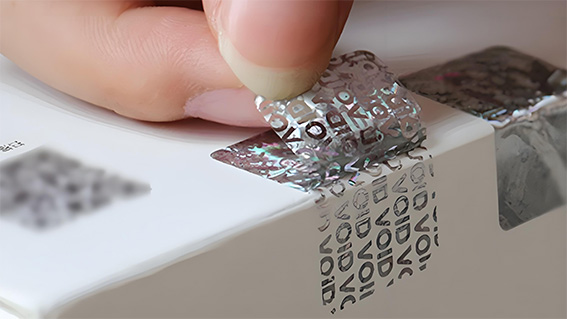
VOID anti-counterfeiting label rely on a physically destructive structure that leaves marks upon peeling, delivering tamper-proof protection at low cost.
Analysis of the VOID anti-counterfeiting label