
The drawbacks of self-adhesive labels
author: Eva
2025-10-30
Self-adhesive labels, as the core material of modern packaging and identification, possess significant advantages in terms of convenience and versatility. However, their potential drawbacks are gradually becoming apparent in areas such as environmental protection, cost, and application scenarios. This article will analyze the core issues from multiple perspectives and provide solutions based on industry practices and policy trends.
I. Systemic Challenges of Environmental Protection and Recycling
1)Separating technical bottlenecks and resource waste
The adhesive of traditional self-adhesive labels is difficult to be completely removed during the recycling process, resulting in contamination of plastic bottle fragments. For instance, the elution rate of conventional labels during PET bottle recycling is only 40%, and the remaining adhesive and paper fibers will downgrade the recycled material and even force the abandonment of the "bottle-to-bottle" recycling due to excessive bisphenol A content. The EU's "Packaging and Packaging Waste Regulations (PPWR)" requires that the plastic packaging recycling rate reach 50% by 2025, but approximately 3 standard football fields' area of release paper is still buried every minute, and the waste of resources is truly shocking.
2)The challenges of material blending and degradation
Labels are usually made of multiple layers of materials such as paper, films (like BOPP, PET), and adhesives. Taking PVC as an example, its degradation cycle lasts for hundreds of years, and incineration can release harmful substances like dioxins. Even for degradable materials, the current market penetration rate is only 7.8%, and their costs are 30-40% higher than traditional materials, limiting their large-scale application. The proportion of degradable label market is expected to reach 24% in 2025, but it still needs to break through the technical and economic bottlenecks.
3)Chemical Pollution and Health Risks
Some solvent-based adhesives contain carcinogenic substances such as toluene, which may migrate to food contact materials. The mandatory standard GB 4806.15-2024 to be implemented in 2025 explicitly prohibits such substances. However, small and medium-sized enterprises, due to lagging process renovations, still face the risk of product recalls. Additionally, the photoinitiators and heavy metals (such as lead and cadmium) in UV inks may also pose hazards to the human body through skin contact or environmental release.

II. Dual Constraints of Cost and Performance
1)High investment in materials and processes
The cost of environmentally friendly solutions has significantly increased. For instance, washable labels (such as FENRO BLUE RW85C) can achieve a 99.94% label removal rate, but the cost per ton of recycled bottle pieces is 300-400 yuan higher than that of traditional labels. Biobased PE film uses extracts from sugarcane residue, reducing the carbon footprint by 62%, but the unit price is still 25% higher than that of ordinary PE film. Small and medium-sized enterprises, due to financial constraints, often find it difficult to bear such upgrading costs.
2)The contradiction between standardization and personalization
The traditional printing model is limited by the minimum order quantity and die-cutting size, making it difficult to meet the requirements of small-batch customization. A certain baby and mother brand, due to the lag in the update of the label ingredient list, was unable to ship its best-selling products for three months, resulting in a direct loss of over one million yuan. Although digital printing technology can achieve "1 piece as the minimum order quantity", the equipment investment cost is as high as several million yuan, making it difficult for small and medium-sized enterprises to transform.
III. The dual pressures from policies and the market
1)Stricter regulations drive industrial upgrading
The domestic "14th Five-Year Plan Action Plan for Plastic Pollution Control" requires that by 2025, the proportion of recycled plastic used in food contact materials reach 30%. The VOCs emission limit for the base material of self-adhesive labels has been tightened from 120mg/m³ to 80mg/m³. The EU's "New Battery Regulation" even requires that battery labels must include carbon footprint information in 2030, promoting the development of labels towards intelligence and traceability. If enterprises do not promptly adjust their processes, they may face market access barriers.
2)Consumer Preferences and Brand Risk
The attention of young consumers to eco-friendly packaging has been increasing year by year. A certain high-end essential oil brand was rejected by the channel distributors due to the lack of recognizability of its label, highlighting the disadvantage of standardized labels in brand differentiation competition. On the contrary, a honey label with tactile ink simulating the texture of a honeycomb increased the conversion rate by 27%, proving the crucial role of personalized design in product premiumization. However, traditional label factories, due to the slow equipment iteration, have difficulty responding quickly to such demands.
3)Supply Chain Collaboration Challenges
The environmental performance of labels depends on the coordination of the entire supply chain. For instance, the washable label project jointly carried out by Nongfu Spring and Finnove Blue-Tex requires full-process collaboration from bottle design, label materials to the recycling factory. Any disconnection at any stage will affect the final recovery rate. Such cross-enterprise collaboration places extremely high demands on supply chain management capabilities.
Conclusion
The drawbacks of self-adhesive labels are essentially a transitional issue during the transformation from industrial civilization to ecological civilization. Through material innovation, technological iteration, and collaborative industrial chain, their environmental performance and economic value are not irreconcilable. Enterprises need to seize the policy window of opportunity, find a balance between compliance costs and market opportunities, and shift from "passive response" to "active leadership", so as to gain the upper hand in the wave of sustainable development. As a supply chain director of a certain listed company said: "Labels should not be an accessory of packaging, but should be a dual carrier of brand value and social responsibility."
Analysis of the impact of low-temperature on self-adhesive labels
The Evolution of Self-adhesive Labels
Related Article

Las etiquetas PET resisten el arrugamiento, la deformación, la pérdida de tinta, el cambio de tamaño y el manchado por tinta durante la producción a alta temperatura y la impresión digital con láser.
Comprehensive Analysis of PET Self-adhesive Labels
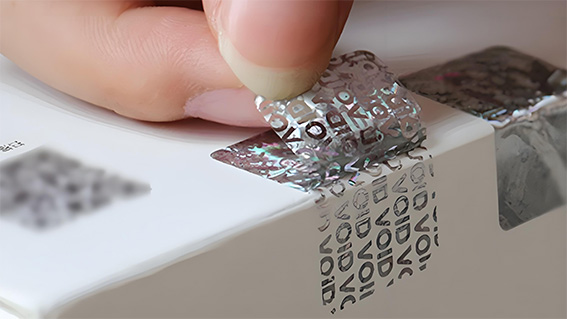
VOID anti-counterfeiting label rely on a physically destructive structure that leaves marks upon peeling, delivering tamper-proof protection at low cost.
Analysis of the VOID anti-counterfeiting label