The application of transparent self-adhesive labels and their environmental friendliness
author: Eva
2026-04-10
In various fields such as packaging labels, product decoration, and information transmission, transparent sticker have emerged as one of the most widely used label types due to their transparent and attractive appearance, easy application, and strong adaptability. From the bottle labels of food and beverages to the exquisite packaging of cosmetics, from the parameter stickers of electronic products to the information labels in the logistics industry, transparent sticker have deeply integrated into all aspects of production and life.
I. What are the application scenarios of transparent sticker?
(1) Food and beverage industry
This is one of the main application fields of transparent sticker. The core requirement is safety, waterproofness, and clear transmission of product information. Bottled water, sparkling water, craft beer, etc. use transparent labels, which can blend with the container and highlight the purity and color of the contents; jam, honey, olive oil, etc. use transparent labels to display the state of the contents, stimulating consumers' appetite; at the same time, food-grade transparent labels (such as PET material) need to comply with food safety standards such as GB 4806.1, without any odor or residual harmful substances, suitable for different storage environments such as refrigeration and normal temperature, and some water-washable labels can also be used for the identification of reusable containers such as beer bottles and tableware.
(2) Cosmetics and daily chemical industry
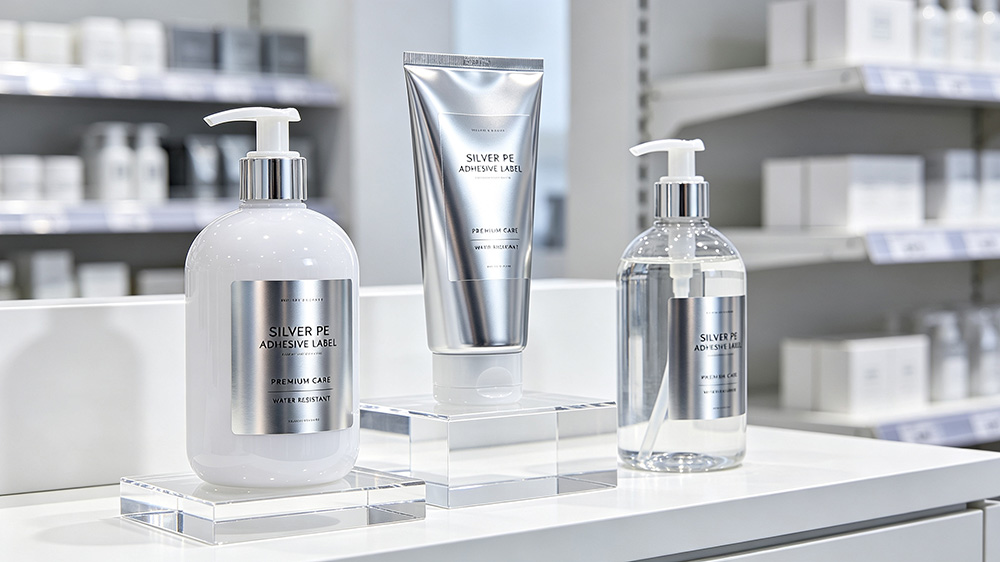
Cosmetics and daily chemical products have extremely high requirements for the appearance and texture of labels. Transparent sticker can perfectly meet the needs of high-end packaging. Essence liquids, essential oils, perfume bottles use transparent labels to highlight the color of the liquid and the design of the bottle, conveying a simple and elegant brand style; hand sanitizer, laundry detergent, masks, etc. use transparent labels, combined with UV coating, cold gold stamping and other processes, can enhance the appearance level and added value of the product, and have waterproof and abrasion-resistant properties, resisting water stains and oil stains erosion during use. Some products can also achieve a "no-label" visual effect through mirror printing, enhancing the overall sense of the product.
(3) Electronics and home appliance industry
Electronic product labels need to have the characteristics of being scratch-resistant, heat-resistant, and not falling off. Transparent PET self-adhesive stickers have become the first choice. Phone cases, power banks, earphone cases, etc. use transparent sticker, which can achieve "invisible bonding", without damaging the product design; the transparent sticker of home appliance bodies, outdoor motors, etc. need to have good weather resistance, able to withstand high and low temperatures and ultraviolet radiation, maintaining clear identification for a long time. Some labels can also be made into irregular shapes through die-cutting technology, suitable for irregular surfaces of products, and avoiding label warping problems.
(4) Medicine and health supplement industry: Compliance and safety, precise information
The medicine and health supplement industry has strict requirements for the safety and standardization of labels. Transparent sticker need to comply with pharmaceutical standards, without harmful substances, no odor, and have good temperature resistance and chemical corrosion resistance. Medicine bottles, health supplement bottles, essential oil bottles, etc. use transparent labels to clearly display key information such as product name, specification, expiration date, ingredients, etc., while fitting the curvature of the bottle, not falling off, and some labels can be combined with anti-counterfeiting processes to ensure the authenticity of the product and meet the industry compliance requirements.
II. What aspects of the environmental friendliness of transparent sticker are there?
(1) Environmental differences among different materials
From the perspective of the environmental friendliness of the surface materials, the ranking is roughly as follows: degradable PET/PLA > ordinary PET > PP > PVC. Among them, degradable PET, PLA and other bio-based materials are currently the most environmentally friendly choices. PLA material can be extracted from renewable resources such as corn starch, and the natural degradation rate within 180 days is not less than 90%. It has no plasticizer residues and complies with international standards such as EU ROHS and US FDA; ordinary PET material cannot be naturally degraded, but it can be recycled and has no harmful substances released, and has higher safety; PP material has a low cost, but poor heat resistance, and some products may release unpleasant odors; PVC material is difficult to degrade and releases harmful gases at high temperatures, and is a non-environmentally friendly material. It has been gradually phased out of the market and is only used in a few special scenarios.
From the perspective of adhesives and inks, there is a significant difference between environmentally friendly products and non-environmentally friendly ones. Traditional solvent-based inks contain volatile organic compounds (VOCs) such as benzene and ketones. After printing, they will leave a pungent smell, which may pose a health hazard if exposed for a long time; while water-based inks and UV-cured inks have extremely low VOCs content, even approaching zero, without any odor and being environmentally friendly, effectively reducing environmental pollution. In terms of adhesives, food-grade environmentally friendly pressure-sensitive adhesives do not contain plasticizers and do not release any odor after bonding, while ordinary pressure-sensitive adhesives may contain harmful additives, resulting in poorer environmental performance.
(2) Current Status and Trends of Environmental Protection
At present, domestic regular self-adhesive manufacturers have gradually shifted to green production, and have adopted environmentally friendly materials and processes, such as using medical-grade PET and degradable PLA substrates, combined with water-based UV inks and food-grade pressure-sensitive adhesives. Their products have passed third-party authoritative tests such as SGS and Intertek, meeting national environmental protection standards and industry norms. However, there are still some small workshops that, in order to reduce costs, use PVC substrates, solvent-based inks, and inferior adhesives, making the environmental performance of their products unreliable and posing risks of residual harmful substances.
In the future, as environmental protection policies continue to tighten and technologies advance, transparent sticker will develop towards a "full-chain environmental protection" direction: the base material will mainly be made of degradable and recyclable materials, the adhesives and inks will be fully upgraded to environmentally friendly products, energy-saving equipment will be introduced during the production process to reduce VOC emissions, and the label recycling system will be improved to achieve a "production - use - recycling" closed loop, which is in line with the global sustainable development trend.
(3) How to judge the environmental friendliness of transparent sticker
For enterprises and consumers, three simple methods can be used to determine the environmental friendliness of the product: First, smell the odor. Environmental-friendly products will have no obvious chemical odor after printing; if there is a pungent plastic smell or ink smell, it is likely to contain residual VOCs; second, check the qualifications. The manufacturer is required to provide a third-party authoritative test report to confirm that the product complies with environmental protection standards such as GB 4806.1 and EU ROHS; third, choose a regular manufacturer and avoid small workshops. Prioritize choosing enterprises with ISO14001 environmental certification and green production equipment to ensure the environmental friendliness and safety of the product.

III. How to Improve the Quality of Transparent sticker by Self-adhesive Manufacturers?
(1) Strictly Control Raw Material Quality to Build a Solid Quality Foundation
Instiker has established a strict system for raw material procurement and selection. In terms of the base material, high-quality and environmentally friendly materials such as food-grade PET, degradable PLA, and high transparency PP are preferred. Inferior PVC materials are strictly prohibited. At the same time, the surface tension, toughness, transparency and other indicators of the base material are tested to ensure they meet the printing and usage requirements. For example, the surface tension of PET base material should be no less than 38 dyn. It can be increased to 42 dyn through corona treatment to avoid ink loss during printing. For the adhesive and ink, environmentally friendly products are selected. Water-based inks and UV-curable inks are preferred. Food-grade pressure-sensitive adhesives must meet safety standards and have no residual harmful substances. At the same time, a raw material supplier review mechanism is established to regularly assess the qualifications of suppliers to ensure stable raw material quality.
(2) Optimize Production Processes to Enhance Product Performance and Precision
The optimization of production processes is the key to improving label quality. Instiker has introduced advanced production equipment and technologies to solve common problems in printing, die-cutting, and laminating processes:
1. Printing Process Optimization: Adopting advanced technologies such as digital printing and flexographic printing. Digital printing does not require plate making and supports small-batch customization. It can achieve delivery from design to within 48 hours, reducing costs while improving printing accuracy. Flexographic printing uses a closed-loop color management system (CMS) to control color difference ΔE within 1.5, meeting color separation requirements. It is also combined with corona treatment and dual curing system (UV + EB) to enhance ink adhesion, avoiding ink loss and fading problems, ensuring clear and uniform printed patterns and color uniformity, and perfect integration with the transparent base material without affecting the transparency of the label.
2. Optimization of die-cutting process: Utilizing a servo-driven die-cutting system and laser-engraved die-cutting templates, the positioning accuracy reaches ±0.01mm, reducing die-cutting deviations and burrs. At the same time, the die-cutting allowance is adjusted according to the label application purpose. For example, when cutting small bottle body labels, a bleeding margin of 0.3mm is retained to prevent the labels from curling during application; for irregular-shaped labels, an AI visual inspection system is introduced to provide real-time feedback on die-cutting errors and automatically compensate, reducing the occurrence rate of burrs from 8% to below 0.5%, ensuring the neat edges and precise dimensions of the labels, and making them suitable for various labeling scenarios.
3. Innovation in post-processing techniques: Adopting advanced post-processing techniques such as composite coating and cold gold stamping, the combination of matte film and UV coating can enhance the wear resistance of labels, increasing the number of friction-resistant times from 50 to 200; the cold gold stamping process does not require heating and is suitable for film material labels, enabling 0.1mm fine-line gold stamping, reducing costs while improving the label quality, and avoiding damage to the transparent substrate during post-processing, ensuring that the transparency and aesthetics of the labels are not affected.
(3) Improve the quality inspection system to prevent unqualified products from flowing out
Establish a full-process quality inspection mechanism, conducting strict inspections at every stage from raw material entry to finished product exit, to ensure product quality meets standards: During raw material entry, inspect the transparency and toughness of the base material, the viscosity and environmental friendliness of the adhesive, the color and VOCs content of the ink; during the production process, conduct real-time inspections of printing accuracy, die-cutting dimensions, and ink adhesion, promptly identify and solve ink bleeding, burrs, and size deviations; before the finished product is released, conduct sampling inspections, focusing on inspecting the stickiness, transparency, weather resistance, and environmental friendliness of the labels, and simultaneously checking for bubbles, wrinkles, residual glue and other defects, establishing a testing archive, and preventing unqualified products from entering the market. In addition, an AI quality inspection system can be introduced, based on deep learning defect recognition algorithms, which can detect 0.1mm² minor flaws, with an error rate of less than 0.1%, improving inspection efficiency and accuracy.
(4) Strengthen technological research and talent cultivation to enhance core competitiveness
With the diversification of market demands, Instiker has increased investment in technological research and development, developing customized products for different industries, such as high-temperature-resistant, low-temperature-resistant, and biodegradable transparent labels, to meet the personalized needs of industries like food, medicine, and electronic products; at the same time, digital twin technology is introduced to simulate the printing process, optimize parameter combinations, reduce trial printing losses, and improve production efficiency. In addition, strengthening talent cultivation, building a professional R&D, production, and inspection team, enhancing the technical level and responsibility awareness of employees, ensuring the standardization and refinement of the production process, and paying attention to industry technical trends, promptly introducing advanced production equipment and processes to promote continuous product quality upgrades, obtaining ISO9001, ISO14001, etc. international authoritative certifications, enhancing the enterprise's quality management level and product competitiveness.
(5) Optimize after-sales service to enhance customer satisfaction
Quality improvement not only lies in the product itself, but also requires a complete after-sales service system. Instiker has established a customer feedback mechanism, promptly collecting problems encountered by customers during label usage, such as label peeling, ink bleeding, and residual glue, formulating solutions for these problems, providing technical support and return and exchange services to customers in a timely manner; at the same time, providing personalized consultation services, recommending suitable base materials, adhesives, and processes based on the customer's industry characteristics and usage scenarios, helping customers select the most suitable transparent label products, enhancing customer satisfaction and loyalty, and establishing a good brand image, standing out in the fierce market competition.
IV. Conclusion
Transparent self-adhesive sticker, as a versatile and highly adaptable identification carrier, come in a wide variety and are widely used. Their environmental friendliness and quality standards have been continuously improving along with the upgrading of industry technology. From mainstream materials such as PET and PP to degradable and environmentally friendly materials, from basic identification to high-end customization, transparent self-adhesive sticker are gradually meeting the diversified needs of various industries and have become an important link connecting products and consumers.
Analysis of the types of adhesive film and environmental impact
The environmental friendliness and price of heat transfer self-adhesive paper
Related Article

Las etiquetas PET resisten el arrugamiento, la deformación, la pérdida de tinta, el cambio de tamaño y el manchado por tinta durante la producción a alta temperatura y la impresión digital con láser.
Comprehensive Analysis of PET Self-adhesive Labels
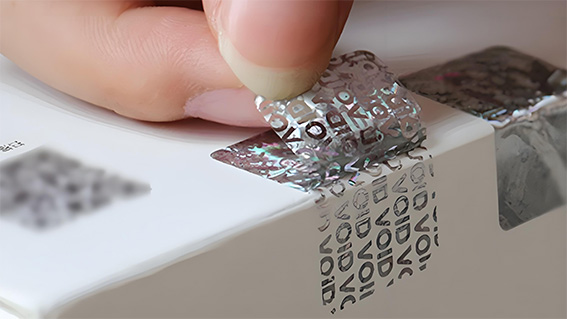
VOID anti-counterfeiting label rely on a physically destructive structure that leaves marks upon peeling, delivering tamper-proof protection at low cost.
Analysis of the VOID anti-counterfeiting label