Feasibility、drawbacks and manufacturer's response strategies of vinyl printer self-adhesive printing
author: Eva
2026-03-03
In the fields of advertising signage, label production, and graphic quick printing, vinyl printer, due to their compatibility with flexible film materials, have become frequently used equipment. Many practitioners are concerned: Can vinyl printer print self-adhesive labels? What are the inherent drawbacks of such devices? Let's take a look at how Instiker resolves these pain points through technology and solutions?
I. Can vinyl printer print self-adhesive labels?
Vinyl printer can definitely print self-adhesive labels, and the printing of self-adhesive labels is one of their core application scenarios. The design core of vinyl printer is to be compatible with various non-absorbent flexible film materials. Self-adhesive labels precisely fall into this category of materials, and their compatibility is naturally high. Through reasonable parameter adjustment and material matching, high-definition, stable, and durable printing effects can be achieved.
The mainstream vinyl printer currently available on the market can be classified into two main types: weak solvent/eco solvent-based roll printers and UV roll/flatbed integrated machines. Both of these models can be used for dry adhesive printing, but there are slight differences in the applicable scenarios and printing effects. The specific details of the compatibility are as follows:
(1) Compatible self-adhesive types and scenarios
The vinyl printer can be compatible with the vast majority of mainstream self-adhesive materials, covering various materials and different uses. It can basically meet the printing needs of various industries. The specific classification is as follows:
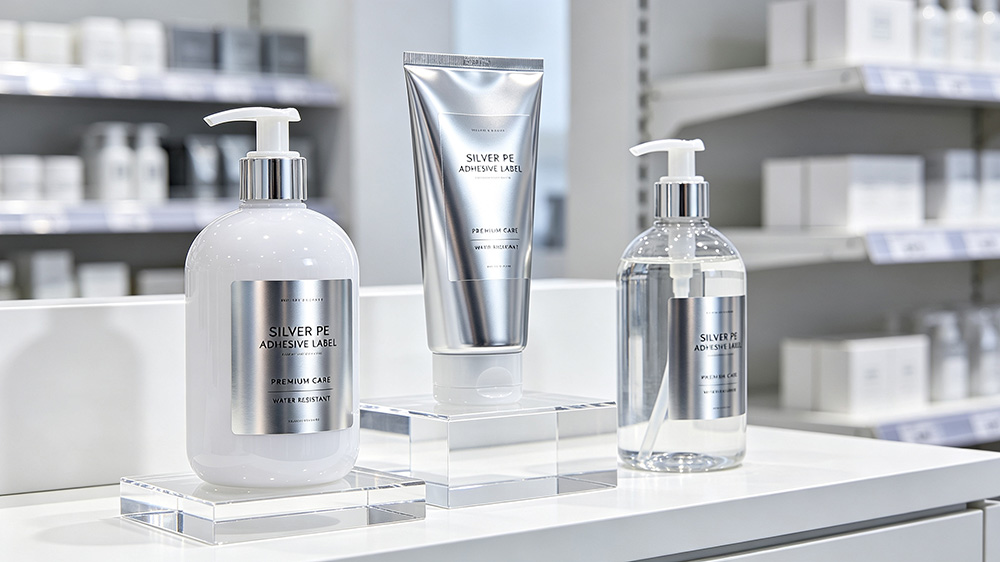
PVC self-adhesive: It includes glossy PVC self-adhesive, matte PVC self-adhesive, and transparent PVC self-adhesive. These are the most commonly used compatible materials. They are waterproof, scratch-resistant, and have strong flexibility. They are widely used in outdoor signs, product labels, window stickers, car stickers, etc. They are also the preferred material for printing self-adhesive labels with vinyl printer.
PET self-adhesive: It is divided into transparent PET, matte PET and colored PET. It has the characteristics of high temperature resistance, chemical corrosion resistance and high transparency. It is suitable for use in scenarios where material stability is required, such as electronic device labels, food packaging labels, medical device identification, etc. Vinyl printer combined with special inks can achieve good adhesion.
Removable Adhesive: Includes removable PVC and removable PET self-adhesive. The back adhesive has moderate stickiness, allowing for easy removal after application without leaving any residue. It is suitable for temporary signs, exhibition setups, window decorations, etc. After being printed by an vinyl printer, it can be used directly without any additional processing.
Other special self-adhesive labels: such as outdoor durable self-adhesive labels, matte anti-slip self-adhesive labels, fluorescent self-adhesive labels, etc. As long as they are matched with the corresponding ink and printing parameters, vinyl printer can achieve stable printing and meet the needs of special scenarios.
(2) Core advantages of self-adhesive printing
Compared with traditional printing methods such as offset printing and screen printing, vinyl printer have significant advantages in printing self-adhesive labels, and this is also the key reason why they have become the mainstream choice:
High adaptability and flexibility: Compatible with various thicknesses and materials of self-adhesive tapes, whether it's roll-type self-adhesive tapes or single-sheet self-adhesive tapes, they can be flexibly adapted without the need to replace equipment, thereby reducing the initial investment cost.
High-definition output, rich colors: The printing precision of the vinyl printer can reach 1440dpi or even higher, capable of clearly presenting detailed patterns, text, QR codes and other contents. When combined with weak solvents or UV inks, the color reproduction is high and it is not prone to fading, meeting the aesthetic requirements of high-end labels and advertisements.
Outdoor durability is excellent: The weak solvent ink and UV ink used by mainstream vinyl printers all have excellent waterproof, scratch-resistant and UV-resistant properties. The self-adhesive products printed with these inks do not require additional coating and can be used outdoors for a long time, significantly reducing subsequent processing costs.
Efficient and convenient, no plate making required: Traditional self-adhesive printing requires pre-plate making, which is suitable for large-scale standardized production.
Efficient and convenient, no plate making required: Traditional self-adhesive printing requires pre-plate making, which is suitable for large-scale standardized production.
However, vinyl printer adopt digital printing technology and do not require plate making. They can start printing with just one click. Whether it's a large batch order or a small batch personalized order, it can be completed quickly, shortening the production cycle and enhancing the order-taking capability.
(3) Precautions for Self-adhesive Printing
Although vinyl printer can perform stable self-adhesive printing, to achieve the best results and avoid problems such as paper jams, pattern detachment, and color deviations, the following points should be noted: First, select the appropriate ink. Weak solvent ink is suitable for outdoor self-adhesive printing, as it has strong adhesion and good weather resistance; UV ink is suitable for both indoor and outdoor use, dries immediately after printing, is environmentally friendly and odorless, and should not be used with water-based ink. Second, adjust the reasonable printing parameters. Based on the material and thickness of the self-adhesive, adjust the paper feeding speed, temperature, and ink discharge volume to avoid material deformation and pattern blurring caused by improper parameters. Third, keep the equipment clean. Regularly clean the paper feeding roller and sensors to prevent the self-adhesive backing from adhering to the equipment, which may cause paper jams, misalignment, and other problems.

II. What are the typical drawbacks of vinyl printer?
(1) Self-adhesive materials are prone to deformation and sticking to the rollers, which affects continuous production.
This is the most common drawback when using vinyl printer to print self-adhesive materials, and it is also the core issue that affects production efficiency. Self-adhesive materials are flexible membranes, and their structure consists of the surface layer, the adhesive layer, and the base paper layer. This structural characteristic leads to the following problems during the printing process:
One issue is that the material is prone to deformation and wrinkling. The surface layer of self-adhesive material tends to shrink and curl when heated. Moreover, during the printing process of vinyl printer, in order to facilitate the drying of the ink, the heating device is activated. The high-temperature environment will further aggravate the deformation of the self-adhesive material, resulting in wrinkling, misalignment, and even paper jams during the printing process, preventing the realization of continuous batch printing. Especially in high-temperature summer conditions or when printing large areas of self-adhesive material, the deformation problem becomes more prominent, seriously affecting the yield rate.
Secondly, the adhesive bonding equipment. The adhesive layer of self-adhesive materials is sticky. During the paper feeding process, if the paper feeding speed is too fast, the roller temperature is too high, or the quality of the adhesive is poor, the adhesive is prone to stick to the paper feeding roller, sensors, and paper pressing wheels. This not only causes paper jams but also pollutes the equipment, requiring frequent manual cleaning, which delays production time and also damages equipment components, increasing maintenance costs. In addition, if the base paper layer is of poor quality, it is prone to paper breakage, which also affects the smoothness of paper feeding and further reduces production efficiency.
Thirdly, thick self-adhesive labels have difficulty in feeding. For thick self-adhesive labels with a thickness exceeding 0.2mm, the feeding system of the vinyl printer is unable to achieve smooth transportation, which often results in feeding deviation, jams, and printing pattern misalignment. This makes it impossible to meet the requirements for precise printing.
(2) Contradiction between ink adhesion and environmental friendliness
One of the environmental shortcomings of weak solvent ink is that it is the mainstream ink for vinyl printer. Its main advantages are strong adhesion and good weather resistance, making it suitable for outdoor self-adhesive printing. However, this type of ink contains a small amount of volatile organic solvents, which will produce a slight irritating odor, failing to meet the indoor environmental protection requirements. Moreover, the volatile solvents will also have a certain impact on the health of the operators, requiring the installation of specialized ventilation equipment, thereby increasing operating costs.
Secondly, the adhesion of water-based ink is insufficient. To meet environmental protection requirements, some manufacturers have introduced water-based ink. However, the adhesion of water-based ink is poor. When printed on self-adhesive surfaces, it is prone to problems such as scratching, peeling, and fading. Especially when used outdoors, its weather resistance is extremely poor, unable to maintain the final effect for a long time. It is only suitable for short-term use of self-adhesive products and the application scenarios are greatly limited.
Thirdly, the cost of ink is high and the ink consumption is large. The special ink used by vinyl printers is relatively expensive, with the price per liter usually ranging from several hundred yuan to several thousand yuan. During the printing process, a significant amount of ink is wasted. Long-term use will increase the cost of consumables, which is a considerable expense for small-scale practitioners. Moreover, different brands of ink have poor compatibility. When changing the ink, the printhead needs to be thoroughly cleaned; otherwise, it may cause the printhead to get clogged, further increasing the ink consumption.
(3) The printer nozzles are prone to clogging, resulting in high maintenance costs and difficulties.
The nozzles are the core components of the vinyl printer, and their performance directly affects the printing accuracy. However, due to the material characteristics of the self-adhesive tape and the ink, the nozzles are prone to clogging. Moreover, the maintenance is difficult and costly. Specifically, this is manifested as:
One issue is that the nozzle is prone to clogging. The surface of the self-adhesive material is smooth and lacks absorbency. When ink is printed on the surface, it needs to dry through evaporation or UV curing. If the printing gap is too long, the ink will solidify at the nozzle of the spray head, causing it to get clogged. Additionally, if the ink is not filtered thoroughly and contains impurities, or if the equipment is not cleaned in time, the nozzle can also get clogged. After clogging, problems such as printing breaks, blurred patterns, color deviations, and even damage to the nozzle may occur. In severe cases, the nozzle can be completely damaged.
Secondly, the maintenance cost is high. The price of the spray heads is expensive. The price of an original spray head is usually several thousand yuan or even tens of thousands of yuan. If the spray heads frequently get clogged or damaged, it will significantly increase the maintenance cost of the equipment. At the same time, the cleaning of the spray heads requires the use of special cleaning solutions. The price of the cleaning solutions is high, and the cleaning process is cumbersome, requiring professional personnel to operate. If the operation is improper, it will further damage the spray heads and other components of the equipment.
Thirdly, maintenance is challenging. The nozzle structure of the vinyl printer is highly sophisticated. Ordinary operators lack the professional maintenance knowledge and skills to perform in-depth cleaning, repair and replacement of the nozzle by themselves. They need to contact the after-sales personnel of the manufacturer. This not only delays production time but also incurs additional after-sales costs. Moreover, other components of the equipment also require regular maintenance. If maintenance is not carried out in time, it will affect the overall performance and service life of the equipment.
(4) The process is cumbersome, and the efficiency of mass production is low, with high labor costs.
The vinyl printer prints self-adhesive labels, but they are not ready for use after printing. Additional processes are required, and the efficiency of mass production is relatively low. The labor costs are high. Specifically, this is manifested as:
One issue is the complexity of subsequent processes. After the self-adhesive printing is completed, there are several subsequent steps such as die-cutting, waste removal, and laminating. Most of these processes require manual operation or the need for additional specialized equipment, thereby increasing the initial investment cost. For example, after the self-adhesive labels are printed, they need to have the excess backing paper removed manually, and then undergo die-cutting before they can be transformed into finished products. For small-batch personalized orders, these processes are cumbersome and time-consuming.
The second issue is the low efficiency of mass production. The printing speed of vinyl printer is relatively slow, especially in high-definition printing mode. The printing speed is usually around 10-30 square meters per hour. For large-scale self-adhesive orders, the production cycle is long and cannot meet the urgent needs of customers. Moreover, the continuous operation stability of the equipment is insufficient. Long-term printing is prone to problems such as paper jams and nozzle blockages, which further affects production efficiency.
The third point is the high cost of labor. The subsequent processes require specialized operators for their complexity, and equipment maintenance and parameter adjustment also need professionals. For small-scale operators, the proportion of labor costs is too high, which squeezes the profit margin. At the same time, manual operations are prone to errors, resulting in a decrease in product yield and further increasing costs.
III. Manufacturer's Response Strategies
In response to the various drawbacks of vinyl printer, Instiker has been constantly exploring and innovating. By integrating market demands and technological advancements, it has introduced targeted solutions from multiple dimensions such as material upgrading, process improvement, software upgrade, and service enhancement.
(1) Addressing issues of material deformation and roller sticking
The base material formula has been optimized, with the addition of heat-resistant and flexible components to control uniformity of thickness; the back adhesive formula has been upgraded, introducing graded viscosity products to prevent equipment from sticking; high-quality base paper has been selected to enhance paper feeding stability; and specialized products suitable for different models have been launched.
(2) Addressing the pain points of ink compatibility
The surface coating of the base material has been optimized to enhance the adhesion of ink; environmentally friendly products have been developed, compatible with low-odor inks and water-based inks; a universal type of self-adhesive has been launched, compatible with various inks, reducing waste.
(3) Addressing the pain points of equipment maintenance
A dust-free production process has been adopted, with strict control of product purity to reduce impurities; the back adhesive coating process has been optimized to avoid back adhesive overflow; products that are easy to remove waste and clean have been launched to reduce the difficulty of equipment maintenance; product usage guidance has been provided.
(4) Addressing the pain points of production efficiency
Pre-cutting and easy waste removal products have been launched to simplify subsequent processes; the roll design has been optimized to be compatible with continuous printing; compatible products with automated equipment have been provided to reduce labor costs.
(5) Other supplementary measures
Product classification has been refined to precisely match the needs of different industries; production costs have been controlled to enhance product cost performance; after-sales services have been improved, providing adaptation guidance and quality assurance.

IV. Summary
Vinyl printer can definitely print self-adhesive labels. The drawbacks that may arise during the printing process can all be resolved through the simple and efficient measures taken by self-adhesive label manufacturers. For self-adhesive label manufacturers, focusing on optimizing the product core and enhancing adaptability is the key to enhancing market competitiveness; for end-users, choosing the appropriate self-adhesive label products and equipment parameters can fully utilize the value of vinyl printers, achieve efficient and high-quality production, and promote industry win-win cooperation.
How do self-adhesive manufacturers address the drawbacks of frozen label?
The uses、advantages and disadvantages of fluorescent paper, and the optimization strategies of manufacturers
Related Article

Las etiquetas PET resisten el arrugamiento, la deformación, la pérdida de tinta, el cambio de tamaño y el manchado por tinta durante la producción a alta temperatura y la impresión digital con láser.
Comprehensive Analysis of PET Self-adhesive Labels
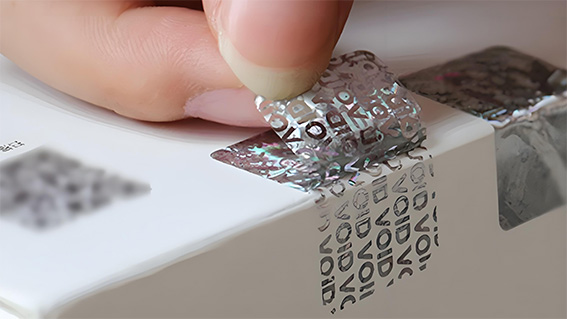
VOID anti-counterfeiting label rely on a physically destructive structure that leaves marks upon peeling, delivering tamper-proof protection at low cost.
Analysis of the VOID anti-counterfeiting label