The environmental degradability, price and application of woodfree paper self-adhesive labels
author: Eva
2026-02-26
In the current era where environmental protection concepts have taken root in people's hearts and the dual carbon goals are continuously advancing, woodfree paper self-adhesive, as a new alternative material to traditional woodfree self-adhesive, has gradually come into the public eye and been widely adopted across various industries. The woodfree self-adhesive independently developed by instiker has been highly praised within the industry for its environmental friendliness and sustainability.
I. Is woodfree paper harmful to the environment?
Regarding whether the woodfree paper self-adhesive labels are harmful to the environment, the core conclusion is: woodfree paper self-adhesive labels that meet national standards are basically harmless to the environment, and their environmental friendliness is much better than that of traditional woodfree paper self-adhesive labels and plastic self-adhesive labels.
Its environmental advantages mainly lie in the raw materials and the entire production chain, reducing the burden on the environment from the source. Unlike traditional wood-based self-adhesive products that rely on deforestation, the raw materials of the woodfree self-adhesive paper do not use any natural wood fibers at all. They are mainly divided into two categories: one uses polypropylene (PP) resin combined with inorganic fillers such as calcium carbonate as the raw material, and for every 1 ton produced, approximately 20 mature trees can be saved, significantly reducing the consumption of forest resources; the other uses agricultural waste such as straw, sugarcane residue, and bamboo fibers as raw materials, achieving the resource utilization of agricultural waste, which is in line with the concept of circular economy and avoids the pollution caused by waste incineration and disposal.
During the production process, the woodfree paper also adheres to the green concept: Traditional pulp paper production requires 200 tons of water per ton and generates chlorine-containing wastewater. However, the woodfree paper self-adhesive mostly adopts physical processes such as melt extrusion and bidirectional stretching. Throughout the process, no water is used, nor are chemical bleaching agents, strong acids, or strong bases used, resulting in no wastewater or exhaust emissions. The energy consumption is reduced by over 38% compared to traditional processes. At the same time, high-quality products use water-based environmentally friendly inks and biodegradable adhesives instead of traditional solvent-based inks and non-biodegradable adhesives, avoiding the pollution of volatile organic compounds (VOCs) to the air. Some products have also obtained international environmental certifications such as OEKO-TEX Standard 100 and FSC, and can be directly in contact with infants' skin, meeting both safety and environmental standards.

II. Can without woodfree paper completely decompose?
Whether woodfree paper self-adhesive labels can be completely decomposed cannot be simply generalized. The key lies in the type of their base material. Overall, they can be classified into two categories: "completely biodegradable" and "reusable for recycling". This has completely broken the traditional dilemma of self-adhesive labels being "difficult to decompose and prone to causing white pollution".
Type 1: woodfree paper adhesive sheets made from natural materials such as straw and bamboo fibers without wood pulp can achieve 100% complete biodegradation. The fiber structure of these materials can be naturally decomposed by microorganisms in nature. Under natural environment or industrial composting conditions, the decomposition period does not exceed 180 days. Some products using enzymatic cellulose hydrolysis technology or adding corn starch membranes can shorten the degradation period to 120 days. After degradation, they completely convert into water and carbon dioxide, leaving no residues or microplastic pollution. They comply with international degradation standards such as EU EN 13432 and US BPI. For example, a non-plastic-coated non-wood fiber adhesive sheet produced by a company in Nanxian, Hunan Province, can be completely degraded within 180 days and has been exported to Europe in large quantities; some of the labels used by certain enterprises in Shanghai can be directly put into wet waste recycling after disposal, reducing plastic waste emissions by tens of tons per year.
Type 2: Synthetic woodfree paper adhesive sheets made from PP resin combined with inorganic fillers such as calcium carbonate cannot be completely biodegraded, but can be 100% recycled and reused. The core component of this material, PP resin, is a thermoplastic. After being discarded, it can be reprocessed into plastic particles through crushing and granulation processes, and the performance of the recycled material is basically the same as the original material, which can be used to produce garbage bags and shopping bags, forming a complete recycling chain. Even if it cannot be recycled, its incineration process only produces carbon dioxide and water, and does not release toxic gases such as dioxins and hydrogen chloride, with a pollution risk much lower than traditional PVC adhesive sheets.
At present, the industry has achieved a dual breakthrough of "degradation and recycling". Some enterprises have, through technological innovation, developed degradable synthetic paper self-adhesive tapes, which combine durability with environmental friendliness. It should be noted that complete degradation requires suitable temperature, humidity and microbial conditions. If they are randomly discarded in a sealed and microbe-free environment, the degradation speed will slow down, but overall, it is still much better than traditional wood fiber self-adhesive tapes and plastic self-adhesive tapes.
III. Is the price reasonable?
Regarding the price of the woodfree self-adhesive paper, the main conclusion is: The overall price is reasonable and affordable. Its cost performance is superior to that of traditional wood-based self-adhesive paper and pure plastic self-adhesive paper. There are differences in prices for different types of products, which can be adapted to different budget scenarios and have lower long-term usage costs.
From the perspective of cost origin, the price advantage of woodfree paper self-adhesive labels is very obvious. The natural woodfree pulp type uses agricultural waste as raw materials and does not require tree felling, with the raw material cost being 15%-25% lower than that of traditional wood pulp; the synthetic type uses PP resin and calcium carbonate as raw materials, with the filling ratio of calcium carbonate reaching 60%, significantly reducing the usage of plastic substrates, and the raw material cost being about 20% lower than that of pure plastic self-adhesive labels. At the same time, its production process does not require complex pulping and bleaching procedures, and the energy consumption and pollutant treatment costs are significantly reduced, further compressing the overall production cost. This is also the core reason for its affordable price.
From the actual market selling prices, there is little difference in the prices of different types of woodfree paper self-adhesive labels. They can meet various needs: the price of ordinary woodfree paper self-adhesive labels is approximately 0.5 - 1.5 yuan per square meter, while the price of high-end biodegradable type is approximately 1.8 - 3 yuan per square meter; the price of traditional wood fiber self-adhesive labels is approximately 1.2 - 2.0 yuan per square meter, and the price of pure plastic self-adhesive labels is approximately 2.0 - 4.0 yuan per square meter. It can be seen that the price of ordinary non-wood fiber self-adhesive labels is lower than that of traditional wood fiber self-adhesive labels and pure plastic self-adhesive labels. Although the high-end biodegradable type is slightly higher in price, considering the environmental protection policy subsidies in some regions (such as tax incentives), as well as the long-term benefits brought by its durability, the overall usage cost has more advantages.
In addition, the woodfree self-adhesive paper has extremely strong durability. Its tear resistance is 3 to 5 times that of traditional paper, and it can withstand more than 50 washes. It is not prone to damage or detachment, which reduces the frequency of repeated pasting and replacement, thereby indirectly lowering the usage cost - especially suitable for scenarios such as logistics and food packaging where items are used for a long time and need frequent replacement, where the cost advantage is even more prominent. From the retail perspective, the A4-sized non-wood fiber self-adhesive printing paper costs only a few yuan to several tens of yuan for 100 sheets, further confirming its affordable price feature.
IV. Where is it mainly applied?
With its core advantages of being environmentally friendly, durable, and cost-effective, the non-wood fiber self-adhesive tape has penetrated various fields of production and life, becoming an important material for achieving green transformation in various industries. Considering its characteristics, it is mainly applied in the following major scenarios, covering daily consumption, industrial production, and other aspects:
(1) Food packaging field
Due to the non-toxic, biodegradable, and direct contact with food properties of the woodfree self-adhesive tape, as well as its waterproof, oil-resistant, and low-temperature resistance features, it is widely used in the labels and packaging sealing of various foods. For example, labels for biscuits, snacks, pre-prepared foods, frozen foods, packaging sealing stickers for baking products, and traceability labels for fruits and vegetables. In particular, some water-soluble non-wood fiber self-adhesive tapes can be directly dissolved during cleaning, without any residue, perfectly solving the problem of difficult cleaning of food labels and potential pollution risks, which meets the development needs of the food industry for "green and safe". Currently, multinational chain enterprises such as KFC and McDonald's have purchased this type of self-adhesive tape for food packaging, and the purchase volume has increased significantly year-on-year.
(2) Logistics and warehousing field
The logistics industry has high requirements for the durability and waterproof properties of self-adhesive tapes. The non-wood fiber self-adhesive tape, with its advantages of tear resistance, waterproof and moisture-proof, and anti-wear, has become an ideal choice for express delivery labels, shelf labels, and pallet markings. It can withstand friction during transportation and maintain stable stickiness even in cold chain logistics (0-4℃), preventing label detachment and information loss. At the same time, its recyclable or degradable characteristics also meet the policy requirements of the courier industry for "green packaging". Currently, China Post, JD, and SF Express, among others, have adopted this type of self-adhesive tape as a common material for green packaging.
(3) Daily use and daily care field
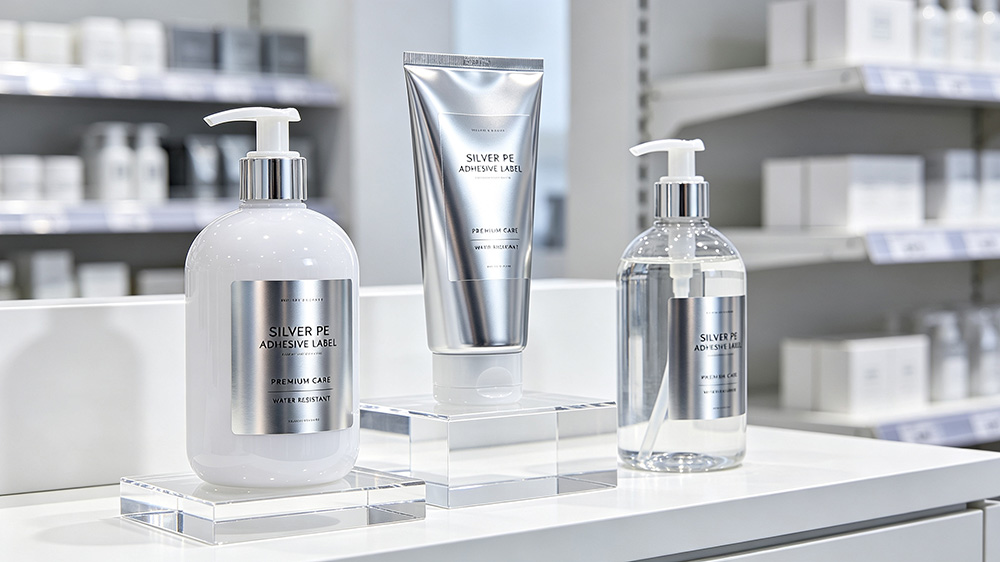
In the packaging of daily care products, the non-wood fiber self-adhesive tape can be used for labels of shampoo, body wash, laundry detergent, etc., which can not only be adapted to printing processes to present exquisite product patterns and information, but also conform to the brand positioning of "natural and environmentally friendly" in the daily care industry. Some natural non-wood pulp-based self-adhesive tapes, through safety certification, have no harmful substance residues and can be used for labels of infant daily care products, ensuring product safety. After a certain daily care enterprise in Shanghai adopted the non-wood fiber self-adhesive tape, the sales volume in offline stores increased by 15%, demonstrating its role in enhancing brand image.
(4) Medicine and medical field
The medicine industry has strict requirements for the safety and environmental friendliness of materials. The non-wood fiber self-adhesive tape, with its non-toxic, odorless, chemical disinfection-resistant, and moisture-proof properties, is widely used in medicine packaging labels, medical device markings, and test tube labels. It can withstand chemical corrosion during disinfection, ensuring that the labels remain clear and legible for a long time, and can be environmentally processed after disposal, avoiding pollution to the medical environment, which meets the compliance requirements of the medicine industry and also conforms to the green development trend of the medical field.
(5) Other diversified scenarios
In addition to the above fields, the woodfree self-adhesive tape is also widely used in multiple scenarios: clothing labels; outdoor advertising; educational teaching aids; industrial markings. Moreover, with the development of water-based barrier technology, the non-wood fiber self-adhesive tape is also used for packaging of disposable paper cups and paper bowls, further expanding the application boundaries.

V. Summary
Overall, the woodfree adhesive paper is a new type of material that combines environmental friendliness, practicality and cost-effectiveness: products that comply with national standards are basically harmless to the environment and can reduce the consumption of forest resources; some can be completely biodegraded, and some can be recycled and reused, solving the environmental concerns of traditional adhesive papers; it has a reasonable price and outstanding cost-effectiveness, suitable for different budget requirements; it has a wide range of application scenarios, covering food, logistics, cosmetics, medicine and other industries, meeting the green transformation needs of various fields.
With the continuous improvement of environmental protection policies and the continuous advancement of technology, the degradability of non-wood fiber self-adhesive sheets will further enhance, the price will become more affordable, and the application scenarios will continue to expand. In the future, it will gradually replace traditional wood fiber self-adhesive sheets and plastic self-adhesive sheets, becoming the mainstream in the adhesive material industry. It will not only help enterprises reduce usage costs and enhance brand image, but also contribute to environmental protection, achieving the goal of "win-win situation of environmental protection and practicality".
The uses、advantages and disadvantages of fluorescent paper, and the optimization strategies of manufacturers
A Comprehensive Guide to the Environmental, Cost and Printing Aspects of PET stickers
Related Article

Las etiquetas PET resisten el arrugamiento, la deformación, la pérdida de tinta, el cambio de tamaño y el manchado por tinta durante la producción a alta temperatura y la impresión digital con láser.
Comprehensive Analysis of PET Self-adhesive Labels
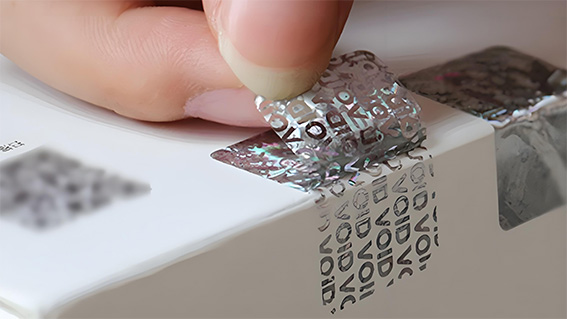
VOID anti-counterfeiting label rely on a physically destructive structure that leaves marks upon peeling, delivering tamper-proof protection at low cost.
Analysis of the VOID anti-counterfeiting label