
Comparison of synthetic paper and coated paper self-adhesive labels
author: Eva
2025-10-15
Currently in the market, coated paper self-adhesive labels and synthetic paper self-adhesive labels are the two main types of base materials. Due to differences in base material structure, physical properties, and cost ranges, they are suitable for completely different application scenarios. Coated paper self-adhesive labels focus on high cost-effectiveness and high-definition printing effects, and are deeply rooted in the fields of civilian use, fast-moving consumer goods, and conventional commercial applications; synthetic paper self-adhesive labels rely on waterproof, weather-resistant, tear-resistant, and corrosion-resistant properties, and mainly target demanding working conditions and high-end signage scenarios.
I. Comparative Analysis of Industry Cases
1. Typical Application Cases of Coated Paper Self-adhesive Labels
Case One: Fast-moving consumer goods retail store display label scenarios. Price labels, product description labels, promotional stickers for daily necessities, snacks, and cold-chain beverages in domestic chain supermarkets are all uniformly printed on glossy offset paper self-adhesive labels. This scenario is in an indoor dry and normal-temperature environment, without oil stains, no direct sunlight, and no low-temperature conditions. The label usage period is short , and there is no need for long-term weather resistance. The high-definition color printing effect of offset paper self-adhesive labels can perfectly present the brand visual design. The unit price for large-scale printing is extremely low, fully meeting the requirements of the scenario, and it is a standard consumable for the retail industry in supermarkets.
Case Two: Ordinary logistics and warehousing label sheets. Ordinary e-commerce express labels, warehouse shelf classification labels, and indoor equipment labels generally use matte offset paper self-adhesive labels. These scenarios have low requirements for physical resistance, and the core requirements are clear printing, compatibility with thermal printing, controllable cost, and stable adhesion. Offset paper self-adhesive labels are compatible with high-speed printing equipment, with firmly attached characters, significant cost advantages in mass production, and are suitable for large-scale standardized warehousing and logistics operations.
2. Typical Application Cases of Synthetic Paper Self-adhesive Labels
Case One: Food Cold Chain and Fresh Produce Packaging Scenario. The outer packaging labels of frozen food, refrigerated dairy products, fresh fruits and vegetables, and frozen meat products are all replaced with food-grade PP synthetic paper self-adhesive labels. Traditional copperplate paper labels are prone to cracking in the -18℃ cold chain environment. When exposed to packaging condensation water, they will quickly absorb water, wrinkle, and delaminate, causing the labels to fall off and resulting in the loss of product information. However, synthetic paper self-adhesive labels have excellent low-temperature resistance and do not crack or deform in low temperatures. They are waterproof and resistant to condensation water, and can accompany the product throughout the cold chain storage, transportation, and sales. The label information is complete and clear, meeting the long-term marking compliance requirements of the food industry.
Case Two: Daily Care Cleaning and Oil Stain Scenarios. The bottle labels of laundry detergent, shower gel, edible oil, sauces, etc., which are prone to water stains and oil stains during use and transportation, all use matte synthetic paper self-adhesive labels. These products are easily stained with water stains and oil stains during use and transportation. Coated paper labels will quickly absorb oil, deteriorate, and delaminate, while the dense polymer structure of synthetic paper can isolate oil and water erosion, resist friction, and withstand rubbing. It remains flat and intact for a long time, effectively enhancing the product's high-end texture.

II. Comprehensive Technical Comparison of Two Types of Self-adhesive Materials
|
Comparison dimension
|
Coated paper self-adhesive label
|
Synthetic paper self-adhesive label
|
|
Waterproof and oil-resistant property
|
Poor quality, wrinkles when exposed to water, oozes when in contact with oil, and prone to damage.
|
Excellent, completely waterproof and oil-resistant, does not seep or deform
|
|
Physical toughness
|
Weaker, prone to tearing, not resistant to friction, and prone to scratching.
|
Extremely strong, resistant to stretching, tear-resistant, resistant to rubbing and abrasion.
|
|
Temperature resistance performance
|
Temperature-adaptive, brittle at low temperatures, prone to yellowing at high temperatures.
|
Resistant to high and low temperatures (-40℃ to 120℃), with wide application compatibility
|
|
Printing effect
|
Bright colors, high fidelity, the preferred choice for conventional printing
|
Printed clearly, with stable adhesion, and featuring high-end matte texture
|
|
Total cost
|
Low, with extremely high production cost performance.
|
Higher, with a premium of 20% to 40% over coated paper
|
|
Environmental protection attribute
|
Biodegradable, no environmental pressure
|
Recyclable, no toxic gases produced during incineration, green and compliant.
|
The coated paper produced by Instiker is suitable for indoor, dry, normal-temperature, short-term use, cost-sensitive standard scenarios. The synthetic paper self-adhesive labels are suitable for outdoor, humid, low-temperature, oily, long-term use, and high durability requirements in high-end and demanding scenarios. not only did it solve the quality and price concerns that the customers were worried about, but it also addressed issues such as ink bleeding and color variations during printing.It is the preferred choice for many customers.
III. Standardized Selection and Production Technology Guidelines
1. Precise Product Selection Technical Specifications
The coated paper self-adhesive labels are preferred for applications such as supermarket price tags, indoor product instructions, short-term promotional stickers, ordinary logistics labels, indoor equipment identification, and dry environment cosmetic labels. The core criteria are: normal temperature and dry environment, usage period not exceeding half a year, limited budget, and no requirements for corrosion resistance or weather resistance. For slight splash-proof protection, a laminating process can be combined to enhance the basic protective performance.
Synthetic paper self-adhesive labels are preferred for applications such as cold chain food, fresh ingredients, cleaning and oil-stained products, outdoor signs, industrial equipment, automotive parts, and long-term retained product traceability labels. The core criteria are: existence of low temperature, humidity, oil stains, and exposure to sunlight, usage period exceeding one year, and high requirements for label integrity, aesthetics, and compliance. For curved surface labeling, PE synthetic paper is selected; for high-temperature scenarios, PET synthetic paper is selected; and for general scenarios, PP synthetic paper is selected.
2. Key Points of Printing Processing Technology
The coated paper self-adhesive products have excellent compatibility with various printing processes. Both water-based and solvent-based inks can be used. The printing speed is fast, and the drying efficiency is high, making it suitable for large-scale and high-speed mass production. During processing, it is necessary to avoid long-term exposure to moisture and stacking, to prevent the paper from deforming due to moisture absorption and inaccurate registration. For laminated products, the lamination temperature needs to be controlled to avoid blistering and delamination.
The synthetic paper self-adhesive products are based on high-molecular materials, and the surface tension differs significantly from that of paper-based substrates. Ordinary inks are prone to problems such as insufficient adhesion and ink bleeding. During processing, an electrostatic pre-treatment process should be adopted to ensure a surface energy of ≥ 36 PILLAR. Special UV inks and oil-based inks should be used, and the printing should be fully cured. At the same time, avoid high-temperature and high-speed printing that causes the substrate to stretch and deform. The die-cutting processing should control the pressure to prevent edge curling and breakage.
IV. Latest Development Trends in the Self-adhesive Label Industry
1. Green and low-carbon have become the core necessity for the industry
Under the dual-carbon policy, the environmental control in the packaging printing industry has been continuously upgraded. Traditional high-pollution and difficult-to-degrade consumables have been gradually phased out. The coated copperplate paper continues to optimize its environmental-friendly processes, promoting the use of solvent-free adhesives and water-based inks, achieving degradable and low-emission production; The coated synthetic paper, leveraging its advantages of recyclability, non-toxic burning, and no residue of waste, has become the core environmentally-friendly material to replace traditional PVC and ordinary paper labels. The penetration rate of synthetic paper in high-end food, cosmetics, and export industrial products continues to increase. At the same time, the industry gradually eliminates one-time non-degradable consumables, and lightweight, recyclable, and low-pollution have become the core selection indicators.
2. Scene refinement and hierarchical division, with a clear trend of substitution and upgrading
In the past, enterprises blindly chose low-cost coated copperplate paper without considering environmental factors, resulting in frequent problems such as terminal product label damage, detachment, and invalidation of identification. Currently, the industry presents a pattern of extreme cost-effectiveness in low-end scenarios and comprehensive functional upgrades in high-end scenarios. Ordinary civilian and short-term identification scenarios continue to use coated paper without any changes, relying on cost advantages to consolidate the market foundation; While in the refrigeration, outdoor, industrial, high-end cosmetics, and infant food and other specialized fields, synthetic paper without coating is accelerating the substitution of traditional coated paper laminated products, completely solving the problems of blistering of the coating, poor waterproof effect, and poor durability, and the demand for long-lasting functional labels continues to grow.
3. Material compounding and function customization iteration
The performance of a single material is gradually unable to meet the diversified terminal demands. The industry is upgrading towards composite functions. The coated copperplate paper focuses on "lightweight, high color rendering, and low cost" optimization, upgrading the fine coating to improve printing accuracy and adapt to high-end color printing scenarios; The coated synthetic paper is moving towards customized function upgrades, giving rise to specialized categories such as high-temperature resistance, low-temperature resistance, removable glue, strong adhesion, UV resistance, anti-counterfeiting matte, etc., which can be customized for substrate thickness, adhesive layer performance, and surface texture according to customer conditions, and can adapt to the needs of emerging industries such as electronics, new energy, and precision manufacturing.
Glassine Paper Comprehensive Analysis of Material Characteristics, Technical System and Industrial Applications
PP Synthetic Paper:A Dual Breakthrough in Sustainability And Durability
Related Article

Las etiquetas PET resisten el arrugamiento, la deformación, la pérdida de tinta, el cambio de tamaño y el manchado por tinta durante la producción a alta temperatura y la impresión digital con láser.
Comprehensive Analysis of PET Self-adhesive Labels
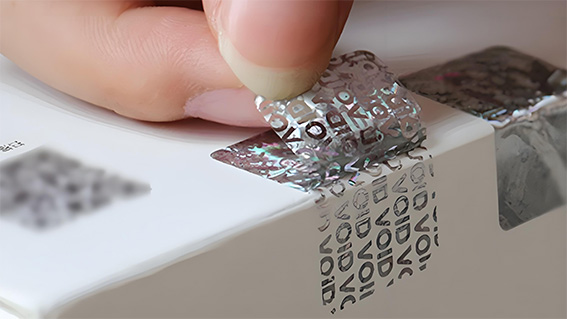
VOID anti-counterfeiting label rely on a physically destructive structure that leaves marks upon peeling, delivering tamper-proof protection at low cost.
Analysis of the VOID anti-counterfeiting label