
Functional labels safeguard quality and safety
author: Eva
2025-09-19
I. Technical Architecture: Evolution from Physical Anti-counterfeiting to Intelligent Sensing
1)Multidimensional Anti-counterfeiting Technology System
Nanometer wet-sensitive anti-counterfeiting labels are designed with ultra-micro hole film materials, which instantly turn transparent when exposed to water, and combine laser holographic stamping layers and breakable anti-counterfeiting lines to achieve "instantly visible upon smearing, and completely destroyed upon uncovering". The anti-counterfeiting labels of Xiamen Nano Optics utilize the polarization light color-changing principle, allowing consumers to observe the color change with a white screen of a mobile phone, without the need for professional equipment to verify authenticity, thus solving the pain point of difficult scanning of traditional holographic labels. The more advanced dynamic covalent bond cross-linking technology enables the labels to self-repair through 60°C heating after mechanical damage, significantly extending the service life and enhancing the anti-counterfeiting toughness.
2)Intelligent Monitoring Integration Solution
In the field of cold chain logistics, the instant measurement wireless electronic temperature label (MOT-U201) records the transportation temperature with a high precision of ±0.2°C in real time. The data is synchronized to the blockchain platform via Bluetooth, providing "immediate warning for temperature anomalies exceeding 2°C + unalterable throughout the process" as a dual guarantee. Hangzhou Aoken Technology's RFID temperature humidity label supports automatic storage mode in air transportation environments, automatically saving data when entering the transmission blind area, and retransmitting data upon resuming communication, ensuring zero data breaks in the cold chain. Medical implant labels use biocompatible PEEK material, integrate pH sensors and drug release micro-needles, and achieve real-time transmission of data through Bluetooth 5.0, simultaneously meeting the needs of treatment monitoring and safety warnings.
3)Material Safety and Function Balance
Food packaging labels need to select acrylic adhesives that have passed FDA 21 CFR 175.105 certification, with migration rate controlled at ≤5μg/dm² to avoid contaminating the contents. In medical scenarios, medical UV glue that has passed ISO 10993 biocompatibility testing is used, supporting 121°C steam sterilization for more than 10 times, while also combining washable labels (PE film + acrylic adhesive) to ensure the safety of medical equipment use. Biodegradable labels made of composite materials such as sugarcane fiber and hemp fiber have a carbon footprint 40% lower than traditional PP, and are compatible with laser and inkjet printing through non-silicification treatment, meeting the requirements of both environmental protection and functionality.

II. Application Scenarios: Precise Quality Control in Key Areas
1)Food and Agricultural Product Traceability
According to the "Food Labeling Supervision and Management Measures" of 2025, the labels of pre-packaged foods must mandatorily indicate the "1+4" core nutrients (energy, protein, fat, carbohydrates, sodium) and allergen warnings, and use white background with black text to mark the production date and shelf life. Combined with blockchain technology, for example, a cross-border maternal and child care platform has linked the entire process data of milk powder from production to terminal sales (including the ship's hold number) onto the blockchain. Consumers can scan the code to view the complete traceability record, and the repeat purchase rate has increased by 40%. For expired food, FamilyMart convenience stores in Japan have increased the purchase rate by 5% through the emotional design of "teary stickers", and reduced waste by 3,000 tons per year.
2)Medical Device Full Life Cycle Management
Medical device labels must strictly follow the "Regulations on the Management of Instructions and Labels for Medical Devices", indicating the unique device ID, sterilization date, and biological compatibility statement, and using fragile paper labels to ensure traceability. A medical equipment company has used the "RFID + Blockchain" system to encrypt and store data from each nursing step, achieving full traceability from production quality inspection to terminal use, and reducing the complaint rate of counterfeit products from 17% to 0.3%. Washable labels combined with degradable adhesives maintain 90% or more adhesiveness after 121°C steam sterilization, meeting the requirements for multiple repeated uses.
3)Industrial Manufacturing and Logistics Monitoring
Automotive component labels use anti-metal RFID labels that can withstand extreme environments of -40°C to 260°C, and can be automatically sensed and read within 30 meters. Warehouse inventory efficiency has increased by 80%. In the luxury goods maintenance field, each maintenance step is recorded and stored on the blockchain through RFID, allowing consumers to view the complete maintenance record, including the batch of cleaning agents used and the qualifications of the technicians, solving the pain point of easily tampered traditional paper documents.
III. Compliance Management: Establishing a Tripartite Risk Prevention and Control System
1)Regulatory Dynamic Response Mechanism
Food enterprises need to establish an annual compliance review of label materials and processes, focusing on verifying the allergen independent indication column and digital label extension information in the new regulations of GB 7718-2025. Medical equipment manufacturers need to regularly update ISO 10993 biological compatibility test reports to ensure the safety of label materials after sterilization. For recall events, the problem batches need to be located through the blockchain traceability system within 24 hours, and the real-time data collection capability of intelligent labels is used to achieve precise recall.
2)Supply Chain Collaborative Management
Adhesive suppliers need to provide chemical migration test reports to ensure food contact safety; label manufacturers need to establish a full-chain quality traceability system from the base material to the top material, such as "CleanFlake PET bottle recycling labels" by Avery Dennison, which through adhesive technology innovation, improves the separation purity of the label and PET bottle after regeneration by 30%, meeting the EU CSRD directive requirements.
3)Intelligent Audit and Warning
Introducing an AI visual inspection system to monitor the clarity of label printing, size deviations, etc., with an identification accuracy rate of 99.7%. A dairy product enterprise has reduced the label non-conformity rate from 0.8% to 0.03% through this system. At the same time, based on big data analysis, a risk prediction model can provide early warnings for high-risk batches, such as predicting potential spoilage risks in cold chain logistics through temperature data, reducing the loss rate by 25%.

IV. Future Trends: From Functional Carrier to Trust Infrastructure
1)Technological Integration Innovation
The combination of "RFID + Blockchain" is reconfiguring the logic of anti-counterfeiting and traceability: The RFID label serves as the "electronic ID" of the product, containing a global unique code and automatically sensing and reading; Blockchain encrypts and dispersively stores production, circulation, and sales data, forming an irreversible "digital footprint". After being applied by a certain tea enterprise, the complaint rate for counterfeit products dropped sharply from 17% to 0.3%, verifying the effectiveness of this technology.
2)Dynamic response and self-optimization
The environmental warning label is designed through "fabric - thermochromic ink layer - shape memory polymer adhesive", triggering dual warnings of ink color change and label curling when the temperature exceeds the limit, with a response time of ≤ 10 seconds. Reconfigurable labels utilize bio-based epoxy resins cross-linked by dynamic covalent bonds, achieving repeated information erasure and structural reshaping through ester exchange reactions, supporting up to 3 cycles of reuse, providing the possibility for closed-loop recycling.
3)Extension of the metaverse scenario
The metasign code technology is based on cryptography, generating dynamic encrypted labels for each product. Consumers can view the blockchain-verified hash value by scanning the code and view the production environment through VR, such as a certain high-end tea brand showing the weather data and soil composition during the growth of tea trees, elevating the traceability experience to an immersive dimension. This "physical label + digital twin" model is building a new paradigm of trust economy that integrates virtual and real worlds.
The essence of quality assurance for functional labels lies in the deep coupling of material performance, technological innovation, and regulatory compliance. From the regulation of adhesive cross-linking density at the molecular level to the design of multi-layer composite structures at the macro level, labels are evolving from static identifiers to intelligent nodes with perception, interaction, and decision-making capabilities. Enterprises need to build a "technology - scenario - compliance" three-in-one management system, through continuous breakthroughs in nanocoatings, 3D printing, and bio-based materials, to promote the field of labels to transition towards precision, intelligence, and sustainability. In the future, functional labels will become the "nanoscale trust interface" connecting the physical world and the digital ecosystem, ensuring product quality and safety while reshaping the trust relationship between consumers and brands.
The diversification of labels
The dual mission of precise identification and anti-counterfeiting traceability
Related Article

Las etiquetas PET resisten el arrugamiento, la deformación, la pérdida de tinta, el cambio de tamaño y el manchado por tinta durante la producción a alta temperatura y la impresión digital con láser.
Comprehensive Analysis of PET Self-adhesive Labels
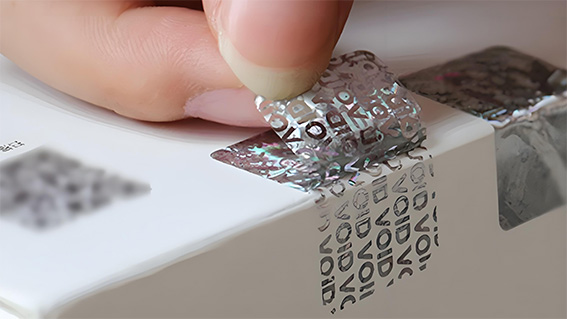
VOID anti-counterfeiting label rely on a physically destructive structure that leaves marks upon peeling, delivering tamper-proof protection at low cost.
Analysis of the VOID anti-counterfeiting label