One type of heat-resistant paper and three types of heat-resistant papers A deep analysis of their protective properties and application scenarios
author: Eva
2025-10-16
I. Technical Definition and Material Comparison
1) Anti-Heat Sensitivity Paper
Core Function:
Primarily based on basic waterproof performance, it can resist minor moisture (such as water droplets or short-term humid environments), but is prone to failure in long-term immersion or high-humidity conditions.
Material Composition:
Base Paper: Ordinary wood pulp paper or recycled paper, with a weight of 50-70g/㎡ and a thickness of approximately 60-80μm.
Heat Sensitivity Coating: Contains a bisphenol A (BPA) coloration system (accounting for 15-20% of the coating weight), combined with calcium carbonate filler (40-50%) and polyvinyl alcohol adhesive (10-15%).
Protective Layer: Only coated with a simple acrylic resin layer (thickness 1-2μm), lacking oil and scratch resistance.
Adhesive: Water-based adhesive system, initial adhesion force ≤ 10N/25mm, suitable for flat surface labeling, but prone to detachment due to grease.
2) Anti-Heat Sensitivity Paper
Core Function:
Through three-layer protection of waterproof, oil-resistant, and scratch-resistant, it maintains stability in harsh environments. For example, exposed to 37℃, 50% RH conditions for 72 hours, the light density retention rate of the printed content is ≥ 90%.
Material Composition:
Base Paper: High-strength chemical wood pulp or synthetic paper (such as PP, PET), with a weight of 70-100g/㎡, a thickness of 80-120μm, and a tear resistance strength > 15N/15mm.
Heat Sensitivity Coating: Without BPA formulation (such as fluorane-based colorants), combined with nano-sized silica filler (30-40%) and polyurethane adhesive (20-30%), with a coloration speed ≤ 0.1 seconds per dot.
Protection System:
Isolation Layer: Contains latex (18-22 parts), PVA (50-60 parts), and crosslinking agent (10-20 parts), preventing grease from penetrating to the heat sensitivity layer.
Top Coating: Fluorocarbon resin (thickness 3-5μm), surface energy ≤ 15mN/m, waterproof rating up to IPX7 (30-minute 1-meter water immersion without penetration).
Adhesive: Hot melt adhesive system, initial adhesion force ≥ 14N/25mm, holding force > 10 hours, suitable for labeling in -20℃ to 70℃ environments.

II. Production Process and Performance Testing Standards
1) Anti-Heat Sensitivity Paper Production Process
Coating Process:
Single-layer scraper coating, coating speed 30-50 meters/minute, oven temperature 80-120℃, coating thickness controlled ±10%.
Testing Standards:
Waterproofness: GB/T 24987-2010 standard, no penetration on the surface after 30 minutes, but prone to delamination after long-term immersion (>2 hours).
Storage Period: ≤ 8 months at room temperature and protected from light, accelerated fading at high temperatures (>40℃) or in the presence of light.
2) Anti-Heat Sensitivity Paper Production Process
Coating Process:
Multi-layer composite coating (pre-coating → heat sensitivity layer → isolation layer → top coating), using micro-etch coating technology, coating thickness error ≤ ±5%, machine speed 15-25 meters/minute.
Key Technologies:
Top Coating Process: Fluorocarbon resin enhanced adhesion through plasma treatment, surface roughness Ra ≤ 0.2μm, pencil hardness ≥ 3H.
Drying Technology: Segmented hot air circulation oven (120℃ → 150℃ → 100℃), ensuring uniform coating curing and no pinhole defects.
Testing Standards:
Waterproofness: ISO 20653:2018 standard, IPX7 level waterproof (1-meter water depth 30 minutes without penetration).
Oil Resistance: ASTM D471 standard, after soaking in pressed peanut oil for 3 hours, light density retention rate ≥ 95%.
Scratch Resistance: Foggra wear tester (4.9N pressure, 100 times friction), surface wear amount ≤ 0.1μm. Supermarket retail: Price tags for common goods (such as stationery and daily necessities), with low costs (0.01 - 0.03 yuan per piece), but avoid contact with the fresh food section as it is exposed to moisture.
Logistics foundation: Ordinary express shipping labels, barcode readability ≥ 98% in a dry environment, but may become blurry in rainy weather.
Medical records: Outpatient registration forms, short retention period (≤ 6 months), suitable for temporary information recording.
III. Application Scenarios and Typical Cases
1) Application Scenario of Heat-sensitive Paper
Retail in Commercial Supermarkets: Price tags for common goods (such as stationery and daily necessities), with low cost (0.01 - 0.03 yuan per sheet), but need to avoid contact with the fresh produce section's moisture.
Logistics Foundation: Ordinary express delivery labels, with barcode readability ≥ 98% in dry environments, but prone to blurring in rainy weather.
Medical Records: Outpatient registration forms, with a short preservation period (≤ 6 months), suitable for temporary information recording.
2)Three-Defense Heat-sensitive Paper Application Scenario
Cold Chain Logistics:
Case: A meat enterprise used three-defense heat-sensitive paper labels (-20℃ labeling), after being processed by a heat shrink machine, stored at -18℃ for 6 months, with barcode scanning pass rate > 99%.
Technical Advantages: Low-temperature adhesive that can withstand the lowest labeling temperature of -5℃, resistant to condensation water penetration, ensuring complete information throughout the cold chain transportation.
Catering Industry:
Case: A chain restaurant adopted anti-oil labels (resistant to 120℃ edible oil splashing), used in the kitchen environment for 3 months, with printed content not smudged or fall off.
Technical Advantages: Low surface energy of fluorocarbon coating, grease contact angle > 110°, easy to clean and resistant to pollution.
Industrial Manufacturing:
Case: Automotive component labels passed salt spray tests (5% NaCl solution, 48 hours), without corrosion or fading, meeting ISO 9227 standards.
Technical Advantages: Isolation layer effectively blocks the penetration of metal processing liquid, protecting the heat-sensitive layer from chemical erosion.
Self Adhesive Materials Decoding Scientific Structures And Industrial Applications
Glassine Paper Comprehensive Analysis of Material Characteristics, Technical System and Industrial Applications
Related Article

Las etiquetas PET resisten el arrugamiento, la deformación, la pérdida de tinta, el cambio de tamaño y el manchado por tinta durante la producción a alta temperatura y la impresión digital con láser.
Comprehensive Analysis of PET Self-adhesive Labels
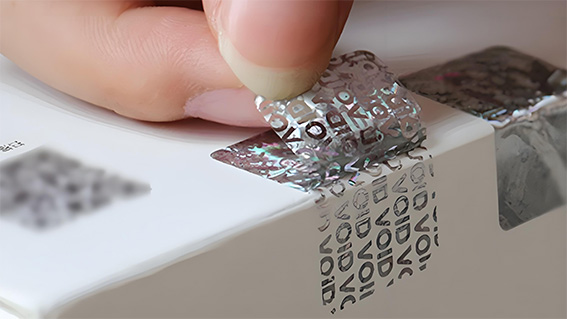
VOID anti-counterfeiting label rely on a physically destructive structure that leaves marks upon peeling, delivering tamper-proof protection at low cost.
Analysis of the VOID anti-counterfeiting label