Analysis of PE Label Materials
author: Eva
2025-10-08
I. What are PE label materials?
PE (Polyethylene) label material is one of the most widely used flexible label substrates in current packaging printing, cosmetics and beauty products, food industry, chemical logistics and other fields.
It has core advantages such as water resistance, oil resistance, excellent flexibility, strong adhesion, high cost performance and excellent chemical stability.
Instiker has been deeply engaged in the field of functional label materials for many years, focusing on the research and production of high-quality PE self-adhesive label materials.
It optimizes product performance for complex usage scenarios in multiple industries and launches various dedicated substrates such as milky white PE, transparent PE, and weather-resistant PE, which are suitable for special bottle shapes, damp oil stains, outdoor weathering, low-temperature storage and other harsh conditions.
It provides standardized and customized label solutions for various industries.

II. The application scenarios of PE label materials
1. Cosmetics and personal care industry
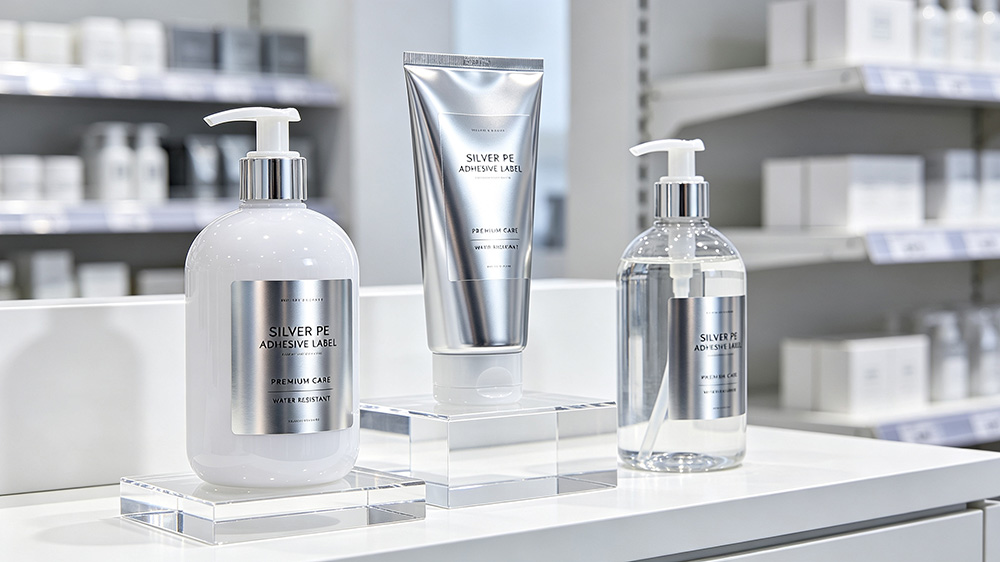
Most daily care products are in the form of flexible tubes, special-shaped pump heads and round arc-shaped bottles. Labeling often encounters problems such as warping, wrinkling and peeling.
Instiker's 80μm white PE label material uses a special water-based adhesive formula. The base material is soft and pliable, with strong extensibility, and can closely adhere to various special-shaped curved surfaces, perfectly suitable for labeling of facial cleansers, body washes, skin care products and cosmetics tubes.
2. Food and Beverage and Fresh Produce Industry
For food packaging, fresh produce cold chain, and beverage bottle bodies, the requirements for moisture-proof, low-temperature resistance, and corrosion resistance of labels are extremely high.
PE label are non-toxic and odorless, food-grade safe and compliant. They have excellent low-temperature resistance and can be adapted for cold storage and refrigerated transportation scenarios. They will not become hard, crack, or peel off in low-temperature environments.
3. Industrial Chemicals and Logistics Warehousing Industry
Chemical reagents, industrial raw materials, and warehousing turnover products require acid and alkali resistant, corrosion-resistant, and wear-resistant identification labels.
PE label have extremely strong chemical stability and do not react with acids, alkalis, or weak corrosive reagents. They can be adapted for use on chemical barrels, reagent bottles, and industrial equipment identification.
4. Medical Devices and Daily Products Industry
Medical consumables, flexible catheters, and daily plastic products are mostly of flexible and curved structures. PE label have excellent flexibility, high adhesion, and no harmful substances are released, meeting medical safety standards.
5. Outdoor and architectural auxiliary signs
The modified weather-resistant PE label have excellent resistance to UV rays, aging, and temperature variations. They can withstand outdoor conditions such as sun exposure, rain, and temperature fluctuations, and are not prone to fading or cracking.
III. Analysis of Real Cases
Case One: Project for Adapting Food Cold Chain Storage Labels
Challenge
In the transportation process of a certain fresh food processing enterprise in Guangdong, the labels frequently experienced problems such as peeling, cracking, and blurred writing. The traceability identification became invalid, resulting in disorder in storage and sorting, and frequent complaints from customers after sales.
Solution
Customized low-temperature-specific PE label materials for Instiker
Result
It has extremely strong low-temperature resistance. Even in extremely low temperature environments, it does not become hard or crack. The glue uses a special low-temperature-resistant formula, ensuring stable adhesion and no failure due to low temperatures.
Case 2: Project for Corrosion Resistance Marking of Industrial Chemical Tanks
Challenge
A chemical raw material manufacturing enterprise has its industrial raw material barrels stored in open-air warehouses and damp workshops. The original paper and ordinary plastic labels are prone to corrosion by acid and alkali fumes as well as rainwater, resulting in label detachment and loss of information.
Solution
Use the anti-corrosion PE label material from Instiker
Result
Resistant to weak acids and alkalis, water vapor, and dust erosion, resistant to wear and aging. The outdoor storage period can reach more than 2 years. The label has clear writing and is firmly attached.
IV. Frequently Asked Questions Answered
Q: Compared to paper label, what are the advantages of PE labels?
A: The PE label has advantages that the paper label does not have, such as waterproofing, oil resistance, moisture resistance, corrosion resistance, resistance to stretching, and resistance to cracking.
A: The PE label has advantages that the paper label does not have, such as waterproofing, oil resistance, moisture resistance, corrosion resistance, resistance to stretching, and resistance to cracking.
Q: Will the PE label easily come off when attached to flexible hoses or special-shaped bottles?
A: The PE label base material of Instiker is soft and highly elastic. It can be adapted to various irregular curved surfaces and the deformation of hoses. Under normal working conditions, it will not peel off or fall off.
A: The PE label base material of Instiker is soft and highly elastic. It can be adapted to various irregular curved surfaces and the deformation of hoses. Under normal working conditions, it will not peel off or fall off.
Q: What is the temperature range that the PE label can withstand?
A: The standard PE label is suitable for temperatures ranging from -20℃ to 60℃, which can meet the requirements for both cold chain storage and normal temperature use.
A: The standard PE label is suitable for temperatures ranging from -20℃ to 60℃, which can meet the requirements for both cold chain storage and normal temperature use.
Q: Can the PE label be used for long-term outdoor application?
A: Ordinary PE labels have average resistance to UV rays and aging, and are not suitable for long-term exposure to outdoor sunlight.
Q: Can the thickness and color of the PE label be customized?
A: Yes. Instiker can customize various specifications such as 80μm regular white PE, transparent PE, and weather-resistant PE. They also support customization of color, size, and adhesive strength, and can meet the personalized needs of different industries.
A: Yes. Instiker can customize various specifications such as 80μm regular white PE, transparent PE, and weather-resistant PE. They also support customization of color, size, and adhesive strength, and can meet the personalized needs of different industries.
V:Comparison of PE Label with Mainstream Label Materials' Properties
|
Material type
|
Flexibility
|
Waterproof and oil-resistant property
|
Surface fit degree
|
Environmental friendliness
|
Value for money
|
Applicable scenarios
|
|
Excellent. It can bend with the shape and does not crack.
|
Excellent, fully waterproof, resistant to oil stains, and moisture-proof.
|
Extremely high, compatible with hoses, irregular surfaces, and flexible carriers
|
Environmentally friendly, non-toxic, recyclable, and free of harmful residues.
|
High, with low overall cost of use and strong durability.
|
Detergent hoses, food cold chain, special-shaped packaging, humid conditions
|
|
|
Paper label
|
Poor quality, prone to damage and cracking
|
Extremely poor quality. It will wrinkle, get damaged and leak when exposed to water.
|
Low, the curved surface labeling is prone to peeling and falling off.
|
Environmental protection and recyclability
|
Low, short service life, high rework cost
|
Paper packaging, temporary signs
|
|
PVC Label
|
Generally, it is rather hard and prone to cracking when deformed.
|
Good, waterproof and oil-resistant
|
Medium, only suitable for small curvature surfaces
|
Poor, non-biodegradable, and the combustion process releases harmful gases.
|
Medium level, with relatively high material costs
|
Industrial hard surface signs, ordinary plastic packaging
|
|
Poor, highly rigid, with almost no ductility
|
Excellent, waterproof, resistant to corrosion, and capable of withstanding both high and low temperatures.
|
Extremely low, only suitable for flat and hard surfaces
|
Good, recyclable
|
Low, with a relatively high price, and having significant limitations in the application scenarios.
|
High-end flat packaging, electronic products, and rigid container labels
|
VI. Summary and Recommendations
The PE label, with its advantages of flexible adhesion, water and stain resistance, safety and stability, high cost-effectiveness, and environmental friendliness, has become the core identification packaging material for multiple industries such as daily chemicals, food, industry, and medicine.
Instiker focuses on addressing industry pain points, relying on mature production processes and customized R&D capabilities, to create high-quality PE label products suitable for various scenarios.
It has solved industry problems such as abnormal edge arched up of labels,moisture detachment, low-temperature failure,and corrosion damage. With stable product quality and comprehensive technical services,it has gained wide recognition in the market.
In the future, with the continuous advancement of green packaging and refined industrial production, high-performance, environmentally friendly, and customized PE labels will have a broader application scope.
Instiker will also continuously improve its product processes, optimize safety performance and environmental attributes, and provide higher-quality, more suitable and greener label material solutions for various industries, helping to upgrade the industrial sector to a higher level of quality.
PP Synthetic Paper:A Dual Breakthrough in Sustainability And Durability
Thermal paper self adhesive is a common type of label material
Related Article

Las etiquetas PET resisten el arrugamiento, la deformación, la pérdida de tinta, el cambio de tamaño y el manchado por tinta durante la producción a alta temperatura y la impresión digital con láser.
Comprehensive Analysis of PET Self-adhesive Labels
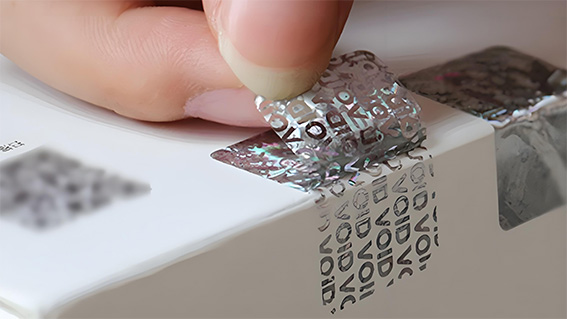
VOID anti-counterfeiting label rely on a physically destructive structure that leaves marks upon peeling, delivering tamper-proof protection at low cost.
Analysis of the VOID anti-counterfeiting label