
Self-adhesive labels the core carrier and technological innovation of modern signage
author: Eva
2025-10-17
I. Essential Definition and Structural Analysis
Pressure-Sensitive Label is a composite material that integrates printing, gluing, and die-cutting. It consists of the face material (the substrate carrying the graphics), the adhesive (the core layer for the adhesive function), and the backing paper (the release protective layer). Its revolutionary feature is that it does not require additional gluing and can be directly adhered by peeling off the backing paper, significantly improving the efficiency of identification. The face material includes three categories: paper (copperplate paper, thermal sensitive paper), film (PET, PVC), and special materials (aluminum foil, laser film). The adhesive is divided into more than ten systems such as permanent, removable, and low-temperature resistance, meeting diverse requirements ranging from daily chemical packaging to aerospace.
II. Material System and Classification Criteria
1)Base Material Matrix
Paper Family:
Copperplate paper achieves a 175-line/inch printing accuracy with a 600-1000s smoothness and is suitable for high-end cosmetic packaging;
Thermal-sensitive paper achieves inkless printing through a heat-sensitive coating (colorless dye + developer) and maintains barcode readability ≥ 98% at -30℃ in cold chain logistics.
Film Group:
PET matte silver paper with a 15N tear resistance strength becomes the preferred choice for electronic labels and achieves IPX4-level waterproofing through a nano-coating;
PVC shrink film with a 300% heat shrink rate adheres to irregular-shaped bottles and has a market share of over 60% in the battery label field.
Special Materials:
Aluminum foil paper with a 0.1mm thickness carries a metallic texture and has an oxygen barrier rate of ≤ 0.5cc/(m²·24h·atm) in food packaging;
Brittle paper achieves "disintegration upon opening" through a micro-crack structure and has an application rate of over 85% for mobile phone anti-counterfeiting sealing labels.
2)Adhesive Technology Evolution
Traditional System:
Acrylic adhesive maintains adhesive stability at -20℃ to +80℃ and has an initial adhesion force of 8.0N/25mm (FTM 9 test standard).
Functional Breakthroughs:
Solvent-free adhesive is certified by FDA 21 CFR 175.105, improving safety in food contact scenarios by 300%;
Water-washable glue maintains non-removal under 70℃ water flow impact for 24 hours, and the reuse rate of beer labels reaches 95%.

III. Future Development Direction and Industry Challenges
1)Technology Frontier
Flexible Electronic Integration: Thermally variable labels printed with conductive ink can display the freshness of food in real time, with an accuracy rate of shelf life warning > 95%;
Dynamic Display Technology: Electronic ink (E Ink) labels enable remote content updates, reducing the cost of supermarket price tag replacement by 90%.
2)Industry Bottlenecks
Cost Paradox: The cost of bio-based materials is 40% higher than that of traditional PET, restricting large-scale application;
Recycling Challenges: The recycling rate of composite structure labels (such as paper-plastic composite) is less than 30%, and inter-layer separation technology needs to be developed.
3)Market Forecast
The global self-adhesive label market is expected to reach 19.86 billion US dollars by 2025, with a compound annual growth rate of 5.7%. Due to the explosive growth of e-commerce logistics in China, the growth rate in this market leads the global trend, and it is expected to account for more than 30% by 2025.
Self-adhesive labels have long surpassed their original role as "identification tools" and have become a crucial node connecting the physical world and the digital world. From the aesthetic expression of daily chemical bottle bodies to the precise traceability of aerospace components, their technological evolution has always revolved around three main lines: efficiency improvement, functional expansion, and sustainable development. Enterprises need to establish a three-dimensional matching model of "materials - processes - scenarios", and through scientific tests (such as 72-hour humidity testing, 500 friction tests) to verify actual performance, in order to seize the initiative in the wave of intelligence and green development.
PET self-adhesive is the main high-performance material for long-lasting and durable tracks
Self Adhesive Materials Decoding Scientific Structures And Industrial Applications
Related Article

Las etiquetas PET resisten el arrugamiento, la deformación, la pérdida de tinta, el cambio de tamaño y el manchado por tinta durante la producción a alta temperatura y la impresión digital con láser.
Comprehensive Analysis of PET Self-adhesive Labels
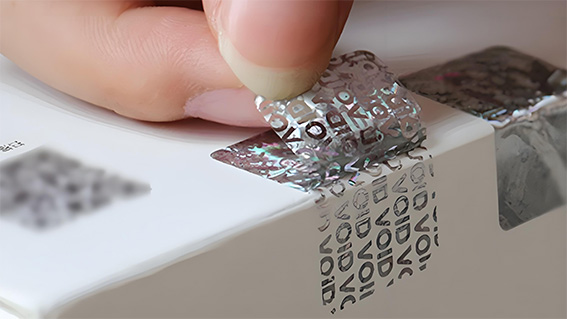
VOID anti-counterfeiting label rely on a physically destructive structure that leaves marks upon peeling, delivering tamper-proof protection at low cost.
Analysis of the VOID anti-counterfeiting label