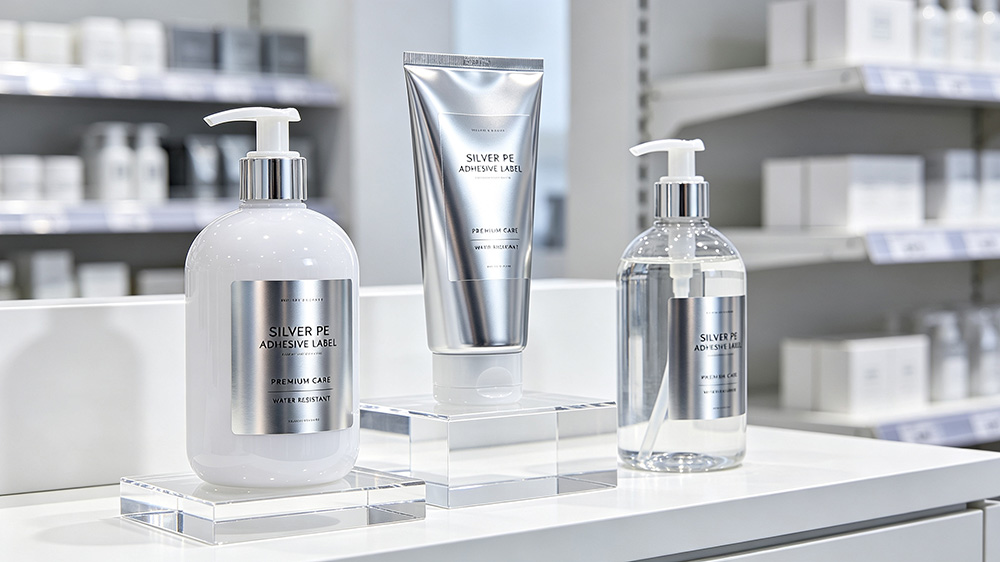
Self Adhesive Materials Decoding Scientific Structures And Industrial Applications
author: Eva
2025-10-16
Self-adhesive materials are indispensable composite functional materials in the fields of modern packaging, intelligent manufacturing, and logistics identification.
Unlike ordinary adhesives, self-adhesive products achieve adhesion through the elastic property of the adhesive layer upon gentle pressure application. They do not require water, solvents, or heating activation. Relying on a multi-layer precise composite structure, they are suitable for automated labeling, multiple process printing, and long-term use in complex conditions.
With the upgrading of manufacturing and the growth of export trade, the selection of materials for self-adhesive labels directly affects the appearance of the products, the durability of the labels, the production yield, and the compliance capabilities.
I. Definition of Self-adhesive Materials and Their Scientific Layered StructureI
1. Basic Definition
Self-adhesive materials are multi-layer composite pressure-sensitive composite materials. After the backing paper is peeled off, they can form a stable bond with the clean substrate under slight pressure, and can be die-cut or processed at high speed in rolls.
They are widely used in product identification, industrial traceability, logistics barcodes, anti-counterfeiting labels, etc.
In the industry, they are commonly known as self-adhesive label raw materials and are supplied to printing factories, packaging factories, and end manufacturing enterprises in the form of large reels.
II. Core Advantages and Limitations of Self-Adhesive Materials
(1) Advantages
Easy to use and compatible with automation: No pre-coating required, compatible with high-speed labeling machines, significantly improving production line packaging efficiency, suitable for large-scale industrial production.
Strong process compatibility: Supports flexographic printing, digital printing, relief printing, screen printing, laser printing, thermal printing.Can meet the printing requirements for color graphics, barcodes and QR codes.
Rich material system: From low-cost paper to high-temperature-resistant, waterproof, and weather-resistant special films, covering indoor normal temperature, cold chain, outdoor, and high-temperature industrial environments.
Widely applicable base materials: Paper,plastic bottles,metal,wood,glass,PCB circuit boards,and most solid surfaces can be adhered.
Friendly for storage and transportation: Finished product reels can be stored at room temperature without additional sealing, occupying less space.
(2) Limitations
Environmental tolerance has boundaries: Ordinary board paper is not waterproof or resistant to moisture; common glue cannot withstand strong acids, strong alkalis, and continuous high temperatures for a long time.
Low tolerance for material selection: Low surface energy PE and PP plastic bottles using common glue are prone to curling; curved containers using hard PET are prone to wrinkling.
Difficulties in removal: Permanent glue is likely to leave residue when forcibly removed; removable adhesive has limited bonding strength and is not suitable for long-term outdoor use.
Environmental protection and regulatory restrictions: Some old solvent glues have high VOC levels; PVC materials are restricted by many countries' environmental policies, and export to Europe and the United States is limited.
Significant cost gradient: High-temperature-resistant PET, food-grade compliant materials, and special laser function films have significantly higher procurement costs than ordinary paper self-adhesive materials.

III. The mainstream industrial application fields of self-adhesive labels
Food and Beverage Industry: Bottle labels, fresh produce cold chain labels, sealing stickers; require waterproof and cold condensation resistance, and comply with food contact regulations. Common materials: synthetic paper, BOPP transparent film, milky PE.
Cosmetics and Personal Care Industry: Flexible tubes, special-shaped bottles, essence bottles labels; require soft and smooth texture, resistant to skincare oils, prefer PE flexible self-adhesive.
Electronic and Electrical Industry: Component traceability labels, PCB identifiers, equipment nameplates; key requirements are high temperature resistance, oil resistance, no residue glue, mainstream matte silver PET, bright white PET.
Logistics and Warehousing, E-commerce: Express delivery labels, inventory barcode labels; mainly use thermal paper and ordinary copperplate paper, pursue high cost-effectiveness.
Medical Devices and Pharmaceutical Packaging: Drug labels, medical device identifiers; need to comply with medical safety standards, low leaching, environmentally friendly water-based adhesive system.
Outdoor Industrial Signage: Mechanical equipment, warehouse warning signs; select UV-resistant synthetic paper, PET materials, resistant to sun exposure and rain.
High-end Packaging and Anti-counterfeiting: Laser film, brushed silver, gold stamp self-adhesive, used for gifts, health supplements, luxury goods packaging to enhance quality.

IV. Case Analysis
Case 1: Solution for Cosmetics Hose Labels
Challenge: The cosmetic hose is made of flexible PE material. Using ordinary coated paper labels, after storage for a period of time, large areas of the labels would curl up, and the oil would seep in, causing the text and graphics to become blurry.
Instiker Solution: 80μm translucent PE material + eco-friendly water-based permanent adhesive + 60g Grafix base paper.
Effect: The PE material is soft and can deform along with the shape of the hose. It is resistant to skincare oils and does not peel off even after long-term storage. The water-based glue has no odor and meets the environmental requirements of beauty products, helping to reduce the bad label rate of customers by 90%. It is now in a stable state of mass production.
Case 2: High-temperature Resistant Trace Label Project for Electronics Factory
Challenge: Front-end identification in the electronics workshop during SMT process, subject to an environment of 110℃ for a short period, and ordinary labels turn yellow and fall off.
Instiker Solution: Matte silver brushed PET self-adhesive, combined with high-temperature resistant modified acrylic adhesive.
Effect: The size remains stable without shrinking, the ink does not fade easily, it is resistant to minor oil stains, it meets the conditions of the electronic workshop, replaces imported expensive raw materials, and effectively reduces procurement costs.
V. Comparison of Mainstream Self-adhesive Materials and Suggestions for Material Selection
|
Material category
|
Advantages
|
Weakness
|
Recommended application scenarios
|
|
Copperplate paper
|
High-quality printing with the lowest price
|
Not waterproof, prone to tearing, and the edges may curl when damp.
|
Indoor normal-temperature product labels, temporary barcodes
|
|
PP synthetic paper
|
Waterproof, not easy to tear, resistant to low temperatures, and with high cost-effectiveness.
|
Relatively rigid, but prone to deformation at high temperatures.
|
Cold chain, fresh produce, short-term outdoor signs
|
|
BOPP film
|
High transparency, excellent tensile strength, and cost-effective film material
|
Hard texture, large curved surfaces are prone to wrinkling
|
Transparent bottle body for cosmetics and beverages labels
|
|
PE film
|
Soft and conforming to the curved surface
|
The upper limit of temperature resistance is relatively low (≤ 70℃)
|
Cosmetic tubes, soft packaging containers
|
|
PET film
|
High temperature resistance, stable size, strong weather resistance
|
The price is relatively high and the hardness is quite strong.
|
Electronic nameplates, industrial equipment, long-term outdoor labels
|
VI. Question Answering
Q1: Shortly after the label was attached, it started to peel. What are the main causes?
A: The glue did not match the surface being attached, the ambient temperature was too low, and the rigidity of the surface material conflicted with the curvature of the container.
A: The glue did not match the surface being attached, the ambient temperature was too low, and the rigidity of the surface material conflicted with the curvature of the container.
Q2: There is a lot of remaining adhesive after removing the label. How to solve this problem?
A: The remaining adhesive is caused by insufficient cohesion within the adhesive layer. A removable effect is needed.
Q3: What are the minimum and maximum tolerable temperatures for ordinary self-adhesive labels?
A: Regular acrylic water-based adhesive: -10℃ to 70℃; Special low-temperature adhesive can reach -25℃; The high-temperature resistant PET adhesive system is suitable for long-term use at 120℃ and a maximum of 150℃ for a short period; Thermal-sensitive paper is not resistant to high temperatures; If the temperature exceeds 45℃, the writing will easily disappear.
Q4: The self-adhesive film printing tends to smudge the ink. How to improve this?
A: Preferentially choose films with surface treatment; combine with UV inks or water-based inks suitable for the films; BOPP and PET without corona treatment are highly prone to ink smudging.
Q5: The base paper is often torn during die-cutting. What's the problem?
A: The base paper has insufficient weight, the materials are damp during storage, and the die-cutting pressure is too high. For high-speed automatic labeling production lines, it is recommended to use Graflex base paper with a weight of 60g or above.
VII. Summary and Industry Development Trends
The performance of self-adhesive materials is jointly determined by multiple layers of structure. There is no universal material. The core principles for material selection are scene priority, substrate matching, and adhesive compatibility.
The current industry is moving towards a direction of green environmental protection and customized functionality: water-based adhesives are gradually replacing traditional solvent adhesives, and the demand for recyclable PP materials, silicone-free release paper, and environmentally friendly functional films is continuously increasing.
For printing factories and end-product manufacturing enterprises, choosing raw material suppliers with independent coating and customized R&D capabilities allows for adjusting the thickness of the substrate, the glue formula, and the peel force according to the production conditions. This way, production losses such as label warping, ink bleeding, and residual glue can be reduced at the source.
Instiker has been continuously developing customized self-adhesive solutions for the cosmetics, food, and electronic export markets, providing the industry with stable, compliant, and cost-effective raw material options.
Self-adhesive labels the core carrier and technological innovation of modern signage
One type of heat-resistant paper and three types of heat-resistant papers A deep analysis of their protective properties and application scenarios
Related Article

Las etiquetas PET resisten el arrugamiento, la deformación, la pérdida de tinta, el cambio de tamaño y el manchado por tinta durante la producción a alta temperatura y la impresión digital con láser.
Comprehensive Analysis of PET Self-adhesive Labels
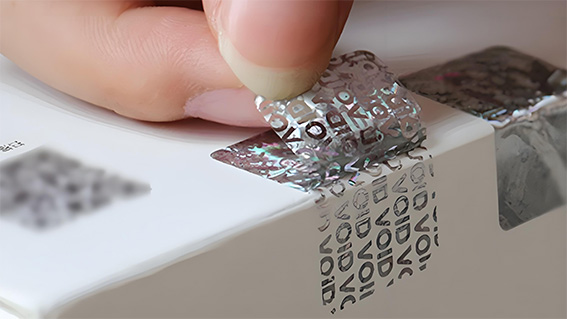
VOID anti-counterfeiting label rely on a physically destructive structure that leaves marks upon peeling, delivering tamper-proof protection at low cost.
Analysis of the VOID anti-counterfeiting label