
PP Synthetic Paper:A Dual Breakthrough in Sustainability And Durability
author: Eva
2025-10-08
I. Material Characteristics: A Revolutionary Alternative to Traditional Paper
PP Synthetic Paper is made from polypropylene (PP) resin as the core material, through biaxial stretching (BOPP) or extrusion processes. It combines the physical properties of plastics with the printing adaptability of paper. Its molecular structure features the regular arrangement of polypropylene chains, which gives the material excellent mechanical strength. The nano-scale calcium carbonate filling technology reduces plastic usage while significantly enhancing rigidity and whiteness. The density of this material is only 0.9-1.0 g/cm³, which is over 30% lighter than traditional paper, yet it can withstand a tearing strength of 17N (longitudinal) to 44N (transverse) (200 μm thickness), far exceeding the tear resistance of ordinary coated paper.
In terms of chemical stability, the non-polar surface of PP synthetic paper performs well in acidic and alkaline environments: after being soaked in 5% hydrofluoric acid for 24 hours, the substrate shows no swelling, and he ink density attenuation is less than 10%. Its temperature tolerance range covers -40°C to 120°C, with a size change rate of less than 1.5% in a 121°C steam sterilization environment , fully meeting the ISO 11607 sterilization packaging standards.
II. Sustainability Revolution: A Full Chain Innovation from Raw Materials to Recycling
1)Resource substitution and ecological protection
The production of PP synthetic paper does not require wood pulp. Producing 100,000 tons of environmentally friendly synthetic paper can replace 300,000 cubic meters of wood consumption, equivalent to protecting approximately 2,000 hectares of forest. Its manufacturing process uses high-temperature melt extrusion technology, with zero water consumption and zero bleaching, and the wastewater discharge is reduced by more than 95% compared to traditional papermaking. The industrial breakthrough of bio-based PP has brought revolutionary progress: BioPP® material, made from sugarcane bagasse cellulose, decomposes in the soil for more than 90% within 6 months, with carbon emissions reduced by 40% compared to traditional PP, and it is expected that the proportion of bio-based PP in synthetic paper raw materials will increase to 18% by 2026.
2)Circular economy model practice
PP synthetic paper can be 100% recycled and regenerated, maintaining more than 80% of its initial performance after 9 cycles. The application of closed-loop recycling technology ensures a purity of > 99.5% for recycled resin, which can be directly used in high-end packaging production. Under the impetus of the EU's "New Plastics Strategy", the proportion of PP synthetic paper products with closed-loop recycling function is expected to increase to 40% by 2025. During incineration, PP synthetic paper only generates CO₂ and H₂O, without the release of toxic gases such as dioxins, meeting the environmental requirements of the EU's WEEE directive.
3)Life cycle environmental benefits
Life Cycle Assessment (LCA) shows that the carbon footprint of PP synthetic paper is 35% lower than that of traditional coated paper. For 1 ton of product, the energy consumption in the production stage is reduced by 4.2 GJ, freshwater consumption is reduced by 98%, and solid waste emissions are reduced by 87%. In the food packaging field, the moisture-proof performance of PP synthetic paper enables it to replace plastic films, reducing petroleum consumption by 0.8 tons per ton of product, equivalent to reducing 4.5 tons of CO₂ emissions.

III. Durability Breakthrough: Performance Benchmark in Extreme Environments
1)Physical performance limits challenge
The biaxial stretching process (BOPP) enables the tensile strength of PP synthetic paper to exceed 150 MPa and the tear resistance to be > 150g. After temperature cycling, the dimensional stability error is less than 0.5%. After being sterilized at 121℃ for 100 times, the peel strength retention rate of a certain brand's medical label remained above 90%, and the depth of the laser marking characters was > 5μm to resist chemical erosion. In outdoor applications, the PP synthetic paper with nano titanium dioxide added showed a color difference ΔE < 1.5NBS after 3000 hours of ultraviolet exposure, and its weather resistance was 5 times higher than that of traditional paper.
2)Chemical protection and functional integration
PP synthetic paper treated with fluorocarbon coating showed an ink density attenuation < 10% after being soaked in 5% hydrofluoric acid for 24 hours, with no substrate swelling and suitable for semiconductor wafer traceability. In the food packaging field, the rubber layer containing plasticizers had a peel strength > 3N/25mm after being peeled at -40℃ in a freezing environment, and integrated with temperature-sensitive color microcapsules, automatically displaying a warning when the temperature was abnormal. The development of intelligent integration technology endowed the material with interactive functions: Avery Dennison's CleanFlake series integrated an NFC chip, achieving a 10-meter reading distance in -60℃ to 250℃ environments and supporting real-time upload of device status.
3)Strict verification of industry applications
Medical field: The sterilization label of a certain medical device manufacturer passed ethylene oxide disinfection and maintained an information integrity retention rate > 99%, meeting the ISO 11135 biocompatibility standard.
Electronic manufacturing: The wave soldering label had a peel strength of 85% of the initial value after being immersed in 260℃ soldering liquid for 5 seconds, and the laser marking characters were resistant to oil stains.
Logistics industry: The PP synthetic paper used for courier packaging had an anti-tear strength > 44N in a -30℃ freezing environment, and its waterproof performance passed the ASTM D543 test, effectively reducing the damage rate of goods.
IV. Technological Innovation: Full-dimensional upgrade from production to application
1)Intelligent transformation of production processes
The high-speed coating machine adopts a closed-loop tension control system , ensuring an error of < 5% in the uniformity of adhesive coating. The 10.2-meter-wide intelligent production line launched by Guangdong Shicheng has a single-line annual production capacity of 68,000 tons, which is 3 times more efficient than traditional equipment. The nano-sized calcium carbonate filling technology (particle size < 90nm) makes the material whiteness reach 92%, transmittance < 20%, and can replace PVC for high-end packaging.
2)Breakthroughs in surface engineering technology
Charging treatment and plasma modification form nano microporous structures on the PP surface, with the oil adhesion reaching 4B grade by the 3M tape method. Laser holographic anti-counterfeiting technology generates three-dimensional dynamic patterns on the surface of PET/PET composite films, with visual recognition degree 200% higher than traditional labels, and the counterfeiting cost increased by 12 times. The superimposed application of micro-sized characters and fluorescent ink requires magnification or ultraviolet light for identification, suitable for anti-counterfeiting management in the pharmaceutical industry.
3)Expansion of functional product matrix
Flame-retardant type: Oxygen index reaches 28% , suitable for identification of electronic device casings.
Antibacterial type: PP synthetic paper with added silver ions has an antibacterial rate > 99% against Escherichia coli and Staphylococcus aureus, meeting the ISO 22196 standard.
Biodegradable type: Wan Kai New Materials' fully biodegradable PP synthetic paper is certified by DIN CERTCO, with a 180-day degradation rate > 90% under composting conditions, and has been applied to fresh produce packaging.

V. Compliance with regulations and market access
1)The strict requirements of international standards
Strict requirements of international standards The EU market needs to simultaneously meet the RoHS 3.0 and REACH regulations , and the heavy metal migration amount of PP synthetic paper needs to be < 0.01 ppm. Food contact applications need to comply with FDA 21 CFR Part 175 and China GB 4806.7-2023 standards, with a total migration amount ≤ 10mg/dm², and the olive oil migration test value < 0.01mg/dm². In the medical field, it needs to pass ISO 10993 biocompatibility tests, with a cell toxicity grade ≤ 1 level.
2)Enhancement of industry certification competitiveness
FSC-certified bio-based PP synthetic paper has a premium of 20% in the EU and US markets, and products certified by the EU Ecolabel can obtain priority qualification for government procurement. Under the impetus of China's "14th Five-Year Plan Plastic Pollution Control Action Plan", high-performance and environmentally friendly synthetic paper will enjoy policy dividends, and it is expected that the domestic market demand will expand at a compound growth rate of 19.4% in 2025.
VI. Future Trends: Synergetic Evolution of Greening and Intelligence
1)Frontier exploration of materials science
The research and development of graphene-modified PP synthetic paper has entered the pilot stage, with its thermal conductivity increased to 2.1W/(m·K), which can be used for heat dissipation labels for 5G equipment. The biomimetic superhydrophobic coating technology (contact angle > 150°) enables the material to maintain a QR code recognition rate of over 95% in rainstorm environments, suitable for outdoor advertising.
2)Deep integration of intelligent integration technology
Flexible electronic labels can monitor parameters such as temperature and humidity in real time through printed silver nanowire circuits (line width < 100μm), and transmit them to the cloud via Bluetooth 5.0. The intelligent label of a semiconductor factory has shortened the equipment failure warning time to within 15 minutes. The application of AI image recognition technology enables millisecond counterfeit identification, and the reliability of Super Code Technology's hollow AI security tape anti-counterfeiting is 200% higher than that of traditional labels.
3)Deepening of the circular economy model
The breakthrough in chemical recycling technology enables PP synthetic paper to depolymerize into propylene monomers, with the purity of the recycled raw materials > 99.9%, and the cost is 15% lower than that of petroleum-based raw materials. Under the EU's "Plastic Packaging Tax" policy, in 2025, synthetic paper products containing recycled PP will enjoy a 50% tax reduction, accelerating the green transformation of the industry.
PP synthetic paper, with its dual advantages of sustainability and durability, is reshaping the material selection standards in industries such as packaging, printing, and healthcare. From the ecological protection of tropical rainforests to the precise traceability of semiconductor wafers, from the moisture-proof barrier in cold chain logistics to the interactive nodes in intelligent packaging, PP synthetic paper, through the deep integration of material science and engineering technology, has become a green bridge connecting the physical world and the digital world. With the continuous breakthroughs in bio-based materials, intelligent integration technology, and circular economy models, PP synthetic paper will further upgrade to the core support for the green and digital transformation of the global industrial chain, leading the new trend of the material revolution.
Comparison of synthetic paper and coated paper self-adhesive labels
Analysis of PE Label Materials
Related Article

Las etiquetas PET resisten el arrugamiento, la deformación, la pérdida de tinta, el cambio de tamaño y el manchado por tinta durante la producción a alta temperatura y la impresión digital con láser.
Comprehensive Analysis of PET Self-adhesive Labels
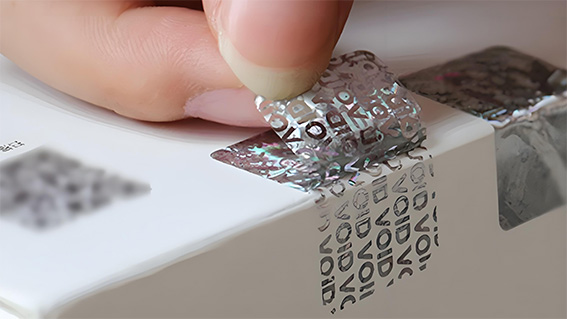
VOID anti-counterfeiting label rely on a physically destructive structure that leaves marks upon peeling, delivering tamper-proof protection at low cost.
Analysis of the VOID anti-counterfeiting label