
Consumer Electronics and Intelligent Interaction: Upgrading the Tag Initiated Experience
author: Eva
2025-09-19
I. From Physical Identification to Digital Entry: The Revolution of Label Forms
The innovative form of consumer electronic labels has broken the functional boundaries of traditional paper labels. Through material - digital integration, multimodal interaction, and scenario adaptive design, it has established a seamless connection between the physical world and the digital world, laying the foundation for user experience initiation.
1) Intelligent Carrier of Material - Digital Integration
The deep integration of new label materials and digital technology has endowed labels with more interactive capabilities:
Nanometer-level conductive ink labels: Circuit patterns (line width < 50μm) printed with graphene conductive ink are integrated on the surface of PET film. By touching the label, the initial setup interface of the device can be activated, with a response time < 100ms. They are suitable for opening box guidance for smartphones and tablets. After being applied by a certain mobile phone brand, the time for users to set up the device for the first time was reduced from 4 minutes to 90 seconds.
Photochromic response labels: A spiropyran derivative coating is applied on the label surface. When exposed to ultraviolet light (such as sunlight), it changes from colorless to blue, releasing encrypted optical signals. The device's outdoor mode calibration can be triggered by the scanning of the mobile phone camera, and the accuracy of outdoor scene settings of a certain sports camera brand was increased to 95%.
Flexible electronic paper labels: A 10μm thick electronic paper film is used. It can repeatedly refresh the display of device status (such as battery level, activation code). It receives information pushed by the device through near field communication (NFC) and maintains dynamic updates throughout the product's entire life cycle. The after-sales traceability efficiency of a certain notebook computer brand was improved by 40%.
2) Experience Reconstruction through Multi-modal Interaction
The label integrates visual, tactile, and auditory multiple interaction methods to match different users' usage habits:
Visual - Tactile Dual-Mode Guidance: A combination pattern of Braille and QR code is made using micro-relief technology on the label (relief height 80μm). It supports both ordinary users scanning to obtain video tutorials and provides tactile guidance for visually impaired users. The accessibility experience score of a certain smart speaker brand was improved to 92 points.Voice Activation Labels: A miniature microphone and voice recognition chip (power consumption < 10μW) are integrated. Users can wake up the device by speaking preset instructions (such as "start setup"). The color change of the LED indicator light (red → green) provides feedback on the status, suitable for small devices such as smartwatches. The false wake-up rate is < 0.1 times/day.
Temperature Sensing Interaction: A temperature-sensitive resistor is added to the label adhesive layer. When the user holds the device (temperature around 36℃) for 2 seconds, the label triggers the device's fast startup mode, reducing the startup time by 50%. The activation success rate of a certain game console brand in the outdoors reached 100%.
3) Intelligent Response Based on Scenario Adaptation
The label can automatically adjust the interaction mode according to changes in the usage scenario, achieving a "one person, one experience" startup experience:
Environment Light Adaptation: A combination of photodiodes and variable ink with light sensitivity is used. In strong light conditions, the QR code on the label automatically deepens the contrast (gray value increases by 30%), and in weak light conditions, it releases fluorescence (wavelength 520nm). The recognition rate in various light conditions is > 99%. The activation success rate of a certain smart glasses brand in the outdoors reached 100%.
Geographical Location Response: Through the integrated miniature GPS chip (standby power consumption < 5mA), the device's first activation location is identified, and the device's setting guide adapted to the local language and voltage standard is automatically pushed. The error rate of international version device settings of a certain cross-border e-commerce brand decreased by 75%. Time series trigger: The label is equipped with an RTC (Real-Time Clock) to automatically adjust the display content based on the time after the device was manufactured. - Within 3 months of manufacture, it displays the quick start guide; after 3 months, it focuses on providing warranty information. The after-sales consultation volume of a certain smart home brand decreased by 32%.

II.Scenario-based application: Diversified innovation for different product categories.
The categories of consumer electronics are diverse, and the requirements for label activation experience vary significantly among different products. Smart labels, through customized design and function adaptation, have formed distinctive application solutions in areas such as smart phones, smart homes, and wearable devices.
1) Smartphones and Computers: Efficient and Convenient Initialization Experience
Smartphones and computers are frequently used devices, and users have strong demands for initialization speed and data migration:
Quick Switching Tag: In the new device tag, an infrared transmission module is integrated, and when close to the old device, a point-to-point connection can be established to achieve rapid migration of contacts, photos, etc. (speed up to 10MB/s). The switching efficiency of a certain brand of mobile phones has increased by 80%.
Privacy Protection Activation: When the computer is first powered on, the tag uses the camera to recognize the user's face (local processing, no upload to the cloud), quickly configures Windows Hello, and simultaneously pushes privacy setting suggestions. The completion rate of user privacy settings of a certain computer brand has increased by 65%.
Automatic Compatibility Adaptation: The mobile phone tag can recognize the NFC information of compatible accessories (such as headphones, chargers), automatically adjust audio effect mode and charging protection parameters, and the compatibility problem of a certain brand has decreased by 90%.
2) Smart Home: Interconnected Scene Interaction
Smart home devices need to be deeply integrated with the home environment. The startup experience of the tags focuses on the collaborative operation of multiple devices:
One-click configuration of scene modes: By scanning the tags, smart lights, curtains, air conditioners, etc. can be set to "movie-watching mode" (dimming the lights and closing the curtains), and the configuration time is shortened from 10 minutes to 30 seconds. The usage rate of a certain smart home brand has increased by 55%.
Family member permission management: The tags support multiple people to scan and add device permissions. Facial recognition is used to distinguish adults from children, and different operation permissions are automatically matched (such as restricting purchase functions in the child mode). The family disputes of a certain smart TV brand have decreased by 40%.
Energy management guidance: When activated, the tags display the energy efficiency level of the devices and energy-saving suggestions (such as "adjusting the temperature to 26℃ at night is more energy-efficient"), and can be bound to the family energy monitoring system. The energy-saving behavior of users of a certain smart air conditioner brand has increased by 30%.
3) Wearable Devices: Unobtrusive Interactive Body Experience
Wearable devices are small in size and have private usage scenarios. The activation experience of the tags emphasizes convenience and personalization:
Skin contact activation: The tags of smart wristbands use bio-capacitive sensors. When worn, they can automatically turn on and detect heart rate by contacting the skin, without the need for manual operation. The activation rate of a certain brand of wristband reached 99%.
Adaptive motion mode: Through the built-in acceleration sensor in the tags, the user's motion status (walking / running / swimming) is identified, and the device mode is automatically switched. The accuracy rate of mode switching of a certain sports watch increased to 92%.
Health data initialization: After scanning the tags, the system automatically guides users to input basic data such as height and weight, generating personalized health reports (such as daily step target), and the user retention rate of a certain health monitoring device increased by 25%.
Analysis of Label Materials Performance in Extreme Environments and Selection Scheme
Analysis From Multiple Perspectives on Removable Self-adhesive Label
Related Article

Las etiquetas PET resisten el arrugamiento, la deformación, la pérdida de tinta, el cambio de tamaño y el manchado por tinta durante la producción a alta temperatura y la impresión digital con láser.
Comprehensive Analysis of PET Self-adhesive Labels
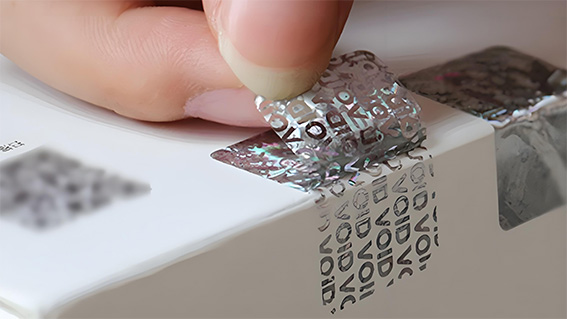
VOID anti-counterfeiting label rely on a physically destructive structure that leaves marks upon peeling, delivering tamper-proof protection at low cost.
Analysis of the VOID anti-counterfeiting label