Analysis of the Uses, Printing Processes and Environmental Impacts of Coated Paper
author: Eva
2026-02-02
If your primary goal is to achieve excellent printing quality at a competitive cost, coated paper is usually the preferred choice.
Its smooth surface enhances image clarity, color accuracy and overall visual appeal, making it a popular option for brochures, catalogues, folding boxes, magazines and high-end commercial printing.
I. What is coated paper?
Coated paper, is a high-grade printing paper that is refined through surface coating and super-pressure polishing.
With its core advantages of high smoothness, high whiteness, precise color reproduction and fine dot reproduction, it has become a key material in commercial printing, high-end packaging and visual communication fields, and is widely used in various high-precision graphic printing scenarios.

II. Core Application of Coated Paper
1)Commercial advertisements and promotional materials
Covering corporate promotional brochures, product manuals, DM single pages, posters, display stand images, banners, yearbooks and calendars, etc.
2)High-end packaging printing
It is widely used in cosmetic gift boxes, food color boxes, electronic product packaging boxes, clothing tags, luxury goods labels, and gift wrapping papers, etc.
3)Book and Magazine Publishing
Fashion magazines, art albums, photography collections, inserts for hardcover books, travel guidebooks, and supplementary pages for educational materials, all of which feature a large amount of graphic content, extensively use coated paper.
4)Cultural Creativity and High-Quality Printing
Includes high-end business cards, postcards, invitations, greeting cards, stamps, and other niche high-quality printed products.
III. Case Study of Coated Paper
Case One: Upgrade of Makeup Brand Catalogue Printing
Challenge
The product catalogues of some well-known domestic beauty brands tend to have an overall dull and dim color tone.
Solution
Printed on 125g matte copperplate paper
Result
The quality of the album has been significantly improved, becoming the core material for brand offline promotion and offline experience.
Case Two: Optimization of food color box packaging quality
Challenge
The patterns on the packaging boxes of the baked goods brand products became blurry and the colors were dull after printing.
Solution
Change to 200g high-gloss coated paper + matte film coating process
Result
The packaging design features rich and bright colors, with clear details of the brand logo and product patterns, and sharp lines without any blurriness.
IV. Comparison of coated paper and offset paper
|
Comparison dimension
|
Offset paper
|
|
|
Surface texture
|
Smooth and fine, without any fibrous texture, with extremely high flatness.
|
The surface is rough, with fine fiber pores, and the texture feels a bit dry.
|
|
Printing colors
|
High color saturation, rich gradations, no color difference, and natural transition.
|
Dim colors, prone to turning gray, gradual color transitions with abrupt breaks, blurred details
|
|
Text adaptability
|
High-definition images and text are compatible. Reading in pure text mode causes a slight glare.
|
The pure-text printing is comfortable to read, does not reflect light, and is suitable for the main text of books and periodicals.
|
|
Applicable scenarios
|
High-definition images and text are compatible. Reading in pure text mode causes a slight glare.
|
Textbooks, books, documents, plain-text printed materials
|
|
Price cost
|
Medium
|
Low cost, with the highest value for money.
|
V. Frequently Asked Questions Answered
Q: How do you choose between glossy coated paper and matte coated paper?
A: If you want to achieve a bright, eye-catching and highly transparent visual effect, choose the high-gloss coated paper. For those who need to read for a long time and prefer a high-quality, soft texture, choose matte coated paper.
A: If you want to achieve a bright, eye-catching and highly transparent visual effect, choose the high-gloss coated paper. For those who need to read for a long time and prefer a high-quality, soft texture, choose matte coated paper.
Q: Can coated paper be used for handwritten signatures?
A: Ordinary coated paper has a smooth surface and does not absorb ink. When using a signature pen to write, it is prone to slipping, and the handwriting is easily smudged and fall off.
A: Ordinary coated paper has a smooth surface and does not absorb ink. When using a signature pen to write, it is prone to slipping, and the handwriting is easily smudged and fall off.
Q: What problems may occur when coated paper gets damp?
A: Coated paper is sensitive to humidity. In humid environments, it is prone to absorbing moisture and deforming, as well as causing the paper surface to stick, resulting in blurred printed patterns.
A: Coated paper is sensitive to humidity. In humid environments, it is prone to absorbing moisture and deforming, as well as causing the paper surface to stick, resulting in blurred printed patterns.
Q: Why does color unevenness occur in offset printing?
A: The paper thickness is uneven, there is too much dust on the paper; the ink ratio for printing is incorrect and the ink quantity is not properly controlled; the temperature and humidity in the printing environment are abnormal.
A: The paper thickness is uneven, there is too much dust on the paper; the ink ratio for printing is incorrect and the ink quantity is not properly controlled; the temperature and humidity in the printing environment are abnormal.
Q: Why are the finished products of coated paper prone to fingerprints and scratches?
A: The high-gloss coated paper has a smooth surface that is bare and exposed. It is prone to leaving fingerprints when in contact with sweat or grease. Over time, scratches will appear on the surface due to repeated friction.
Q: How long does it take for coated paper to completely dry after printing?
A: The ink on coated paper only adheres to the surface and does not penetrate inside. Under normal temperature and ventilation conditions, the surface will dry within 3 to 6 hours, and it will be fully cured in 24 hours.
A: The ink on coated paper only adheres to the surface and does not penetrate inside. Under normal temperature and ventilation conditions, the surface will dry within 3 to 6 hours, and it will be fully cured in 24 hours.
VI. The environmental impact of coated paper
1. Shortcomings of traditional manufacturing processes
The production process of coated paper is complex. Compared to ordinary offset paper, it requires additional processes such as coating, polishing, and drying.
During the production, higher consumption of water, electricity, and chemical raw materials is involved, and the total amount of carbon emissions and energy consumption is relatively large.
2. Optimization and Upgrade of Modern Environmental Protection Technologies
The mainstream production processes in the industry have already phased out chlorine-based bleaching agents and adopted chlorine-free bleaching techniques, significantly reducing the risk of water pollution;
The coating formula has been optimized, using environmentally friendly water-based paints and degradable additives, reducing the discharge of chemical pollutants.
3. Industry Environmental Trends and Low-Carbon Applications
Currently, the printing industry is gradually implementing green material selection standards, and the coated paper industry is upgrading towards lightweight, low-carbon, and recyclable directions.
VII. Analysis of Printing Effects on Coated Paper
1. The color reproduction is extremely accurate with high saturation.
The surface of the coated paper is dense and free of pores. The ink only adheres to the surface of the paper and does not penetrate or spread inward. The purity and saturation of the colors are far superior to those of ordinary paper.
2. Glossy texture is available for selection, suitable for various scenarios
It is divided into two categories: high-gloss coated paper and matte coated paper: The high-gloss coated paper has a bright and transparent image with strong three-dimensionality; the matte coated paper has a soft visual effect and a high-quality texture.
3. Excellent printing stability, with no deviations in batches
The thickness, smoothness and elongation rate of the paper are uniformly stable. During large-scale printing, there will be no problems such as inaccurate registration, uneven color, or local thinning.
VIII. Summary and Recommendations
Coated paper, as a high-end core material in the printing industry, has firmly established its dominance in core scenarios such as commercial promotion, high-end packaging, and premium publishing due to its precise color reproduction, delicate detail presentation, stable printing effect, and versatile process adaptability.
Although the traditional production process has certain energy consumption drawbacks, with the advancement of environmental protection technologies and the improvement of the recycling system, its environmental negative impacts have continued to decrease. Its overall cost-effectiveness and practicality are irreplaceable.
In practical applications, it is only necessary to precisely match the weight, matte/reflective categories according to the scenario, and ensure protection against moisture, scratches and pressure. This way, the texture advantages of coated paper can be maximally utilized, and it can meet the majority of high-end printing and packaging requirements. It is one of the best choices for modern visual communication and product packaging.
At Instiker, we regularly develop customized labels, flexible packaging and printing materials for clients in industries such as cosmetics, food and beverages, medicine, logistics and consumer goods.
If you need any self-adhesive materials, we will provide you with professional services.
Analyzing the differences between inkjet paper and ordinary paper
Types, Environmental Impact and Prices of Environmental Label Self-adhesive Labels
Related Article

Las etiquetas PET resisten el arrugamiento, la deformación, la pérdida de tinta, el cambio de tamaño y el manchado por tinta durante la producción a alta temperatura y la impresión digital con láser.
Comprehensive Analysis of PET Self-adhesive Labels
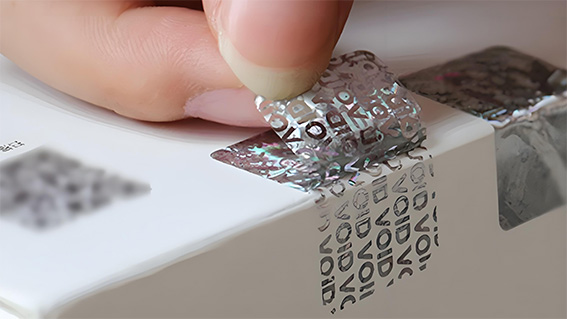
VOID anti-counterfeiting label rely on a physically destructive structure that leaves marks upon peeling, delivering tamper-proof protection at low cost.
Analysis of the VOID anti-counterfeiting label