
The printing performance and environmental impact of durable labels
author: Eva
2026-05-25
In various fields such as industrial production, warehousing and logistics, outdoor equipment, daily care and cleaning products, electronic appliances, etc., ordinary paper-based self-adhesive labels are prone to damage, fading, detachment, and moisture absorption, failing to meet the requirements for long-term identification, traceability tracking, and equipment display. However, durable self-adhesive labels, with their excellent weather resistance, wear resistance, and corrosion resistance, have become the core choice for high-end identification scenarios. When users select models, they generally pay attention to three core issues: whether the durable labels can be printed normally, whether they will affect the environment during use, and what types of mainstream durable self-adhesive labels are available on the market. This article will comprehensively answer these questions by combining industry production processes and actual application scenarios.
I. Can durable labels be printed?
The durable self-adhesive labels available on the market all support printing processing and are compatible with most mainstream printing equipment and techniques in the market. Unlike ordinary labels, their printed images have stronger adhesion and more durable characters, and are less likely to fade, scratch, or fall off, making them perfectly suitable for long-term usage scenarios.
From the perspective of print process compatibility, the durable labels have extremely strong compatibility. Common printing methods used in industrial scenarios, such as thermal transfer printing, laser printing, UV flexographic printing, and digital carbon powder printing, can all be compatible. They also support various devices like desktop printers and industrial-grade high-speed printers for operation. They can print various identification contents such as text, QR codes, barcodes, variable data, logo patterns, etc. Unlike ordinary labels that can only show color for a short period, the durable labels, after being printed with special inks and carbon tapes, can resist friction, high temperatures, humidity, and slight chemical corrosion, maintaining clear and complete images for a long time, meeting the requirements of the UL969 permanent identification standard.
The printing methods for different types of durable labels vary slightly: Polyester and polypropylene durable labels are suitable for thermal transfer and laser printing, with extremely high image firmness; DuPont synthetic paper labels can support dot matrix printing, thermal transfer, and even handwritten annotations, suitable for simple identification scenarios such as nurseries and outdoor equipment; Outdoor-specific PVC and vinyl labels are suitable for UV printing, with high color saturation and excellent resistance to ultraviolet aging. In general, as long as the corresponding consumables and printing parameters are matched, durable labels can achieve efficient, high-definition, and long-lasting printing, fully meeting the needs of batch industrial production and personalized customization.
II. Do durable labels have an impact on the environment?
The environmental impact of durable labels mainly depends on the base material, adhesive, and backing paper. Traditional ordinary durable labels have certain environmental drawbacks. However, new eco-friendly durable labels can achieve low pollution, biodegradability, and recyclability, aligning with green production standards. The overall environmental impact is controllable.
1. Environmental shortcomings of traditional durable labels
Early low-cost durable labels on the market mostly used ordinary PVC and inferior solvent-based adhesives, which had obvious environmental problems. Firstly, the materials were difficult to degrade, and after being discarded, they would remain in the soil for a long time, causing soil pollution; secondly, during production and use, solvent-based adhesives would release a small amount of VOC harmful gases, polluting the air; thirdly, some substandard products contained heavy metals and harmful additives, not meeting the RoHS environmental directive, and after being discarded, they would cause ecological residual pollution. At the same time, the base material, backing paper, and adhesive of traditional labels were tightly combined, making it difficult to separate for recycling, and prone to generating solid waste waste.
2. Environmental advantages of new durable labels
With the upgrading of environmental policies and the iteration of industry technology, mainstream self-adhesive manufacturers have fully upgraded their environmental production processes. New durable labels significantly reduce environmental impact. On the one hand, they use solvent-free eco-friendly acrylic adhesives and separable backing papers, with no VOC emissions, ensuring green and safe production and use; on the other hand, they introduce environmentally friendly materials such as degradable synthetic paper and recyclable polypropylene, which can naturally degrade or be recycled after being discarded, reducing solid waste pollution. In addition, the popularization of digital on-demand printing technology significantly reduces excessive production of labels and waste of printing materials, reducing material loss by about 25% compared to traditional printing, further optimizing the environmental attributes. Compliant industrial-grade durable labels have passed environmental testing, are non-toxic and harmless, and can be widely used in industries with strict environmental requirements such as food, medical, and new energy.

III. Main durable label categories and characteristics produced by adhesive label manufacturers
Major adhesive label manufacturers have developed multiple mainstream durable label products based on application scenarios, weather resistance performance, and material characteristics, covering industrial, outdoor, civilian, and special scenarios. The core categories are as follows:
1. Polyester (PET) durable labels
PET labels are the most widely used durable labels in industrial applications. They are lightweight, strong, waterproof, oil-resistant, acid and alkali resistant, and possess excellent high and low temperature resistance. They can adapt to a temperature range of -40°C to 150°C. The surface is smooth and dense, suitable for laser and thermal transfer high-definition printing. The character adhesion is extremely strong, resistant to scratching and fading. They are mainly used for parameter identification and traceability labels of electronic appliances, machinery equipment, batteries, and hardware accessories, and are the preferred category for industrial permanent identification.
2. Polypropylene (PP) synthetic durable labels
PP synthetic labels have both toughness and flexibility. They are waterproof, moisture-proof, resistant to rubbing, and have better weather resistance than ordinary paper labels. They have a high cost-performance ratio and are suitable for digital printing and thermal transfer printing. The color reproduction is high. They are widely used in daily care products, cosmetics, beverages, and food packaging labels. They are also suitable for indoor and outdoor general scenarios such as warehouse logistics and shelf labeling, and can resist moisture and minor wear for a long time.
3. DuPont synthetic paper durable labels
This label uses high-strength synthetic fiber material. It is strong and tear-resistant, waterproof, resistant to sun exposure, and resistant to high and low temperatures. Unlike ordinary PVC material, it will not become brittle and crack over time. The core advantage is its strong adaptability, which can be handwritten, dot matrix printed, or thermal transferred. It has excellent weather resistance and can be fully adapted to nursery cultivation, outdoor gardening, and flower identification scenarios. It leaves clear identification throughout the production, cultivation, and terminal sales process, making it a dedicated durable label for agricultural and forestry scenarios.
4. Outdoor weather-resistant PVC/ethylene durable labels
Designed specifically for extreme outdoor scenarios, they have strong resistance to ultraviolet rays, rain, and aging, and can withstand long-term exposure to sun exposure, rain, and sand erosion. The service life can reach 3-5 years. The material has good extensibility, waterproof and anti-corrosion properties, and is suitable for UV high-definition printing. The color is durable and does not fade. They are mainly used for outdoor billboards, traffic signs, equipment nameplates, pipeline labels, and exterior warning labels in open-air scenarios.
5. High-temperature and low-temperature special durable labels
They belong to functional special durable labels and are divided into two categories: high-temperature resistant and low-temperature resistant. High-temperature resistant labels can withstand temperatures above 200°C without carbonization, detachment, or loss of clarity, suitable for industrial baking, welding, and injection molding identification; Low-temperature resistant labels can maintain adhesion and integrity at -196°C ultra-low temperatures and are suitable for cold chain logistics, low-temperature storage, and biological freezing reagent identification, widely used in new energy, precision manufacturing, and cold chain medical industries.
6. Removable durable labels
These are made with high-quality removable acrylic adhesive, balancing durability and peelability. During normal use, the adhesion is stable, resistant to wear, and does not peel off. They meet long-term identification needs and can be cleanly peeled off, leaving no residue and without damaging the base material surface. They are suitable for smooth substrates such as glass, plastic, and metal, and are mostly used for temporary identification of household appliances, glass products, high-end products, and warehouse turnover labels. They can be repeatedly disassembled and used, significantly reducing material waste.
IV. Summary
To sum up, high-quality and durable self-adhesive labels fully support various mainstream printing processes, with clear imaging, long-lasting and wear-resistant properties, capable of meeting both personalized and mass production requirements. The environmental impact can be effectively controlled through material upgrades and process optimizations. Environmentally friendly and durable labels have become the industry standard. Self-adhesive manufacturers have launched a variety of durable labels such as PET, PP synthetic paper, DuPont paper, outdoor weather-resistant, high and low temperature special, etc., covering various scenarios including indoor industrial, outdoor open-air, special working conditions, and civilian packaging. When enterprises select the type, they can match the corresponding durable label category based on the usage environment, printing requirements, environmental protection standards, and service life requirements, taking into account both the usage effect and the green production needs.
The PET and PP films produced by Instiker not only have excellent printing quality but also have strong adhesion. They are the preferred choice for many customers. If you are also interested, please contact us.
Definition, Categories, and Detailed Printing Guide for Personalized Label
Difficulty in printing glossy labels, ink smudging and solutions
Related Article

Las etiquetas PET resisten el arrugamiento, la deformación, la pérdida de tinta, el cambio de tamaño y el manchado por tinta durante la producción a alta temperatura y la impresión digital con láser.
Comprehensive Analysis of PET Self-adhesive Labels
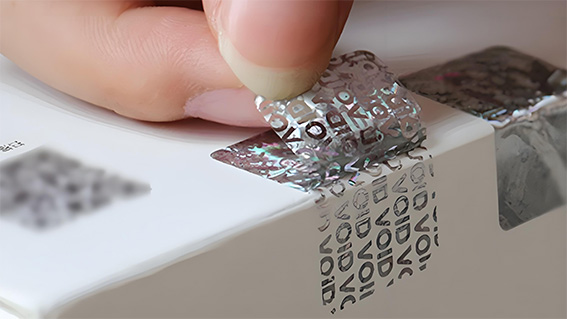
VOID anti-counterfeiting label rely on a physically destructive structure that leaves marks upon peeling, delivering tamper-proof protection at low cost.
Analysis of the VOID anti-counterfeiting label