
Types, Environmental Impact and Prices of Environmental Label Self-adhesive Labels
author: Eva
2026-01-26
In the current era where the "dual carbon" goal is being pursued and environmental awareness is increasingly awakening, environmentally friendly labels self-adhesive sheets, as a green alternative to traditional labels, are widely used in various industries such as food, cosmetics, electronics, and logistics. However, there are still many misunderstandings regarding its specific types, whether it is truly harmless to the environment, and whether the prices are excessively high. Instiker produces writing paper and water-soluble paper that fully meet environmental protection standards, which precisely addresses many customers' pain points.
I. Main Types of Environmentally Friendly Labels Self-adhesive Materials
Fully biodegradable self-adhesive: Using biodegradable materials such as polylactic acid and polybutylene terephthalate as the base, combined with water-based eco-friendly glue, these labels can completely degrade into water and carbon dioxide within 6 to 12 months under composting conditions, without any harmful residues. These labels are resistant to high and low temperatures and can withstand tearing. They are suitable for high-requirement scenarios such as fresh produce cold chain and food packaging, solving the pollution problem of traditional plastic labels at the source.
Recyclable synthetic paper self-adhesive: The base material is mostly PP and PE synthetic paper, which has the characteristics of waterproofing, oil resistance, and wear resistance. After use, it can be recycled and reprocessed into plastic products through classification, achieving resource recycling. During printing, it can be combined with low-VOC water-based inks. The emission of volatile organic compounds is reduced by more than 70% compared to traditional solvent-based inks. The synthetic paper, pearlescent film and PE self-adhesive developed independently by instiker are produced using environmentally friendly materials. They not only meet environmental requirements but also have prices that are accepted by most customers.
Environmentally friendly labels self-adhesive paper: The base material is made from paper sourced from sustainably managed forests, combined with water-based or heat-melt eco-friendly adhesives. It has no irritating odor and can be naturally decomposed with high recycling efficiency. It offers excellent cost-effectiveness. instiker's writing self-adhesive paper and kraft paper self-adhesive paper are produced using degradable paper, fully meeting environmental protection requirements.
Non-adhesive eco-friendly electrostatic adhesive: No need to apply glue. It adheres to smooth surfaces based on the principle of electrostatic attraction. It can be reused and leaves no residue after removal. It has no impact on the object being adhered or the environment.

II. Environmentally Friendly Labels Self-adhesive: Not Completely Harmless to the Environment
Compared with traditional solvent-based self-adhesive labels, the environmental impact of eco-friendly labels has been significantly reduced. However, being environmentally friendly does not mean it is completely harmless. Its environmental impact is mainly reflected in the details throughout the entire life cycle:
1) Core advantages in terms of environmental friendliness
The entire production and disposal chain of the eco-friendly label self-adhesive sheet adheres to the green concept: at the production stage, biogenic raw materials or recyclable materials are used to reduce reliance on non-renewable resources such as petroleum and wood, and water-based inks and solvent-free adhesives are employed, significantly reducing VOC emissions and water pollution; at the usage end, no harmful substances are released, allowing it to directly come into contact with sensitive products such as food and medicine; at the disposal stage, it can be processed through methods such as composting for degradation or classified recycling, avoiding the formation of "white garbage" caused by non-degradable materials in traditional labels, and also reducing secondary pollution caused by adhesive residues.
2) Unnoticed Potential Impacts
Firstly, the degradation of some environmental protection labels requires specific conditions. For instance, PLA materials can only degrade rapidly in industrial composting environments. If they are mixed with ordinary household waste and landfilled, the degradation rate will significantly slow down, potentially causing environmental burdens. Secondly, even if environmentally friendly processes are adopted during production, certain energy consumption and greenhouse gas emissions will still occur. In the paper-making and substrate processing stages, if wastewater treatment is improper, it may still have a minor impact on water bodies. Finally, when environmental protection labels are recycled along with other waste, if the classification is not thorough, it may reduce the overall recycling efficiency and indirectly increase environmental costs.
In conclusion, the self-adhesive labels with environmental protection labels are "low-hazard and manageable" green products that can minimize environmental risks to the greatest extent. However, they need to be paired with standardized production processes and waste disposal methods to truly achieve environmental protection value.

III. Environmentally friendly labels sticker are not necessarily more expensive based on their environmental friendliness.
The price of eco-friendly label stickers is influenced by factors such as material, process, and order quantity. However, not all eco-friendly labels are expensive; some types can even be comparable to traditional labels in terms of cost.
1) The core influencing factors of price differences
Material cost: The prices of fully biodegradable PLA and PBAT materials are usually 2-3 times higher than those of ordinary copperplate paper labels due to complex production processes and high raw material costs. Each square meter can reach several tens of yuan; while the cost of environmentally friendly paper and ordinary synthetic paper labels for environmental protection is more affordable, ranging from a few yuan to a dozen yuan per square meter, and the price gap with traditional copperplate paper labels is relatively small.
Complexity of the process: For environmentally friendly labels using high-end processes such as UV printing, laminating, and special-shaped die-cutting, the unit price will be 30%-50% higher than that of ordinary offset printing labels; if only basic printing and sticking functions are required, ordinary environmentally friendly labels using water-based ink have the same process cost as traditional labels.
Order quantity scale: For small-batch customized fully biodegradable labels, due to the high proportion of mold costs, the unit price will significantly increase; while for large-scale purchases, manufacturers can reduce costs through large-scale production, and the price advantage of fully biodegradable labels will gradually become apparent. Some manufacturers' quotations can even be within 1.5 times that of traditional labels.
2) Market price reference
From the actual market quotations, the price range of environmentally friendly labels (self-adhesive) is quite wide: Basic models such as ordinary ROHS environmentally friendly labels and GP environmentally friendly labels have a price range of 5-20 yuan for 1,000 pieces, with a single piece cost as low as 0.005-0.02 yuan, which is the same as traditional labels; fully biodegradable food-grade labels, for small-batch customization, the unit price is approximately 0.08-0.2 yuan per piece, and for large-scale purchases, it can be reduced to 0.05-0.1 yuan per piece; high-end transparent PET environmentally friendly labels, due to material and process premiums, have a unit price of about 0.05-0.1 yuan per square centimeter, which is higher than ordinary paper labels, but much lower than imported high-end environmentally friendly labels.
IV. Rational Selection of environmentally friendly labels Adhesive Sheets
Eco-friendly label adhesive sheets come in various types, which can meet the environmental and functional requirements of different industries. The core value lies in "reducing environmental risks" rather than "absolute safety", and the price is not the main factor hindering its widespread adoption. For enterprises and consumers, when making a choice, they can consider the specific needs of the scenario: for basic identification scenarios, environmentally friendly paper labels can be selected, taking into account both cost and environmental protection; for high-end scenarios such as food and export products, fully degradable or certified eco-friendly labels can be chosen to fulfill green responsibilities; at the same time, through bulk purchasing and simplifying unnecessary processes, the balance between environmental protection needs and cost control can be achieved.
As the environmental protection technology progresses and is applied on a larger scale, the cost of eco-friendly label adhesive sheets will further decrease, and their application in the sustainable packaging field will become more widespread, becoming an important carrier connecting product quality and environmental responsibility.
As the environmental protection technology progresses and is applied on a larger scale, the cost of eco-friendly label adhesive sheets will further decrease, and their application in the sustainable packaging field will become more widespread, becoming an important carrier connecting product quality and environmental responsibility.
Analysis of the Uses, Printing Processes and Environmental Impacts of Coated Paper
Introduction to Thermal Transfer Paper
Related Article

Las etiquetas PET resisten el arrugamiento, la deformación, la pérdida de tinta, el cambio de tamaño y el manchado por tinta durante la producción a alta temperatura y la impresión digital con láser.
Comprehensive Analysis of PET Self-adhesive Labels
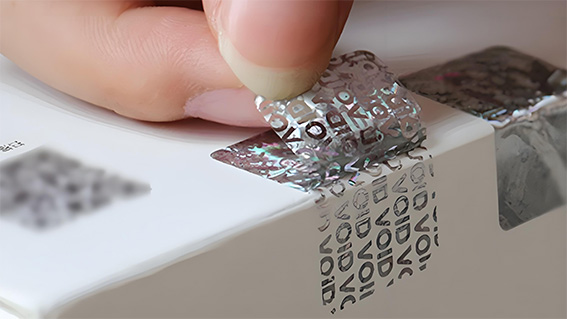
VOID anti-counterfeiting label rely on a physically destructive structure that leaves marks upon peeling, delivering tamper-proof protection at low cost.
Analysis of the VOID anti-counterfeiting label