Analysis of the types of adhesive film and environmental impact
author: Eva
2026-04-13
In numerous industries such as packaging, labeling, electronics, etc., film adhesive, due to their convenient sticking properties, have become indispensable basic materials, and their presence can be seen in all aspects of daily life.
With the upgrading of manufacturing industries and the tightening of environmental protection policies, product selection is no longer solely based on performance and cost. Weather resistance stability, construction compatibility, and environmental friendliness throughout the entire life cycle have become the core evaluation criteria.
This article provides a detailed comparison to assist packaging buyers, printing professionals, and brand owners in making confident choices regarding the most suitable materials.
This article provides a detailed comparison to assist packaging buyers, printing professionals, and brand owners in making confident choices regarding the most suitable materials.
I. What is adhesive film?
The adhesive film is made of high molecular films such as PET, PP, PE, and TPU as the base material. It is combined with water-based, hotmelt, or solvent-based pressure-sensitive adhesives and a release material to form a bonding label material. It contains no paper fibers, has a dense structure, and has stable physical properties.
II. What kinds of adhesive film products are available on the market? What are their characteristics?
|
Type
|
Main features
|
Application
|
|
High transparency, high temperature resistance, high tensile strength, and chemical corrosion resistance.
|
Electronic components, high-end packaging, outdoor weather-resistant signs
|
|
|
Lightweight, resistant to low temperatures, excellent water resistance, and high cost-effectiveness.
|
Food and beverage labels, cold chain logistics labels
|
|
|
High flexibility, excellent surface adhesion, and strong tear resistance
|
Hose, curved bottle body, irregular product labeling
|
|
|
High environmental protection grade, no VOC residue, highly degradable, large modification space
|
Medical, maternal and infant, high-end food labels
|
There are many types of adhesive film available on the market, and each type has its own specific uses and characteristics.

III. Case Analysis of Adhesive Film
Case One: High-end beauty and cosmetics packaging
Challenge
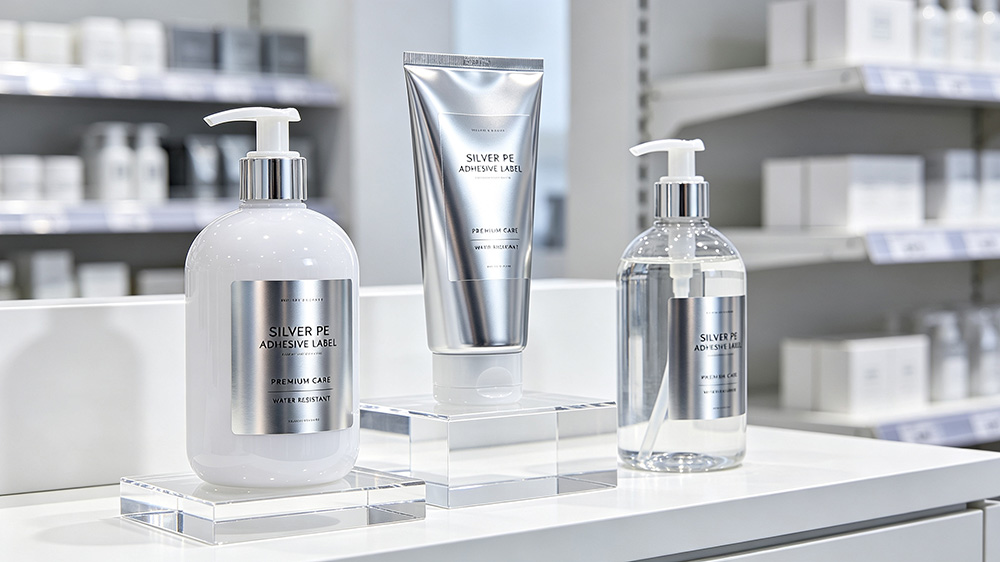
The curved bottle body of the skincare products from a leading cosmetics brand has a traditional adhesive label that is poorly adhered, prone to peeling at the edges, and can easily fade when exposed to water. the residual glue from the paper label poses a high risk of contamination. This does not meet the safety and environmental protection requirements for cosmetics.
Solution
The brand has replaced the PE flexible film produced by Instiker with water-based environmentally friendly glue.
Result
The surface fits perfectly, is waterproof and easy to clean. It has no odor or harmful residues. It complies with REACH and ROHS environmental protection standards.
Case Two: Upgrading of the Cold Chain Food Industry
Challenge
The original labels of the leading domestic cold-chain food enterprises were all made of adhesive paper. In the storage and transportation environment of -18℃, the paper labels would get damp, freeze, fall off and get damaged severely. Moreover, a large number of damaged labels became non-recyclable mixed garbage.
Solution
After the enterprise completely replaced its self-adhesive labels with PP low-temperature hotmelt adhesive film, the low-temperature adhesion became stable, and it was also waterproof and resistant to friction.
Result
The label detachment rate has decreased from 15% to 0.3%. This has enhanced production efficiency, significantly reduced waste of consumables and the amount of solid waste generated.
IV. What types of adhesives are used for the adhesive film?
|
Type
|
Characteristics
|
Characteristics
|
|
Water-based pressure-sensitive adhesive
|
Using water as the solvent, it has no VOCs emissions, no odor, and no pollution.
|
Food, medicine
|
|
Hotmelt pressure-sensitive adhesive
|
No solvent, fast curing, high energy utilization rate
|
Snacks, daily hygiene products and regular labels, balancing stickiness stability and environmental compliance, suitable for large-scale civilian products
|
|
Solvent-based pressure-sensitive adhesive
|
The most resistant to weathering
|
Outdoor advertising labels, outdoor nameplates, photovoltaic module labels
|
|
Removable pressure-sensitive adhesive
|
No glue residue, easy to peel off
|
Temporary classification stickers, replaceable product description labels, allowing for repeated sticking and replacement
|
V. Frequently Asked Questions
Q: Will the self-adhesive film peel off or have edges lift off?
A: Compliance selection and standardized construction generally won't cause this problem.
Q: Can self-adhesive film be used in scenarios where food and cosmetics come into contact?
A: Products that comply with REACH, ROHS and food packaging safety standards can be safely used.
Q: Does the self-adhesive film resist high and low temperatures? What is the applicable temperature range?
A: The PET film has a temperature resistance range of -20℃ to 120℃. The PP and PE films have excellent low-temperature performance and can stably withstand the low temperature of -20℃ in the cold chain, without cracking or losing adhesion.
Q: Can the self-adhesive film be recycled and reused?
A: The new type of self-adhesive film is recyclable and can be recycled for reuse.
Q: The cost of self-adhesive labels made of film is higher than that of self-adhesive labels made of paper. Why are companies replacing the former with the latter?
A: The single purchase price is high, but the overall usage cost is lower.
Q: Will there be any remaining adhesive residue after the self-adhesive film is removed?
A: The high-quality customized version can achieve complete removal of any remaining adhesive.
VI. Why choose Instiker?
At Instiker, we have established a full-range coating production line, covering the three major adhesive systems that are popular in the market. We also take into account both general mass production and high-end customization requirements.
Our team provides customers with material recommendations, prototype prototyping, printing compatibility assessment, and customized packaging solutions to ensure the selection of the correct substrate before mass production.
VII. Summary
Taking into account the technical parameters of the entire product, the comparison of categories, actual application cases, environmental assessment and industry trends into consideration
The adhesive film non-stick label is an upgraded version of the traditional paper non-stick label. It has completely solved the problems of water resistance, temperature resistance, fragility, inability to be recycled, and high overall loss of paper labels.
With stable weather resistance, excellent printing display effect, and controllable environmental protection properties, it is fully compatible with high-standard industrial and commercial scenarios such as cold chain, cosmetics, electronics, and healthcare.
Selection of materials for self-adhesive on food packaging labels and reasons for their detachment
The application of transparent self-adhesive labels and their environmental friendliness
Related Article

Las etiquetas PET resisten el arrugamiento, la deformación, la pérdida de tinta, el cambio de tamaño y el manchado por tinta durante la producción a alta temperatura y la impresión digital con láser.
Comprehensive Analysis of PET Self-adhesive Labels
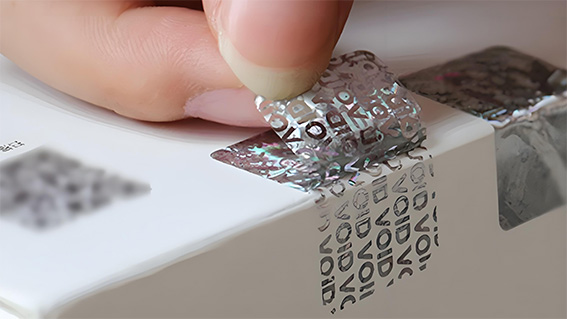
VOID anti-counterfeiting label rely on a physically destructive structure that leaves marks upon peeling, delivering tamper-proof protection at low cost.
Analysis of the VOID anti-counterfeiting label