Analyzing the differences between inkjet paper and ordinary paper
author: Eva
2026-02-02
If your printed materials have problems such as blurred text, through printing, fading, or wrinkled paper, inkjet paper is usually a better choice. It focuses on high-definition image quality, color reproduction, long-term preservation, and visual texture, making it the preferred choice for quality products.
If your primary goal is to achieve excellent printing quality at a competitive cost, ordinary paper is usually the preferred choice. It is inexpensive, versatile, has high print compatibility, and does not require the distinction of printing devices. It focuses on basic office needs.
These two materials do not have an absolute superiority or inferiority. The correct choice depends on your application scenario, printing method, working environment, expected service life, budget, and sustainability requirements. This guide provides in-depth comparative analysis, aiming to help packaging purchasers, printing professionals, and brand owners confidently select the most suitable material.
I. What is inkjet paper and ordinary paper?
Inkjet paper is a specialized type of printing paper designed specifically for inkjet printers.
The surface of the paper is coated with a uniform nano-porous ink-absorbing layer. It possesses the physical properties of controllable ink absorption, rapid curing, and precise color fixation. This can prevent ink droplets from spreading, penetrating, or bleeding, and accurately reproduce the colors and details of the picture.
Ordinary paper belongs to general-purpose uncoated office paper. It is made from wood pulp fibers and has no functional ink-absorbing coating on the surface. The fiber pores are large and unevenly distributed. The flatness and density of the paper conform to the general standard design, only meeting the basic requirements for graphic layout and presentation
II. The Core Differences Between Inkjet Paper and Ordinary Paper
(1) Ordinary Paper: Basic necessity, low-cost, versatile application scenarios
The core advantages of ordinary paper are its low price, wide adaptability, high printing compatibility, and the ability to be used without distinguishing between printing devices.
It focuses on basic office needs and is suitable for scenarios where no color is required, no long-term preservation is needed, and temporary use is involved.
It includes: daily office black-and-white document printing, file copying, draft drawings, meeting minutes, paper archives storage, ordinary contract printing, student homework, test paper printing, etc.
In these scenarios, only clear handwriting and quick readability are required, and there are no additional requirements for color, image quality, or preservation. Ordinary paper can fully meet the needs and can also maximize the control of printing costs.
(2) Inkjet Paper: Quality Output, High Precision for Professional Scenarios
The inkjet paper is mainly characterized by high-definition image quality, color reproduction, long-term preservation, and visual texture. It is compatible with all inkjet printing devices and is focused on color, high precision, formal, and display output scenarios. It is the preferred choice for high-quality finished products.
Suitable for image output, commercial graphics, long-term archiving and cultural and educational purposes

|
Comparison dimension
|
Ordinary paper
|
|
|
Weather resistance and preservation performance
|
It has certain water resistance, light resistance and antioxidant properties. For high-end photo paper, if stored in a dark environment indoors for 5 years or more, there will be no significant fading. For the velvet surface photo paper, it can be stored for a long time without the need for gluing.
|
Without waterproof and light-resistant treatment, it will be severely stained when exposed to water. If stored for a long time, it will show obvious fading and yellowing. Usually, after being stored for more than half a year, the color will fade and it cannot be preserved for a long term.
|
|
Drying and ink absorption performance
|
The coating features a precise microporous structure, which can quickly adsorb and retain ink droplets, inhibit the lateral diffusion of ink droplets, and has a fast drying speed. High-end photo paper can be used for immediate printing and drying without smudging.
|
Only relying on the paper-based fibers to absorb ink, the ink droplets are prone to spread and diffuse in all directions, resulting in a slow drying speed. After printing, there is a tendency for smudging and ghosting, and when printing on both sides, the backside is likely to get ink stains.
|
|
Printing effect performance
|
The color reproduction is highly accurate, with a color gamut coverage of over 98% of sRGB. The colors are vivid and saturated, and the detail clarity is high. There are no jagged edges or bleeding, and the gray-scale transition is smooth. It can present rich details in the shadow areas.
|
The color reproduction is poor, with the color gamut coverage being less than 1/4 of that of the photo paper. The colors are dull and pale, the details are blurry, the edges of the text are prone to have fringes, the image is prone to have a grainy appearance, and it is unable to present fine tonal variations.
|
|
Cost price
|
The price is relatively high. The cost of a single sheet is 5 to 20 times that of ordinary paper, and the price of high-end professional photo paper is even higher.
|
Low price, high value for money, with extremely low single-piece cost, suitable for large-scale daily use
|
III. Analysis of Real Cases
Case One: Mistake in Selecting the Enterprise Bid Proposal
Challenge
After printing, there are problems such as large areas of dull color, blurred image edges, and color bleeding.
Solution
Use 120g matte inkjet paper uniformly for printing the color pages.
Result
The tender documents are presented in a clean and precise manner, resulting in a significant increase in the pass rate of tenders.
Case Two: Precise product selection for the photo and graphic store
Challenge
The customers have reported that the photos are blurry, the posters are fading, and the images are too dark.
Solution
The official report documents will uniformly use 110g - 130g color inkjet paper. For high-end imaging orders, RC waterproof inkjet paper will be selected.
Result
The color saturation of the finished product has been significantly enhanced, the image details are clear, there is no smudging, and the customer complaint rate has dropped to zero.
IV. Frequently Asked Questions Answered
Q: What is the main difference between inkjet paper and ordinary paper?
A: The key difference lies in the ink-absorbing coating. The special nano ink-absorbing coating for inkjet paper ensures ink retention and color stability; while regular paper has no coating, ink is easily absorbed and spreads.
A: The key difference lies in the ink-absorbing coating. The special nano ink-absorbing coating for inkjet paper ensures ink retention and color stability; while regular paper has no coating, ink is easily absorbed and spreads.
Q: Can ordinary paper be printed on using an inkjet printer?
A: Yes, but it is only suitable for black and white text. Color printing will result in problems such as grayness, smudging, bleed-through, and wrinkling, and the image quality will be extremely poor.
Q: Can inkjet paper be printed using a laser printer?
A: No. The high temperature of the laser machine can damage the inkjet paper coating, causing jamming, ink loss, and paper peeling, and also causing damage to the equipment.
Q: Does inkjet paper need to be laminated for storage?
A: For regular color printing paper, it is recommended to apply a coating; RC waterproof inkjet paper has its own waterproof and anti-aging properties, and does not require coating for long-term preservation.
Q: Why is inkjet paper able to produce clearer and more vivid prints?
A: The special coating can quickly fix the ink droplets, prevent them from spreading and seeping, precisely reproduce the color gradations, and avoid the ink absorption and fading problems that occur with ordinary paper.
Q: Does the higher the weight of the inkjet paper, the better the effect?
A: No. For daily printing, the 110-130g thickness offers the best cost-performance ratio. For photos and high-quality finished products, we recommend using paper thicker than 180g. Just choose the type as needed.
A: No. For daily printing, the 110-130g thickness offers the best cost-performance ratio. For photos and high-quality finished products, we recommend using paper thicker than 180g. Just choose the type as needed.
V. Summary and Recommendations
Inkjet paper and ordinary paper are not simply good or bad; they differ in terms of scene adaptability.
Ordinary paper is the cost-effective choice for basic office work, meeting the basic black-and-white printing needs of daily use;
Inkjet paper is the core carrier of quality output, addressing the problems of color printing smudging, fading, and blurry image quality, and is suitable for all professional, external, and long-term printing scenarios.
The core of scientific paper selection lies in "tailored matching and precise adaptation".
By differentiating usage scenarios, standardizing printing parameters, and avoiding selection mistakes, it is possible to strictly control printing costs while maximizing the quality of the output. Whether for personal use, business office, or commercial graphic services, it can achieve a dual improvement in efficiency and quality.
If you need help in choosing the appropriate materials
You can contact Instiker's packaging experts to obtain free consultation, material recommendations or sample evaluations.
Whether you are developing product labels, commercial packaging or high-performance printing materials, Instiker will help you select a solution that balances performance, appearance and cost.
The heat resistance, adhesiveness and environmental impact of self-adhesive products
Analysis of the Uses, Printing Processes and Environmental Impacts of Coated Paper
Related Article

Las etiquetas PET resisten el arrugamiento, la deformación, la pérdida de tinta, el cambio de tamaño y el manchado por tinta durante la producción a alta temperatura y la impresión digital con láser.
Comprehensive Analysis of PET Self-adhesive Labels
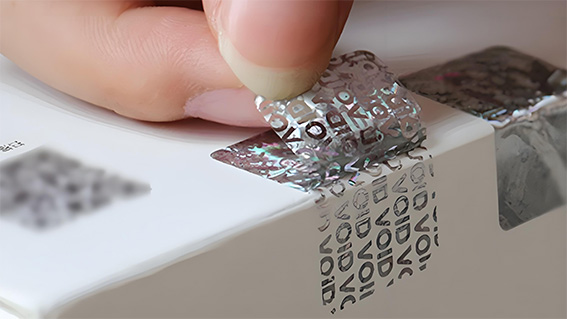
VOID anti-counterfeiting label rely on a physically destructive structure that leaves marks upon peeling, delivering tamper-proof protection at low cost.
Analysis of the VOID anti-counterfeiting label