
Analysis of Kraft Paper Label: Food Applicability、Environmental Friendliness and High-Quality Production Pathway
author: Eva
2026-03-19
In the current era when the packaging industry is transforming towards green and safety, Kraft paper label has been widely used in multiple fields such as food, cultural and creative products, and industry, thanks to its natural texture, cost advantage and sustainable attributes. However, there are still many questions to be answered regarding whether it can directly contact food, its environmental friendliness, and how Instiker can improve its quality.
I. Can Kraft Paper Label Be Directly Applied to Food?
Regarding whether kraft paper label can directly contact food, the core conclusion is: kraft paper label that meet food contact safety standards can be directly in contact with food in specific scenarios; products that do not meet the standards are strictly prohibited from direct contact. Food contact labels directly relate to consumer food safety and must strictly follow relevant national and international standards, while also considering the suitability based on the usage scenarios.
From the perspective of safety standards, China has issued GB 4806.8-2022, the "National Food Safety Standard for Paper and Paperboard Materials and Products in Contact with Food", which clearly stipulates the raw materials, sensory, physical and chemical, and microbiological indicators for food contact paper. This standard officially came into effect on December 1, 2023, providing a clear basis for the food contact application of kraft paper label. Kraft paper label that comply with this standard must meet three core requirements:
First, the raw materials must be compliant. Use non-toxic and harmless raw materials such as virgin wood pulp. The use of toxic and harmful materials such as recycled medical waste and discarded food packaging is strictly prohibited. Additives must comply with the provisions of GB 9685.
Second, the physical and chemical indicators should meet the standards. The migration amounts of harmful substances such as fluorescent substances, formaldehyde, and heavy metals should not exceed the limits. Among them, fluorescent substances should not show obvious blue fluorescence under 365nm ultraviolet light.
Third, the microbial indicators must be qualified. For labels that come into direct contact with ready-to-eat food, the total number of colonies, coliform bacteria and pathogenic bacteria must comply with strict limits.
From the perspective of application scenarios, the food contact applications of kraft paper label need to be distinguished between "direct contact" and "indirect contact": for indirect contact scenarios, the protective requirements for labels are relatively low, and it is only necessary to meet the basic safety standards; for direct contact scenarios, further classification is required based on the characteristics of the food - for dry foods, kraft paper label that meet the standards can be used, and their natural breathability can also help prevent food from getting moldy; for moist, oily foods or foods that need to be refrigerated or frozen, ordinary kraft paper labels are prone to absorbing moisture and oil seepage, and special treatments such as PE lamination and PIT coating are required, and the coating materials must comply with the relevant standards of GB 4806.7 to avoid the migration of harmful substances.
It should be noted that some low-cost kraft paper label on the market are made from recycled pulp and may contain harmful substances such as heavy metals and fluorescent brighteners. Such labels are only suitable for non-food applications and must not come into direct or indirect contact with food. Moreover, even food-grade kraft paper label should avoid prolonged exposure to high-temperature and high-humidity environments in contact with food to prevent degradation of the label material or migration of harmful substances.
II. Is Kraft Paper Label Environmentally Friendly?
In the current era of increasing environmental awareness, the environmental advantages of kraft paper label have become one of their core competencies. Compared to traditional materials such as plastic labels, the environmental friendliness of kraft paper label extends throughout the entire life cycle, specifically manifested in the three aspects of raw materials, production process, and waste disposal.
At the raw material level, kraft paper is made from renewable natural plant fibers, which are widely available and sustainable. Many high-quality kraft paper manufacturers adopt sustainable forest resources and even utilize forest thinning, sawmill waste, etc. as raw materials to achieve "zero wood waste", reducing resource waste and promoting a virtuous cycle of forests - reasonable forest thinning can create growth space for high-quality trees, and forests, as the "green lungs of the earth", can effectively absorb carbon dioxide and release oxygen, achieving carbon storage. Compared with plastic labels that rely on non-renewable resources such as petroleum, the raw materials of kraft paper label have more environmental advantages.
At the production process level, the environmentally friendly kraft paper label adopt processes such as low-temperature cooking and physical pulping, which avoid water pollution caused by traditional chemical pulping. In the printing stage, water-based inks are selected, which are non-toxic, odorless, and have no solvent volatilization. They comply with the EU REACH standards and do not produce harmful chemical residues, thus protecting the production environment and reducing potential harm to the human body. At the same time, some advanced production enterprises have achieved self-sufficiency in energy in the production process, generating electricity from wood waste, further reducing carbon emissions.
In terms of waste disposal, the kraft paper label have completely degradable, recyclable and compostable properties, truly achieving a closed-loop cycle of "coming from the earth and returning to the earth". After being discarded, the kraft paper labels can naturally degrade within 3 to 6 months in a composting environment, without leaving any microplastic residues and without causing pollution to the soil or water bodies. Even if not subjected to composting treatment, they can be recycled and reused to make recycled paper or other paper products, achieving resource recycling. According to industry data from the beginning of 2026, brands that use environmentally friendly kraft paper label have seen an average increase of 42% in consumer environmental satisfaction ratings, clearly demonstrating that their environmental value has been recognized by the market.
It should be noted that the environmental friendliness of the kraft paper label is not absolute. If fluorescent whitening agents, heavy metals, or solvent-based inks are used during the production process, it will still cause pollution to the environment. Moreover, if the back adhesive of the self-adhesive kraft paper labels is made of non-degradable materials, it will also affect their overall environmental friendliness. Therefore, truly environmentally friendly kraft paper labels must achieve full-chain environmental protection in terms of raw materials, production processes, and back adhesive materials.

III. How do self-adhesive manufacturers produce better-quality Kraft Paper Label?
(1) Select high-quality raw materials to lay a solid foundation for quality
Raw materials are the key factor determining the quality of the paper labels. Instiker has established a strict raw material selection mechanism, taking into account safety, toughness and compatibility.
First, use food-grade raw wood pulp kraft paper. Select the appropriate weight and thickness based on the application scenario.
Second, use high-quality self-adhesive materials. Preferably select solvent-free and biodegradable backing tapes to ensure stable adhesion. They should not easily come off in different temperature and humidity conditions. At the same time, the backing tape must comply with food contact safety standards to prevent the migration of harmful substances. Especially for food labels, it is necessary to avoid direct contact between the backing tape and the food.
Thirdly, use environmentally friendly water-based inks to ensure bright and durable printing colors, strong adhesion, no odor, no harmful residues, and a printing clarity of over 99.9%, meeting the requirements for product information display.
(2) Optimize production processes to enhance product quality
The level of refinement in production processes directly affects the flatness, edge precision and printing effect of labels. Instiker upgraded its production equipment and optimized process parameters.
First, we adopt advanced die-cutting technology. We prefer to use round knives for die-cutting instead of the traditional flat knives. The continuous rolling method can prevent the problem of uneven pressure causing the tearing of kraft paper and edge burrs. The die-cutting accuracy is stable within ±0.1mm, which is suitable for the complex requirements of small-sized and irregular-shaped labels. At the same time, it extends the lifespan of the die-cutting molds by more than 30%.
Secondly, the printing process was optimized. The printing pressure was controlled within the range of 0.15-0.25 MPa. The appropriate drying temperature was set based on the type of ink to ensure that the registration accuracy was within ±0.05mm, avoiding problems such as ghosting, missed printing, and ink seepage. At the same time, considering the texture characteristics of the kraft paper, the ink ratio was adjusted to enhance the adhesion between the ink and the paper.
Thirdly, improve the post-processing techniques, such as applying films and performing polishing on the labels, to enhance their waterproof, oil-resistant, and abrasion-resistant properties. Especially for scenarios involving damp and oily foods, PE laminating treatment can be used to enhance protection, while ensuring that the post-processing materials meet safety standards. Additionally, integrate processes such as material compounding, die-cutting, waste removal, and rewinding to achieve integrated control throughout the production process, thereby improving production efficiency and product consistency.
(3) Strengthen quality control and uphold the safety bottom line
Quality control should be integrated throughout the entire production process and a full-chain testing system from raw material entry to finished product exit should be established.
One is the inspection of raw materials upon entry. Samples of raw materials such as kraft paper, backing adhesive, and ink are taken for testing. Key indicators such as fluorescent substances, formaldehyde, and heavy metals are examined. Raw materials that do not meet the standards are strictly prohibited from being stored.
The second aspect is the production process inspection. Real-time monitoring is carried out for die-cutting accuracy, printing quality, and adhesive stability. Edge precision testing and adhesion pull force tests are conducted for each batch of products to ensure that the labels have no loose edges, no overflow glue, and are firmly adhered. At the same time, the clarity of printing and color consistency are also tested, and production parameters are adjusted in a timely manner.
The third step is the inspection of finished product storage. Samples are taken from the labels of the finished products for testing. The focus is on checking the safety indicators, dimensional accuracy, and the durability of stickiness. At the same time, the sensory characteristics of the labels are also inspected to ensure there is no odor, no foreign matter, and normal color. Any non-compliant products are strictly prohibited from being released from the warehouse.
In addition, Instiker has established a quality traceability system, recording information such as production batches, raw material sources, and test results, which facilitates subsequent problem investigation and recall.
(4) Focus on technological innovation, meet diverse demands
With the diversification of market demands, Instiker has combined industry trends and increased investment in technological innovation to enhance product competitiveness.
One is to develop customized products. Based on the specific needs of different industries and scenarios, we will create targeted kraft paper label - for instance, for organic food, we will introduce FSC-certified biodegradable kraft paper label; for chilled food, we will develop labels with resistance to low temperatures; for high-end cultural and creative products, we will offer personalized labels with retro textures and unique die-cut designs.
Second, we will promote the upgrading of environmental protection technologies, develop fully biodegradable adhesives and water-based inks, ensuring the environmental protection throughout the entire lifecycle of the labels, aligning with the global sustainable development trend, and simultaneously reducing energy consumption and pollution in the production process.
Thirdly, we introduce intelligent production equipment, such as imported round knife die-cutting machines and automated inspection equipment, to enhance production accuracy and efficiency, reduce human errors, and optimize production processes through data analysis to improve product stability.
IV. Conclusion
Kraft Paper Label, as a natural and environmentally friendly packaging material, its suitability for food products depends on its compliance with safety standards and its compatibility with the usage scenarios. Its environmental value lies in its green attributes throughout the entire life cycle. The production of high-quality products requires manufacturers to make efforts from multiple dimensions such as raw materials, processes, control, and innovation. With the advancement of environmental policies and the enhancement of consumers' safety awareness, the application of Kraft Paper Label in food packaging, high-end cultural and creative fields, etc., will become more widespread.
For manufacturers of self-adhesive labels, only by adhering to safety standards, deeply exploring environmental protection technologies, and optimizing production processes can they produce more market-relevant kraft paper label, achieving a win-win situation of economic benefits and environmental benefits. For users, clearly identifying the applicable scenarios of the labels and choosing products that meet standards can fully leverage the value of the kraft paper label, balancing safety and environmental protection. In the future, with the continuous upgrading of technology, kraft paper label will develop in a direction that is safer, more environmentally friendly, and more personalized, injecting new impetus into the sustainable development of the packaging industry.
The principle and effectiveness of anti-counterfeiting labels
Transparent sticky paper: Application scenarios、environmental friendliness and green production paths
Related Article

Las etiquetas PET resisten el arrugamiento, la deformación, la pérdida de tinta, el cambio de tamaño y el manchado por tinta durante la producción a alta temperatura y la impresión digital con láser.
Comprehensive Analysis of PET Self-adhesive Labels
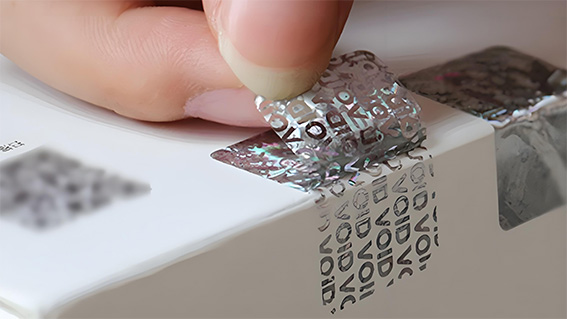
VOID anti-counterfeiting label rely on a physically destructive structure that leaves marks upon peeling, delivering tamper-proof protection at low cost.
Analysis of the VOID anti-counterfeiting label