Analyzing the drawbacks of label digital and the solutions provided by the self-adhesive label manufacturers
author: Eva
2026-03-10
As the label industry undergoes a transformation towards personalization, refinement, and shorter production cycles, label digital, with their core advantages of no need for plate-making, quick implementation, and flexible customization, have been widely applied in various fields such as food, electronics, cosmetics, and logistics. Self-adhesive labels, as the core substrate of label digital, their material compatibility directly determines the printing quality, usage effect, and application lifespan of label digital; while the limitations of digital labels also impose higher requirements on the production technology and product development of self-adhesive label manufacturers. How does Instiker address these limitations?
I. Adhesive Labels Compatible with Digital Tags
The core difference between label digital and traditional labels lies in the fact that digital signals are at the core, allowing for graphic printing without the need for plate-making. This requires even stricter requirements for the surface flatness, ink absorption, ink compatibility, and physical stability of the adhesive labels - inferior adhesive labels will not only cause the graphics on the labels to be blurry, ink to run, and edges to curl, but also shorten the lifespan of the labels and affect the brand image of the products.
(1) Paper Adhesive Labels
Paper adhesive labels have become the mainstream choice for short-term indoor label digital due to their low cost, ease of processing, and environmental friendliness and degradability. Among them, coated paper, kraft paper, dedicated digital, and paper are the most representative. They are compatible with mainstream digital printing processes such as laser and inkjet printing. The surface of coated paper adhesive labels is specially coated, which is smooth and fine, and the ink absorption is uniform. It can accurately reproduce the bright colors and detailed graphics of label digital. Whether it is cosmetic gift boxes, handmade product labels, supermarket price tags, or temporary signs, they can all be perfectly adapted. After laminating, the wear resistance and water resistance can be slightly enhanced, and the short-term usage period can be extended.
The self-adhesive labels made of kraft paper have their original texture when unsealed. After printing, they present a retro and simple texture, suitable for label digital designs such as handwritten text and simple lines. Their features of being resistant to pulling and tearing, environmentally friendly, and odorless make them suitable for use in handbooks, courier sealing stickers, and environmental product labels. The special digital and paper self-adhesive labels are a dedicated category developed by manufacturers for label digital. Through special coating treatment, they significantly enhance the adhesion of ink and the color reproduction accuracy. After printing, they are less likely to bleed ink or smudge, and are compatible with various digital printing machines. They are an ideal choice for short-run and personalized label digital.
It should be noted that ordinary paper-based self-adhesive labels have poor weather resistance. They tend to fade and deform when exposed to dampness and direct sunlight for a long time, and are not suitable for outdoor or long-term use label digital.
(2) Membrane-based self-adhesive labels
For label digital in complex scenarios such as outdoor, industrial, and food industries, plastic-based self-adhesive labels with excellent physical stability are the preferred category. Among them, the three materials PVC, PET, and PP have the strongest adaptability and can meet the strict requirements of different scenarios. PVC self-adhesive labels have a smooth surface, are wear-resistant, and resistant to acid and alkali corrosion. They can be used for laser and inkjet digital printing, and can also fit curved surfaces. The soft version can be used for car interior labels and home appliance markings, while the hard version is suitable for fixed nameplates and industrial equipment labels. It should be noted that the environmental performance of ordinary PVC is generally poor, and it may release trace harmful substances at high temperatures. High-end label digital for food and children's products need to use non-phthalate environmentally friendly versions.
PET self-adhesive film has high strength, can withstand high temperatures and is resistant to aging. It can remain stable in extreme environments ranging from -40℃ to 120℃. It is also resistant to oil and chemical corrosion. The surface can be treated with matte, glossy or frosted finish. It is suitable for UV digital printing and other high-end processes and is commonly used in high-end scenarios such as electronic device labels, food packaging labels, and medical equipment labels. Transparent PET has a light transmittance of over 90%. The printed patterns have a floating effect and are suitable for glassware and cosmetic bottle bodies.
PP self-adhesive labels are environmentally friendly, lightweight, and resistant to chemical corrosion. They have superior heat stability compared to PVC. Before printing, electrostatic treatment can enhance the ink absorption property, making them suitable for label digital in food packaging, chemical products, etc. The drawback is that they tend to become brittle at low temperatures and have slightly lower tensile strength than PET, making them unsuitable for use in low-temperature environments.
(3) Special Adaptation Self-Adhesive Labels
In addition to the regular categories, some functional and special self-adhesive labels can also be adapted for label digital, specifically addressing the usage pain points in special scenarios. For example, easy-to-tear self-adhesive labels have low strength and are prone to being torn. They can be printed with anti-counterfeiting and traceability information through digital printing, making them suitable for label digital in pharmaceuticals, health supplements, etc., which require tamper-proof features. Heat transfer self-adhesive labels can transfer patterns printed through digital printing to fabrics, metals, etc., through high-temperature transfer, solving the printing problems of irregular surfaces and special materials for label digital. They are often used in clothing printing labels, custom gift labels, etc. Removable self-adhesive labels are suitable for temporary label digital. After being adhered, they can be easily removed without leaving any residue, avoiding damage to the product surface. It should be noted that special paper with rough surfaces is not suitable for label digital printing. It is prone to graphic discontinuity and color unevenness, and it is recommended to use screen printing technology in combination.

II. Drawbacks of label digital
(1) Core Advantages of label digital
Label digital do not require plate-making, which can eliminate the cost of traditional label printing plate-making, significantly reducing the unit cost of small-batch, single-sheet printing orders, especially suitable for customized and trial sales label types; the process is simplified, from design files to finished labels, they can be printed immediately, with a short delivery cycle, and can quickly respond to urgent orders; it supports variable data printing, enabling each label to have differentiated content, meeting the needs of personalized marketing, anti-counterfeiting traceability, and precise control; it has outstanding environmental performance, reducing plate and ink waste, without wastewater and exhaust emissions, conforming to the green label development trend, and the color reproduction accuracy of high-end digital printing equipment has already been comparable to traditional printing.
(2) Disadvantages of label digital
1. Limited precision and detail presentation: The registration accuracy of label digital still has room for improvement, especially when printing gradient tones, lines smaller than 4pt, and small fonts, it is prone to blurring, discontinuity, and double images, the uniformity of large-area solid printing is also slightly inferior to traditional offset printing and intaglio printing, unable to meet the extreme detail requirements of high-end labels.
2. High equipment and maintenance cost threshold: Label digital printing equipment has high technical content, the initial purchase cost is expensive, small manufacturers find it difficult to afford high-end equipment investment; at the same time, the equipment needs to be regularly calibrated, cleaned, and maintained, the maintenance cost is high, and the operation and maintenance of the system software require professional technicians, further increasing the labor cost.
3. Durability and ink performance need improvement: The adhesion, wear resistance, and light resistance of the ink used in label digital rely on equipment and technology upgrades, some inks on plastic-based self-adhesive labels are prone to ink loss, fading, and scratching; and the low migration of the ink cannot fully meet the requirements of high-end scenarios such as food and medical, additional post-processing such as coating and UV coating is required, increasing the process and cost.
4. Cost advantage in large-scale orders is not significant: The variable cost of label digital is high, the printing cost of a single label is higher than that of traditional labels, when the order volume reaches a certain scale, its unit cost is far higher than that of traditional label printing, not suitable for the production of large-scale standardized labels, and it is difficult to replace the advantages of traditional printing in batch scenarios.
III. How do manufacturers produce self-adhesive labels compatible with digital tags?
(1) Optimizing substrate selection and pre-treatment
The substrate is the foundation for the compatibility of digital tags. Instiker prioritizes the selection of substrates with smooth surfaces, no impurities, and uniform thickness to avoid problems such as blurred printing, uneven ink layers, and label warping caused by uneven or uneven thickness of the substrate. For plastic substrates, due to insufficient surface tension, the ink is prone to fall off. It is necessary to enhance the surface tension to the standard value through corona treatment, usually to around 42 dyn, which can effectively enhance the adhesion of the ink; for paper substrates, by adjusting the pulp ratio and optimizing the calendering process, the surface smoothness and ink absorption uniformity can be improved, and the moisture content of the substrate should be strictly controlled to avoid deformation and wrinkling during printing, which may affect the flatness of the digital tags.
In addition, Instiker has deep cooperation with substrate suppliers and customizes special substrates for label digital, such as low-weight, high-smoothness copperplate paper developed for digital printing, or plastic substrates with added special components, further enhancing printing adaptability; at the same time, reducing the proportion of rough-textured special paper used for label digital. If high-end texture is required, a combined process of screen printing and digital printing can be used, balancing texture and adaptability.
(2) Develop specialized coating technology to solve the problems of ink absorption and ink fixation in labels
Coating is the key connection between the substrate and the ink, directly affecting the ink absorption, fixation and color reproduction of label digital, and is also the core breakthrough to solve ink bleeding and smudging in label digital. According to the printing characteristics of label digital, Instiker has developed specialized coatings, different from traditional printing coatings, focusing on improving the ink absorption speed and fixation effect - both to allow ink to quickly absorb, avoiding smudging and diffusion, ensuring clear graphics, and also to ensure that the ink is firmly fixed, not prone to bleeding or scratching, and improving the wear resistance of the label. For example, coating the surface of paper self-adhesive labels with ink-absorbing coating to enhance the uniformity of ink absorption, making the colors of label digital more saturated and lasting; coating the surface of plastic self-adhesive labels with specialized adhesion coating to enhance the bonding force between the ink and the substrate, and at the same time improving the resistance to friction and water resistance, suitable for outdoor label digital requirements.
At the same time, coating research and development should also take into account environmental protection, using water-based, UV and other environmentally friendly coating materials, in line with the development trend of green label digital; for different digital printing technologies, optimizing coating formulas, for example, the special coating for inkjet printing needs to improve ink compatibility to avoid problems such as nozzle blockage and ink penetration, and the special coating for laser printing needs to improve high-temperature resistance to avoid coating melting and deformation during printing. Digital-specific and paper self-adhesive labels developed by manufacturers such as Wenzhou Xinhout and Instiker have achieved a dual improvement in printing durability and color reproduction through their independently developed coating technology, perfectly adapting to various digital label printing machines.
(3) Optimize glue formulas, balancing label adhesion and printing compatibility
The glue of self-adhesive labels not only affects the adhesion effect of label digital, but may also indirectly affect the printing quality - if the glue is too fluid, during printing, it is prone to penetrate the surface of the substrate, resulting in blurred graphics and smudging; if the glue is not sticky enough, the label is prone to fall off after adhesion, affecting the user experience; if the glue is incompatible with the coating and ink, it is prone to problems such as coating detachment and ink fading. Therefore, Instiker has optimized the glue formula and developed specialized glue for label digital.
On one hand, controlling the fluidity and penetration ability of the glue to prevent it from penetrating onto the substrate surface and interfering with the printing, ensuring the clarity of the graphic content on the label digital; on the other hand, enhancing the stickiness and stability of the glue to ensure that the label can firmly adhere to the surfaces of different materials and different curved surfaces of products, and at the same time meet the requirements of different application scenarios. In addition, the glue needs to be perfectly compatible with the coating and the substrate to avoid reactions and detachment; for high-end label digital scenarios such as food and medical, using environmentally friendly glue without odor and migration, which complies with relevant industry standards, while avoiding the influence of the glue composition on the weather resistance and safety of the ink, ensuring that the entire label meets the usage requirements.
(4) Improving production control and process upgrading to ensure the stability of label products
Label digital have extremely high requirements for the consistency of self-adhesive materials. Even a slight thickness deviation or uneven coating can lead to differences in printing effects, affecting the uniformity of the label. Therefore, Instiker has improved the production control system, establishing strict quality inspection standards in each link such as substrate procurement, coating application, glue application, and cutting. For example, through online surface tension detectors, real-time monitoring of the pre-treatment effect of the substrate; using closed-loop color management systems to ensure the color consistency of different batches of products; equipping with high-precision detection equipment to eliminate unqualified products with impurities on the surface, uneven coatings, or thickness deviations, ensuring the stability of self-adhesive materials, and providing a reliable carrier for label digital printing.
Instiker has upgraded its production process by introducing a line processing system, integrating processes such as coating, printing, die-cutting, and inspection into a single system. This reduces losses and pollution during the transportation of semi-finished products and enhances production efficiency. To meet the post-processing requirements of label digital, it also provides processes such as lamination, UV coating, and cold gold stamping, improving the weather resistance and texture of the labels and compensating for the shortcomings of the poor weather resistance of digital printing inks. It has also introduced intelligent production equipment, such as AI quality inspection systems, which can detect tiny flaws of 0.1mm² and reduce the error rate, further improving product quality. Additionally, Instiker has strengthened cooperation with label digital printing enterprises. Based on the characteristics of the printing equipment, it optimizes the parameters of self-adhesive products to achieve precise compatibility between self-adhesive and digital printing equipment, forming a "production-printing" collaborative system and enhancing the overall quality of label digital.
IV. Conclusion
The widespread use of label digital has pushed the self-adhesive industry into a new stage of "precise adaptation, personalized customization, and green efficiency". Choosing the right self-adhesive material for adaptation and rationally evaluating the advantages and disadvantages of label digital are the keys for practitioners to achieve efficient production and enhance product competitiveness. For self-adhesive manufacturers, only by basing themselves on the needs of label digital and continuously optimizing production technology, upgrading product formulas, and improving quality control systems can they create more adaptable products and seize market opportunities; for label digital printing enterprises, they need to combine order size and application scenarios, reasonably select self-adhesive materials and printing methods, achieve complementary advantages, and reduce costs while improving quality.
In the future, with the continuous upgrading of digital printing technology and the continuous optimization of self-adhesive production processes, the compatibility between the two will further improve. The complementary symbiosis of label digital and traditional labels will drive the self-adhesive industry and the label industry towards a more environmentally friendly, more efficient, and more personalized direction, providing higher-quality and more demand-aligned label digital solutions for various industries.
The environmental benefits、drawbacks of heat proof vinyl self-adhesive and the solutions adopted by manufacturers
The waterproof performance、drawbacks and manufacturer's optimization solutions of BOPP sticker paper
Related Article

Las etiquetas PET resisten el arrugamiento, la deformación, la pérdida de tinta, el cambio de tamaño y el manchado por tinta durante la producción a alta temperatura y la impresión digital con láser.
Comprehensive Analysis of PET Self-adhesive Labels
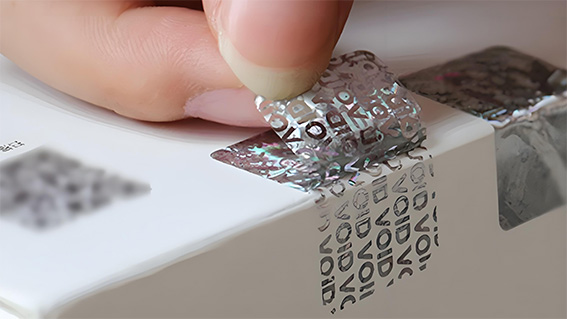
VOID anti-counterfeiting label rely on a physically destructive structure that leaves marks upon peeling, delivering tamper-proof protection at low cost.
Analysis of the VOID anti-counterfeiting label