
The safety, environmental protection and food safety issues of synthetic paper labels
author: Eva
2026-01-12
In various fields such as packaging, labeling, and printing, synthetic paper labels have become increasingly widely used due to their excellent characteristics such as water resistance, tear resistance, and stable composition. Instiker is concerned about the safety, environmental friendliness, and compliance with food safety requirements of these labels. As a result, they have also produced a series of synthetic paper labels products that meet the SGS report and ROH standards.
Regular synthetic paper labels usually undergo third-party testing and management system audits such as SGS and ISO during the production process, with a focus on indicators such as heavy metal content, volatile organic compounds (VOCs), and migration risks. The Instiker synthetic paper labels material has passed the SGS test and is produced in accordance with the ISO 9001 quality management system. The stable production process and continuous quality control ensure that the material performs reliably in terms of printing adaptability, durability, and batch consistency, making it suitable for long-term and large-scale use.
I. Are synthetic paper labels safe?
The safety of synthetic paper labels mainly depends on their raw material composition and production process. According to authoritative testing data and industry standards, products that comply with the regulations can be used safely. According to the Material Safety Data Sheet (MSDS) of synthetic paper labels released by Eli Lilly (China) Co., Ltd., qualified synthetic paper labels belong to materials without chemical hazards. Their core components include polypropylene films, butyl acrylate polymers, rosin glycerides, etc., and none of them are included in the category of harmful substances.
II. Are the synthetic paper labels environmentally friendly?
The environmental friendliness of synthetic paper labels is reflected throughout its entire life cycle, including raw material substitution, production process, and waste disposal. Compared to traditional plant-based fiber paper, it has significant green advantages. In terms of raw materials, synthetic paper labels uses synthetic polymer materials such as polyethylene films and polypropylene films as the core raw materials, without relying on natural plant fibers like wood, effectively reducing deforestation of forest resources and aligning with the global trend of "replacing paper with plastic and wood with plastic" for environmental protection.
In the production and waste disposal processes, the environmental advantages of synthetic paper labels are more prominent. Its production process does not involve the polluting procedures such as cooking and bleaching that are common in traditional papermaking, achieving low or even no pollution in the production stage. For waste, qualified synthetic paper labels can be 100% recycled and reused. Even if it undergoes incineration treatment, since its plastic base mainly contains carbon and oxygen elements, it will not produce toxic gases, avoiding the generation of secondary pollution. Some types of synthetic paper also have photo-decomposition and hydrolysis properties, which can gradually degrade in the natural environment, further reducing the long-term pressure on the environment. However, it should be noted that the current recycling system for synthetic paper labels still needs to be improved. The recycling of some niche types of products is rather difficult, and this is an area that the industry needs to optimize in the future.

III. Are the synthetic paper labels safe for food?
Whether synthetic paper labels meets food safety requirements mainly depends on whether it complies with the relevant national standards for food contact materials. Qualified products can achieve safe contact with food. The "Food Safety National Standard - Materials and Products for Food Contact (GB 4806.8 - 2022)" of China stipulates that the raw materials of food contact materials and products should not pose any harm to human health and must pass strict tests for multiple indicators such as heavy metals, formaldehyde, and microorganisms.
For synthetic paper labels used in food contact scenarios (such as food labels, inner linings of food packaging, etc.), the products must meet the specific requirements of the aforementioned standards: the content of heavy metals (measured by lead and arsenic) should be controlled within the safety limits, no fluorescent substances should be present, the residual formaldehyde content should comply with regulations, and they must pass the total migration test to ensure that no harmful substances migrate to the food during use. From a practical perspective, synthetic paper labels made from polypropylene films, due to its strong chemical stability and no release of harmful substances, has been widely used in scenarios where it directly or indirectly comes into contact with food, and some products clearly indicate "can be in direct contact with food". It is particularly important to note that non-food-grade synthetic paper labels (such as products used for outdoor advertising and industrial labels) may contain additives that do not meet food standards and must not be used in food contact scenarios.
IV. Conclusion
Synthetic paper labels and synthetic self-adhesive labels that meet industry standards have sufficient safety when used in standard scenarios; their characteristics of raw material conservation, low pollution, and recyclability make them high-quality and environmentally friendly alternatives to traditional paper; and food-grade synthetic paper labels that has passed food safety tests can even meet the safety requirements for food contact. in non-direct food contact application scenarios such as logistics, retail, daily chemicals and industrial identification, synthetic paper labels materials that meet standards have good safety and reliability. Instiker produces three types of synthetic paper labels, namely 54μ synthetic paper, 75μ synthetic paper, and 95μ synthetic paper, all of which comply with environmental protection industry standards.
For consumers and enterprises, they only need to select products that meet the corresponding standards through regular channels - in ordinary scenarios, they should pay attention to the MSDS reports of the products; in food contact scenarios, they should confirm that the products comply with relevant national standards such as GB 4806.8 - 2022. Then, they can fully enjoy the excellent performance brought by synthetic paper labels. With the deepening of environmental protection concepts and the upgrading of production technologies, the advantages of synthetic paper labels in the fields of safety and environmental protection will become more prominent, providing stronger support for the green development of various industries.
Common Questions about Labeling Fruit
What kind of material is best for sticker paper roll?
Related Article

Las etiquetas PET resisten el arrugamiento, la deformación, la pérdida de tinta, el cambio de tamaño y el manchado por tinta durante la producción a alta temperatura y la impresión digital con láser.
Comprehensive Analysis of PET Self-adhesive Labels
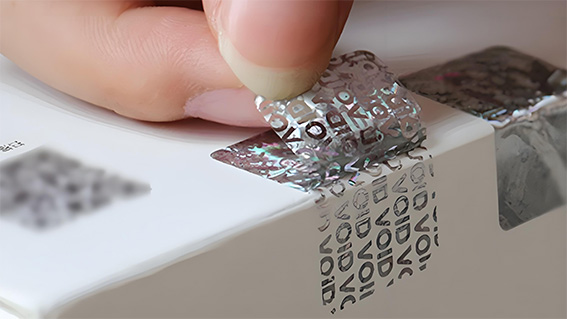
VOID anti-counterfeiting label rely on a physically destructive structure that leaves marks upon peeling, delivering tamper-proof protection at low cost.
Analysis of the VOID anti-counterfeiting label